

Feb . 11, 2026 00:01 Back to list
china hdpe pipe company Performance Analysis
Introduction
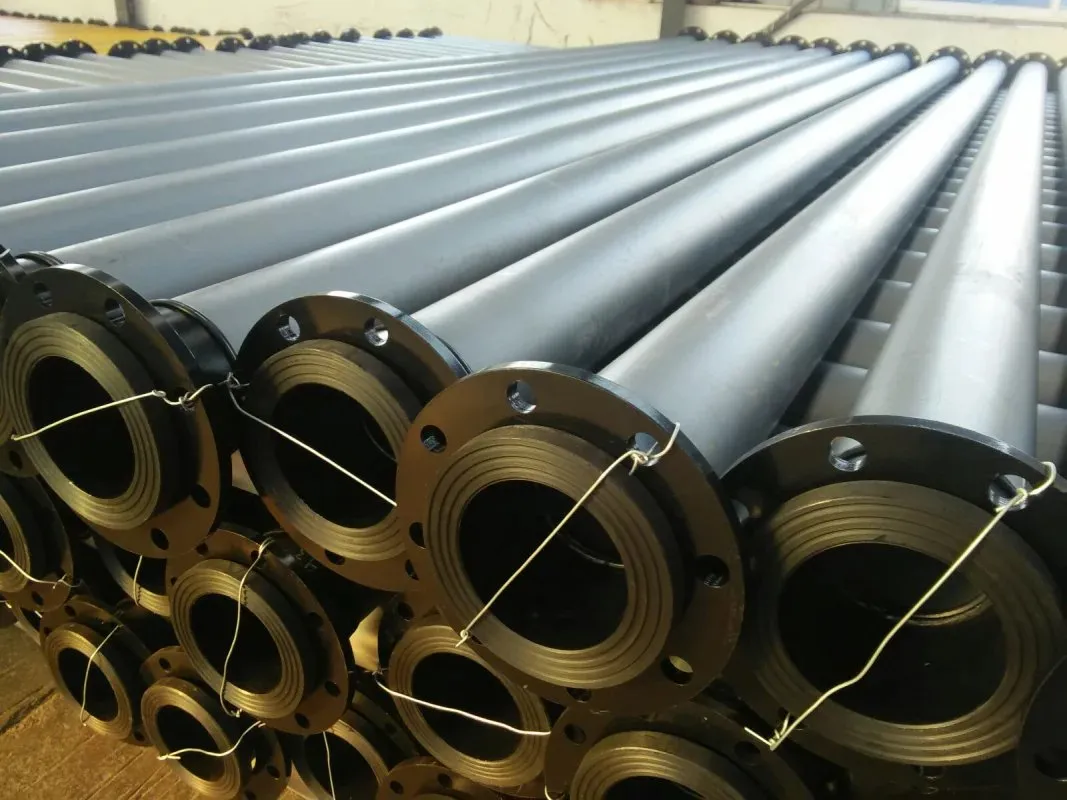
High-Density Polyethylene (HDPE) pipe represents a critical component in modern infrastructure, spanning applications from potable water distribution and gas transmission to drainage and industrial effluent handling. China HDPE Pipe Company specializes in the manufacturing and supply of these essential piping systems, serving a global market. HDPE pipes, distinguished by their inherent corrosion resistance, flexibility, and longevity, are increasingly favored over traditional materials like ductile iron, steel, and PVC, particularly in demanding environments. This technical guide provides an in-depth examination of HDPE pipe technology, covering material science, manufacturing processes, performance characteristics, failure modes, and relevant industry standards. The core performance of HDPE pipe is defined by its Pressure Rating (PN or PSI), its Hydrostatic Design Stress (HDS), and its resistance to Slow Crack Growth (SCG) and Rapid Crack Propagation (RCP). The escalating demand for sustainable and cost-effective infrastructure solutions positions China HDPE Pipe Company at the forefront of this evolving landscape. A primary industry pain point is maintaining consistent quality across varying production batches and ensuring compliance with diverse international regulations.
Material Science & Manufacturing
HDPE pipes are produced from polyethylene resin, a thermoplastic polymer derived from the polymerization of ethylene. The resin grade directly influences the pipe’s physical and chemical properties. Typical HDPE grades utilized include PE3408, PE4710, and PE100, each possessing distinct molecular weight distributions and density characteristics. PE100, for instance, exhibits superior stress crack resistance and impact strength. The raw material undergoes a rigorous quality control process, including melt flow index (MFI) testing, density measurements, and assessment of oxidative induction time (OIT) to ensure consistent performance. Manufacturing typically involves extrusion processes: spiral winding for smaller diameter pipes and ram extrusion for larger diameters. Key process parameters include melt temperature (typically 180-210°C), extrusion pressure, haul-off speed, and cooling rates. Precise control of these parameters is vital to achieve uniform wall thickness, minimize residual stress, and prevent defects like sagging or ovality. The cooling process utilizes water baths to solidify the pipe, followed by dimensional inspection and hydrostatic testing. Pipe dimensions are critical and are guided by standards like ISO 4427, which defines tolerances for outer diameter, wall thickness, and straightness. Chemical compatibility is also crucial, especially for applications handling corrosive substances. HDPE exhibits excellent resistance to most acids and bases, but prolonged exposure to strong oxidizing agents should be avoided.
Performance & Engineering
The performance of HDPE pipes is governed by several engineering principles. Firstly, the hydrostatic design stress (HDS) dictates the maximum allowable internal pressure the pipe can withstand, calculated using Barlow's formula, factoring in the pipe’s dimensions and the Material Design Basis (MDB) of the PE grade. Secondly, the pipe’s flexibility allows for expansion and contraction due to temperature fluctuations and ground movement, minimizing stress concentrations and reducing the risk of joint failure. The Modulus of Elasticity (approximately 0.7-1.0 GPa for HDPE) defines its stiffness. Thirdly, resistance to slow crack growth (SCG) is paramount, especially in applications involving sustained tensile stress and exposure to aggressive environments. SCG is influenced by factors like resin grade, temperature, stress levels, and the presence of surfactants. Rapid Crack Propagation (RCP) is a catastrophic failure mode triggered by pre-existing flaws or damage, mitigated by the inclusion of pressure surge protection devices and proper installation techniques. Environmental resistance also includes UV degradation, which can be addressed through the addition of carbon black or UV stabilizers to the HDPE formulation. Furthermore, soil loading and burial depth must be considered in the engineering design to prevent pipe deformation or collapse. Compliance requirements, such as those outlined in AWWA C906 for potable water applications and ASTM F480 for gas distribution, dictate material specifications, testing procedures, and installation guidelines. Fatigue analysis is crucial for applications subject to cyclic pressure or loading, assessing the pipe’s long-term durability under repeated stress.
Technical Specifications
| Parameter | PE80 | PE100 | Unit |
|---|---|---|---|
| Hydrostatic Design Stress (HDS) | 8.0 | 10.0 | MPa |
| Minimum Required Strength (MRS) | 6.3 | 8.0 | MPa |
| Density | 0.935 – 0.955 | 0.960 – 0.980 | g/cm³ |
| Melt Flow Index (MFI) | 0.3 - 0.8 | 0.1 - 0.5 | g/10min |
| Oxidative Induction Time (OIT) | >60 | >120 | min |
| Tensile Strength at Yield | >3.5 | >4.0 | MPa |
Failure Mode & Maintenance
HDPE pipe failures can stem from various causes. Slow Crack Growth (SCG) is a prevalent mode, initiated by stress concentrations around imperfections or scratches, exacerbated by exposure to aggressive chemicals or sustained tensile stress. This manifests as hairline cracks that propagate slowly over time. Rapid Crack Propagation (RCP) is a more sudden and catastrophic failure, often triggered by impact damage or localized stress concentrations. UV degradation can lead to embrittlement and cracking, particularly in above-ground applications. Corrosion, while HDPE is inherently corrosion-resistant, can occur due to contamination or exposure to specific aggressive environments. Joint failures are common, resulting from improper fusion welding, inadequate joint preparation, or thermal expansion/contraction stresses. Ground movement and excessive soil loading can cause deformation and cracking. Maintenance strategies include regular visual inspections for signs of cracking, deformation, or leaks. Hydrostatic testing can be performed to assess the pipe’s integrity. For SCG mitigation, proper pipe handling and installation techniques are crucial. For RCP prevention, impact protection and surge control devices are essential. For UV degradation, consider protective coatings or burial. Proper fusion welding procedures, including surface preparation, temperature control, and pressure monitoring, are vital for joint integrity. Leak detection systems can proactively identify and address failures before they escalate.
Industry FAQ
Q: What is the impact of temperature on the long-term performance of HDPE pipe?
A: Temperature significantly affects HDPE pipe performance. Higher temperatures reduce the pipe's strength and increase its susceptibility to creep and SCG. Lower temperatures can increase brittleness. Engineering designs must account for the operating temperature range and implement appropriate derating factors for HDS calculations, particularly in extreme climates.
Q: How does the pipe’s wall thickness affect its resistance to surge pressure?
A: Increased wall thickness provides greater resistance to surge pressure. The pipe's ability to withstand pressure spikes is directly proportional to its wall thickness and material strength. Proper surge analysis and the implementation of surge protection devices are critical, especially in pumping systems.
Q: What are the critical factors to consider during HDPE pipe fusion welding?
A: Critical factors include proper surface preparation (cleaning and removal of contaminants), accurate temperature control of the heating elements, appropriate fusion pressure and duration, and thorough visual inspection of the weld bead. Compliance with DVS 3221 or similar welding standards is essential.
Q: What is the role of carbon black in HDPE pipe formulations?
A: Carbon black acts as a UV stabilizer, protecting the HDPE from degradation caused by ultraviolet radiation. It also enhances the pipe's electrical conductivity, which can be beneficial for leak detection systems. The concentration of carbon black affects the pipe's color and processing characteristics.
Q: How do different soil types affect the long-term performance of buried HDPE pipes?
A: Soil type impacts the pipe’s load-bearing capacity and susceptibility to corrosion or chemical attack. Aggressive soils with high acidity or sulfate content can accelerate degradation. Proper bedding and backfill materials are crucial to provide adequate support and protect the pipe from external stresses. Soil resistivity also affects the performance of cathodic protection systems, if employed.
Conclusion
HDPE pipe systems represent a robust and versatile solution for a wide range of fluid conveyance applications. Their inherent advantages – corrosion resistance, flexibility, and longevity – coupled with advancements in material science and manufacturing techniques, position them as a superior alternative to traditional piping materials. China HDPE Pipe Company, committed to quality and innovation, plays a crucial role in supplying these critical infrastructure components globally. Understanding the material properties, engineering principles, and potential failure modes is paramount for ensuring the long-term reliability and performance of HDPE pipe installations.
Future developments in HDPE pipe technology will likely focus on enhancing resin formulations for improved SCG resistance, incorporating smart sensors for real-time monitoring, and developing sustainable manufacturing processes. Continued adherence to international standards and best practices in installation and maintenance will be essential to maximize the lifespan and minimize the environmental impact of these essential infrastructure systems. The demand for durable, cost-effective, and environmentally responsible piping solutions will continue to drive innovation within the HDPE industry.
-
DN25 HDPE Compression Fitting-HORON INTERNATIONAL|Reliable Irrigation Solutions
NewsFeb.11,2026
-
china hdpe coupling price Performance Analysis
News2026-06-01
-
china dual wall perforated corrugated pipe Performance Analysis
News2026-06-01
-
china ppr pipe 63mm Performance Analysis
News2026-06-01
-
china 63mm hdpe pipe price Performance Analysis
News2026-06-01
-
china ppr water pipe Performance Analysis
News2026-06-01
-
china 2.5 inch hdpe pipe price Performance Analysis
News2026-05-31
-
china 20mm pvc pipe Performance Analysis
News2026-05-31
-
china hdpe pipe company Performance Analysis
News2026-05-31
-
china water pipe for kitchen sink Material Performance
News2026-05-31
-
china 12 inch diameter pvc pipe for sale Performance Analysis
News2026-05-31
-
china 2 inch upvc column pipe price Performance Analysis
News2026-05-30
-
china hdpe to pvc coupling Performance Analysis
News2026-05-30
-
china 2 hdpe to pvc coupling Performance Analysis
News2026-05-30
-
china 48 inch hdpe pipe cost Performance Analysis
News2026-05-30
-
china upvc column pipe price Performance Analysis
News2026-05-30