

Feb . 11, 2026 00:01 Back to list
china dual wall perforated corrugated pipe Performance Analysis
Introduction
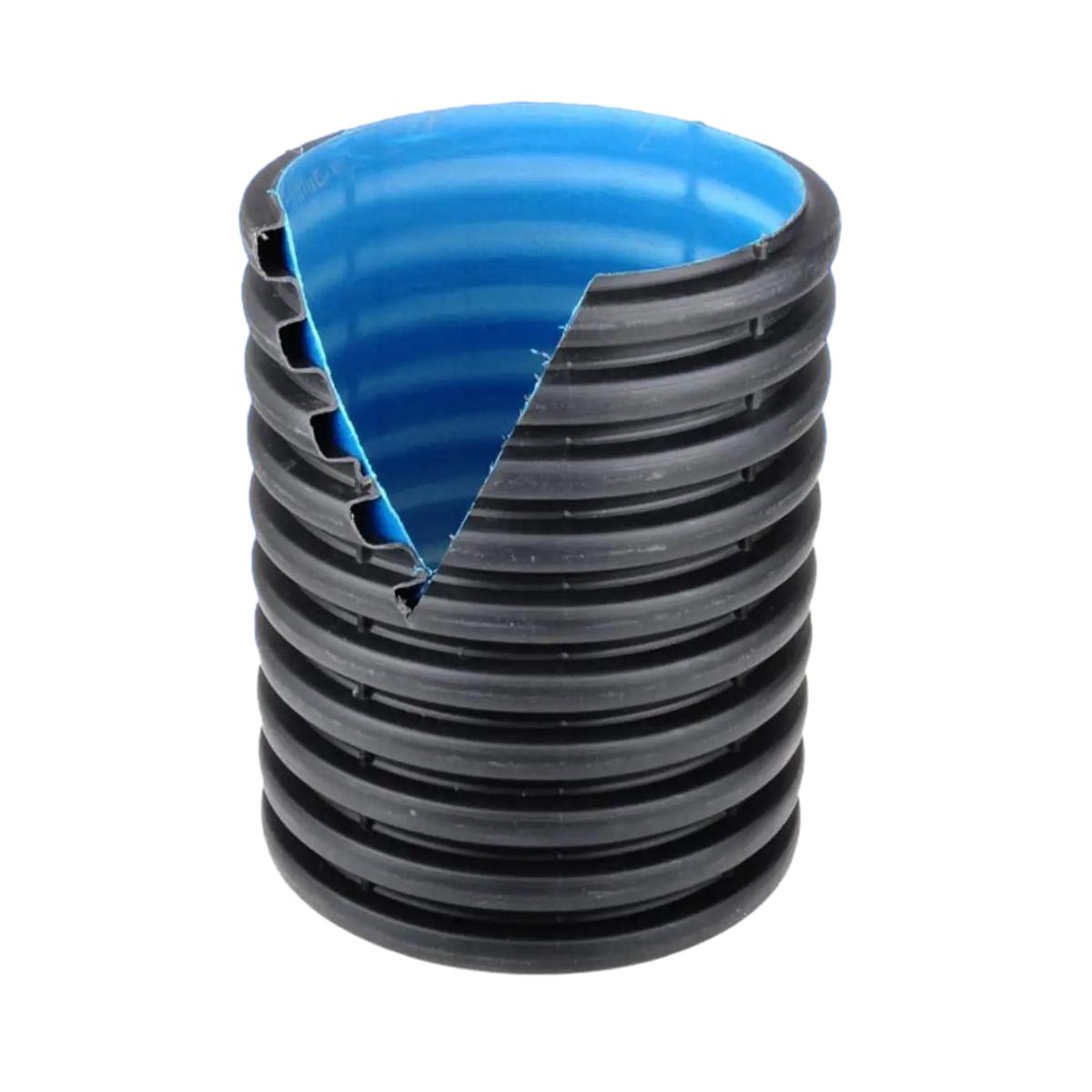
China dual wall perforated corrugated pipe represents a significant advancement in subsurface drainage and fluid management solutions. This product, categorized within the broader realm of polyethylene (PE) piping systems, serves as a critical component in civil engineering projects including stormwater management, agricultural drainage, landfill leachate collection, and road subdrainage. Its defining characteristic – a double-walled, perforated structure – provides enhanced structural integrity and superior filtration capabilities compared to single-wall corrugated pipe. The perforations, strategically sized and spaced, facilitate efficient water ingress while preventing soil particles from entering the pipe, thus maintaining long-term flow capacity. This guide provides an in-depth technical analysis of the material science, manufacturing processes, performance characteristics, potential failure modes, and relevant industry standards governing this vital infrastructure component. A core pain point in the industry revolves around balancing cost-effectiveness with long-term durability and resistance to environmental degradation, and this guide addresses these concerns with detailed technical insights.
Material Science & Manufacturing
The core material for China dual wall perforated corrugated pipe is typically high-density polyethylene (HDPE), chosen for its inherent chemical resistance, flexibility, and cost-effectiveness. The HDPE resin employed is often categorized as per ASTM D3350, with PE3458, PE3608, or PE4710 being common grades. These grades are characterized by varying molecular weight distributions and density, directly impacting the pipe's impact resistance, tensile strength, and long-term creep resistance. The manufacturing process begins with the extrusion of the outer layer, utilizing a circular die to create the corrugated profile. This is followed by the co-extrusion of the inner layer, forming the smooth interior wall. The perforation process is typically performed immediately after extrusion while the HDPE is still pliable. Precision drilling or laser cutting techniques are employed to create accurately sized and spaced holes, conforming to project-specific requirements. Critical parameters during manufacturing include extrusion temperature (typically between 180-220°C), cooling rate (to ensure dimensional stability), and perforation accuracy (to maintain consistent flow rates). Furthermore, the quality control process rigorously checks for wall thickness uniformity, dimensional accuracy, and the integrity of the perforations. Chemical compatibility is paramount; the HDPE material demonstrates excellent resistance to most common soil chemicals, but prolonged exposure to strong acids or solvents should be avoided. Raw material sourcing and consistent resin quality are major industry concerns, influencing the final product’s long-term performance.
Performance & Engineering
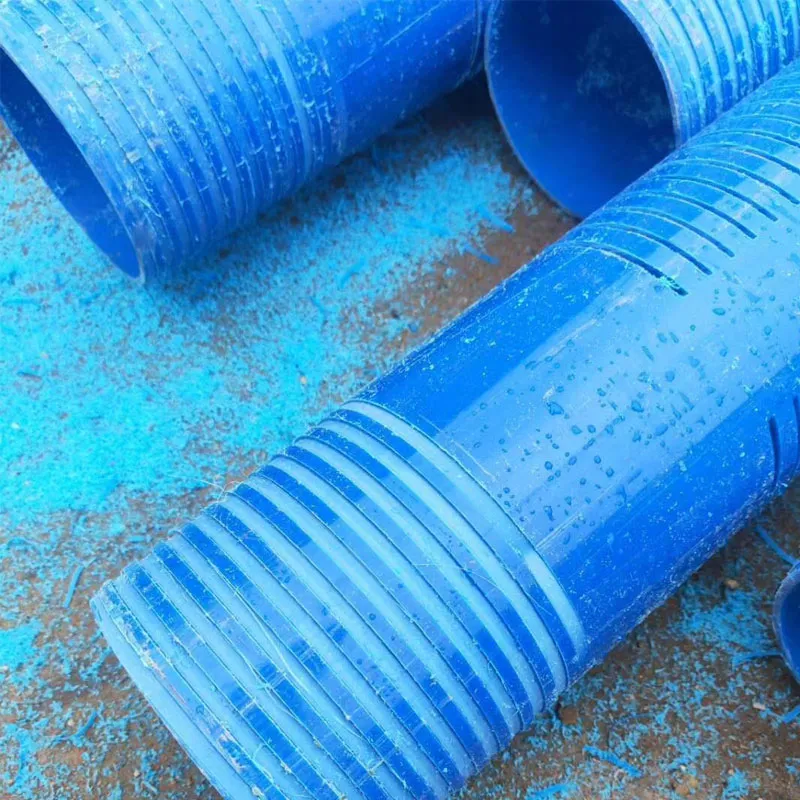
The performance of dual wall perforated corrugated pipe is governed by several engineering principles. Structurally, the corrugated profile provides significant ring stiffness, resisting deformation under external loads such as soil overburden and traffic loads. This ring stiffness is quantified using ASTM D2412, with higher values indicating greater load-bearing capacity. The perforations are engineered to maximize water flow while minimizing soil intrusion. Hydraulic performance is evaluated using Darcy's Law, considering the pipe diameter, perforation size, spacing, and the hydraulic conductivity of the surrounding soil. Environmental resistance is a critical factor. HDPE exhibits good UV resistance, but prolonged exposure can lead to degradation and embrittlement. UV stabilizers are typically incorporated into the resin formulation to mitigate this effect. Furthermore, the pipe must withstand freeze-thaw cycles without cracking or losing structural integrity. Impact resistance, measured by ASTM F1492, assesses the pipe's ability to withstand impact from rocks or other debris during installation and operation. Compliance requirements, such as AASHTO M294 (for drainage applications) and ASTM F894 (for gravity flow applications), dictate minimum performance standards for load-bearing capacity, hydraulic conductivity, and long-term durability. A key industry challenge is accurately predicting the long-term performance of the pipe in various soil conditions and under varying climatic conditions, requiring sophisticated modeling and field testing.
Technical Specifications
| Parameter | Unit | Typical Value (DN/ID 300mm) | Test Standard |
|---|---|---|---|
| Nominal Diameter (DN) | mm | 300 | ISO 4427 |
| Internal Diameter (ID) | mm | 290 | ASTM F894 |
| Ring Stiffness | psi | 62 | ASTM D2412 |
| Wall Thickness (Outer/Inner) | mm | 3.0/2.5 | ASTM F894 |
| Perforation Diameter | mm | 4.5 | Manufacturer Specification |
| Perforation Spacing | mm | 150 (Longitudinal), 75 (Circumferential) | Manufacturer Specification |
| Tensile Strength at Yield | MPa | > 8.0 | ASTM D638 |
Failure Mode & Maintenance
Several failure modes can affect the long-term performance of dual wall perforated corrugated pipe. Fatigue cracking can occur due to repeated stress from traffic loads or soil settlement, particularly in areas with poor compaction. Delamination, where the inner and outer walls separate, can result from manufacturing defects or prolonged exposure to moisture and temperature fluctuations. Oxidation, caused by UV exposure or chemical attack, can lead to embrittlement and reduced impact resistance. Another common failure mode is blockage of the perforations due to sediment buildup or root intrusion. This reduces hydraulic capacity and can lead to system failure. Maintenance strategies include regular inspections to identify and address potential problems early. Flushing the pipe with high-pressure water can remove sediment buildup. Root intrusion can be controlled using root inhibitors or mechanical root cutting. Proper installation practices, including adequate bedding and compaction, are crucial for preventing premature failure. In areas with aggressive soil conditions, the use of a geotextile filter fabric surrounding the pipe can help prevent soil intrusion and prolong its lifespan. Understanding the specific soil chemistry and ground water conditions is crucial for proactive maintenance planning. Failure analysis often reveals that a combination of factors, rather than a single cause, contributes to the eventual failure of the system.
Industry FAQ
Q: What is the impact of soil acidity on the long-term performance of HDPE corrugated pipe?
A: Prolonged exposure to highly acidic soils (pH < 5.5) can accelerate the degradation of HDPE, leading to embrittlement and reduced strength. While HDPE exhibits good chemical resistance, acids can catalyze oxidative degradation. Mitigation strategies include using HDPE resins with enhanced UV and oxidation resistance, applying a protective coating, or utilizing a geotextile filter fabric to create a buffer zone between the pipe and the aggressive soil.
Q: How does the pipe's ring stiffness relate to its load-bearing capacity and suitable application?
A: Ring stiffness is a direct measure of the pipe’s resistance to flattening under external loads. Higher ring stiffness values indicate a greater ability to withstand soil overburden and traffic loads. Lower ring stiffness pipes are suitable for shallow burial depths and low-traffic areas, while higher ring stiffness pipes are required for deeper burial, heavy traffic, or unstable soil conditions. Proper selection based on anticipated loads is critical to prevent deformation and failure.
Q: What are the common causes of perforation blockage and how can it be prevented?
A: Common causes include sediment buildup (silt, sand), root intrusion, and debris accumulation. Prevention strategies include using a geotextile filter fabric surrounding the pipe to prevent soil particles from entering the perforations, implementing regular flushing programs to remove sediment, and applying root inhibitors in areas prone to root intrusion. Proper installation techniques, such as ensuring adequate slope for drainage, can also minimize sediment buildup.
Q: What is the significance of the HDPE grade (e.g., PE3458, PE4710) in determining pipe performance?
A: The HDPE grade dictates the material's molecular weight distribution and density, influencing key properties such as tensile strength, impact resistance, creep resistance, and long-term durability. Higher grade HDPE resins (e.g., PE4710) generally offer superior performance characteristics compared to lower grades (e.g., PE3458), but come at a higher cost. Selecting the appropriate grade depends on the specific application requirements and anticipated service life.
Q: How do temperature fluctuations affect the pipe’s dimensional stability and performance?
A: HDPE is susceptible to thermal expansion and contraction. Significant temperature fluctuations can cause the pipe to elongate or shrink, potentially leading to joint separation or deformation. Proper installation practices, including allowing for thermal movement, are crucial. The coefficient of thermal expansion for HDPE is relatively high, so adequate expansion joints or flexible connections should be incorporated into the design, particularly for long pipe runs.
Conclusion
China dual wall perforated corrugated pipe offers a robust and cost-effective solution for a wide range of drainage and subsurface fluid management applications. Its inherent properties, including chemical resistance, flexibility, and structural integrity, coupled with advancements in manufacturing techniques, contribute to its increasing adoption in civil engineering projects. Understanding the nuances of material science, installation procedures, and potential failure modes is paramount to ensuring long-term performance and maximizing the return on investment.
Future developments in this field will likely focus on enhancing the durability and sustainability of the material through the incorporation of recycled content, the development of improved UV stabilizers, and the implementation of advanced monitoring technologies to detect early signs of degradation. Continued research and adherence to stringent industry standards will be critical to maintaining the integrity and reliability of this essential infrastructure component.
-
DN25 HDPE Compression Fitting-HORON INTERNATIONAL|Reliable Irrigation Solutions
NewsFeb.11,2026
-
china hdpe coupling price Performance Analysis
News2026-06-01
-
china dual wall perforated corrugated pipe Performance Analysis
News2026-06-01
-
china ppr pipe 63mm Performance Analysis
News2026-06-01
-
china 63mm hdpe pipe price Performance Analysis
News2026-06-01
-
china ppr water pipe Performance Analysis
News2026-06-01
-
china 2.5 inch hdpe pipe price Performance Analysis
News2026-05-31
-
china 20mm pvc pipe Performance Analysis
News2026-05-31
-
china hdpe pipe company Performance Analysis
News2026-05-31
-
china water pipe for kitchen sink Material Performance
News2026-05-31
-
china 12 inch diameter pvc pipe for sale Performance Analysis
News2026-05-31
-
china 2 inch upvc column pipe price Performance Analysis
News2026-05-30
-
china hdpe to pvc coupling Performance Analysis
News2026-05-30
-
china 2 hdpe to pvc coupling Performance Analysis
News2026-05-30
-
china 48 inch hdpe pipe cost Performance Analysis
News2026-05-30
-
china upvc column pipe price Performance Analysis
News2026-05-30