

Feb . 11, 2026 00:01 Back to list
china 2 inch upvc column pipe price Performance Analysis
Introduction
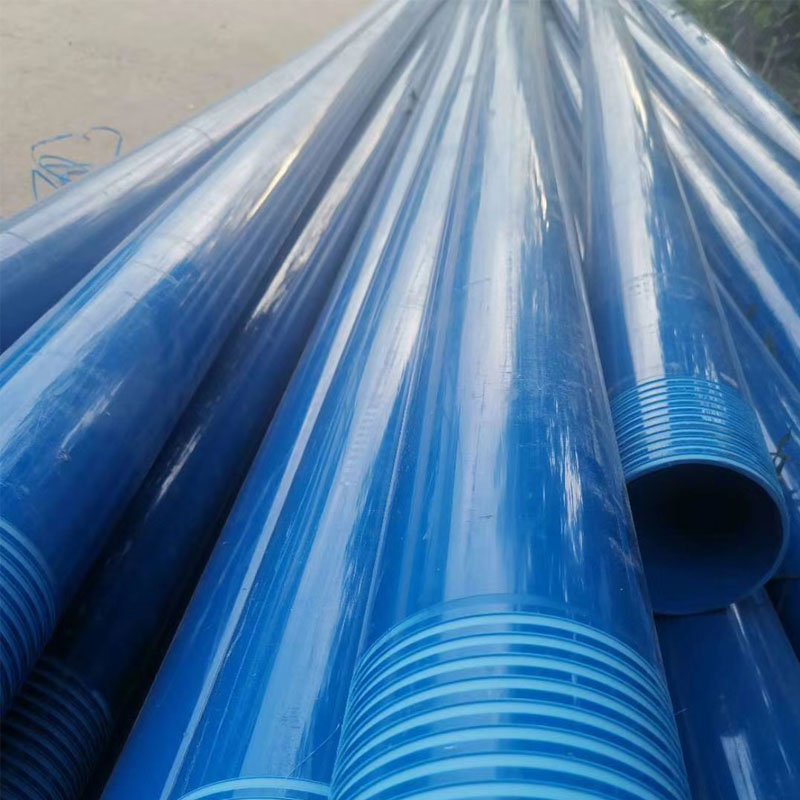
2-inch Unplasticized Polyvinyl Chloride (UPVC) column pipes represent a critical component in various fluid conveyance systems, particularly within agricultural irrigation, water distribution networks, and drainage applications. Manufactured to specific dimensional standards, these pipes serve as vertical supports for water columns, utilizing atmospheric pressure to deliver water efficiently. Unlike pressure pipes designed for significant internal pressure, column pipes primarily manage hydrostatic pressure based on the height of the water column they support. The Chinese manufacturing sector has become a dominant force in the global UPVC pipe market due to competitive pricing and increasing adherence to international quality control standards. Core performance characteristics include resistance to corrosion, low frictional loss, and relatively lightweight construction, making them a cost-effective alternative to traditional materials like steel or concrete in appropriate applications. The price point, as indicated by “china 2 inch upvc column pipe price,” is a significant factor influencing procurement decisions, requiring a thorough understanding of material grade, manufacturing processes, and adherence to relevant industry benchmarks.
Material Science & Manufacturing
UPVC column pipes are fundamentally constructed from polyvinyl chloride resin, a thermoplastic polymer created through the polymerization of vinyl chloride monomer. The raw material, PVC resin, is rarely used in its pure form; instead, it is compounded with a variety of additives to enhance its properties. Common additives include impact modifiers (e.g., chlorinated polyethylene - CPE) to improve toughness, stabilizers (e.g., lead-based or calcium-zinc based) to prevent thermal degradation during processing, lubricants to facilitate extrusion, and processing aids to enhance surface finish. The selection of these additives significantly impacts the final pipe’s performance, particularly its resistance to UV radiation and long-term durability.
Manufacturing typically involves extrusion. PVC compound is fed into a single-screw extruder, where it is heated and homogenized. The molten PVC is then forced through a die that shapes it into a seamless pipe. Precise control of extrusion temperature, screw speed, and die pressure is critical to ensuring consistent wall thickness and dimensional accuracy. Following extrusion, pipes undergo cooling, typically using water baths, to solidify the PVC. Further processing includes cutting to specified lengths, bell-ending (for solvent-welded connections), and quality control inspections. Key parameters to control are melt flow index (MFI) of the PVC compound, extrusion temperature profile (generally between 180-220°C), cooling rate, and ovality of the finished pipe. Improper cooling can lead to internal stresses, while inadequate temperature control can cause degradation and discoloration.
Performance & Engineering
The primary engineering consideration for UPVC column pipes is their ability to withstand hydrostatic pressure. This pressure is directly proportional to the height of the water column and the density of the water. The pipe wall thickness is a critical factor in determining the allowable hydrostatic head. Force analysis involves calculating hoop stress within the pipe wall using Barlow’s formula (σ = PD/2t, where σ is hoop stress, P is internal pressure, D is pipe diameter, and t is wall thickness). Beyond hydrostatic pressure, the pipes must also withstand external loads such as soil backfill (if buried) and wind loads (for above-ground installations).
Environmental resistance is also paramount. While UPVC exhibits excellent resistance to many chemicals, prolonged exposure to certain solvents and hydrocarbons can cause swelling and degradation. UV radiation can also cause embrittlement over time, particularly in pipes manufactured with inadequate UV stabilizers. Compliance requirements vary by region but generally adhere to standards like ASTM D1785 (Standard Specification for Poly(Vinyl Chloride) (PVC) Plastic Pipe, Schedules 40, 80, and 120) or equivalent international standards. Proper installation, including adequate support and bedding, is crucial to prevent stress cracking and ensure long-term performance. Connection methods, primarily solvent welding, must be performed according to established procedures to achieve leak-proof joints and maintain structural integrity.
Technical Specifications
| Parameter | Unit | Typical Value (2" UPVC Column Pipe) | Testing Standard |
|---|---|---|---|
| Nominal Diameter | inch | 2 | ASTM D1785 |
| Outside Diameter | mm | 63.5 | ASTM D1785 |
| Wall Thickness | mm | 3.2 – 4.2 (varies with schedule) | ASTM D1785 |
| Pressure Rating | psi | Variable, dependent on schedule and temperature | ASTM D1785 |
| Tensile Strength | MPa | 60-70 | ASTM D638 |
| Impact Strength (Izod Notched) | J/m | 500-800 | ASTM D256 |
| Hydrostatic Pressure Test | MPa | Dependent on Schedule | ASTM D1785 |
Failure Mode & Maintenance
Common failure modes in 2-inch UPVC column pipes include: Longitudinal Cracking – Often initiated by stress concentrations at fittings or due to excessive hydrostatic pressure. Environmental Stress Cracking (ESC) – Caused by the combined effect of tensile stress and exposure to certain chemicals. UV Degradation – Results in embrittlement and loss of impact strength, leading to cracking. Impact Damage – Physical impacts during handling or installation can cause cracking or puncture. Solvent Weld Joint Failure – Improperly performed solvent welding can lead to weak joints that fail under pressure.
Maintenance strategies include: Regular Visual Inspection - Checking for cracks, discoloration, or signs of degradation. Pressure Testing – Periodically testing the system for leaks. Joint Inspection – Specifically examining solvent weld joints for any signs of separation or cracking. Proper Support and Bedding – Ensuring adequate support to prevent stress on the pipe. UV Protection – Consider using UV-resistant coatings or pipe coverings in exposed applications. If failure occurs, localized repairs using solvent welding and appropriate fittings are typically employed. Complete pipe replacement may be necessary for extensive damage or widespread degradation. Preventative maintenance focused on proper installation, material selection, and regular inspections is the most effective strategy for extending the service life of UPVC column pipes.
Industry FAQ
Q: What is the difference between Schedule 40 and Schedule 80 UPVC column pipe, and how does this affect price?
A: Schedule 80 pipes have a thicker wall thickness than Schedule 40 pipes, resulting in higher pressure ratings and increased structural rigidity. The thicker wall requires more material, and therefore Schedule 80 pipes are typically more expensive than Schedule 40. The appropriate schedule depends on the specific application's pressure requirements and external load conditions.
Q: How does temperature affect the performance of UPVC column pipes?
A: UPVC’s mechanical properties, particularly its impact strength, decrease with decreasing temperature. While UPVC is generally suitable for a wide range of temperatures, extremely cold temperatures can make it more brittle and susceptible to cracking. Elevated temperatures can lead to a reduction in pressure rating due to softening of the material.
Q: What are the common causes of leaks in solvent-welded UPVC pipe joints?
A: Common causes include inadequate surface preparation (e.g., insufficient cleaning), improper application of solvent cement, insufficient curing time, and gaps between the pipe and fitting. Ensuring the surfaces are clean, dry, and free of contaminants, applying the correct type and amount of solvent cement, and allowing adequate curing time are critical to achieving leak-proof joints.
Q: What is the expected service life of a properly installed UPVC column pipe system?
A: A properly installed and maintained UPVC column pipe system can have a service life of 50 years or more. However, this lifespan is dependent on factors such as environmental conditions, exposure to UV radiation, and the quality of the materials and installation.
Q: Are there alternative materials to UPVC for column pipe applications, and what are their advantages and disadvantages?
A: Alternatives include HDPE (High-Density Polyethylene), steel, and concrete. HDPE offers greater flexibility and impact resistance but is generally more expensive. Steel provides high strength and pressure ratings but is susceptible to corrosion. Concrete is cost-effective but is heavy and prone to cracking. The optimal material choice depends on the specific application requirements and budget constraints.
Conclusion
2-inch UPVC column pipes offer a cost-effective and durable solution for various fluid conveyance applications, particularly where corrosion resistance and lightweight construction are paramount. Understanding the material science, manufacturing processes, performance characteristics, and potential failure modes is crucial for ensuring long-term reliability. The “china 2 inch upvc column pipe price” represents a significant competitive advantage, but procurement decisions should not solely focus on cost; thorough evaluation of quality control standards, adherence to relevant industry regulations, and proper installation practices are equally important.
Future trends in UPVC pipe technology include the development of enhanced UV stabilizers, improved impact modifiers, and innovative connection methods. Continued research into bio-based plasticizers and sustainable manufacturing processes will further enhance the environmental profile of UPVC pipes. Proper lifecycle cost analysis, considering initial cost, maintenance requirements, and expected service life, will be vital for optimizing investment decisions in this evolving market.
-
DN25 HDPE Compression Fitting-HORON INTERNATIONAL|Reliable Irrigation Solutions
NewsFeb.11,2026
-
china 2 inch upvc column pipe price Performance Analysis
News2026-05-30
-
china hdpe to pvc coupling Performance Analysis
News2026-05-30
-
china 2 hdpe to pvc coupling Performance Analysis
News2026-05-30
-
china 48 inch hdpe pipe cost Performance Analysis
News2026-05-30
-
china upvc column pipe price Performance Analysis
News2026-05-30
-
china hdpe pipe to pvc pipe connection Performance Engineering
News2026-05-29
-
china 12 inch pvc pipe Performance Analysis
News2026-05-29
-
china pvc to hdpe pipe connection Performance Analysis
News2026-05-29
-
china types of pipes pvc Performance Analysis
News2026-05-29
-
china 2 hdpe coupling Material Science
News2026-05-29
-
china 48 hdpe pipe for sale Performance Analysis
News2026-05-28
-
china perforated land drainage pipe Performance Analysis
News2026-05-28
-
china clear pvc hose Performance Analysis
News2026-05-28
-
china kitchen sink hot cold water lines Performance Analysis
News2026-05-28
-
china 110 mm pvc pipe Performance Analysis
News2026-05-28