

Feb . 11, 2026 00:01 Back to list
china 12 inch pvc pipe Performance Analysis

Introduction
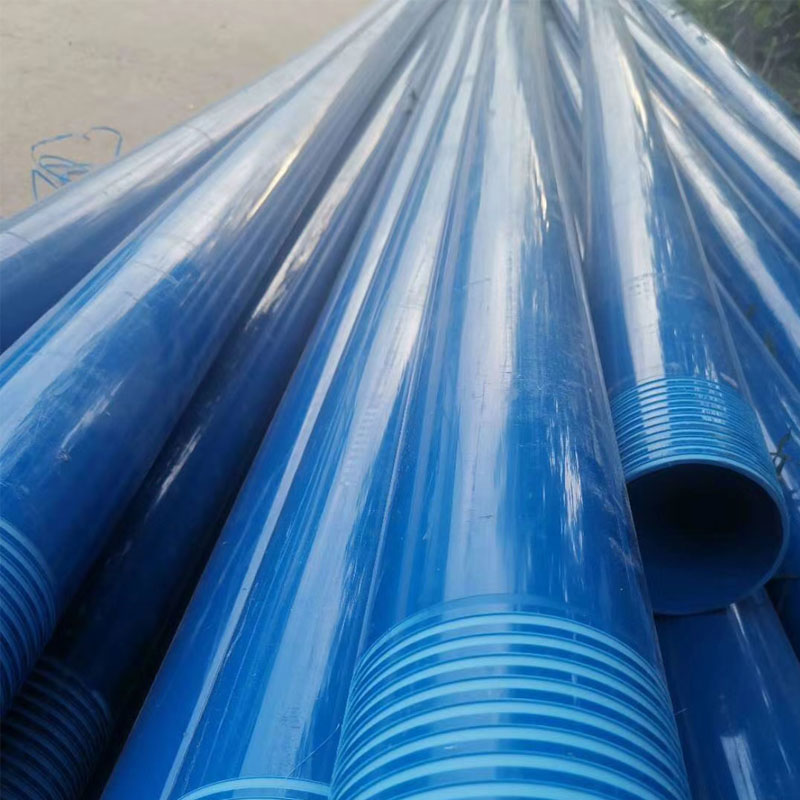
Polyvinyl Chloride (PVC) pipe, specifically 12-inch diameter manufactured in China, represents a critical component in a wide range of infrastructure applications, including water distribution, wastewater management, irrigation, and drainage systems. Its position within the industry chain is as a semi-finished product requiring further fabrication and installation by contractors. Unlike metallic piping, PVC offers advantages in corrosion resistance and cost-effectiveness. Core performance characteristics are defined by its pressure rating, tensile strength, impact resistance, and long-term durability. A significant pain point within the industry relates to ensuring consistent quality across various manufacturers and compliance with differing international standards. Variations in PVC formulations and manufacturing processes can lead to discrepancies in performance, requiring rigorous testing and quality control measures. This guide provides a comprehensive technical overview of 12-inch Chinese PVC pipe, detailing material science, manufacturing processes, performance engineering, potential failure modes, and relevant industry standards.
Material Science & Manufacturing
The primary raw material for 12-inch PVC pipe is Polyvinyl Chloride resin, typically produced via suspension polymerization. Additives are crucial for modifying the properties of the PVC compound. Common additives include plasticizers (e.g., Diisononyl Phthalate - DINP, Dioctyl Terephthalate - DOTP) to increase flexibility, stabilizers (e.g., Calcium-Zinc stabilizers, Tin stabilizers) to prevent degradation during processing and use, lubricants to aid in processing, and impact modifiers (e.g., Chlorinated Polyethylene - CPE) to enhance toughness. The molecular weight and K-value of the PVC resin significantly affect the pipe’s mechanical properties.
Manufacturing primarily involves extrusion. The PVC compound is fed into a twin-screw extruder where it is heated and homogenized. The molten PVC is then forced through a circular die to form a continuous pipe. Critical parameters during extrusion include die temperature, screw speed, and haul-off speed. Precise control of these parameters is essential to maintain consistent wall thickness and diameter. Following extrusion, the pipe is cooled in a water bath to solidify the PVC. Subsequent steps include cutting to length, bell-end forming (for socket joints), and quality inspection. Hydrostatic testing is performed to verify the pipe’s pressure rating. The quality of the weld bead during bell-end forming is a common area requiring careful monitoring to prevent failure points. The cooling rate post-extrusion influences the crystalline structure of the PVC, impacting long-term strength and creep resistance.
Performance & Engineering
The structural performance of 12-inch PVC pipe is governed by hoop stress, axial stress, and buckling resistance. Hoop stress arises from internal pressure and is directly related to the pipe diameter and wall thickness. Axial stress occurs due to longitudinal forces, such as those encountered during installation or thermal expansion/contraction. The pipe’s resistance to buckling depends on the pipe’s diameter, wall thickness, and the surrounding soil conditions. Finite Element Analysis (FEA) is commonly employed to model these stresses and optimize pipe design. Environmental resistance is a crucial consideration. PVC is susceptible to degradation from prolonged UV exposure, necessitating the use of UV stabilizers in the formulation. Temperature also influences performance; PVC’s mechanical properties decrease at elevated temperatures.
Compliance requirements vary by region and application. For potable water applications, the PVC must meet stringent standards regarding the leaching of chemicals into the water. ASTM D1785 and NSF/ANSI 61 are relevant standards in North America. For wastewater applications, resistance to hydrogen sulfide (H2S) and other corrosive substances is important. The long-term performance is also affected by creep, which is the tendency of the material to deform slowly under sustained load. Accurate prediction of creep behavior requires accelerated aging tests and sophisticated material models. The choice of jointing method (solvent welding, rubber gasket joints, or mechanical couplings) significantly affects the system's overall performance and leak tightness.
Technical Specifications
| Parameter | Unit | Typical Value (China 12" PVC Pipe) | Testing Standard |
|---|---|---|---|
| Nominal Diameter | inch | 12 | ASTM D1785 |
| Pressure Rating | psi | 40 - 100 (depending on Schedule) | ASTM D2412 |
| Wall Thickness | inch | 0.25 – 0.375 (depending on Schedule) | ASTM D1785 |
| Tensile Strength | psi | 6,000 – 8,000 | ASTM D638 |
| Impact Strength (Izod Notched) | ft-lb/in | 5 – 10 | ASTM D256 |
| Hardness (Shore D) | - | 70 – 80 | ASTM D2240 |
Failure Mode & Maintenance
Common failure modes for 12-inch PVC pipe include brittle fracture, stress cracking, and degradation due to UV exposure or chemical attack. Brittle fracture can occur due to impact damage or excessive stress concentration, particularly at pipe joints. Stress cracking is caused by the combined action of tensile stress and aggressive chemicals. UV degradation leads to surface cracking and reduced mechanical properties. Hydrogen embrittlement, resulting from prolonged exposure to H2S in wastewater environments, can significantly reduce the pipe’s ductility.
Preventive maintenance includes regular visual inspections to identify signs of cracking or degradation. Protecting the pipe from direct sunlight by burying it or applying UV-resistant coatings is crucial. Soil conditions surrounding the pipe should be assessed to ensure adequate support and prevent excessive stress. If chemical attack is a concern, the PVC formulation should be specifically designed to resist those chemicals. For repairs, solvent welding is commonly used for smaller cracks, while larger damage may require replacing the affected section of pipe. Proper joint preparation is essential to ensure a watertight seal. Hydrostatic testing can be used to identify leaks and assess the overall integrity of the pipe system. Regular monitoring of soil moisture content can help prevent ground movement that could induce stress on the pipe.
Industry FAQ
Q: What is the difference between Schedule 40 and Schedule 80 PVC pipe, and how does it affect pressure rating?
A: Schedule 40 and Schedule 80 refer to the pipe’s wall thickness. Schedule 80 has a thicker wall than Schedule 40. This increased wall thickness results in a higher pressure rating. The schedule number is directly proportional to the allowable stress and inversely proportional to the pipe diameter. Therefore, Schedule 80 pipe can withstand significantly higher internal pressures than Schedule 40 pipe of the same diameter. Choosing the correct schedule depends on the operating pressure and safety factors required for the application.
Q: How does temperature affect the long-term performance of PVC pipe?
A: Elevated temperatures reduce the tensile strength, impact resistance, and creep resistance of PVC. Higher temperatures accelerate the degradation of PVC due to thermal oxidation. Long-term exposure to temperatures exceeding 140°F (60°C) can significantly reduce the pipe’s service life. Derating factors are often applied to pressure ratings at higher temperatures. Conversely, low temperatures can make PVC more brittle and susceptible to cracking, particularly during installation.
Q: What are the potential risks associated with using improper solvent cement during PVC pipe installation?
A: Using an incorrect solvent cement or applying it improperly can lead to weak joints that are prone to leakage or failure. The solvent cement softens the PVC surface, allowing the two pieces to fuse together. An incompatible solvent cement may not properly dissolve the PVC, resulting in a weak bond. Improper application, such as insufficient cement or applying it to wet surfaces, can also compromise joint integrity. Always use a solvent cement specifically designed for PVC and follow the manufacturer’s instructions carefully.
Q: How can I mitigate the risk of hydrogen embrittlement in wastewater applications?
A: Hydrogen embrittlement is a concern in wastewater environments due to the presence of H2S. To mitigate this risk, select a PVC formulation that is specifically designed for wastewater applications and contains inhibitors to prevent H2S permeation. Ensure adequate ventilation in manholes and wet wells to reduce H2S concentrations. Regularly inspect the pipe for signs of cracking or degradation. Consider using alternative materials, such as HDPE, in severely corrosive environments.
Q: What quality control measures should I look for when sourcing 12-inch PVC pipe from Chinese manufacturers?
A: Thorough quality control is crucial. Verify that the manufacturer holds relevant certifications (e.g., ISO 9001). Request material test reports (MTRs) for each batch of pipe, confirming compliance with ASTM D1785 or other applicable standards. Inspect the pipe visually for defects such as cracks, blisters, or uneven wall thickness. Conduct hydrostatic testing on a representative sample of the pipe. Perform independent third-party inspections to verify the manufacturer’s quality control procedures.
Conclusion
The 12-inch PVC pipe manufactured in China presents a cost-effective and durable solution for numerous infrastructure applications. Understanding the material science, manufacturing processes, and performance characteristics of this product is paramount to ensuring long-term reliability and safety. Careful consideration of factors such as pressure rating, temperature, chemical exposure, and installation practices is crucial for preventing premature failure.
Future advancements in PVC technology will likely focus on developing more sustainable formulations, improving impact resistance at low temperatures, and enhancing resistance to aggressive chemicals. Continued adherence to stringent quality control standards and international regulations will be essential for maintaining the integrity and longevity of PVC pipe systems globally. Proactive maintenance programs and regular inspections are vital for maximizing the service life of these critical infrastructure components.
-
DN25 HDPE Compression Fitting-HORON INTERNATIONAL|Reliable Irrigation Solutions
NewsFeb.11,2026
-
china hdpe pipe to pvc pipe connection Performance Engineering
News2026-05-29
-
china 12 inch pvc pipe Performance Analysis
News2026-05-29
-
china pvc to hdpe pipe connection Performance Analysis
News2026-05-29
-
china types of pipes pvc Performance Analysis
News2026-05-29
-
china 2 hdpe coupling Material Science
News2026-05-29
-
china 48 hdpe pipe for sale Performance Analysis
News2026-05-28
-
china perforated land drainage pipe Performance Analysis
News2026-05-28
-
china clear pvc hose Performance Analysis
News2026-05-28
-
china kitchen sink hot cold water lines Performance Analysis
News2026-05-28
-
china 110 mm pvc pipe Performance Analysis
News2026-05-28
-
china upvc column pipes for submersible pumps price list Performance Analysis
News2026-05-27
-
china ppr pipe for water supply Performance Analysis
News2026-05-27
-
china 20mm ppr pipe price Performance Analysis
News2026-05-27
-
china hdpe pipe 24 inch Performance Analysis
News2026-05-27
-
china hdpe to steel coupling Performance Analysis
News2026-05-27