

Feb . 11, 2026 00:01 Back to list
china 110 mm pvc pipe Performance Analysis

Introduction
110mm Polyvinyl Chloride (PVC) pipe, manufactured in China, represents a significant component of modern fluid conveyance systems. Primarily utilized in drainage, wastewater management, irrigation, and increasingly in potable water distribution, its prevalence stems from a combination of cost-effectiveness, durability, and relative ease of installation. This technical guide details the material science, manufacturing processes, performance characteristics, potential failure modes, and relevant industry standards associated with Chinese-manufactured 110mm PVC pipe. It addresses critical industry pain points including long-term material degradation due to UV exposure and temperature fluctuations, ensuring consistent product quality from various manufacturers, and adherence to international safety and performance benchmarks. Unlike metal piping, PVC resists corrosion from many aggressive chemicals, but exhibits vulnerabilities to specific solvents and prolonged UV exposure. Proper specification and installation are crucial for maximizing service life and preventing premature failure.
Material Science & Manufacturing
110mm PVC pipe is predominantly composed of Polyvinyl Chloride resin, a thermoplastic polymer synthesized from the polymerization of vinyl chloride monomer (VCM). The resin is rarely used in its pure form; it’s typically compounded with plasticizers (such as phthalates or alternatives like DINCH), stabilizers (often lead-based, calcium-zinc, or organic-based), lubricants, and impact modifiers (e.g., chlorinated polyethylene – CPE) to achieve desired performance properties. The proportion of these additives significantly influences the pipe’s flexibility, temperature resistance, and long-term durability.
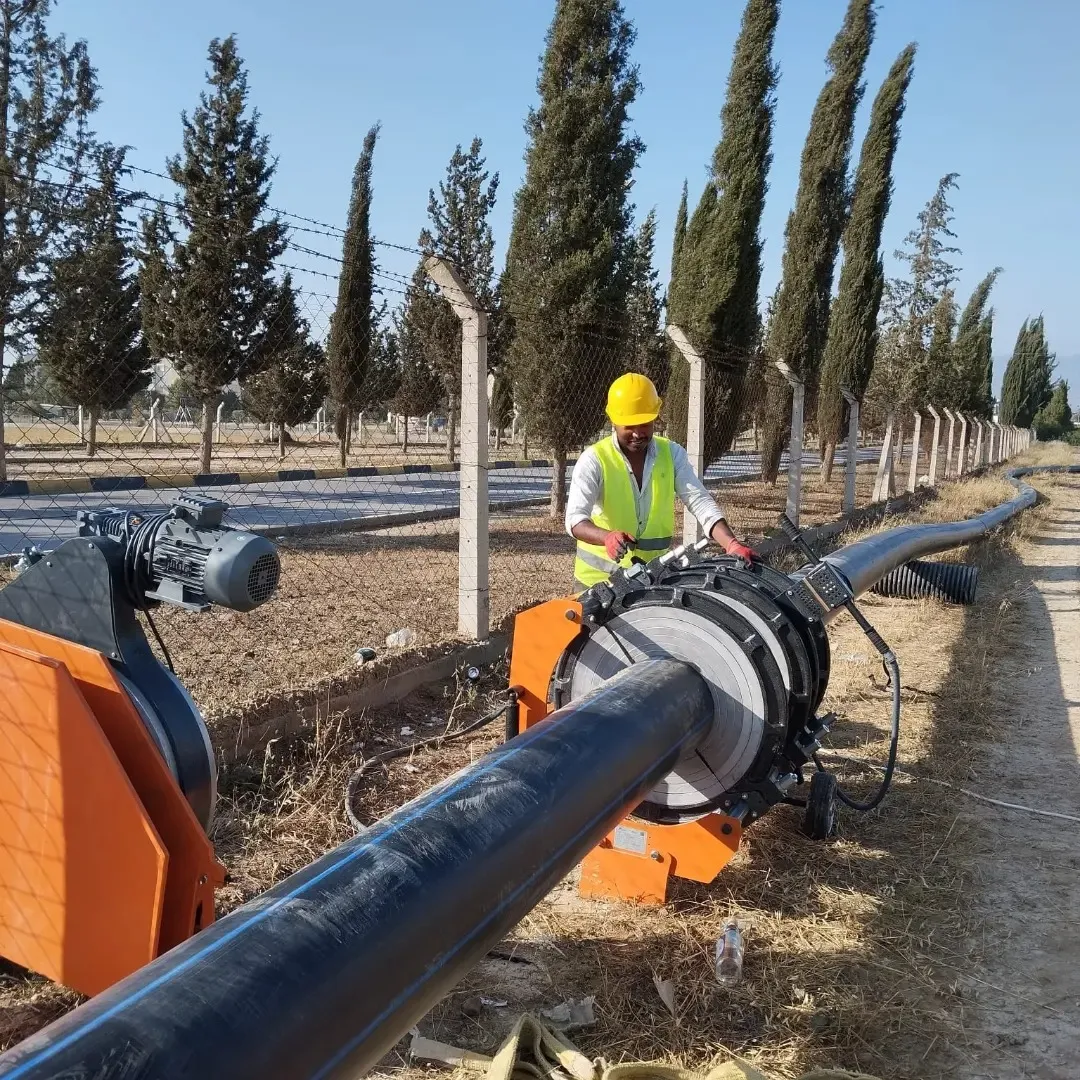
Manufacturing typically follows the extrusion process. PVC compound is fed into a single-screw or twin-screw extruder where it’s heated, melted, and homogenized. The molten PVC is then forced through a die that shapes it into a seamless pipe with the specified 110mm outer diameter and wall thickness. Critical parameters during extrusion include melt temperature (typically 180-210°C), screw speed, die pressure, and cooling rate. Precise control of these parameters is essential to ensure dimensional accuracy, uniform material distribution, and prevention of defects like voids or surface irregularities. Subsequent cooling, sizing (using a vacuum tank or similar), and cutting to length complete the process. Quality control includes hydrostatic pressure testing (as per standards like GB/T 10001.1-2018) to verify burst resistance and dimensional checks using calibrated gauges. Marking of the pipe with manufacturer details, pipe size, pressure rating, and material designation is also standard practice.
Performance & Engineering
The performance of 110mm PVC pipe is governed by several key engineering principles. Hydrostatic pressure resistance is paramount, dictated by the pipe's wall thickness and material properties. The hoop stress (circumferential stress) is the primary stress experienced under internal pressure, calculated using the Barlow formula: σ = (PD)/(2t), where P is the internal pressure, D is the outer diameter, and t is the wall thickness. This dictates the pressure rating of the pipe. Long-term performance is influenced by creep – the tendency of PVC to slowly deform under sustained stress. Temperature significantly affects creep behavior; elevated temperatures accelerate the process.
Environmental resistance is another critical factor. While PVC is generally resistant to many acids, bases, and salts, it can be degraded by prolonged exposure to UV radiation, causing embrittlement and discoloration. Plasticizers can leach out over time, leading to decreased flexibility and increased brittleness. Soil conditions also play a role; aggressive soil chemicals can attack the PVC material. Engineering considerations include proper bedding and backfilling to provide support and minimize stress, as well as the use of UV-resistant coatings or burial depth to mitigate UV degradation. Furthermore, the coefficient of thermal expansion for PVC is relatively high (approximately 8 x 10^-5 /°C), necessitating expansion joints in long pipeline runs to accommodate thermal expansion and contraction and prevent buckling.
Technical Specifications
| Parameter | Units | Typical Value (China 110mm PVC Pipe) | Test Standard |
|---|---|---|---|
| Outer Diameter | mm | 110 ± 0.5 | GB/T 10001.1-2018 |
| Wall Thickness | mm | 3.2 – 4.0 (depending on pressure class) | GB/T 10001.1-2018 |
| Pressure Rating (PN) | bar | PN10, PN16 (common) | GB/T 10001.1-2018 |
| Hydrostatic Pressure Test | bar | 2.4xPN for 5 minutes (no failure) | GB/T 10001.1-2018 |
| Impact Strength (Charpy) | kJ/m² | ≥ 5 (at 20°C) | GB/T 18742-2002 |
| Tensile Strength | MPa | ≥ 50 | GB/T 1043.1-2008 |
Failure Mode & Maintenance
110mm PVC pipe is susceptible to several failure modes. Brittle Fracture can occur due to impact damage, especially at low temperatures or in pipes with reduced ductility. Creep Rupture is a long-term failure mechanism caused by sustained stress and temperature, leading to gradual deformation and eventual rupture. Environmental Stress Cracking (ESC) arises from the combined effect of tensile stress and exposure to certain chemicals, leading to crack initiation and propagation. UV Degradation causes embrittlement and discoloration, reducing impact resistance. Joint Failure is common, stemming from improper solvent welding, inadequate surface preparation, or incompatible materials.
Maintenance primarily focuses on preventative measures. Regular visual inspections should be conducted to identify cracks, discoloration, or other signs of degradation. Proper jointing procedures – including thorough cleaning, priming, and application of appropriate solvent cement – are crucial. Backfilling with appropriate materials and compaction techniques minimizes stress on the pipe. For UV-exposed applications, UV-resistant coatings or shielding should be employed. In cases of minor cracking, repair sleeves or patching compounds can be used, but for significant damage, pipe replacement is generally recommended. Monitoring ground movement in areas prone to settlement or seismic activity can help identify potential stress points and prevent failures. Routine pressure testing can verify the integrity of the pipeline system.
Industry FAQ
Q: What is the expected service life of 110mm PVC pipe in a typical underground drainage application?
A: Under normal conditions, with proper installation and minimal exposure to aggressive chemicals or UV radiation, a well-manufactured 110mm PVC pipe can have a service life exceeding 50 years. However, factors like soil acidity, temperature fluctuations, and load stress can significantly impact longevity. Regular inspections are recommended to assess degradation and identify potential issues early on.
Q: How does the quality of PVC pipe from different Chinese manufacturers compare?
A: Quality control standards can vary between manufacturers. It's crucial to select suppliers with established quality management systems (e.g., ISO 9001 certification) and verifiable testing reports. Independent third-party testing and adherence to relevant international standards (see footer) are strong indicators of consistent quality. It’s important to examine material composition reports and hydrostatic pressure test results before making a purchasing decision.
Q: What are the limitations of using 110mm PVC pipe for potable water distribution?
A: While PVC is permitted for potable water in many regions, concerns exist regarding potential leaching of plasticizers and the formation of disinfection byproducts (DBPs) when chlorine is used for disinfection. The specific regulations regarding PVC use in potable water vary by country and locality. NSF/ANSI 61 certification is often required to ensure that the pipe material meets safety standards for contact with drinking water.
Q: What is the impact of temperature on the performance of 110mm PVC pipe?
A: Elevated temperatures reduce the pipe's pressure rating and accelerate creep. Lower temperatures can increase brittleness, making it more susceptible to impact damage. The operating temperature range for PVC pipe is typically between 0°C and 60°C. Exceeding these limits can compromise its structural integrity and shorten its service life. Proper consideration of ambient temperature conditions is essential during design and installation.
Q: What are the best practices for solvent welding 110mm PVC pipe joints?
A: Proper solvent welding is crucial for leak-proof joints. Surfaces must be clean, dry, and free of contaminants. Use a PVC primer to soften the surfaces and improve adhesion. Apply the solvent cement evenly and quickly, ensuring complete coverage. Assemble the joint immediately and hold it firmly for the recommended time (as per the solvent cement manufacturer's instructions). Avoid excessive cement application, as it can weaken the joint. Always allow sufficient curing time before pressure testing.
Conclusion
China-manufactured 110mm PVC pipe offers a cost-effective and durable solution for a wide range of fluid conveyance applications. Understanding the material science, manufacturing processes, and performance characteristics is critical for ensuring its long-term reliability. Rigorous adherence to relevant industry standards and proper installation practices are paramount to mitigate potential failure modes such as creep rupture, environmental stress cracking, and UV degradation.
Future developments will likely focus on the incorporation of more sustainable plasticizers and stabilizers, enhancing UV resistance, and improving the overall durability of PVC pipe. Continued advancements in extrusion technology will also contribute to tighter dimensional tolerances and more consistent product quality. Ultimately, informed material selection, meticulous installation, and proactive maintenance will ensure the longevity and optimal performance of 110mm PVC pipe systems.
-
DN25 HDPE Compression Fitting-HORON INTERNATIONAL|Reliable Irrigation Solutions
NewsFeb.11,2026
-
china 48 hdpe pipe for sale Performance Analysis
News2026-05-28
-
china perforated land drainage pipe Performance Analysis
News2026-05-28
-
china clear pvc hose Performance Analysis
News2026-05-28
-
china kitchen sink hot cold water lines Performance Analysis
News2026-05-28
-
china 110 mm pvc pipe Performance Analysis
News2026-05-28
-
china upvc column pipes for submersible pumps price list Performance Analysis
News2026-05-27
-
china ppr pipe for water supply Performance Analysis
News2026-05-27
-
china 20mm ppr pipe price Performance Analysis
News2026-05-27
-
china hdpe pipe 24 inch Performance Analysis
News2026-05-27
-
china hdpe to steel coupling Performance Analysis
News2026-05-27
-
china water lines under kitchen sink Performance Analysis
News2026-05-26
-
china hdpe conduit coupling Performance Analysis
News2026-05-26
-
china pvc irrigation pipe Performance Analysis
News2026-05-26
-
china all types of pvc pipes Performance Analysis
News2026-05-26
-
china hdpe reducing coupler Performance Analysis
News2026-05-26