

Feb . 11, 2026 00:01 Back to list
china all types of pvc pipes Performance Analysis

Introduction
Polyvinyl Chloride (PVC) pipes manufactured in China represent a significant portion of the global PVC pipe market, serving a diverse range of applications including potable water distribution, wastewater management, irrigation, and industrial fluid conveyance. This guide provides a comprehensive technical overview of Chinese PVC pipe production, encompassing material science, manufacturing processes, performance characteristics, potential failure modes, and relevant industry standards. The proliferation of PVC pipes in China is due to their cost-effectiveness, durability, and relative ease of installation, making them a preferred alternative to traditional materials like ductile iron, steel, and concrete in many applications. However, variations in manufacturing quality and adherence to international standards necessitate a detailed understanding of the material and its production methods. This document will delineate the different types of PVC pipes available – Schedule 40, Schedule 80, CPVC, and specialized formulations – and their respective applications. Core performance aspects such as tensile strength, impact resistance, and chemical inertness will be thoroughly analyzed. Addressing the increasing demand for sustainable infrastructure, we will also explore recent advancements in PVC recycling and bio-based PVC production within the Chinese manufacturing landscape.
Material Science & Manufacturing
PVC is a thermoplastic polymer produced through the polymerization of vinyl chloride monomer (VCM). The fundamental raw material is ethylene, derived from either petroleum or, increasingly, ethane cracking. The ethylene is then converted to ethylene dichloride, and subsequently to VCM. The polymerization process can be either suspension, emulsion, or bulk polymerization, each resulting in PVC resin with differing molecular weight distributions and particle sizes. Chinese PVC manufacturers commonly utilize suspension polymerization due to its cost-effectiveness and ability to produce a versatile range of PVC grades. Additives are crucial for modifying the properties of PVC. Common additives include plasticizers (phthalates, DINP, DOTP) to enhance flexibility, stabilizers (lead-based, calcium-zinc-based) to prevent degradation during processing and use, lubricants to improve processability, and impact modifiers to increase toughness. The selection of additives significantly influences the final pipe’s performance characteristics. Manufacturing processes for PVC pipes primarily include extrusion, injection molding, and, less commonly, compression molding. Extrusion is the dominant method, particularly for producing long, continuous pipes. The PVC compound is fed into an extruder, where it is heated, melted, and forced through a die to create the desired pipe shape. Critical parameters during extrusion include die temperature, screw speed, haul-off speed, and cooling rate. Maintaining precise control over these parameters is essential to ensure dimensional accuracy, consistent wall thickness, and optimal material properties. Cooling is typically achieved through water baths, followed by air cooling. Injection molding is used for fittings and short pipe sections, while compression molding is reserved for specialized applications. Quality control throughout the manufacturing process involves rigorous testing of raw materials, in-process monitoring of key parameters, and final product inspection to verify compliance with relevant standards.
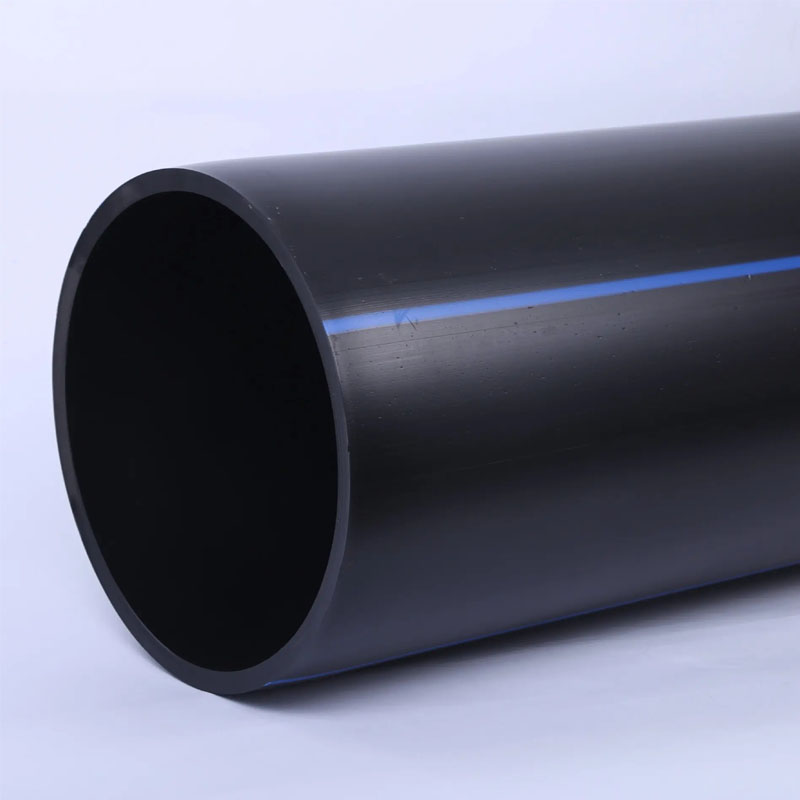
Performance & Engineering
The performance of PVC pipes is dictated by a confluence of mechanical, thermal, and chemical properties. Tensile strength, typically ranging from 50-70 MPa for standard PVC, determines the pipe’s resistance to longitudinal stress. Impact strength, measured using Charpy or Izod tests, indicates its ability to withstand sudden shocks. The long-term hydrostatic strength (LTHS) is a critical parameter for pressure-rated pipes, representing the sustained pressure the pipe can withstand over a specified lifespan (typically 50 years) at a given temperature. This is often determined through extrapolation based on accelerated aging tests. Environmental resistance is another key consideration. PVC exhibits good resistance to many acids, alkalis, and salts, but is susceptible to degradation by strong oxidizing agents and some organic solvents. Exposure to ultraviolet (UV) radiation can also cause embrittlement and discoloration, necessitating the incorporation of UV stabilizers in outdoor applications. Thermal expansion and contraction are also significant factors, particularly in large-diameter pipes. The coefficient of thermal expansion for PVC is relatively high (approximately 8 x 10^-5 /°C), requiring appropriate design considerations to accommodate thermal movements and prevent stress buildup. Furthermore, compliance with relevant building codes and industry standards (see Section 7) is paramount. For potable water applications, PVC pipes must meet stringent requirements for leachability of additives to ensure water quality. Finite element analysis (FEA) is frequently employed during the design process to optimize pipe geometry, assess stress distribution, and predict long-term performance under various loading conditions. Corrosion resistance is a significant advantage of PVC over metallic pipes, eliminating the need for costly corrosion protection measures.
Technical Specifications
| Parameter | Schedule 40 PVC | Schedule 80 PVC | CPVC (Chlorinated PVC) | UPVC (Unplasticized PVC) - Irrigation Grade |
|---|---|---|---|---|
| Pressure Rating (PSI) @ 73°F | 400 | 600 | 100-400 (depending on temp) | 100 |
| Tensile Strength (MPa) | 62-69 | 62-69 | 75-85 | 55-60 |
| Impact Strength (Izod Notched, J/m) | 400-600 | 500-700 | 600-800 | 300-400 |
| Operating Temperature Range (°C) | 0-60 | 0-60 | -15 to 93 | 0-50 |
| Wall Thickness (Typical) | 0.133 in | 0.179 in | Variable, generally thicker | 0.090 in |
| Density (g/cm³) | 1.40 | 1.40 | 1.45 | 1.40 |
Failure Mode & Maintenance
PVC pipes, while durable, are susceptible to several failure modes. Brittle fracture, particularly at low temperatures, can occur due to impact or excessive stress. This is more prevalent in older PVC formulations with lower impact modifiers. Long-term creep, the slow deformation under sustained stress, can lead to dimensional changes and eventual failure, especially in pressure-rated pipes. Environmental stress cracking (ESC) arises from the combined effect of tensile stress and exposure to certain chemicals, causing the formation of cracks. UV degradation, as mentioned previously, causes embrittlement and loss of mechanical properties. Microbiologically Influenced Corrosion (MIC), although less common in PVC than metals, can occur in certain environments due to the activity of microorganisms that degrade the polymer matrix. Joint failures are another common issue, often stemming from improper solvent welding techniques, inadequate surface preparation, or incompatible materials. Maintenance of PVC pipe systems primarily involves regular visual inspections to identify cracks, leaks, or signs of degradation. Cleaning to remove debris and scaling can prevent blockages and maintain flow capacity. For solvent-welded joints, periodic re-inspection is recommended to ensure continued integrity. In cases of minor cracks or leaks, repair sleeves or clamps can be used to provide temporary fixes. Major failures typically require pipe replacement. Prevention of failure involves proper material selection for the intended application, adherence to established installation procedures, and protection from UV exposure and harsh chemicals. Implementing a cathodic protection system is unnecessary as PVC doesn’t corrode but may be necessary for any metallic connections within the system.
Industry FAQ
Q: What is the difference between Schedule 40 and Schedule 80 PVC pipe, and when should each be used?
A: Schedule 40 and Schedule 80 refer to the pipe wall thickness. Schedule 80 has a thicker wall, resulting in a higher pressure rating and greater impact resistance. Schedule 40 is typically used for lower-pressure applications like irrigation and cold water distribution, while Schedule 80 is preferred for higher-pressure systems, such as industrial fluid conveyance and chemical processing, or where greater mechanical strength is required.
Q: How does CPVC differ from standard PVC, and what are its advantages?
A: CPVC (Chlorinated PVC) is produced by chlorinating PVC resin, increasing its chlorine content. This process enhances its heat resistance, allowing it to be used at significantly higher temperatures than standard PVC. CPVC is commonly used in hot water distribution systems and industrial applications involving corrosive fluids at elevated temperatures. It also exhibits improved flame retardancy.
Q: What are the potential concerns regarding the use of phthalate plasticizers in PVC pipes, and are there safer alternatives?
A: Phthalate plasticizers, while effective at increasing flexibility, have raised health concerns due to potential endocrine disruption. Many manufacturers are transitioning to alternative plasticizers like DINP (Diisononyl Phthalate) and DOTP (Dioctyl Terephthalate), which have a more favorable toxicological profile. Bio-based plasticizers are also emerging as a sustainable alternative.
Q: What are the proper solvent welding techniques for PVC pipes to ensure a watertight seal?
A: Proper solvent welding involves several critical steps. First, ensure the pipe and fitting surfaces are clean, dry, and free of debris. Apply a thin, even layer of PVC primer to both surfaces to soften the material. Immediately apply PVC cement, also evenly and liberally. Quickly insert the pipe into the fitting with a slight twisting motion, ensuring full engagement. Hold firmly for 30-60 seconds to allow the cement to set. Avoid excessive cement, which can create internal obstructions.
Q: What steps should be taken to protect PVC pipes from UV degradation in outdoor applications?
A: PVC is susceptible to UV degradation, leading to embrittlement. To mitigate this, use PVC compounds containing UV stabilizers. Coating the pipes with a UV-resistant paint or shielding them from direct sunlight with protective covers can further extend their lifespan. Burying the pipes underground provides the best protection from UV exposure.
Conclusion
Chinese-manufactured PVC pipes offer a cost-effective and versatile solution for a wide spectrum of applications. However, understanding the nuances of material science, manufacturing processes, and performance characteristics is crucial for ensuring long-term reliability and safety. The proliferation of various PVC formulations – from standard Schedule 40 to high-performance CPVC – necessitates careful selection based on the specific application requirements, considering factors such as pressure, temperature, and chemical exposure. Ongoing advancements in PVC technology, including the development of bio-based plasticizers and improved stabilization systems, are addressing concerns related to sustainability and environmental impact.
Moving forward, a continued emphasis on quality control, adherence to international standards, and responsible material selection will be paramount. The increasing demand for durable and sustainable infrastructure will drive further innovation in PVC pipe technology, leading to enhanced performance, extended service life, and reduced environmental footprint. Effective implementation of preventative maintenance programs and rigorous inspection protocols are essential for maximizing the lifespan and minimizing the risk of failure in PVC pipe systems.
-
DN25 HDPE Compression Fitting-HORON INTERNATIONAL|Reliable Irrigation Solutions
NewsFeb.11,2026
-
china water lines under kitchen sink Performance Analysis
News2026-05-26
-
china hdpe conduit coupling Performance Analysis
News2026-05-26
-
china pvc irrigation pipe Performance Analysis
News2026-05-26
-
china all types of pvc pipes Performance Analysis
News2026-05-26
-
china hdpe reducing coupler Performance Analysis
News2026-05-26
-
china type of ppr pipe Manufacturing Analysis
News2026-05-25
-
china plumbing ppr pipe Performance Analysis
News2026-05-25
-
china 20mm ppr pipe Material Science
News2026-05-25
-
china pvc sprinkler pipe Performance and Engineering
News2026-05-25
-
china dn500 hdpe double wall corrugated pipe for sewage drain Performance Analysis
News2026-05-25
-
china use of pvc pipe Performance Analysis
News2026-05-24
-
china 50mm pvc pipe price Performance Analysis
News2026-05-24
-
china ppr pipe 50mm price Performance Analysis
News2026-05-24
-
china hdpe coupler price Performance Analysis
News2026-05-24
-
china white pvc pipe Performance Analysis
News2026-05-24