

Feb . 11, 2026 00:01 Back to list
china 50mm pvc pipe price Performance Analysis

Introduction
Polyvinyl Chloride (PVC) pipe, specifically the 50mm diameter variant manufactured in China, represents a ubiquitous material in fluid conveyance systems across a broad spectrum of industries including water distribution, irrigation, drainage, and industrial process piping. Its prevalence stems from a combination of cost-effectiveness, ease of installation, and adequate performance characteristics for a multitude of non-pressurized and low-pressure applications. This technical guide provides an in-depth exploration of 50mm PVC pipe, covering its material science, manufacturing processes, performance parameters, potential failure modes, and relevant industry standards. The core economic driver for sourcing from China is volume production and competitive pricing, however, understanding the nuances of manufacturing quality control is paramount for ensuring long-term system reliability and minimizing lifecycle costs. This guide aims to equip engineers, procurement managers, and technical professionals with the comprehensive knowledge needed to evaluate and deploy 50mm PVC pipe effectively.
Material Science & Manufacturing
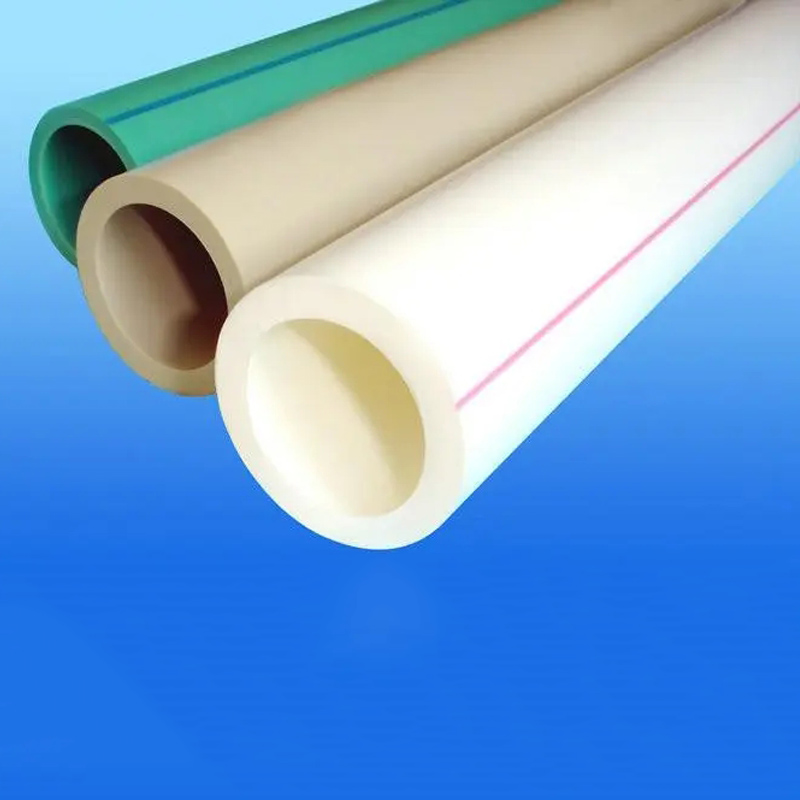
50mm PVC pipe is primarily composed of Polyvinyl Chloride resin, a thermoplastic polymer synthesized from vinyl chloride monomer. The PVC resin is rarely used in its pure form; it's typically compounded with a variety of additives to enhance its properties. These additives include plasticizers (typically phthalates or alternatives like DINCH), stabilizers (often based on lead, calcium-zinc, or organic compounds to prevent degradation during processing and service), lubricants (to facilitate processing), impact modifiers (to improve toughness), and pigments (for coloration). The ratio of these additives significantly impacts the final properties of the pipe. Manufacturing typically involves extrusion. PVC compound is fed into a single-screw extruder, where it is heated and plasticized. The molten PVC is then forced through a die to form a seamless pipe. Critical parameters during extrusion include die temperature, screw speed, haul-off speed, and cooling water temperature. Deviation from optimal parameters can lead to dimensional inaccuracies, inconsistent wall thickness, and material degradation. Subsequent to extrusion, the pipes are often tested for dimensional accuracy, hydrostatic pressure resistance, and impact strength. Quality control focuses on ensuring consistent batch-to-batch material composition and adherence to specified dimensions. The molecular weight distribution of the PVC resin is also a crucial factor, influencing the impact resistance and long-term creep resistance of the pipe.
Performance & Engineering
The performance of 50mm PVC pipe is dictated by its mechanical strength, chemical resistance, and hydraulic characteristics. Tensile strength, typically ranging from 50-65 MPa, governs its ability to withstand axial loads. However, PVC is brittle and has limited ductility. Impact strength, measured using Izod or Charpy tests, is critical, especially in applications subject to shock loading or external impact. PVC exhibits good resistance to a wide range of chemicals, including acids, bases, and salts, making it suitable for diverse industrial applications. However, it is susceptible to attack by certain organic solvents. Hydrostatic pressure rating, determined through burst pressure testing, dictates the maximum operating pressure. Long-term hydrostatic strength is affected by creep, the time-dependent deformation under sustained stress. Temperature significantly influences PVC’s properties; elevated temperatures reduce its strength and increase its susceptibility to creep. Jointing methods, typically solvent welding or rubber ring joints, are crucial for maintaining system integrity. Solvent welding creates a fusion bond between the pipe and fitting, resulting in a homogenous joint with strength comparable to the pipe itself. Rubber ring joints rely on the compression of an elastomeric seal within a groove. Engineering design must account for thermal expansion and contraction, particularly in long pipeline runs, utilizing expansion joints or flexible connections as needed. Furthermore, the pipe’s resistance to UV degradation should be considered for outdoor applications, potentially necessitating the use of UV-stabilized PVC compounds or protective coatings.
Technical Specifications
| Parameter | Units | Typical Value (Chinese Manufactured 50mm PVC) | Test Standard |
|---|---|---|---|
| Nominal Diameter | mm | 50 | GB/T 10002.1 |
| Wall Thickness | mm | 2.0 - 4.0 (dependent on schedule) | GB/T 10002.1 |
| Pressure Rating (PN) | bar | 6.3 – 16 | GB/T 10002.2 |
| Tensile Strength | MPa | 55-65 | GB/T 8804 |
| Impact Strength (Izod Notched) | kJ/m² | 4-8 | GB/T 8804 |
| Elongation at Break | % | 150-300 | GB/T 8804 |
Failure Mode & Maintenance
Common failure modes for 50mm PVC pipe include cracking, particularly at joints or areas of stress concentration; crazing, the formation of fine cracks on the surface due to tensile stress; and brittle fracture, especially at low temperatures or under impact loading. Long-term exposure to UV radiation can cause embrittlement and discoloration. Chemical attack by incompatible solvents can lead to swelling, softening, and eventual failure. Soil movement or improper installation can induce excessive stress on the pipe, leading to cracking or joint failure. Microbiologically Influenced Corrosion (MIC), while less common in PVC than metals, can occur in certain environments where microorganisms degrade the PVC polymer. Maintenance primarily focuses on preventative measures. Regular visual inspections can identify signs of cracking, discoloration, or deformation. Proper support and bedding are essential to prevent stress on the pipe. Avoid using incompatible solvents or cleaning agents. For solvent-welded joints, ensure proper surface preparation and adequate curing time. When repairs are necessary, use compatible PVC fittings and solvent cement. For significant damage, complete pipe replacement is often the most reliable solution. In instances of suspected MIC, thorough system evaluation and remediation may be required. The selection of appropriate backfill material is critical, avoiding materials with sharp edges that could damage the pipe.
Industry FAQ
Q: What are the key differences between Schedule 40 and Schedule 80 PVC pipe, and how does this impact cost and application?
A: Schedule 40 and Schedule 80 refer to the pipe’s wall thickness. Schedule 80 has a thicker wall, providing higher pressure ratings and greater mechanical strength. This increased durability comes at a higher material cost. Schedule 40 is suitable for low-pressure applications like irrigation and drainage, while Schedule 80 is preferred for higher-pressure systems or applications where increased impact resistance is required. The cost differential can be significant, often 20-40% depending on volume and supplier.
Q: How does the quality control process in Chinese PVC pipe manufacturing compare to European or North American standards?
A: While Chinese manufacturers have significantly improved their quality control processes in recent years, variations can exist. European and North American standards (ASTM, EN) generally require more rigorous testing and documentation throughout the manufacturing process. However, reputable Chinese manufacturers are increasingly adopting these standards and obtaining certifications (e.g., ISO 9001). Independent third-party inspection is recommended to verify compliance and ensure consistent quality.
Q: What is the expected lifespan of a properly installed 50mm PVC pipe system in a typical potable water application?
A: A properly installed and maintained 50mm PVC pipe system in a potable water application can have a lifespan of 50-100 years. However, this is dependent on factors such as water quality, soil conditions, operating pressure, and exposure to UV radiation. Regular inspections and proactive maintenance are crucial to maximizing lifespan.
Q: What considerations should be made regarding the thermal expansion and contraction of PVC pipe in long pipeline runs?
A: PVC exhibits a relatively high coefficient of thermal expansion. In long pipeline runs, this expansion and contraction can induce significant stresses on the pipe and joints. Expansion loops, expansion joints, or flexible couplings should be incorporated into the design to accommodate these movements. Proper anchoring and support are also essential to prevent buckling or excessive strain.
Q: What are the environmental implications associated with PVC production and disposal, and are there sustainable alternatives available?
A: PVC production involves the use of fossil fuels and can release harmful chemicals. Disposal of PVC can be problematic due to the difficulty of recycling and the potential for dioxin emissions during incineration. Sustainable alternatives include polyethylene (PE) and polypropylene (PP), which are more readily recyclable. However, PE and PP may not offer the same level of chemical resistance or pressure rating as PVC in certain applications.
Conclusion
50mm PVC pipe manufactured in China provides a cost-effective and versatile solution for a wide range of fluid conveyance applications. Understanding the nuances of its material science, manufacturing processes, and performance characteristics is critical for ensuring long-term system reliability. Careful attention must be paid to quality control, proper installation techniques, and preventative maintenance to mitigate potential failure modes.
Future developments in PVC technology may focus on incorporating bio-based plasticizers and stabilizers to reduce environmental impact, and improving impact resistance through advanced polymer blends. Continued advancements in manufacturing processes will further enhance the consistency and quality of Chinese-produced PVC pipe, solidifying its position as a leading material in the infrastructure sector. Careful material selection and a holistic system design approach are essential for maximizing the value and longevity of any PVC pipeline system.
-
DN25 HDPE Compression Fitting-HORON INTERNATIONAL|Reliable Irrigation Solutions
NewsFeb.11,2026
-
china use of pvc pipe Performance Analysis
News2026-05-24
-
china 50mm pvc pipe price Performance Analysis
News2026-05-24
-
china ppr pipe 50mm price Performance Analysis
News2026-05-24
-
china hdpe coupler price Performance Analysis
News2026-05-24
-
china white pvc pipe Performance Analysis
News2026-05-24
-
china 100mm pvc pipe price Performance Analysis
News2026-05-23
-
china pvc pipe used for Performance Analysis
News2026-05-23
-
china ppr water pipe fittings Performance Analysis
News2026-05-23
-
china hdpe pipe couplings Performance Analysis
News2026-05-23
-
china 50mm ppr pipe price Performance Analysis
News2026-05-23
-
china corrugated hdpe pipe fittings Performance Analysis
News2026-05-22
-
china ppr pipe for hot water Performance Analysis
News2026-05-22
-
china ppr Technical Performance Analysis
News2026-05-22
-
china corrugated dual wall pipe Performance Analysis
News2026-05-22
-
china sink inlet pipe Material Performance Analysis
News2026-05-22