

Feb . 11, 2026 00:01 Back to list
china corrugated hdpe pipe fittings Performance Analysis
Introduction
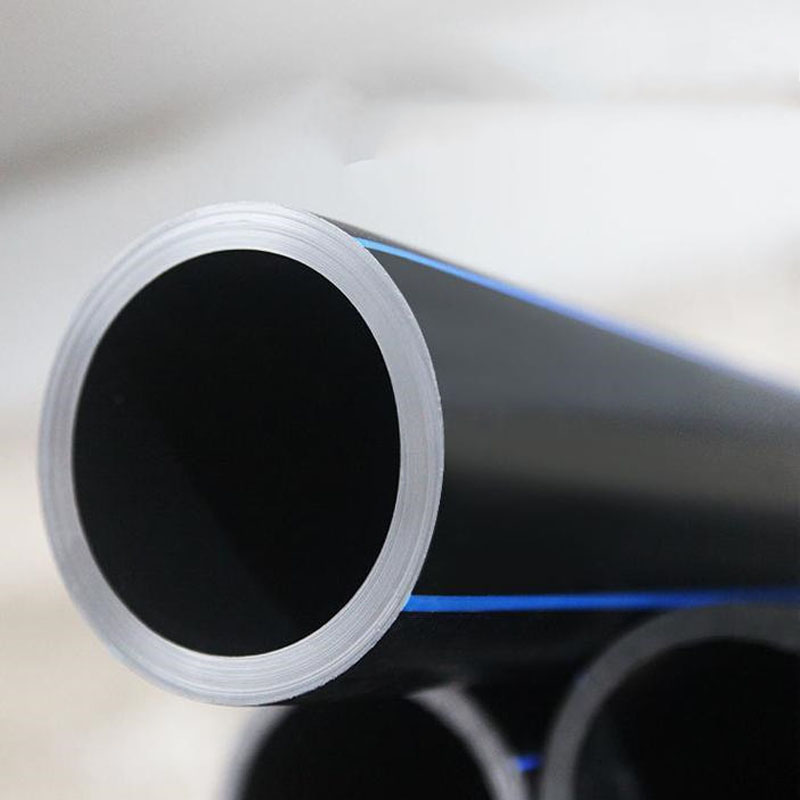
China corrugated high-density polyethylene (HDPE) pipe fittings represent a significant component in modern infrastructure projects, primarily utilized for drainage, culverts, storm sewer systems, and protective conduit for various utilities. These fittings, typically manufactured in diameters ranging from 200mm to 3000mm, offer a lightweight, durable, and cost-effective alternative to traditional materials like concrete and steel. Their corrugated structure imparts enhanced flexibility, allowing adaptation to ground movement and minimizing the need for expansion joints. The manufacturing base in China has become a dominant global supplier due to competitive labor costs and increasing production capacity. This guide provides an in-depth technical overview of these fittings, encompassing material science, manufacturing processes, performance characteristics, failure modes, and relevant industry standards. A core pain point for project managers and engineers is ensuring the fittings meet stringent load-bearing requirements while maintaining long-term durability in varying soil conditions and chemical environments.
Material Science & Manufacturing
Corrugated HDPE pipe fittings are predominantly manufactured from HDPE resin, typically conforming to PE100 or PE80 standards. PE100 offers superior mechanical properties, including higher tensile strength and stress crack resistance, making it ideal for demanding applications. The raw material’s molecular weight distribution (MWD) significantly influences the final product’s performance; a broader MWD generally improves impact resistance. The manufacturing process typically involves extrusion followed by corrugation and subsequent fitting fabrication. Extrusion utilizes a single-screw or twin-screw extruder to melt and homogenize the HDPE resin. The molten HDPE is then formed into a continuous sheet via a die. Corrugation is achieved using a series of rollers that impart the characteristic corrugated profile. Critical parameters during corrugation include roller temperature, speed, and pressure, influencing the corrugation profile's geometry and consistency. Fitting fabrication, such as the creation of couplings, bends, and tees, employs techniques like injection molding, butt fusion welding, or socket fusion welding. Butt fusion, in particular, requires precise control of temperature, pressure, and dwell time to ensure a homogenous weld joint with comparable strength to the base material. Chemical compatibility with surrounding soil and transported fluids is paramount. HDPE exhibits excellent resistance to most acids, alkalis, and organic solvents, however, prolonged exposure to oxidizing agents should be avoided. The presence of UV stabilizers in the HDPE formulation is essential for preventing degradation in above-ground applications.
Performance & Engineering
The performance of corrugated HDPE pipe fittings is primarily dictated by their structural integrity under load. Key engineering considerations include soil load, live load (traffic), and hydrostatic pressure. The corrugated profile significantly enhances the pipe's bending stiffness, allowing it to distribute loads effectively. Burial depth is a critical factor; deeper burial increases the external pressure exerted by the surrounding soil. Finite Element Analysis (FEA) is commonly employed to model the stress distribution within the fitting under various loading scenarios. According to AASHTO M294 standards, fittings must demonstrate adequate resistance to buckling and ovalation. The pipe's ring stiffness, measured in psi, indicates its ability to resist deformation under external loads. Hydrostatic pressure resistance is typically evaluated through short-term and long-term hydrostatic strength tests, ensuring the fitting can withstand the intended operating pressure without failure. Environmental resistance is another crucial aspect. While HDPE is inherently resistant to many chemicals, exposure to extreme temperatures can affect its mechanical properties. Low temperatures can increase brittleness, while high temperatures can reduce stiffness. The long-term creep behavior of HDPE must also be considered, particularly in applications involving sustained loads. Proper installation procedures, including adequate bedding and backfill compaction, are essential for maximizing the fitting's performance and preventing premature failure. The use of geotextiles can provide additional support and filtration, mitigating the effects of soil erosion and groundwater infiltration.
Technical Specifications
| Parameter | Unit | PE100 (Typical) | PE80 (Typical) |
|---|---|---|---|
| Nominal Diameter | mm | 200-3000 | 200-3000 |
| Ring Stiffness (10% Deformation) | psi | 730-1450 | 580-1200 |
| Tensile Strength at Yield | MPa | 50-63 | 38-50 |
| Elongation at Break | % | 300-600 | 200-500 |
| Impact Resistance (Charpy, 23°C) | kJ/m² | >10 | >5 |
| Short-Term Hydrostatic Strength | MPa | 12.4-16 | 8-12.4 |
Failure Mode & Maintenance
Common failure modes for corrugated HDPE pipe fittings include fatigue cracking, ovalation, buckling, and stress cracking. Fatigue cracking typically occurs due to repeated loading cycles, particularly in applications with heavy traffic or seismic activity. Ovalation, the deformation of the pipe’s circular cross-section, can be caused by inadequate bedding or excessive external loads. Buckling can occur if the pipe is subjected to compressive forces exceeding its critical buckling load. Stress cracking is initiated by the presence of localized stresses, often exacerbated by chemical attack or environmental factors. Long-term creep deformation can also lead to gradual failure. Failure analysis often reveals the root cause to be improper installation, exceeding load capacity, or material defects. Maintenance primarily focuses on preventative measures. Regular visual inspections should be conducted to identify signs of damage, such as cracks, deformation, or joint separation. Maintaining proper drainage and preventing the accumulation of debris within the pipe is crucial. Periodic cleaning and flushing can remove sediment and contaminants, reducing the risk of clogging and corrosion. Repairs can be made using butt fusion welding or mechanical couplings, depending on the extent of the damage. In severe cases, complete replacement of the fitting may be necessary. Proper backfilling procedures, utilizing approved granular materials and achieving adequate compaction, are essential for long-term performance. Avoid using heavy machinery directly over the buried pipe, and ensure proper protection during excavation work.
Industry FAQ
Q: What is the impact of soil corrosivity on the long-term performance of HDPE pipe fittings?
A: Highly corrosive soils, particularly those with high sulfate content or acidic pH, can potentially degrade the HDPE material over extended periods. While HDPE is generally resistant to chemical attack, prolonged exposure can lead to embrittlement and reduced mechanical properties. Geotextiles and protective coatings can mitigate the effects of corrosive soils by creating a barrier between the pipe and the aggressive environment. Proper soil analysis and selection of appropriate materials are crucial.
Q: How does the corrugated profile affect the load-bearing capacity compared to a smooth-walled HDPE pipe?
A: The corrugated profile significantly increases the pipe's bending stiffness and resistance to buckling. The corrugations act as reinforcing ribs, distributing loads more effectively and preventing the pipe from collapsing under external pressure. A corrugated pipe will generally have a higher load-bearing capacity than a smooth-walled pipe of the same diameter and wall thickness.
Q: What are the critical considerations for butt fusion welding to ensure joint integrity?
A: Critical parameters for butt fusion welding include precise temperature control of the heating plates, proper alignment of the pipe ends, adequate pressure application during the cooling phase, and ensuring a clean weld surface free from contaminants. Following established welding procedures and employing qualified welders are essential for achieving a homogenous weld joint with comparable strength to the base material.
Q: What is the recommended minimum bedding depth for corrugated HDPE pipe fittings in typical soil conditions?
A: The recommended minimum bedding depth varies depending on the pipe diameter, soil load, and traffic volume. Generally, a minimum cover of 0.6 meters (2 feet) is recommended for pipes carrying light loads. For applications with heavy traffic, a minimum cover of 1.2 meters (4 feet) or greater may be required. Consulting relevant industry standards and geotechnical reports is essential for determining the appropriate bedding depth.
Q: How do UV rays affect the lifespan of HDPE pipe fittings, and what preventative measures can be taken?
A: Prolonged exposure to UV radiation can cause degradation of the HDPE material, leading to embrittlement and reduced mechanical properties. This is particularly relevant for above-ground applications. The inclusion of UV stabilizers in the HDPE formulation can significantly enhance its resistance to UV degradation. For extended above-ground exposure, applying a protective coating or burying the pipe is recommended.
Conclusion
China corrugated HDPE pipe fittings provide a robust and cost-effective solution for a wide range of drainage and infrastructure applications. Their inherent properties – lightweight nature, corrosion resistance, and flexibility – coupled with advancements in manufacturing techniques, have cemented their position as a preferred alternative to traditional materials. However, realizing the full potential of these fittings necessitates a thorough understanding of material science principles, proper installation practices, and diligent maintenance protocols.
Looking forward, continued innovation in HDPE resin formulations, coupled with refinements in corrugation profiles and welding technologies, will further enhance the performance and longevity of these fittings. Addressing the pain points related to long-term creep behavior and chemical resistance in specific environments remains a key area of research. The growing emphasis on sustainable infrastructure solutions will likely drive increased adoption of corrugated HDPE pipe fittings due to their recyclability and minimal environmental impact.
-
DN25 HDPE Compression Fitting-HORON INTERNATIONAL|Reliable Irrigation Solutions
NewsFeb.11,2026
-
china corrugated hdpe pipe fittings Performance Analysis
News2026-05-22
-
china ppr pipe for hot water Performance Analysis
News2026-05-22
-
china ppr Technical Performance Analysis
News2026-05-22
-
china corrugated dual wall pipe Performance Analysis
News2026-05-22
-
china sink inlet pipe Material Performance Analysis
News2026-05-22
-
china 1 2 inch pvc Performance Analysis
News2026-05-21
-
china hdpe pipe joint coupler Performance Analysis
News2026-05-21
-
china ppr pipes and fittings price list Technical Analysis
News2026-05-21
-
china 9 inch pvc pipe price Performance Analysis
News2026-05-21
-
china 2 inch borewell column pipe price Performance Engineering
News2026-05-21
-
china hdpe pipe suppliers Performance Analysis
News2026-05-20
-
china submersible pump column pipe Performance Engineering
News2026-05-20
-
china 8 hdpe corrugated pipe Manufacturing Analysis
News2026-05-20
-
china dual wall hdpe pipe Performance Analysis
News2026-05-20
-
china water lines under sink Performance Analysis
News2026-05-20