

Feb . 11, 2026 00:01 Back to list
china hdpe pipe joint coupler Performance Analysis
Introduction
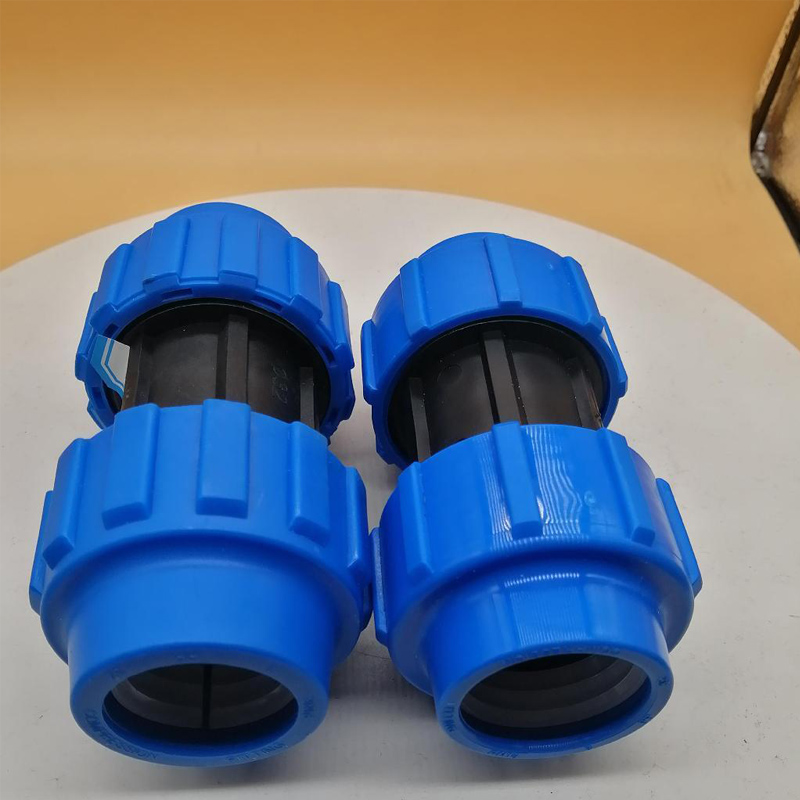
High-Density Polyethylene (HDPE) pipe joint couplers represent a critical component in polyethylene piping systems, utilized extensively across diverse industries including water distribution, gas transmission, irrigation, and drainage. These couplers facilitate the secure and leak-proof connection of HDPE pipes, offering a robust alternative to traditional joining methods like welding or solvent cementing. Specifically, China HDPE pipe joint couplers have gained prominence due to competitive pricing and increasing manufacturing capabilities. Their function isn't simply mechanical joining; they are engineered to maintain the integrity of the pressure rating, chemical resistance, and long-term performance characteristics inherent to the HDPE piping system. A key industry pain point is ensuring long-term joint reliability, preventing failures due to thermal expansion/contraction, ground movement, or material degradation. This guide provides a comprehensive technical overview of HDPE pipe joint couplers manufactured in China, encompassing material science, manufacturing processes, performance characteristics, failure modes, and relevant industry standards.
Material Science & Manufacturing
HDPE pipe joint couplers are predominantly constructed from High-Density Polyethylene (HDPE) resin, typically conforming to PE100 or PE80 classifications according to ISO 1167. PE100 offers superior mechanical properties and long-term hydrostatic strength compared to PE80. The raw material selection is paramount, impacting the coupler’s resistance to slow crack growth (SCG), chemical attack, and UV degradation. Additives such as carbon black are often incorporated to enhance UV resistance, while antioxidants are used to mitigate thermal degradation during processing and service life. Manufacturing predominantly utilizes injection molding. This process involves melting HDPE pellets and injecting them under high pressure into a mold cavity. Critical parameters include melt temperature (typically 200-250°C), mold temperature (30-50°C), injection pressure (70-100 MPa), and cooling time. Precise control of these parameters is essential to minimize residual stresses, ensure complete filling of the mold, and prevent warping or shrinkage. Extrusion is also employed for larger diameter couplers or those with complex geometries. In this process, HDPE is melted and forced through a die to create the desired shape. Post-processing operations often include trimming of flash, deburring, and quality control inspections to verify dimensional accuracy and absence of defects like voids or weld lines. The molecular weight distribution of the HDPE resin and its impact on the melt flow index are key quality control metrics. Furthermore, the coupler's surface finish influences the effectiveness of sealing elements, such as rubber gaskets.
Performance & Engineering
The primary performance criteria for HDPE pipe joint couplers revolve around maintaining the pressure rating of the connected piping system and ensuring a leak-proof seal under various operating conditions. Force analysis considers hoop stress induced by internal pressure, axial stress from thermal expansion/contraction, and bending moments due to ground settlement or external loads. Couplers are engineered to withstand these forces without deformation or failure. Environmental resistance is another critical aspect. HDPE exhibits excellent chemical resistance to a wide range of substances, but prolonged exposure to strong oxidizing agents or aromatic hydrocarbons can cause degradation. UV exposure can lead to embrittlement, especially in the absence of adequate carbon black pigmentation. Compliance requirements vary depending on the application and geographical region. For potable water systems, couplers must meet NSF/ANSI 61 standards for biocompatibility. Gas transmission applications require compliance with DOT regulations and API standards. The sealing mechanism typically involves a rubber gasket (EPDM, NBR, or Viton) compressed between the coupler body and the pipe. The gasket material must be compatible with the conveyed fluid and resistant to aging and compression set. Finite Element Analysis (FEA) is increasingly used during the design phase to optimize coupler geometry and predict stress distribution under various load scenarios. The design must also account for differential thermal expansion between the HDPE pipe and the coupler, especially in applications with significant temperature fluctuations.
Technical Specifications
| Parameter | Unit | PE100 Coupler (DN100) | PE80 Coupler (DN100) |
|---|---|---|---|
| Material | - | PE100 | PE80 |
| Pressure Rating (PN) | Bar | 16 | 12.5 |
| Operating Temperature | °C | -20 to +60 | -20 to +40 |
| Diameter | mm | 100 | 100 |
| Gasket Material | - | EPDM | NBR |
| Weight | kg | 1.8 | 1.6 |
Failure Mode & Maintenance
HDPE pipe joint coupler failures can manifest in several forms. Slow Crack Growth (SCG) is a prevalent issue, particularly in environments with residual stress concentrations or exposure to certain chemicals. This results in the gradual propagation of cracks over time, ultimately leading to leakage. Fatigue cracking can occur under cyclic loading, such as from water hammer or ground movement. Delamination of the gasket is another common failure mode, caused by improper installation, aging, or incompatibility with the conveyed fluid. Oxidation can degrade the HDPE material, reducing its mechanical properties and increasing its susceptibility to cracking. Corrosion, while not directly affecting the HDPE, can occur on metallic components within the coupler (e.g., retaining rings) if exposed to corrosive environments. Maintenance primarily focuses on preventative measures. Regular visual inspections should be conducted to identify signs of cracking, leakage, or gasket deterioration. Proper installation procedures, including correct pipe preparation and tightening torque, are crucial to prevent failures. Grounding of the piping system can mitigate the risk of static discharge, which can contribute to SCG. Periodic testing of the pipeline pressure is recommended to detect leaks early on. If a failure occurs, the affected coupler should be replaced with a new one, and the cause of the failure should be investigated to prevent recurrence. Proper storage of couplers, shielded from UV light and extreme temperatures, is also important to maintain their integrity.
Industry FAQ
Q: What is the impact of different HDPE resin grades (PE100 vs. PE80) on the long-term performance of couplers?
A: PE100 offers significantly higher hydrostatic strength and resistance to SCG compared to PE80. This translates to a longer service life and reduced risk of failure, particularly in high-pressure applications or environments prone to stress cracking. While PE80 is more cost-effective, PE100 is generally preferred for critical applications where long-term reliability is paramount.
Q: How does temperature fluctuation affect the sealing performance of HDPE pipe joint couplers?
A: Temperature fluctuations cause thermal expansion and contraction of the HDPE pipe and coupler. This can lead to changes in gasket compression and potentially compromise the seal. Couplers are designed with a degree of flexibility to accommodate these movements, but excessive temperature variations can still induce stress on the gasket. Selecting a gasket material with a suitable temperature range and ensuring proper installation are crucial to mitigate this effect.
Q: What are the key considerations for selecting the appropriate gasket material for a specific application?
A: Gasket material selection depends on the conveyed fluid, operating temperature, and pressure. EPDM is a versatile choice for potable water and general-purpose applications. NBR is suitable for oil-based fluids and provides good resistance to abrasion. Viton offers superior chemical resistance and high-temperature performance but is more expensive. Compatibility charts should be consulted to ensure the gasket material is not degraded by the conveyed fluid.
Q: What quality control measures are typically employed during the manufacturing of HDPE pipe joint couplers in China?
A: Reputable manufacturers in China employ rigorous quality control procedures, including raw material inspection, dimensional checks, hydrostatic pressure testing, and impact resistance testing. They often hold certifications such as ISO 9001 to demonstrate their commitment to quality management. Verification of melt flow index, density, and molecular weight distribution of the HDPE resin is also standard practice.
Q: How do I determine the correct installation torque for an HDPE pipe joint coupler?
A: The correct installation torque is specified by the coupler manufacturer and is dependent on the pipe diameter, material, and gasket type. Using a calibrated torque wrench is essential to ensure proper gasket compression without over-tightening, which can damage the coupler or gasket. Under-tightening can lead to leaks, while over-tightening can cause deformation or cracking.
Conclusion
China HDPE pipe joint couplers represent a vital component in modern piping infrastructure, offering a cost-effective and reliable solution for joining HDPE pipes. Their performance relies heavily on the quality of the HDPE resin, the precision of the manufacturing process, and adherence to established engineering principles. Understanding the material science, potential failure modes, and relevant industry standards is crucial for ensuring long-term system integrity and preventing costly downtime.
Looking ahead, continued advancements in HDPE resin technology and coupler design will likely focus on enhancing resistance to SCG, improving gasket sealing performance, and expanding the operating temperature range. The implementation of advanced monitoring technologies, such as embedded sensors, could provide real-time feedback on coupler performance and enable predictive maintenance strategies. Successfully navigating the evolving landscape requires a commitment to quality, innovation, and rigorous adherence to international standards.
-
DN25 HDPE Compression Fitting-HORON INTERNATIONAL|Reliable Irrigation Solutions
NewsFeb.11,2026
-
china corrugated hdpe pipe fittings Performance Analysis
News2026-05-22
-
china ppr pipe for hot water Performance Analysis
News2026-05-22
-
china ppr Technical Performance Analysis
News2026-05-22
-
china corrugated dual wall pipe Performance Analysis
News2026-05-22
-
china sink inlet pipe Material Performance Analysis
News2026-05-22
-
china 1 2 inch pvc Performance Analysis
News2026-05-21
-
china hdpe pipe joint coupler Performance Analysis
News2026-05-21
-
china ppr pipes and fittings price list Technical Analysis
News2026-05-21
-
china 9 inch pvc pipe price Performance Analysis
News2026-05-21
-
china 2 inch borewell column pipe price Performance Engineering
News2026-05-21
-
china hdpe pipe suppliers Performance Analysis
News2026-05-20
-
china submersible pump column pipe Performance Engineering
News2026-05-20
-
china 8 hdpe corrugated pipe Manufacturing Analysis
News2026-05-20
-
china dual wall hdpe pipe Performance Analysis
News2026-05-20
-
china water lines under sink Performance Analysis
News2026-05-20