

Feb . 11, 2026 00:01 Back to list
china ppr pipes and fittings price list Technical Analysis
Introduction
Polypropylene Random Copolymer (PPR) pipe and fitting systems represent a significant advancement in pressure piping technology, primarily utilized for potable water supply, heating systems, and industrial fluid conveyance. PPR systems have gained substantial market share due to their corrosion resistance, thermal stability, and cost-effectiveness, particularly within the Chinese manufacturing landscape. This guide provides an in-depth technical analysis of China-manufactured PPR pipes and fittings, focusing on material composition, manufacturing processes, performance characteristics, potential failure modes, and relevant industry standards. The “price list” aspect is implicitly addressed through understanding material costs, manufacturing efficiencies, and quality control measures that directly influence pricing structures. The core performance benefits include a smooth inner surface minimizing pressure drop, ease of installation via thermal fusion welding, and long-term reliability when installed and operated correctly. A primary industry pain point lies in inconsistent quality control across various Chinese manufacturers, demanding rigorous evaluation of material specifications and production standards.
Material Science & Manufacturing
PPR pipes and fittings are predominantly manufactured from polypropylene random copolymers, a thermoplastic polymer derived from propylene monomer. The ‘random’ designation refers to the random distribution of comonomers (typically ethylene) within the polymer chain, resulting in improved impact strength and flexibility compared to homopolymers. Raw material selection is critical, with Type 3 PPR material (also known as PPR-C) being the most common due to its superior creep resistance at elevated temperatures. Manufacturing processes typically involve extrusion for pipes and injection molding for fittings. Extrusion requires precise control of temperature profiles (melt temperature, die temperature, cooling bath temperature) to ensure consistent wall thickness and dimensional accuracy. Injection molding necessitates careful regulation of mold temperature, injection pressure, and cooling time to avoid warping or sink marks. Key parameters include Melt Flow Index (MFI) which dictates processability, and Hydrostatic Stress Cracking Resistance (HSCR) which defines long-term durability under pressure. Post-production quality control includes hydrostatic testing to verify burst pressure and dimensional inspections to confirm adherence to specified tolerances. The presence of recycled materials, if not properly managed, can compromise the mechanical properties and long-term performance of the pipes and fittings.
Performance & Engineering
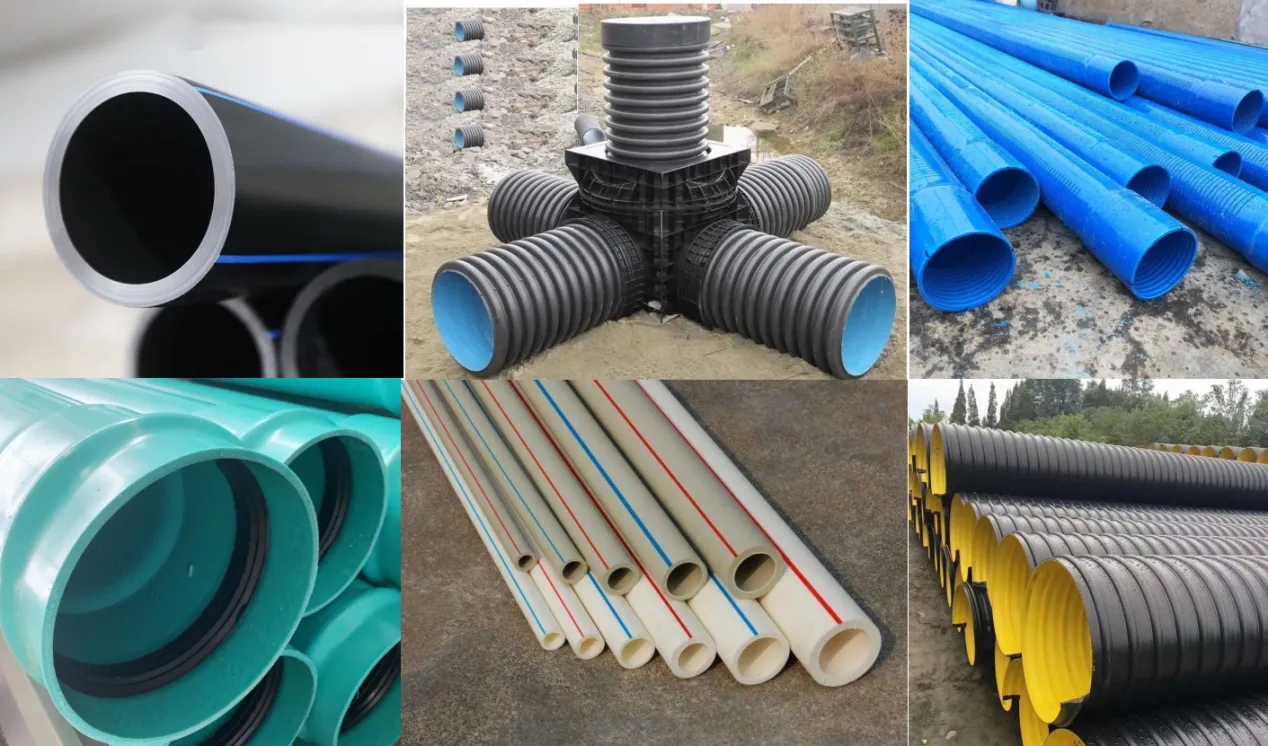
The performance of PPR piping systems is dictated by several engineering factors. Hydrostatic pressure rating, determined through burst testing, is a critical parameter, varying based on pipe diameter and wall thickness. Creep resistance, the tendency of the material to deform over time under constant stress, is particularly important for hot water applications. Thermal expansion and contraction must be accounted for during installation, utilizing expansion loops or flexible connectors to prevent stress on the joints. Force analysis during installation, particularly thermal fusion welding, requires careful consideration of welding parameters (temperature, pressure, and time) to ensure a homogenous joint with strength comparable to the base material. Environmental resistance encompasses UV stability (PPR is susceptible to degradation upon prolonged UV exposure) and chemical compatibility (PPR exhibits good resistance to most common chemicals, but can be affected by strong oxidizing agents). Compliance requirements vary by region, with standards such as DIN 8077 and EN ISO 15876 governing material specifications, testing procedures, and installation guidelines. A common engineering challenge is mitigating noise transmission within the piping system, often addressed through the use of insulation or vibration damping materials.
Technical Specifications
| Parameter | Unit | PPR Type 1 | PPR Type 2 |
|---|---|---|---|
| Hydrostatic Pressure (20°C) | MPa | 1.25 | 1.6 |
| Hydrostatic Pressure (60°C) | MPa | 0.8 | 1.0 |
| Maximum Operating Temperature | °C | 60 | 70 |
| Melt Flow Index (MFI) | g/10min | 1.8 - 3.5 | 2.5 - 4.5 |
| Density | g/cm³ | 0.905 - 0.925 | 0.905 - 0.925 |
| Oxygen Induction Time | min | >20 | >30 |
Failure Mode & Maintenance
PPR pipe and fitting systems are generally durable, but are susceptible to specific failure modes. Fatigue cracking can occur at joints subjected to repeated thermal cycling or mechanical stress. Delamination, often resulting from improper thermal fusion welding, weakens the joint and can lead to leakage. Oxidation, primarily due to prolonged exposure to high temperatures and oxygen, degrades the polymer matrix, reducing its mechanical properties. Hydrostatic stress cracking (HSCR) occurs when the material is exposed to sustained pressure in the presence of certain chemicals or detergents. UV degradation causes embrittlement and discoloration if exposed to sunlight for extended periods. Maintenance primarily involves visual inspection for cracks, leaks, or discoloration. Regular monitoring of water quality is crucial to prevent corrosion or chemical attack. Repair options include replacing damaged sections or utilizing saddle clamps for minor leaks. Preventive maintenance includes ensuring proper support and anchoring of the piping system to minimize stress. Long-term performance is directly linked to adhering to manufacturer’s installation guidelines and avoiding overloading the system.
Industry FAQ
Q: What is the primary difference between PPR Type 1, Type 2, and Type 3 materials, and how does this impact selection?
A: The classification of PPR materials (Type 1, 2, and 3) is based on their hydrostatic pressure ratings at different temperatures, dictated by the molecular weight distribution and comonomer content of the polypropylene. Type 1 is suitable for cold water applications, Type 2 for both cold and hot water, and Type 3 (PPR-C) offers superior creep resistance and is recommended for continuous hot water applications exceeding 60°C. Selection should align with the specific application and anticipated operating temperatures to ensure long-term performance and prevent premature failure.
Q: What are the critical parameters to monitor during thermal fusion welding to ensure a robust joint?
A: Key parameters include welding temperature (typically 260-270°C), welding pressure (consistent and sufficient to ensure full contact), and welding time (dependent on pipe diameter and wall thickness – refer to manufacturer’s specifications). Proper alignment of the pipe and fitting is also crucial. Insufficient heating or pressure will result in a weak joint prone to failure, while overheating can degrade the material. Visual inspection of the weld bead for consistency and absence of voids is recommended.
Q: How does UV exposure affect PPR pipes and fittings, and what mitigation strategies are recommended?
A: PPR is susceptible to UV degradation, leading to embrittlement and loss of mechanical properties. Prolonged exposure to sunlight causes chain scission and discoloration. Mitigation strategies include using UV-stabilized PPR materials, shielding the piping from direct sunlight (e.g., burying it underground or using protective coverings), or applying UV-resistant coatings.
Q: What is the acceptable level of hydrostatic pressure testing, and what constitutes a failed test?
A: Hydrostatic pressure testing typically involves pressurizing the system to 1.5 times its maximum operating pressure for a specified duration (e.g., 30 minutes). A failed test is indicated by any visible leakage, a significant pressure drop, or structural deformation of the pipe or fittings. The test should be conducted according to relevant standards (e.g., DIN 8077) and documented meticulously.
Q: What are the common chemicals that can degrade PPR materials, and what precautions should be taken?
A: While PPR exhibits good chemical resistance, strong oxidizing agents (e.g., concentrated chlorine bleach, nitric acid) can cause degradation. Avoid prolonged contact with these chemicals. Ensure the water chemistry is compatible with PPR materials. Avoid using harsh cleaning agents that contain strong oxidizing compounds within the piping system.
Conclusion
China-manufactured PPR pipes and fittings represent a viable and cost-effective solution for various plumbing and fluid conveyance applications. However, realizing the full potential of these systems requires meticulous attention to material selection, manufacturing quality control, proper installation techniques, and adherence to relevant industry standards. The industry pain point of inconsistent quality necessitates rigorous vetting of suppliers and independent testing to ensure long-term reliability.
Future trends point towards the development of advanced PPR formulations with enhanced UV resistance, improved creep resistance, and increased chemical compatibility. Furthermore, the integration of smart monitoring systems to detect leaks and monitor pressure will contribute to more efficient and reliable piping infrastructure. A continued focus on standardization and quality assurance will be paramount to further solidify PPR's position in the global plumbing market.
-
DN25 HDPE Compression Fitting-HORON INTERNATIONAL|Reliable Irrigation Solutions
NewsFeb.11,2026
-
china corrugated hdpe pipe fittings Performance Analysis
News2026-05-22
-
china ppr pipe for hot water Performance Analysis
News2026-05-22
-
china ppr Technical Performance Analysis
News2026-05-22
-
china corrugated dual wall pipe Performance Analysis
News2026-05-22
-
china sink inlet pipe Material Performance Analysis
News2026-05-22
-
china 1 2 inch pvc Performance Analysis
News2026-05-21
-
china hdpe pipe joint coupler Performance Analysis
News2026-05-21
-
china ppr pipes and fittings price list Technical Analysis
News2026-05-21
-
china 9 inch pvc pipe price Performance Analysis
News2026-05-21
-
china 2 inch borewell column pipe price Performance Engineering
News2026-05-21
-
china hdpe pipe suppliers Performance Analysis
News2026-05-20
-
china submersible pump column pipe Performance Engineering
News2026-05-20
-
china 8 hdpe corrugated pipe Manufacturing Analysis
News2026-05-20
-
china dual wall hdpe pipe Performance Analysis
News2026-05-20
-
china water lines under sink Performance Analysis
News2026-05-20