

Feb . 11, 2026 00:01 Back to list
china submersible pump column pipe Performance Engineering
Introduction
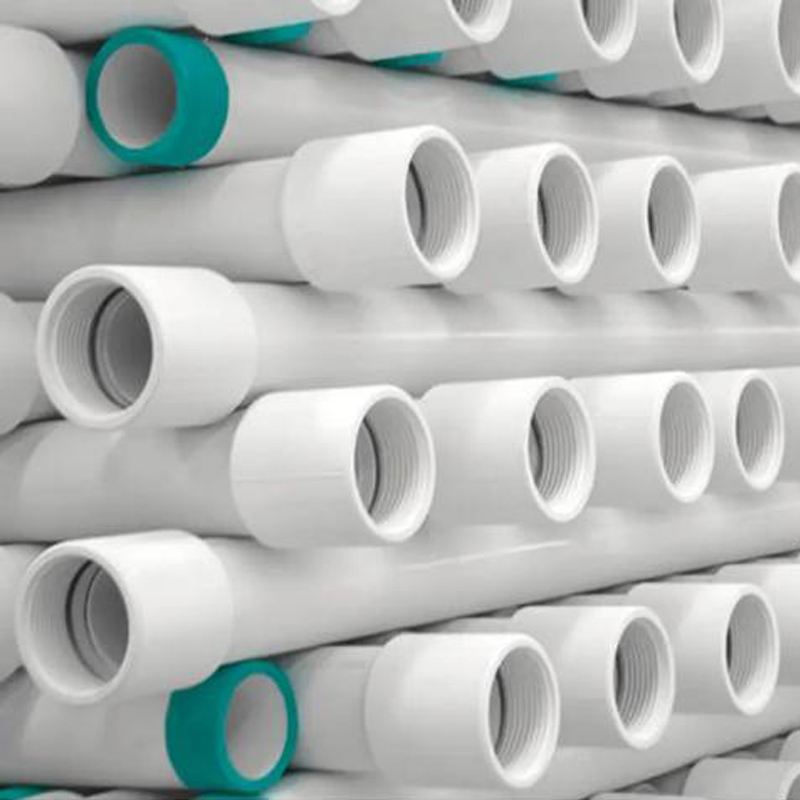
China submersible pump column pipe constitutes a critical component in deep-well pumping systems, facilitating the transmission of hydraulic power from the submersible pump to the surface. These pipes are specifically engineered to withstand the harsh conditions inherent in downhole applications, including high hydrostatic pressure, corrosive fluids, and significant tensile stresses. Typically manufactured from carbon steel with protective coatings, these pipes connect the pump discharge to the wellhead, effectively conveying produced fluids. Their performance directly impacts the efficiency and reliability of the entire pumping operation, making material selection, manufacturing precision, and adherence to industry standards paramount. The industry’s reliance on cost-effective and durable column pipe solutions is a primary driver for Chinese manufacturers, resulting in a highly competitive landscape focused on material grade optimization and coating technologies.
Material Science & Manufacturing
The predominant material for submersible pump column pipe is carbon steel, specifically grades like Q235, Q345, and occasionally higher alloy steels like 4140 for enhanced strength. These steels possess adequate tensile strength, yield strength, and ductility for the intended application. Raw material selection begins with rigorous chemical composition analysis to ensure compliance with relevant standards (detailed in the conclusion). Manufacturing typically involves a seamless pipe production process, minimizing weld seams which are potential failure points under high pressure. This is often achieved via hot rolling or extrusion. Following pipe formation, several critical processes are undertaken. Internal and external surfaces are subjected to cleaning and descaling to prepare for coating application. The most common coatings include epoxy resin, polyethylene, and phenolic coatings. Epoxy provides excellent corrosion resistance in many downhole environments, while polyethylene offers enhanced abrasion resistance. Phenolic coatings are used in more aggressive environments. Coating thickness and adhesion are meticulously controlled through quality control procedures, including holiday testing to detect pinholes and imperfections. Pipe ends are then threaded according to API specifications for secure connection. Parameter control during threading is vital, ensuring consistent thread geometry and minimizing stress concentrations. Non-destructive testing (NDT), such as ultrasonic testing and magnetic particle inspection, is routinely performed to detect subsurface defects.
Performance & Engineering
The performance of submersible pump column pipe is dictated by its ability to withstand a complex interplay of forces. Primarily, it experiences axial tensile stress due to the weight of the pump and fluid column. This stress is calculated based on the fluid density, well depth, and pump weight. Hydrostatic pressure, proportional to well depth and fluid density, exerts compressive stress on the pipe wall. Fatigue analysis is crucial, considering the cyclical loading caused by pump start-ups and shut-downs, as well as fluid flow turbulence. Buckling is a potential concern in deviated wells or with insufficient lateral support. Engineering calculations must consider the pipe’s slenderness ratio and the wellbore’s deviation angle. Corrosion resistance is paramount; downhole fluids often contain dissolved gases (H2S, CO2) and salts (chlorides) that accelerate corrosion. Coating selection and cathodic protection strategies are employed to mitigate corrosion. Furthermore, the pipe must exhibit sufficient resistance to erosion caused by sand production. Compliance with API 5CT (Specification for Casing and Tubing) is mandatory, specifying dimensional tolerances, mechanical properties, and connection requirements. Detailed stress analysis, utilizing Finite Element Analysis (FEA) software, is commonly employed to optimize pipe wall thickness and ensure structural integrity under various operating conditions.
Technical Specifications
| Parameter | Unit | API 5CT Grade | Typical Value (China Manufacture) |
|---|---|---|---|
| Outside Diameter | inches | Various | 2.375 - 4.5 |
| Wall Thickness | inches | Various | 0.218 – 0.535 |
| Yield Strength (Minimum) | psi | J55, K55, L80, N80, P110 | 55,000 - 110,000 |
| Tensile Strength (Minimum) | psi | J55, K55, L80, N80, P110 | 75,000 – 135,000 |
| Elongation | % | Various | 18 - 25 |
| Coating Type | - | - | Epoxy, Polyethylene, Phenolic |
Failure Mode & Maintenance
Submersible pump column pipe is susceptible to several failure modes. Corrosion, both uniform and pitting, is a significant concern, particularly in corrosive fluid environments. Stress corrosion cracking (SCC) can occur due to the combined action of tensile stress and corrosive agents. Fatigue cracking initiates at stress concentrators, such as threaded connections or surface imperfections, and propagates under cyclic loading. Erosion, caused by abrasive particles in the fluid, can wear away the pipe wall, especially at bends and restrictions. Thread failures can occur due to improper make-up torque, corrosion, or fatigue. Buckling can result from excessive axial load or lateral instability. Maintenance strategies focus on preventative measures. Regular inspection, utilizing visual inspection, ultrasonic thickness testing, and electromagnetic crack detection, can identify corrosion, erosion, and cracks before they lead to catastrophic failure. Proper thread make-up, adhering to API recommended torque values, is essential. Cathodic protection, utilizing sacrificial anodes or impressed current systems, can mitigate corrosion. Fluid analysis is crucial to understand the corrosive potential of the produced fluids and select appropriate coatings and materials. Prompt repair or replacement of damaged pipes is critical to prevent further deterioration and maintain system reliability. Regular monitoring of pump performance parameters, such as pressure and flow rate, can provide early indications of potential column pipe issues.
Industry FAQ
Q: What is the typical lifespan of a submersible pump column pipe in a moderately corrosive environment?
A: The typical lifespan varies significantly based on fluid composition, operating conditions, and coating quality, but a well-maintained column pipe with an appropriate coating (e.g., epoxy) can reasonably be expected to last 5-10 years in a moderately corrosive environment. However, regular inspections and proactive maintenance are essential to maximizing lifespan.
Q: How does the choice of coating impact the overall cost of ownership?
A: While more durable coatings (e.g., phenolic) have a higher upfront cost, they can significantly reduce lifecycle costs by extending the pipe’s service life and minimizing the frequency of replacements. The initial cost savings of cheaper coatings are often offset by increased maintenance and potential downtime.
Q: What are the critical considerations when selecting a column pipe grade for high-temperature applications?
A: High-temperature applications require steel grades with excellent creep resistance and oxidation resistance. Higher alloy steels, such as P110 or customized alloys, are often necessary to maintain mechanical properties at elevated temperatures. The coating must also be compatible with the operating temperature.
Q: How does deviated wellbore geometry affect the selection and installation of column pipe?
A: Deviated wellbores increase the risk of buckling and necessitate careful consideration of lateral support and pipe wall thickness. The pipe must be able to withstand bending stresses induced by the wellbore deviation. Specialized running tools and installation procedures may be required.
Q: What non-destructive testing methods are most effective for detecting subsurface defects in column pipe?
A: Ultrasonic testing (UT) is highly effective for detecting subsurface cracks, voids, and inclusions. Magnetic particle inspection (MPI) is suitable for detecting surface and near-surface defects in ferromagnetic materials. Radiographic testing can also be employed, but it is less common due to safety concerns and cost.
Conclusion
China submersible pump column pipe is a critical enabling technology for artificial lift systems, demanding a meticulous approach to material selection, manufacturing, and quality control. The interplay of tensile stress, hydrostatic pressure, and corrosive environments necessitates a thorough understanding of material properties, failure modes, and relevant industry standards. Selecting the appropriate steel grade, coating system, and connection type is essential for ensuring long-term reliability and minimizing operational costs.
Future developments in this area will likely focus on advanced coating technologies, improved corrosion resistance alloys, and enhanced NDT methods. Further integration of sensor technologies for real-time monitoring of pipe condition will allow for predictive maintenance and optimized operational efficiency. Adherence to rigorous quality assurance protocols and international standards remains paramount to maintaining the integrity and safety of submersible pumping systems.
-
DN25 HDPE Compression Fitting-HORON INTERNATIONAL|Reliable Irrigation Solutions
NewsFeb.11,2026
-
china corrugated hdpe pipe fittings Performance Analysis
News2026-05-22
-
china ppr pipe for hot water Performance Analysis
News2026-05-22
-
china ppr Technical Performance Analysis
News2026-05-22
-
china corrugated dual wall pipe Performance Analysis
News2026-05-22
-
china sink inlet pipe Material Performance Analysis
News2026-05-22
-
china 1 2 inch pvc Performance Analysis
News2026-05-21
-
china hdpe pipe joint coupler Performance Analysis
News2026-05-21
-
china ppr pipes and fittings price list Technical Analysis
News2026-05-21
-
china 9 inch pvc pipe price Performance Analysis
News2026-05-21
-
china 2 inch borewell column pipe price Performance Engineering
News2026-05-21
-
china hdpe pipe suppliers Performance Analysis
News2026-05-20
-
china submersible pump column pipe Performance Engineering
News2026-05-20
-
china 8 hdpe corrugated pipe Manufacturing Analysis
News2026-05-20
-
china dual wall hdpe pipe Performance Analysis
News2026-05-20
-
china water lines under sink Performance Analysis
News2026-05-20