

Feb . 11, 2026 00:01 Back to list
china 8 hdpe corrugated pipe Manufacturing Analysis
Introduction
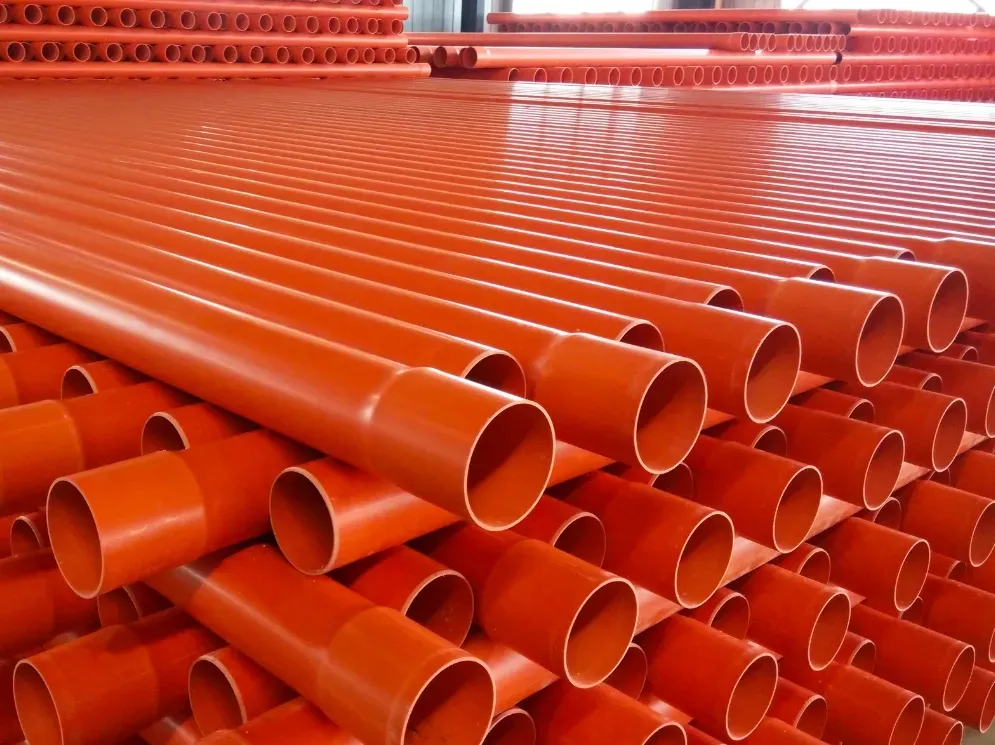
China 8 HDPE corrugated pipe, conforming to common diameters specified in metric designations (DN8 representing approximately 8 inches), is a thermoplastic piping system widely utilized for subsurface drainage, non-pressure applications like stormwater management, and protective conduit for utility lines. Its position within the broader infrastructure chain lies as a crucial component in civil engineering projects, replacing traditional materials such as concrete and PVC in select applications due to its lighter weight, flexibility, and corrosion resistance. Core performance characteristics center around its hydraulic capacity, structural integrity under load (compressive strength and ring stiffness), and long-term durability in varied soil conditions. A key industry pain point revolves around consistent quality control in manufacturing, ensuring adherence to rigorous standards to prevent premature failure and costly repairs. Another challenge lies in accurately predicting long-term performance in aggressive soil environments with varying chemical compositions and moisture content. Ensuring proper installation techniques to maintain structural integrity is also paramount.
Material Science & Manufacturing
The fundamental material for China 8 HDPE corrugated pipe is High-Density Polyethylene (HDPE), a thermoplastic polymer characterized by its high strength-to-density ratio. HDPE exhibits excellent resistance to a wide range of chemicals, making it suitable for burial in diverse soil types. Raw material properties crucial for pipe performance include molecular weight distribution (MWD), density (typically 0.941 – 0.965 g/cm³), and Melt Flow Index (MFI), which dictates processability. Manufacturing typically involves extrusion. HDPE pellets are fed into an extruder where they are heated and melted, then forced through a die to form a continuous corrugated profile. Key parameters in the extrusion process include die temperature, screw speed, and cooling rates. Corrugation is achieved using a series of forming rolls immediately following the extrusion die. The corrugated structure significantly increases the pipe’s ring stiffness, enabling it to withstand external loads. Precise control of the corrugation profile (height and pitch) is critical. Subsequent steps include cutting the pipe to desired lengths and quality control checks, including dimensional accuracy and hydrostatic pressure testing. Improper cooling can lead to warping, while inconsistent extrusion parameters can result in variations in wall thickness, compromising structural integrity. Additives, such as UV stabilizers and antioxidants, are often incorporated during the extrusion process to enhance long-term durability and prevent degradation from environmental factors.
Performance & Engineering
Performance of China 8 HDPE corrugated pipe is primarily governed by its ability to withstand external loads and maintain hydraulic flow. Force analysis considers both vertical loads from soil overburden and live loads from traffic. The pipe’s ring stiffness, a measure of its resistance to flattening, is a critical parameter. This is calculated using the formula: S = D / ΔD, where D is the nominal pipe diameter and ΔD is the deformation under a specific load. Environmental resistance includes assessment of long-term creep behavior under sustained loads, and resistance to chemical attack from soil constituents. Compliance requirements are dictated by regional and national standards (see section 7). Functional implementation necessitates careful consideration of jointing methods. Common methods include bell-and-spigot joints with rubber gaskets, ensuring a watertight seal. Proper bedding and backfill procedures are vital to distribute external loads evenly and prevent localized stress concentrations. Soil type directly influences performance; well-graded granular materials provide superior support compared to poorly compacted clay soils. Long-term performance is also affected by temperature fluctuations, which can induce expansion and contraction of the pipe material. Furthermore, the pipe’s resistance to abrasion from soil particles must be considered in applications with high sediment loads.
Technical Specifications
| Parameter | Unit | Typical Value (DN8 / 8 inch) | Testing Standard |
|---|---|---|---|
| Nominal Diameter | mm | 200 | ISO 4437 |
| Wall Thickness | mm | 3.0 – 5.0 | ASTM D2412 |
| Ring Stiffness | kN/m² | >8.0 | ASTM D2412 |
| Longitudinal Tensile Strength | MPa | >20 | ISO 527-2 |
| Impact Strength (Charpy) | kJ/m² | >20 | ISO 145-5 |
| Hydrostatic Pressure Test | MPa | 0.8 | ISO 1167 |
Failure Mode & Maintenance
Failure modes in China 8 HDPE corrugated pipe commonly include: 1) Fatigue cracking due to repeated loading cycles (especially in heavily trafficked areas). This is often initiated at stress concentration points, such as joints or areas of localized damage. 2) Creep rupture under sustained load, particularly at elevated temperatures. 3) Delamination of the corrugated structure, arising from manufacturing defects or damage during installation. 4) Environmental stress cracking (ESC), caused by exposure to certain chemicals in the soil. 5) Oxidation and UV degradation, affecting the pipe’s long-term mechanical properties. 6) Joint failure due to improper installation or gasket degradation. Maintenance primarily focuses on preventative measures. Regular inspections for signs of deformation, cracking, or joint leakage are essential. Backfill material should be properly compacted to provide adequate support. Damaged sections can be repaired using specialized couplings and sealing materials. In cases of significant structural damage, complete pipe replacement may be necessary. Proper drainage design to minimize hydrostatic pressure buildup is crucial. Avoidance of aggressive soil conditions (high acidity or alkalinity) or implementation of protective coatings can mitigate ESC. Periodic cleaning to remove sediment buildup can improve hydraulic capacity and prevent premature clogging. Soil analysis to understand chemical composition is important to predict potential corrosion or degradation.
Industry FAQ
Q: What is the impact of soil corrosivity on the lifespan of HDPE corrugated pipe?
A: Soil corrosivity, specifically the presence of sulfates, chlorides, and organic acids, can significantly reduce the lifespan of HDPE corrugated pipe by inducing Environmental Stress Cracking (ESC). High concentrations of these chemicals accelerate polymer degradation. Mitigation strategies include utilizing HDPE compounds with enhanced chemical resistance, applying protective coatings, and employing proper bedding materials to isolate the pipe from aggressive soil constituents. Periodic soil testing is recommended to assess the level of corrosivity.
Q: How does temperature affect the performance of HDPE corrugated pipe?
A: Temperature affects HDPE’s mechanical properties. Higher temperatures reduce stiffness and increase creep susceptibility. Lower temperatures increase brittleness. The pipe is designed to operate within a specified temperature range. Exceeding these limits can compromise its structural integrity. Thermal expansion and contraction must also be considered during installation to prevent stress buildup.
Q: What are the key considerations for backfill material and installation procedures?
A: Proper backfill is crucial. Granular materials (sand and gravel) provide optimal support and drainage. Avoid using rocks or sharp objects that could damage the pipe. Backfill should be compacted in layers to achieve uniform support and prevent settlement. The minimum cover height above the pipe should be maintained to protect it from traffic loads. Strict adherence to the manufacturer’s installation guidelines is essential.
Q: What are the differences between single-wall and double-wall HDPE corrugated pipe, and when should each be used?
A: Single-wall pipe is typically used for lighter load applications, such as drainage. Double-wall pipe offers significantly higher ring stiffness and is suitable for applications requiring greater load-bearing capacity, such as stormwater retention systems or buried utility conduits subject to heavy traffic. The choice depends on the anticipated load conditions and the soil type.
Q: How do you ensure the long-term watertightness of joints in HDPE corrugated pipe?
A: Watertightness is primarily achieved through the use of properly installed rubber gaskets within bell-and-spigot joints. The gaskets must be compatible with the HDPE material and maintained free from debris. Proper joint alignment and sufficient compression of the gasket during assembly are crucial. Regular inspection of joints for leakage is recommended.
Conclusion
China 8 HDPE corrugated pipe represents a robust and cost-effective solution for a range of subsurface drainage and conduit applications. Its inherent chemical resistance, lightweight nature, and ease of installation offer significant advantages over traditional materials. However, realizing its full potential requires a comprehensive understanding of the material’s properties, careful consideration of installation procedures, and proactive maintenance strategies.
Future development will likely focus on enhancing HDPE formulations to improve resistance to ESC and UV degradation, as well as developing advanced jointing technologies for improved watertightness and long-term performance. Continued research into the long-term creep behavior of HDPE under varying load and temperature conditions is also crucial for refining design guidelines and ensuring the sustainability of infrastructure projects utilizing this versatile piping system.
-
DN25 HDPE Compression Fitting-HORON INTERNATIONAL|Reliable Irrigation Solutions
NewsFeb.11,2026
-
china corrugated hdpe pipe fittings Performance Analysis
News2026-05-22
-
china ppr pipe for hot water Performance Analysis
News2026-05-22
-
china ppr Technical Performance Analysis
News2026-05-22
-
china corrugated dual wall pipe Performance Analysis
News2026-05-22
-
china sink inlet pipe Material Performance Analysis
News2026-05-22
-
china 1 2 inch pvc Performance Analysis
News2026-05-21
-
china hdpe pipe joint coupler Performance Analysis
News2026-05-21
-
china ppr pipes and fittings price list Technical Analysis
News2026-05-21
-
china 9 inch pvc pipe price Performance Analysis
News2026-05-21
-
china 2 inch borewell column pipe price Performance Engineering
News2026-05-21
-
china hdpe pipe suppliers Performance Analysis
News2026-05-20
-
china submersible pump column pipe Performance Engineering
News2026-05-20
-
china 8 hdpe corrugated pipe Manufacturing Analysis
News2026-05-20
-
china dual wall hdpe pipe Performance Analysis
News2026-05-20
-
china water lines under sink Performance Analysis
News2026-05-20