

Feb . 11, 2026 00:01 Back to list
china white pvc pipe Performance Analysis
Introduction
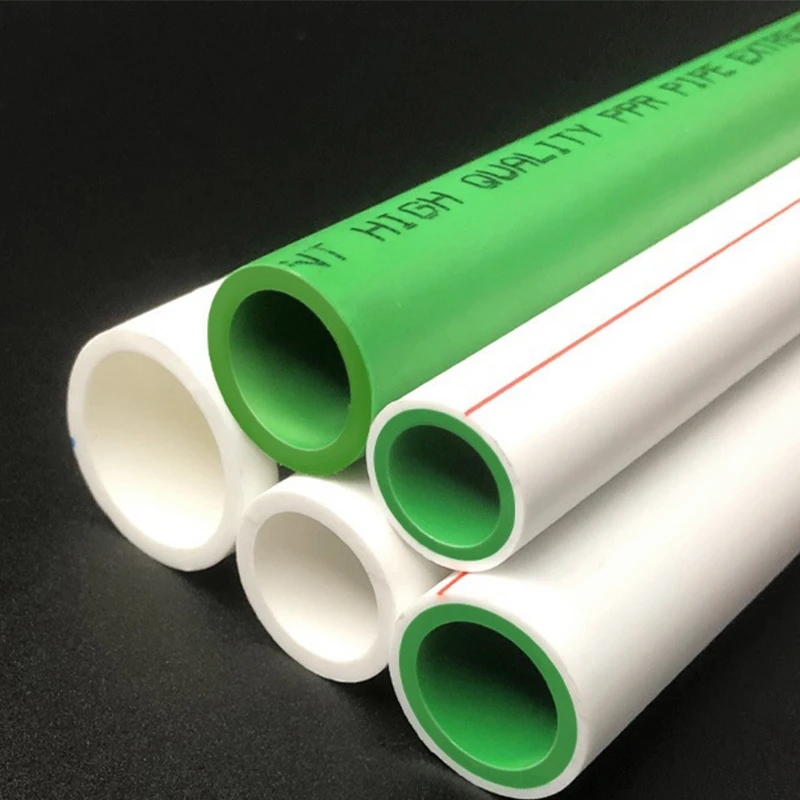
Polyvinyl chloride (PVC) pipe, specifically ‘China White PVC’ due to its prevalent manufacturing origin and characteristic color, is a thermoplastic polymer-based piping system widely employed in diverse applications ranging from potable water distribution and irrigation to drainage, waste, and vent (DWV) systems, and industrial chemical conveyance. It occupies a central position in modern infrastructure, offering a cost-effective alternative to traditional metallic piping. This guide details the material science, manufacturing processes, performance characteristics, potential failure modes, and essential maintenance considerations for China White PVC pipe, addressing core industry challenges related to long-term durability, chemical resistance, and regulatory compliance. The key performance attributes of this PVC type lie in its excellent tensile strength, chemical inertness, and relatively low cost, though its performance is heavily influenced by formulation, processing, and installation quality. A significant industry pain point is variability in product quality originating from differing manufacturing standards and reliance on plasticizers, which can affect long-term flexibility and contribute to environmental concerns.
Material Science & Manufacturing
China White PVC pipe is predominantly composed of polyvinyl chloride resin, typically around 87-95% by weight. The remaining composition includes stabilizers (to prevent degradation during processing and use), lubricants (to facilitate processing), plasticizers (primarily phthalates or increasingly, alternatives like DINCH, to impart flexibility), impact modifiers (such as acrylic or MBS resins to enhance toughness), and pigments, contributing to the ‘white’ coloration – often Titanium Dioxide (TiO2). The PVC resin itself is produced through the polymerization of vinyl chloride monomer (VCM). Manufacturing commences with the mixing of the PVC resin with the aforementioned additives. This is typically performed in high-speed mixers, ensuring homogenous distribution. Extrusion is the primary manufacturing process. The compounded PVC material is fed into an extruder, where it is heated and melted, then forced through a die to form a seamless pipe. Critical parameters during extrusion include barrel temperature profile (typically 180-210°C), screw speed, and die pressure. Cooling is crucial; pipes are typically submerged in a water bath to rapidly reduce temperature and maintain dimensional stability. Subsequent processes include cutting to specified lengths, bell-end forming (for solvent-welded joints), and quality control checks, including hydrostatic pressure testing. The choice of plasticizer profoundly impacts the final product properties. Phthalate-based plasticizers offer good performance but face increasing regulatory scrutiny. The selection and precise ratio of additives directly influence the pipe's resistance to UV degradation, impact strength, and long-term flexibility, factors often compromised in lower-grade manufacturing.

Performance & Engineering
The performance of China White PVC pipe is fundamentally governed by its mechanical and chemical properties. Tensile strength, typically ranging from 50-70 MPa depending on formulation and schedule (wall thickness), determines its ability to withstand internal pressure and external loads. The modulus of elasticity, around 3-4 GPa, influences pipe stiffness and resistance to deflection. A critical engineering consideration is the hydrostatic design stress (HDS), a measure of the long-term pressure-carrying capacity, determined by factors like temperature and time. PVC's chemical resistance is generally excellent, withstanding acids, alkalis, and many organic compounds. However, it is susceptible to degradation by certain solvents, notably ketones, esters, and aromatic hydrocarbons. Environmental resistance is a significant concern. UV exposure causes discoloration and embrittlement; therefore, UV stabilizers are crucial, particularly for outdoor applications. Temperature plays a key role; PVC becomes brittle at low temperatures and its strength decreases at elevated temperatures. Installation practices are paramount. Proper slope is essential for gravity-flow drainage systems. Joints, typically solvent-welded or threaded, represent potential weak points and require careful execution to ensure leak-proof connections. Furthermore, compliance with regional building codes (e.g., Uniform Plumbing Code, International Plumbing Code) dictates allowable stresses, minimum wall thicknesses, and testing requirements. Thermal expansion and contraction must be accounted for in long pipe runs to prevent stress cracking and joint failure.
Technical Specifications
| Parameter | Schedule 40 | Schedule 80 | ASTM D1785 Dimension Ratio (DR) | Operating Temperature Range |
|---|---|---|---|---|
| Material | PVC (Polyvinyl Chloride) | PVC (Polyvinyl Chloride) | Varies based on pipe size | -40°C to +60°C (-40°F to +140°F) |
| Tensile Strength (MPa) | 55-60 | 60-70 | Dependent on Formulation | Dependent on Formulation |
| Modulus of Elasticity (GPa) | 3.0 - 3.5 | 3.2 - 3.8 | N/A | N/A |
| Hydrostatic Design Stress (HDS) (MPa) | 8.27 | 10.34 | Calculated based on DR and Size | Decreases with increasing Temperature |
| Impact Resistance (Izod Notched, kJ/m²) | 4-6 | 6-8 | Influenced by Impact Modifier | Influenced by Impact Modifier |
| Chemical Resistance | Excellent to most acids and bases | Excellent to most acids and bases | Susceptible to ketones, esters | Susceptible to ketones, esters |
Failure Mode & Maintenance
China White PVC pipe, while durable, is susceptible to several failure modes. Embrittlement due to prolonged UV exposure is a common issue, leading to cracking, especially at joints. Solvent cracking occurs when exposed to incompatible solvents, causing rapid deterioration. Thermal deformation can occur in high-temperature applications, leading to warping and leaks. Pressure surges (water hammer) can cause pipe bursts, particularly in systems lacking surge protection devices. Joint failure is frequent, often stemming from improper solvent welding (insufficient cement, inadequate curing time) or damage during installation. Soil stress can cause cracking or flattening in buried pipelines, particularly if the bedding material is inadequate. Microbial Influenced Corrosion (MIC), although less common than in metallic pipes, can occur in certain environments, facilitated by sulfate-reducing bacteria. Maintenance involves regular visual inspections for cracks, discoloration, or leaks. UV-damaged sections should be coated with UV-resistant paint or replaced. Joints should be re-cemented if leaks are detected. Proper bedding and backfill are crucial for buried pipelines. Flush systems periodically to remove sediment buildup. For systems experiencing frequent water hammer, install surge arrestors. Periodic hydrostatic testing can identify weakened sections. A preventative maintenance schedule, tailored to the specific application and environmental conditions, is essential to maximize the service life of China White PVC piping.
Industry FAQ
Q: What is the impact of plasticizer migration on the long-term performance of China White PVC pipe?
A: Plasticizer migration, the leaching of plasticizers from the PVC matrix, reduces flexibility over time, leading to increased brittleness and a higher susceptibility to cracking, particularly under stress. This is more pronounced with phthalate-based plasticizers and at elevated temperatures. Modern formulations increasingly utilize alternative plasticizers, like DINCH, to mitigate this issue, but the rate and extent of migration remain a critical consideration for long-term durability assessments.
Q: How does the pipe schedule (e.g., Schedule 40 vs. Schedule 80) affect its pressure-bearing capacity?
A: Pipe schedule refers to the wall thickness. Schedule 80 pipes have thicker walls than Schedule 40 pipes. This increased wall thickness directly correlates to a higher hydrostatic design stress (HDS) and therefore, a greater ability to withstand internal pressure. Schedule 80 is typically used in higher-pressure applications or where increased robustness is required.
Q: What are the implications of using improper solvent cement for joining PVC pipes?
A: Using the incorrect solvent cement – incompatible with the PVC formulation or not designed for the specific application (e.g., pressure vs. non-pressure) – can result in a weak, unreliable joint. Insufficient cement application or inadequate curing time also compromises joint integrity. This can lead to leaks, joint separation, and ultimately, system failure.
Q: Can China White PVC pipe be used in direct sunlight without any protective measures?
A: While PVC possesses inherent UV resistance, prolonged exposure to direct sunlight will cause discoloration, surface degradation, and ultimately embrittlement. Therefore, it is strongly recommended to use UV-resistant coatings, bury the pipe, or select a PVC formulation specifically designed for outdoor exposure to maintain long-term performance.
Q: What is the significance of the ‘Dimension Ratio’ (DR) in selecting the appropriate PVC pipe for a given application?
A: The Dimension Ratio (DR) is the ratio of the pipe's outside diameter to its wall thickness. A lower DR indicates a thicker wall and therefore, a higher pressure rating. DR is a critical parameter in determining the pipe's ability to withstand internal pressure and is specified in ASTM D1785. Selecting the appropriate DR is essential for ensuring the safety and reliability of the piping system.
Conclusion
China White PVC pipe remains a dominant material in a wide range of piping applications due to its cost-effectiveness, corrosion resistance, and relative ease of installation. However, understanding its material properties, manufacturing nuances, and potential failure modes is crucial for ensuring long-term performance and reliability. Proper material selection based on application requirements, adherence to stringent quality control during manufacturing, and meticulous installation practices are paramount to mitigating risks associated with embrittlement, solvent cracking, and joint failure.
Looking ahead, advancements in PVC formulations, particularly the increasing adoption of non-phthalate plasticizers and enhanced UV stabilizers, will further improve the durability and environmental profile of China White PVC pipe. Continued research into alternative joining technologies and improved quality control standards are also essential for addressing industry pain points and extending the service life of these vital infrastructure components.
-
DN25 HDPE Compression Fitting-HORON INTERNATIONAL|Reliable Irrigation Solutions
NewsFeb.11,2026
-
china use of pvc pipe Performance Analysis
News2026-05-24
-
china 50mm pvc pipe price Performance Analysis
News2026-05-24
-
china ppr pipe 50mm price Performance Analysis
News2026-05-24
-
china hdpe coupler price Performance Analysis
News2026-05-24
-
china white pvc pipe Performance Analysis
News2026-05-24
-
china 100mm pvc pipe price Performance Analysis
News2026-05-23
-
china pvc pipe used for Performance Analysis
News2026-05-23
-
china ppr water pipe fittings Performance Analysis
News2026-05-23
-
china hdpe pipe couplings Performance Analysis
News2026-05-23
-
china 50mm ppr pipe price Performance Analysis
News2026-05-23
-
china corrugated hdpe pipe fittings Performance Analysis
News2026-05-22
-
china ppr pipe for hot water Performance Analysis
News2026-05-22
-
china ppr Technical Performance Analysis
News2026-05-22
-
china corrugated dual wall pipe Performance Analysis
News2026-05-22
-
china sink inlet pipe Material Performance Analysis
News2026-05-22