

Feb . 11, 2026 00:01 Back to list
china perforated land drainage pipe Performance Analysis
Introduction
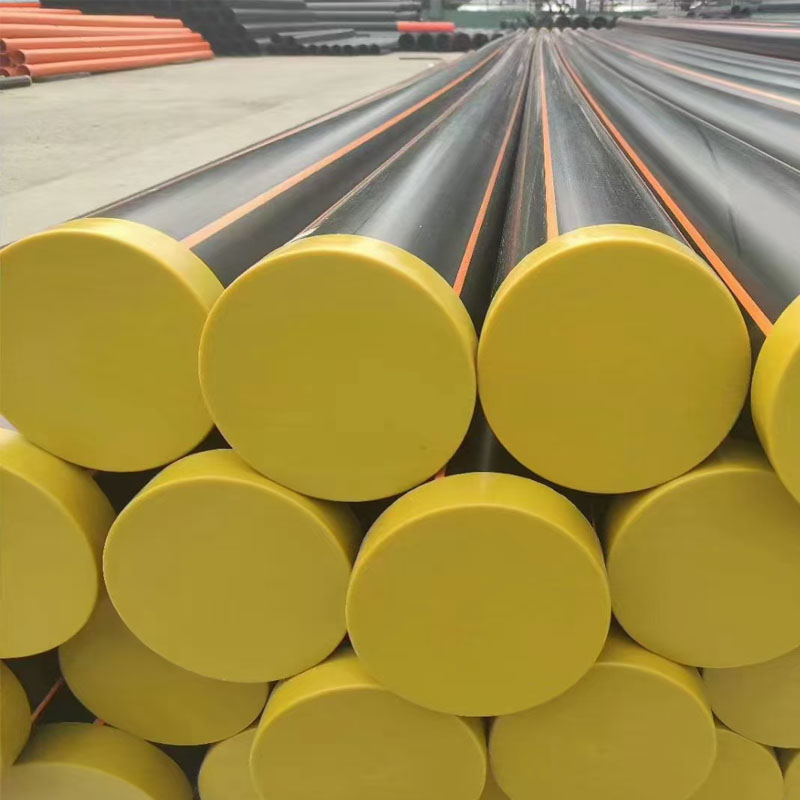
China perforated land drainage pipe, a critical component in subsurface water management, represents a significant advancement over traditional drainage solutions like gravel-filled trenches. These pipes, typically manufactured from High-Density Polyethylene (HDPE) or Polyvinyl Chloride (PVC), are designed to efficiently collect and convey groundwater away from structures, agricultural land, and transportation infrastructure. Their perforated design facilitates water ingress while maintaining structural integrity, preventing soil erosion and waterlogging. Within the civil engineering and agricultural supply chains, perforated drainage pipe acts as the primary conduit for stormwater runoff and excess irrigation water, preventing damage to foundations, roadways, and crops. Core performance characteristics include hydraulic capacity, crush resistance, and long-term durability, factors increasingly scrutinized in demanding applications. The industry is currently facing increasing pressure to utilize recycled materials and improve installation techniques to minimize environmental impact and maximize system longevity.
Material Science & Manufacturing
The predominant materials used in the manufacture of China perforated land drainage pipe are HDPE and PVC. HDPE offers superior impact resistance and flexibility, especially at lower temperatures, due to its semi-crystalline structure. Its chemical resistance is also excellent, resisting degradation from typical soil constituents. PVC, while less flexible than HDPE, provides a rigid structure and good resistance to chemical corrosion, particularly acids and alkalis commonly found in industrial and agricultural runoff. The raw materials undergo extrusion processes, where the polymer resin is melted and forced through a die to create the pipe's cylindrical form. Perforations are created using laser drilling or mechanical punching techniques, with laser drilling offering greater precision and reduced risk of structural weakening. Key parameter control during manufacturing includes maintaining consistent wall thickness – impacting crush resistance – and ensuring accurate perforation size and spacing to optimize hydraulic flow. The density of the polymer (typically ranging from 0.94 to 0.96 g/cm³ for HDPE and 1.4 g/cm³ for PVC) directly influences its mechanical properties and resistance to environmental stress cracking. Post-extrusion processes often include cooling, sizing, and quality control checks to verify dimensional accuracy and structural integrity. Filter fabric sleeves are frequently added to the perforations to prevent soil ingress, requiring a robust bonding process to ensure long-term adherence. The specific grade of polymer used (e.g., HDPE SDR 17, PVC Schedule 40) determines the pipe’s pressure rating and suitability for different applications.

Performance & Engineering
The performance of perforated land drainage pipe is fundamentally governed by hydraulic principles and soil mechanics. The pipe’s hydraulic capacity, measured in cubic meters per second, is directly proportional to the diameter of the pipe and the slope of the installation. Darcy's Law dictates the flow rate through the perforations, which is dependent on the permeability of the surrounding soil. Engineering designs must account for the potential for clogging due to sediment accumulation, necessitating the use of filter fabric and proper system maintenance. Structural integrity is paramount, and the pipe must withstand both external loads (soil overburden, traffic loads) and internal hydrostatic pressure. Force analysis involves calculating the hoop stress and longitudinal stress within the pipe wall, considering factors like pipe diameter, wall thickness, and soil pressure. Environmental resistance is also critical, particularly resistance to UV degradation (especially for PVC pipes exposed to sunlight) and chemical attack from corrosive soil conditions. Compliance requirements are stringent, dictated by local building codes and environmental regulations. For example, systems designed to manage stormwater runoff must adhere to regulations related to peak flow reduction and water quality improvement. Installation techniques significantly impact performance; proper bedding and backfill materials are essential to prevent deformation and maintain hydraulic capacity. The Manning equation is often employed in engineering calculations to predict flow velocity and head loss within the drainage system.
Technical Specifications
| Parameter | HDPE (SDR 17) | PVC (Schedule 40) | ASTM D2412 |
|---|---|---|---|
| Material | High-Density Polyethylene | Polyvinyl Chloride | Standard Test Method for Properties of Plastics |
| Diameter (mm) | 100 - 600 | 100 - 300 | Relevant for Dimensional Accuracy |
| Wall Thickness (mm) | 2.3 – 10.6 | 3.2 – 6.4 | Affects Crush Resistance |
| Crush Resistance (kN/m) | > 0.8 | > 0.6 | Determines Load-Bearing Capacity |
| Perforation Diameter (mm) | 4.5 - 6.0 | 4.5 - 6.0 | Impacts Inflow Rate |
| Perforation Spacing (mm) | 150 - 300 | 150 - 300 | Determines Water Intake |
Failure Mode & Maintenance
Perforated land drainage pipe is susceptible to several failure modes. Fatigue cracking can occur due to repeated loading and unloading from soil settlement and traffic loads, particularly in areas with unstable soil conditions. Delamination, primarily in PVC pipes, can result from poor bonding between layers during manufacturing or exposure to aggressive chemical environments. Degradation, specifically UV degradation in PVC, causes embrittlement and loss of strength. Oxidation, influenced by soil chemistry and temperature, can lead to material breakdown over extended periods. Clogging is a common failure mode, stemming from sediment buildup within the perforations and the pipe itself, reducing hydraulic capacity. Maintenance solutions include regular inspection and flushing to remove sediment. Geotextile filter fabrics around the pipe help mitigate clogging, but periodic replacement may be necessary. Repairing cracked pipes often necessitates section replacement, using appropriate couplings and ensuring proper backfilling. Preventative measures include proper site preparation, utilizing appropriate bedding materials, and avoiding heavy compaction directly over the pipe. Regular video inspection can identify early signs of degradation or blockage, allowing for timely intervention and preventing catastrophic failures. Furthermore, accurate record-keeping of installation details and maintenance history is crucial for effective long-term management.
Industry FAQ
Q: What is the impact of soil type on the selection of perforation size and spacing?
A: Soil type directly influences hydraulic conductivity. Clay soils have low permeability, requiring closer perforation spacing and larger diameter perforations to maintain adequate inflow rates. Sandy soils, with high permeability, can utilize wider spacing and smaller perforations. Failing to account for soil characteristics leads to inefficient drainage or premature clogging.
Q: How does the SDR (Standard Dimension Ratio) of HDPE pipe affect its crush resistance?
A: A lower SDR indicates a thicker wall relative to the pipe diameter, resulting in significantly higher crush resistance. SDR 17 HDPE pipe is substantially more robust than SDR 21 or SDR 26, making it suitable for installations subjected to heavy loads or deep burial depths.
Q: What are the long-term effects of exposure to sulfates in the soil on PVC drainage pipe?
A: Sulfates can react with PVC, leading to a degradation process known as sulfate attack. This weakens the pipe material, causing cracking and eventual failure. Using sulfate-resistant PVC formulations or alternative materials like HDPE is crucial in sulfate-rich environments.
Q: Can perforated drainage pipe be used in applications requiring submersible operation?
A: While HDPE pipe can withstand continuous submersion, PVC is less suitable. The pipe must be designed to resist hydrostatic pressure, and appropriate end caps or connections are essential to prevent water ingress into the system. Considerations for buoyancy may also be necessary.
Q: What is the recommended backfill material for optimal drainage pipe performance?
A: Granular backfill materials, such as gravel or crushed stone, are recommended to ensure good drainage and prevent soil compaction around the pipe. Avoid using clay-rich soils, as they can impede water flow and contribute to clogging. Proper compaction of the backfill is also vital for stability, but over-compaction should be avoided.
Conclusion
China perforated land drainage pipe represents a vital technology for effective water management in diverse applications. Selecting the appropriate material (HDPE or PVC) and technical specifications, considering soil conditions, anticipated loads, and environmental factors, is crucial for ensuring long-term performance and preventing premature failure. The implementation of robust manufacturing processes, adherence to international standards, and diligent maintenance practices are all essential components of a successful drainage system.
Future advancements in this field will likely focus on the development of more sustainable materials, improved installation techniques, and enhanced monitoring systems. The integration of smart technologies, such as sensors to detect clogging or structural defects, will enable proactive maintenance and optimization of drainage system performance. Continued research into filter fabric materials and their long-term effectiveness will also be essential for minimizing maintenance requirements and maximizing system lifespan.
-
DN25 HDPE Compression Fitting-HORON INTERNATIONAL|Reliable Irrigation Solutions
NewsFeb.11,2026
-
china 48 hdpe pipe for sale Performance Analysis
News2026-05-28
-
china perforated land drainage pipe Performance Analysis
News2026-05-28
-
china clear pvc hose Performance Analysis
News2026-05-28
-
china kitchen sink hot cold water lines Performance Analysis
News2026-05-28
-
china 110 mm pvc pipe Performance Analysis
News2026-05-28
-
china upvc column pipes for submersible pumps price list Performance Analysis
News2026-05-27
-
china ppr pipe for water supply Performance Analysis
News2026-05-27
-
china 20mm ppr pipe price Performance Analysis
News2026-05-27
-
china hdpe pipe 24 inch Performance Analysis
News2026-05-27
-
china hdpe to steel coupling Performance Analysis
News2026-05-27
-
china water lines under kitchen sink Performance Analysis
News2026-05-26
-
china hdpe conduit coupling Performance Analysis
News2026-05-26
-
china pvc irrigation pipe Performance Analysis
News2026-05-26
-
china all types of pvc pipes Performance Analysis
News2026-05-26
-
china hdpe reducing coupler Performance Analysis
News2026-05-26