

Feb . 11, 2026 00:01 Back to list
china 20mm pvc pipe Performance Analysis
Introduction
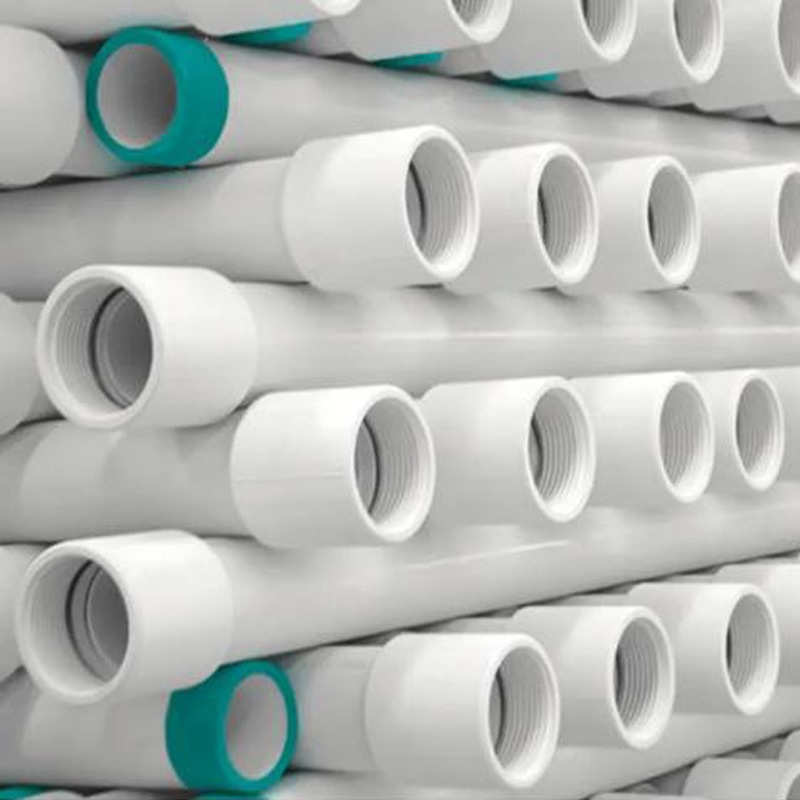
Polyvinyl chloride (PVC) pipe, specifically the 20mm diameter variant manufactured in China, represents a foundational component in modern fluid conveyance systems. Positioned within the broader infrastructure supply chain, it serves applications ranging from potable water distribution and irrigation to drainage, sewage, and industrial chemical transfer. This technical guide provides an in-depth analysis of 20mm PVC pipe, examining its material composition, manufacturing processes, performance characteristics, potential failure modes, and relevant industry standards. The core performance criteria for this product revolve around pressure resistance, chemical inertness, longevity, and cost-effectiveness, presenting challenges in balancing these parameters to meet diverse application requirements. A significant pain point for procurement managers is ensuring consistent quality and adherence to international standards across varying Chinese manufacturers.
Material Science & Manufacturing
The primary raw material for 20mm PVC pipe is polyvinyl chloride, a thermoplastic polymer produced through the polymerization of vinyl chloride monomer (VCM). Key additives include plasticizers (typically phthalates or alternatives), stabilizers (often lead-based, calcium-zinc based, or organic-based), lubricants, and impact modifiers. The specific formulation dictates the pipe’s flexibility, UV resistance, and processing characteristics. Raw material purity and consistent additive ratios are critical for maintaining consistent mechanical properties. Manufacturing typically involves extrusion. PVC compound is fed into a single-screw extruder where it is heated, melted, and forced through a die to form a continuous pipe. Critical parameters during extrusion include barrel temperature profile (typically 180-220°C), screw speed, die pressure, and cooling rate. Cooling is crucial to solidify the pipe and maintain dimensional accuracy. Post-extrusion, the pipe is cut to length, often using automated saws, and undergoes quality control checks, including dimensional measurements and hydrostatic pressure testing. The degree of polymerization of the PVC resin impacts impact strength and temperature resistance; higher degrees generally indicate greater rigidity but reduced impact resistance. Maintaining consistent die temperature is paramount to avoiding ovality and ensuring uniform wall thickness. The choice of lubricant influences surface finish and ease of downstream processing.
Performance & Engineering
The performance of 20mm PVC pipe is fundamentally governed by its ability to withstand internal hydrostatic pressure and external loads. Force analysis, utilizing the Barlow formula (S = P D / 2t, where S is hoop stress, P is internal pressure, D is outer diameter, and t is wall thickness), is crucial for determining the appropriate wall thickness for a given application and pressure rating. The material’s long-term hydrostatic strength (LTHS) is a critical parameter, accounting for creep rupture over extended periods of use. Environmental resistance is also vital; prolonged exposure to UV radiation can cause degradation and embrittlement, necessitating the inclusion of UV stabilizers in the PVC formulation. Chemical compatibility is paramount; PVC exhibits good resistance to many acids, alkalis, and salts, but is susceptible to attack by certain organic solvents and chlorinated hydrocarbons. Compliance requirements vary by region, encompassing standards related to drinking water safety (e.g., NSF/ANSI 61), pressure rating (e.g., ASTM D1785), and dimensional accuracy (e.g., ASTM D2466). Furthermore, consideration must be given to thermal expansion and contraction; PVC exhibits a relatively high coefficient of thermal expansion, which can induce stresses in buried pipelines, requiring appropriate expansion joints or flexible couplings. Fatigue analysis is relevant for applications involving cyclical pressure changes, such as pump systems.
Technical Specifications
| Parameter | Unit | Typical Value (Schedule 40) | Typical Value (Schedule 80) |
|---|---|---|---|
| Nominal Diameter | mm | 20 | 20 |
| Outer Diameter | mm | 21.3 | 23.5 |
| Wall Thickness | mm | 2.2 | 3.2 |
| Pressure Rating (at 23°C) | MPa | 1.0 | 1.6 |
| Hydrostatic Design Stress | MPa | 55 | 55 |
| Tensile Strength | MPa | 55 | 55 |
| Elongation at Break | % | 30 | 30 |
Failure Mode & Maintenance
Common failure modes for 20mm PVC pipe include brittle fracture due to impact or overpressure, cracking induced by stress corrosion (particularly in aggressive soil environments), and degradation resulting from long-term UV exposure. Fatigue cracking can occur in applications with cyclical pressure fluctuations. Joint failures, often stemming from improper solvent welding or mechanical connection, are also prevalent. Failure analysis reveals that UV degradation manifests as surface chalking and a reduction in impact strength. Stress cracking is often initiated at stress concentrators, such as threaded fittings or areas with geometric discontinuities. Maintenance involves periodic visual inspections for cracks, discoloration, or deformation. Corrective measures include repairing leaks with appropriate PVC cement and couplings, replacing damaged sections of pipe, and ensuring adequate UV protection (e.g., burying the pipe or applying a UV-resistant coating). Preventative maintenance includes proper backfilling procedures to avoid external loads and ensuring compatibility of solvents and chemicals with the PVC material. Regular hydrostatic testing can identify weaknesses before catastrophic failure occurs. Proper storage of PVC pipe is essential, keeping it out of direct sunlight and extreme temperatures to prevent pre-mature degradation.
Industry FAQ
Q: What is the impact of different plasticizer types on the long-term performance of 20mm PVC pipe?
A: The type of plasticizer significantly influences the pipe’s flexibility and resistance to degradation. Phthalate plasticizers, while cost-effective, are prone to leaching over time, leading to embrittlement. Alternatives like DINP or DOTP offer improved durability and reduced migration, though they may be more expensive. The choice depends on the application and regulatory requirements.
Q: How does soil corrosivity affect the lifespan of buried 20mm PVC pipe?
A: Highly corrosive soils, particularly those with high sulfate or chloride content, can induce stress corrosion cracking in PVC. Proper bedding and backfilling with non-corrosive materials are crucial. The use of protective coatings or cathodic protection may be necessary in extreme environments.
Q: What are the key differences between Schedule 40 and Schedule 80 PVC pipe in terms of application suitability?
A: Schedule 80 pipe has a thicker wall than Schedule 40, providing higher pressure resistance and greater impact strength. Schedule 40 is suitable for lower-pressure applications, such as irrigation and drainage, while Schedule 80 is preferred for higher-pressure systems, like industrial fluid transfer or potable water distribution.
Q: What quality control measures should be implemented to ensure the consistency of 20mm PVC pipe sourced from Chinese manufacturers?
A: Rigorous quality control should include verification of material composition, dimensional accuracy, hydrostatic pressure testing, and impact resistance. Independent third-party inspection and adherence to recognized international standards (e.g., ISO, ASTM) are essential. Audits of the manufacturing facility are recommended.
Q: How does temperature affect the pressure rating of 20mm PVC pipe?
A: The pressure rating of PVC pipe decreases as temperature increases. This is due to the reduction in the material's strength and increased creep. Manufacturers typically provide derating factors to account for temperature variations. Operating above the recommended temperature limits can lead to premature failure.
Conclusion
China-manufactured 20mm PVC pipe serves as a ubiquitous and cost-effective solution for fluid conveyance. However, ensuring reliable performance necessitates a thorough understanding of the material science, manufacturing processes, and potential failure modes. Consistent quality control, adherence to international standards, and proper installation practices are critical for maximizing lifespan and minimizing risk. The selection of appropriate PVC formulations, based on application-specific requirements—including pressure, temperature, and chemical exposure—is paramount.
Looking ahead, advancements in PVC formulation, particularly the development of bio-based plasticizers and improved UV stabilizers, are likely to further enhance the durability and sustainability of this essential product. Continued refinement of extrusion techniques and quality control protocols will be vital for maintaining competitiveness in the global market. Procurement managers should prioritize supplier selection based on demonstrated quality assurance capabilities and a commitment to adhering to stringent industry regulations.
-
DN25 HDPE Compression Fitting-HORON INTERNATIONAL|Reliable Irrigation Solutions
NewsFeb.11,2026
-
china hdpe coupling price Performance Analysis
News2026-06-01
-
china dual wall perforated corrugated pipe Performance Analysis
News2026-06-01
-
china ppr pipe 63mm Performance Analysis
News2026-06-01
-
china 63mm hdpe pipe price Performance Analysis
News2026-06-01
-
china ppr water pipe Performance Analysis
News2026-06-01
-
china 2.5 inch hdpe pipe price Performance Analysis
News2026-05-31
-
china 20mm pvc pipe Performance Analysis
News2026-05-31
-
china hdpe pipe company Performance Analysis
News2026-05-31
-
china water pipe for kitchen sink Material Performance
News2026-05-31
-
china 12 inch diameter pvc pipe for sale Performance Analysis
News2026-05-31
-
china 2 inch upvc column pipe price Performance Analysis
News2026-05-30
-
china hdpe to pvc coupling Performance Analysis
News2026-05-30
-
china 2 hdpe to pvc coupling Performance Analysis
News2026-05-30
-
china 48 inch hdpe pipe cost Performance Analysis
News2026-05-30
-
china upvc column pipe price Performance Analysis
News2026-05-30