

Feb . 11, 2026 00:01 Back to list
china pvc pipe cost per foot Technical Analysis
Introduction
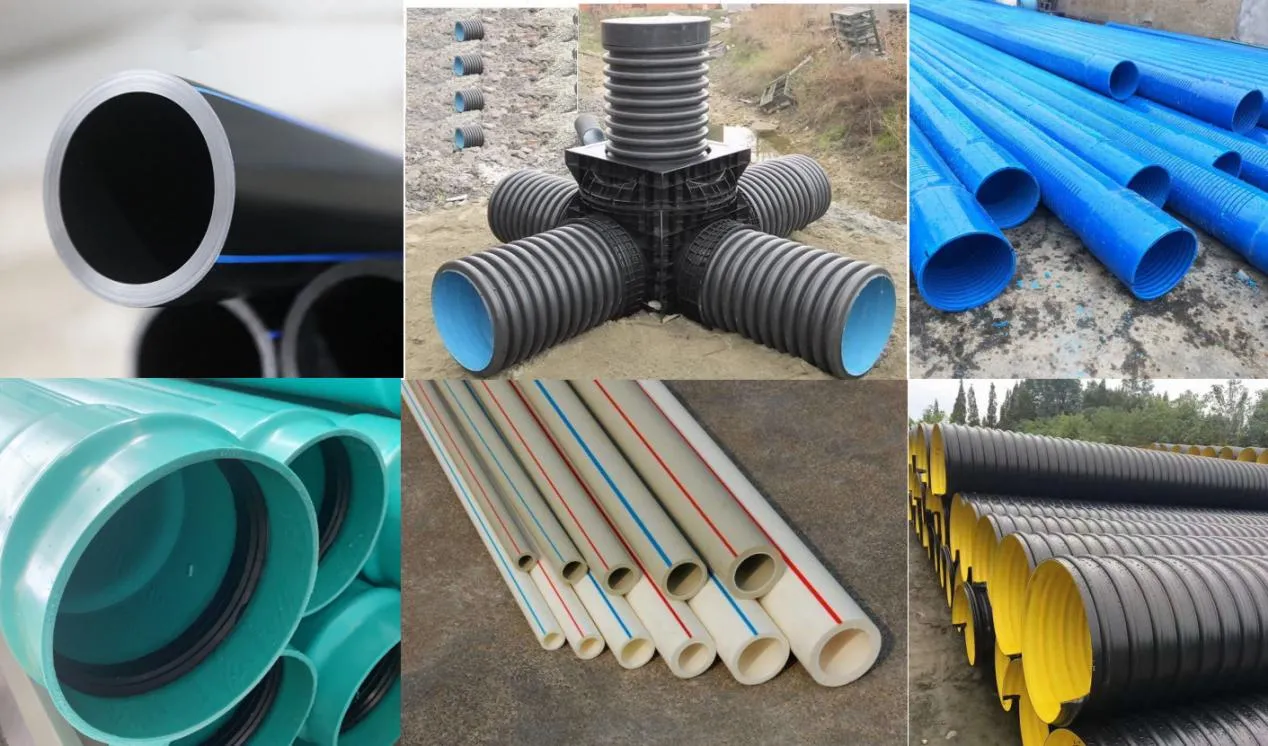
Polyvinyl Chloride (PVC) pipe, manufactured extensively in China, represents a substantial portion of the global piping market. Its popularity stems from its cost-effectiveness, durability, and versatility across diverse applications, including potable water distribution, irrigation, drainage, and sewage systems. The cost per foot of Chinese PVC pipe is a critical factor for project budgeting, influenced by raw material prices (ethylene and chlorine), manufacturing scale, pipe diameter, schedule (wall thickness), and regional demand. This guide provides an in-depth technical analysis of Chinese PVC pipe, encompassing material science, manufacturing processes, performance characteristics, failure modes, and relevant industry standards. A key pain point in the industry revolves around ensuring consistent quality control given the varied manufacturing capabilities among Chinese producers, particularly concerning long-term performance under demanding environmental conditions and adherence to international compliance regulations. Understanding these factors is crucial for procurement managers and engineers seeking reliable and cost-optimized piping solutions.
Material Science & Manufacturing
PVC is a thermoplastic polymer produced by the polymerization of vinyl chloride monomer (VCM). The raw material, ethylene dichloride (EDC), is derived from ethylene and chlorine. China’s access to competitively priced ethylene and chlorine contributes to its PVC production cost advantages. The critical properties of PVC relevant to pipe manufacturing include its tensile strength (typically 50-70 MPa), elongation at break (20-40%), and glass transition temperature (around 80°C). Manufacturing primarily employs extrusion processes. PVC compound is fed into an extruder, where it’s heated and plasticized before being forced through a die to form the pipe's shape. Key parameters include extruder screw speed, barrel temperature profile (typically 130-200°C, varying by PVC formulation), die pressure, and cooling rate. The cooling process – often using water baths – is critical to maintaining dimensional stability. Pipe schedules (e.g., Schedule 40, Schedule 80) dictate wall thickness and pressure-bearing capacity. Formulations often include additives like stabilizers (to prevent degradation during processing and use), lubricants (to aid extrusion), and impact modifiers (to enhance toughness, especially at lower temperatures). Proper mixing and dispersion of these additives are essential for consistent pipe quality. Degradation of PVC during processing, particularly thermal degradation, can release hydrochloric acid (HCl), requiring effective venting systems and stabilizer packages to mitigate corrosion and material breakdown.
Performance & Engineering
The performance of PVC pipe is governed by hydrostatic pressure resistance, impact strength, and resistance to environmental degradation. Hydrostatic pressure testing, conducted according to ASTM D1597, assesses the pipe's ability to withstand internal pressure without failure. Finite Element Analysis (FEA) is frequently used in engineering design to optimize pipe dimensions and wall thickness for specific application pressures and burial depths. Impact strength, particularly important in demanding applications like mining or earthquake-prone regions, is evaluated using impact tests (e.g., ASTM D2444). Long-term performance is significantly influenced by UV exposure and temperature variations. PVC can become brittle over time due to UV degradation, necessitating the use of UV stabilizers, particularly in above-ground applications. Soil conditions also play a crucial role; corrosive soils can accelerate degradation. The chemical resistance of PVC is generally excellent, but it can be affected by certain organic solvents and strong oxidizing agents. Furthermore, the coefficient of thermal expansion for PVC is relatively high (around 8 x 10⁻⁵ /°C), requiring consideration in piping system design to accommodate thermal expansion and contraction and prevent stress cracking at joints. Jointing methods include solvent welding, threaded connections, and gasketed joints, each with its own engineering considerations regarding sealing performance and long-term reliability.
Technical Specifications
| Parameter | Schedule 40 (Typical) | Schedule 80 (Typical) | ASTM D1785 Standard |
|---|---|---|---|
| Material | PVC (Polyvinyl Chloride) | PVC (Polyvinyl Chloride) | PVC Compound |
| Diameter (inches) | 0.5 – 12 | 0.5 – 24 | 0.5 – 48 |
| Wall Thickness (inches) | 0.065 – 0.218 | 0.095 – 0.375 | Varies by Schedule |
| Pressure Rating (PSI) | Up to 400 | Up to 600 | Dependent on Size & Schedule |
| Tensile Strength (MPa) | 55-65 | 60-70 | Minimum 55 |
| Operating Temperature (°C) | 0 – 60 | 0 – 60 | 0 – 40 (continuous) |
Failure Mode & Maintenance
Common failure modes in PVC pipe include brittle fracture (particularly at low temperatures or due to impact), stress cracking (caused by prolonged exposure to tensile stress in conjunction with corrosive environments), and UV degradation (leading to embrittlement and cracking in exposed sections). Long-term creep, or slow deformation under sustained stress, can also occur, especially in heavily loaded systems. Joint failures are frequently observed due to improper solvent welding, damaged gaskets, or corrosion of threaded connections. Microbial Influenced Corrosion (MIC) can occur in sewer applications, where sulfate-reducing bacteria can produce hydrogen sulfide, leading to corrosion. Maintenance involves regular visual inspections for cracks, leaks, and signs of degradation. Pressure testing should be conducted periodically to verify system integrity. For underground pipes, cathodic protection may be necessary in corrosive soil conditions. Damaged sections should be replaced using appropriate joining methods and ensuring compatibility with the existing piping system. Preventative measures include using UV-stabilized PVC for above-ground applications, selecting appropriate pipe schedules for the anticipated operating pressures, and ensuring proper installation techniques to minimize stress concentrations. Proper backfilling procedures are also crucial to prevent external loads from damaging the pipe.
Industry FAQ
Q: What is the impact of varying PVC resin grades on the long-term performance of pipe, and how do Chinese manufacturers ensure consistency?
A: PVC resin grades differ in molecular weight, particle size distribution, and additive content, directly affecting impact strength, processability, and resistance to degradation. Reputable Chinese manufacturers employ rigorous quality control procedures, including incoming resin inspection, process monitoring, and finished product testing according to ASTM standards. However, the consistency across different manufacturers can vary. Third-party certification programs (e.g., NSF, CSA) provide an independent verification of product quality and adherence to standards.
Q: How does the cost per foot of Chinese PVC pipe compare to that of pipes manufactured in North America or Europe?
A: Generally, Chinese PVC pipe is significantly more cost-competitive due to lower labor costs, economies of scale, and access to competitively priced raw materials. The price difference can range from 20% to 50%, depending on the specific specifications and quantity ordered. However, this cost advantage must be weighed against potential concerns regarding quality control and compliance with local regulations.
Q: What are the key considerations when specifying PVC pipe for potable water applications in terms of chemical leaching and compliance with drinking water standards?
A: Potable water applications require PVC pipe formulations that meet stringent chemical leaching requirements, such as those outlined in NSF/ANSI Standard 61. The pipe material must not impart any harmful contaminants to the water. Look for pipes specifically certified for potable water use. The PVC compound should contain only approved stabilizers and additives.
Q: What are the typical failure rates observed in Chinese PVC pipe installations over a 20-year service life, and what factors contribute to these failures?
A: Published long-term failure rate data specifically for Chinese PVC pipe is limited. However, observed failures are often linked to inadequate UV protection, improper installation (e.g., insufficient bedding support), corrosive soil conditions, and the use of substandard materials. Proper material selection, installation practices, and ongoing maintenance are crucial to maximizing service life.
Q: What are the implications of the increasing use of recycled PVC in pipe manufacturing, and how does it affect the material's properties and performance?
A: The use of recycled PVC can reduce costs and environmental impact. However, recycled PVC may have reduced mechanical properties compared to virgin PVC, particularly impact strength and elongation. Manufacturers mitigate this by blending recycled PVC with virgin resin and using appropriate stabilizers and impact modifiers. The percentage of recycled content should be clearly specified and the material tested to ensure it meets required performance standards.
Conclusion
Chinese PVC pipe represents a cost-effective solution for a wide range of piping applications, driven by its favorable material costs and large-scale manufacturing capabilities. However, ensuring long-term reliability and compliance requires careful consideration of material quality, manufacturing processes, and installation practices. Understanding the potential failure modes and implementing preventative maintenance strategies are crucial for maximizing the service life of PVC piping systems.
Procurement managers and engineers should prioritize working with reputable Chinese manufacturers who adhere to international standards and offer third-party certifications. Rigorous quality control, proper material selection based on application requirements, and adherence to best practices in installation and maintenance are all essential components of a successful and durable PVC piping infrastructure.
-
DN25 HDPE Compression Fitting-HORON INTERNATIONAL|Reliable Irrigation Solutions
NewsFeb.11,2026
-
china pvc pipe cost per foot Technical Analysis
News2026-04-26
-
china double walled corrugated pipe Performance Analysis
News2026-04-26
-
china hdpe sprinkler pipe price list Performance Analysis
News2026-04-26
-
china water pipe in kitchen Performance Analysis
News2026-04-26
-
china hdpe to pvc pipe coupling Performance Analysis
News2026-04-26
-
china 32 mm ppr pipe Performance Analysis
News2026-04-25
-
china ppr pipe for hot water supply Performance Analysis
News2026-04-25
-
china double walled drainage pipe Performance Analysis
News2026-04-25
-
china black hdpe pipe Manufacturing Analysis
News2026-04-25
-
china dn25 ppr hot water pipes for kitchen Performance Analysis
News2026-04-25
-
china pvc to hdpe connection Performance Analysis
News2026-04-24
-
china ppr pipe elbow Performance Analysis
News2026-04-24
-
china hdpe straight coupler Performance Analysis
News2026-04-24
-
china what are pvc pipes used for Performance Analysis
News2026-04-24
-
china hdpe flexible irrigation pipe Performance Analysis
News2026-04-24