

Feb . 11, 2026 00:01 Back to list
china double walled drainage pipe Performance Analysis
Introduction
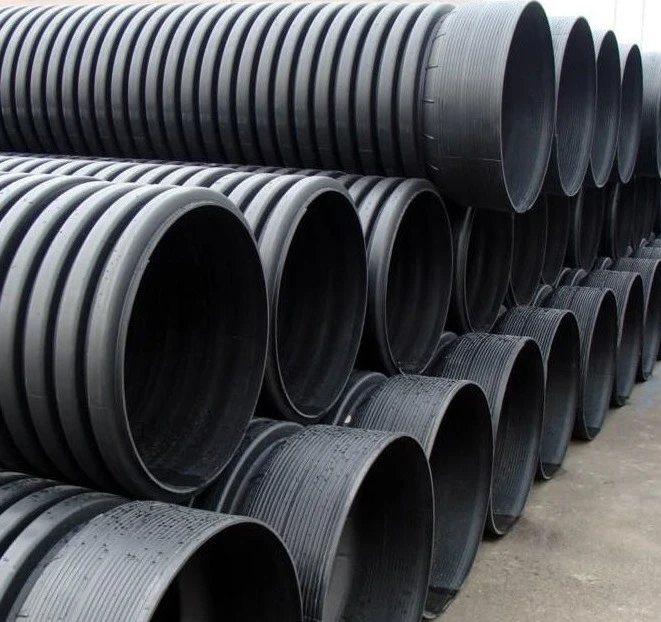
China double walled drainage pipe represents a significant advancement in subsurface drainage infrastructure. Typically manufactured from polyethylene (PE) or polypropylene (PP), these pipes are characterized by a corrugated outer layer fused with a smooth inner layer, providing a balance of structural strength and hydraulic efficiency. This design contrasts sharply with traditional concrete or single-wall plastic drainage solutions, offering advantages in weight, installation speed, and resistance to corrosion. Positioned within the broader civil engineering supply chain, it addresses critical needs for stormwater management, wastewater conveyance, and agricultural drainage. Core performance characteristics include high ring stiffness, excellent flow capacity, leak-proof joints, and durability in aggressive soil environments. The increasing adoption of these pipes reflects a growing demand for sustainable and cost-effective drainage solutions within China and globally. A major pain point addressed by this technology is the high installation cost and susceptibility to cracking and infiltration associated with legacy materials.
Material Science & Manufacturing
The primary raw material for China double walled drainage pipe is typically high-density polyethylene (HDPE) or polypropylene (PP). HDPE offers excellent chemical resistance and impact strength, crucial for underground applications. PP provides superior stiffness and temperature resistance. The choice of polymer dictates the pipe's overall performance envelope. Manufacturing begins with the extrusion of both the inner and outer layers. The inner layer, designed for smooth flow, is typically extruded as a solid profile. The outer layer is formed through a corrugated extrusion process, often utilizing a multi-plate die system to create the desired wave profile. Critical parameters include die temperature (180-220°C for HDPE, 200-240°C for PP), extrusion speed (optimized to maintain consistent wall thickness), and cooling rates. Following extrusion, the inner and outer layers are fused together using a co-extrusion process, ensuring a strong, leak-proof bond. Jointing methods commonly employed include socket joints with rubber seals, electrofusion welding, and mechanical couplings. The quality of the polymer resin, particularly its molecular weight distribution and melt flow index, directly influences the finished product’s long-term creep resistance and overall durability. Improper cooling can lead to residual stresses and dimensional instability.
Performance & Engineering
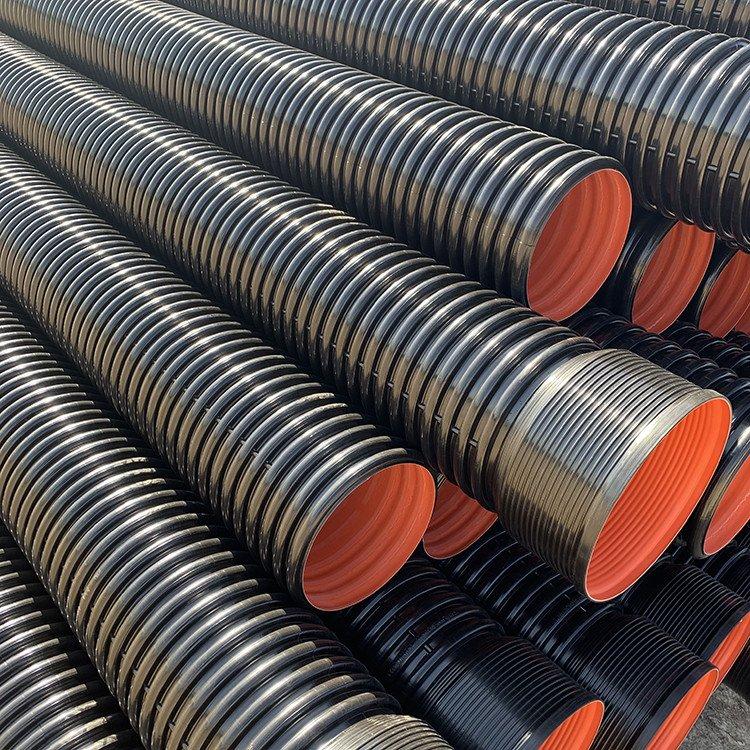
Performance of double walled drainage pipe is heavily reliant on ring stiffness (measured in PSI or kN/m²), which indicates the pipe’s resistance to flattening under load. This is directly related to the corrugated outer wall’s geometry and the material’s modulus of elasticity. Force analysis during installation and operation must consider soil load, traffic load (for shallow burial depths), and hydrostatic pressure. Environmental resistance is paramount; pipes must withstand prolonged exposure to soil acidity, alkalinity, and potential contaminants. UV exposure, while minimized by burial, can degrade the polymer during storage and handling, necessitating the use of UV stabilizers. Compliance requirements vary by region but generally adhere to standards such as ASTM D2412 (polyethylene pipes for underground storm drainage) and EN 13476 (plastic piping systems for non-pressure underground drainage and sewerage applications). Hydraulic performance is assessed via Manning’s equation, considering the pipe’s inner diameter and roughness coefficient. Proper slope and gradient calculations are vital to ensure adequate flow velocity and prevent sedimentation. A key engineering challenge is mitigating the risk of buckling, particularly in unstable soil conditions. This is often addressed through the use of backfill compaction and appropriately sized pipe diameters.
Technical Specifications
| Parameter | HDPE (DN300mm) | PP (DN300mm) | Units |
|---|---|---|---|
| Nominal Diameter | 300 | 300 | mm |
| Ring Stiffness | 5.0 | 7.5 | kN/m² |
| Wall Thickness (Inner/Outer) | 3.7/5.8 | 4.2/6.5 | mm |
| Manning’s Roughness Coefficient | 0.011 | 0.010 | - |
| Tensile Strength | >32 | >35 | MPa |
| Elongation at Break | >400 | >300 | % |
Failure Mode & Maintenance
Common failure modes in double walled drainage pipe include creep rupture (slow deformation over time due to sustained load), fatigue cracking (initiated by cyclic loading from traffic or soil movement), and joint failure (caused by improper installation or seal degradation). Delamination between the inner and outer layers can occur due to inadequate co-extrusion or chemical attack. Oxidation can also degrade the polymer matrix, reducing its strength and flexibility. Failure analysis often involves visual inspection, microscopic examination of fractured surfaces, and mechanical testing to determine the root cause. Preventive maintenance includes regular inspections to identify signs of deformation, cracking, or joint leakage. Backfill compaction around the pipe is crucial to minimize stress concentrations and prevent buckling. In cases of minor cracking, repair sleeves or localized patching can be employed. For significant damage, pipe replacement is typically necessary. Proper storage of pipes before installation is essential to prevent UV degradation and maintain material integrity. The presence of aggressive chemicals in the soil or wastewater can accelerate degradation, necessitating the use of chemically resistant pipe materials or protective coatings.
Industry FAQ
Q: What is the long-term impact of soil acidity on HDPE drainage pipe?
A: Prolonged exposure to acidic soils can lead to stress cracking and reduced creep resistance in HDPE. The rate of degradation depends on the soil pH, temperature, and the presence of other aggressive ions. Selectively choosing HDPE grades with enhanced chemical resistance and implementing protective measures like alkaline backfill can mitigate this issue.
Q: How does the corrugated outer wall contribute to the pipe’s structural integrity?
A: The corrugated design significantly increases the pipe’s ring stiffness, enabling it to withstand external loads from soil and traffic. The corrugations act as arches, distributing the load across the pipe’s circumference. The geometry of the corrugations (height, pitch, and wall thickness) are critical parameters influencing the pipe’s load-bearing capacity.
Q: What are the key differences between HDPE and PP for drainage applications?
A: HDPE offers superior impact resistance and flexibility, making it suitable for installations in unstable soil conditions. PP provides higher stiffness and temperature resistance, ideal for applications where structural integrity and thermal stability are paramount. The choice depends on the specific project requirements and environmental conditions.
Q: What installation practices can minimize the risk of pipe buckling?
A: Proper trench preparation, including a stable and uniformly compacted base, is crucial. Adequate backfill material and compaction techniques are essential to provide full support to the pipe. Avoid point loads from heavy equipment during installation. Consult the manufacturer's recommendations for specific installation guidelines.
Q: What quality control measures are essential during the manufacturing process?
A: Rigorous quality control should encompass raw material testing, dimensional checks, hydrostatic pressure testing, and impact resistance testing. Monitoring critical process parameters such as die temperature, extrusion speed, and cooling rates is also essential to ensure consistent product quality. Regular audits and adherence to relevant international standards are critical.
Conclusion
China double walled drainage pipe represents a robust and efficient solution for modern drainage infrastructure. Its combination of high structural strength, excellent hydraulic performance, and resistance to corrosion makes it a superior alternative to traditional materials. Successful implementation requires careful consideration of material selection, proper installation techniques, and ongoing maintenance to ensure long-term durability and performance.
Looking ahead, continued advancements in polymer technology and manufacturing processes will further enhance the capabilities of these pipes. The development of more sustainable materials and improved recycling techniques will also contribute to a more environmentally responsible drainage infrastructure. Proper adherence to international standards and rigorous quality control are vital to maintain the integrity and reliability of these systems.
-
DN25 HDPE Compression Fitting-HORON INTERNATIONAL|Reliable Irrigation Solutions
NewsFeb.11,2026
-
china 32 mm ppr pipe Performance Analysis
News2026-04-25
-
china ppr pipe for hot water supply Performance Analysis
News2026-04-25
-
china double walled drainage pipe Performance Analysis
News2026-04-25
-
china black hdpe pipe Manufacturing Analysis
News2026-04-25
-
china dn25 ppr hot water pipes for kitchen Performance Analysis
News2026-04-25
-
china pvc to hdpe connection Performance Analysis
News2026-04-24
-
china ppr pipe elbow Performance Analysis
News2026-04-24
-
china hdpe straight coupler Performance Analysis
News2026-04-24
-
china what are pvc pipes used for Performance Analysis
News2026-04-24
-
china hdpe flexible irrigation pipe Performance Analysis
News2026-04-24
-
china 40mm pvc pipe Material and Manufacturing
News2026-04-23
-
china hdpe to pvc connection Performance Analysis
News2026-04-23
-
china ppr pipe 1 price Performance Analysis
News2026-04-23
-
china colored pvc pipe Performance Analysis
News2026-04-23
-
china hdpe pipe price list pdf Performance Analysis
News2026-04-23