

Feb . 11, 2026 00:01 Back to list
china hdpe reducer coupling Performance Analysis
Introduction
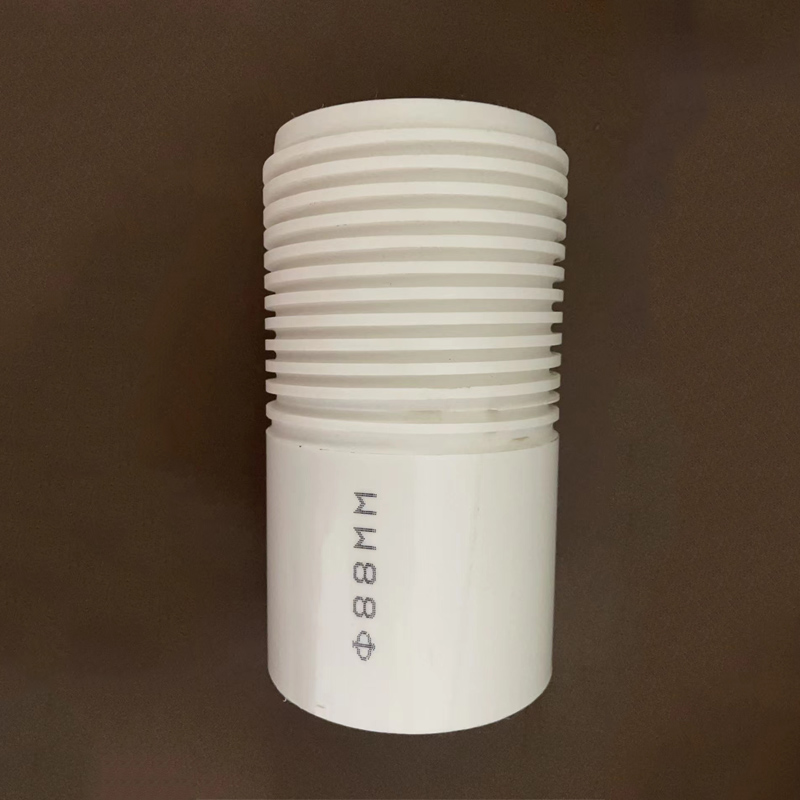
High-Density Polyethylene (HDPE) reducer couplings are critical components in pipeline systems designed for fluid or gas transfer. These couplings facilitate the transition between different diameter HDPE pipes, ensuring system integrity and operational efficiency. Within the broader context of industrial piping – spanning sectors like water distribution, wastewater treatment, mining, and irrigation – HDPE couplings represent a significant advancement over traditional metallic alternatives due to their corrosion resistance, lightweight nature, and ease of installation. The Chinese manufacturing base has become a prominent supplier of these components, offering a range of sizes and configurations to meet global demand. Key performance characteristics include pressure rating, leak-proof sealing, and dimensional accuracy, all crucial for maintaining system reliability and preventing costly downtime. The fundamental purpose of a reducer coupling is to provide a secure, permanent joint while accommodating changes in pipe diameter, mitigating stress concentrations, and maintaining flow characteristics. This guide provides an in-depth technical assessment of HDPE reducer couplings, focusing on material properties, manufacturing processes, performance parameters, failure modes, and relevant industry standards.
Material Science & Manufacturing
HDPE reducer couplings are predominantly manufactured from High-Density Polyethylene resin, typically conforming to standards like PE100 or PE80. PE100 offers superior mechanical properties, specifically higher tensile strength and stress crack resistance, making it suitable for higher pressure applications. The raw material exhibits a semi-crystalline structure, lending to its toughness and resistance to environmental stress cracking. Manufacturing processes typically involve injection molding for smaller diameter couplings and rotational molding for larger diameters. Injection molding ensures dimensional precision and repeatable production, crucial for maintaining tight tolerances. Rotational molding is preferred for larger parts due to its ability to create hollow, seamless components with uniform wall thickness. A critical parameter in the molding process is melt temperature, which directly influences the crystallinity and density of the finished product. Typical melt temperatures range from 180°C to 240°C. Cooling rates are also meticulously controlled to prevent warping and internal stresses. The coupling body is often designed with a ribbed exterior to enhance rigidity and resistance to external loads. The sealing mechanism commonly utilizes an elastomeric gasket, often EPDM or nitrile rubber, selected for its chemical compatibility with the conveyed fluid and its ability to maintain a watertight seal under pressure. The gasket is compression-fitted into a groove within the coupling, ensuring secure containment. Dimensional accuracy is validated through rigorous quality control procedures, including laser scanning and precise caliper measurements, adhering to ISO 4427 standards for polyethylene pipes and fittings.
Performance & Engineering
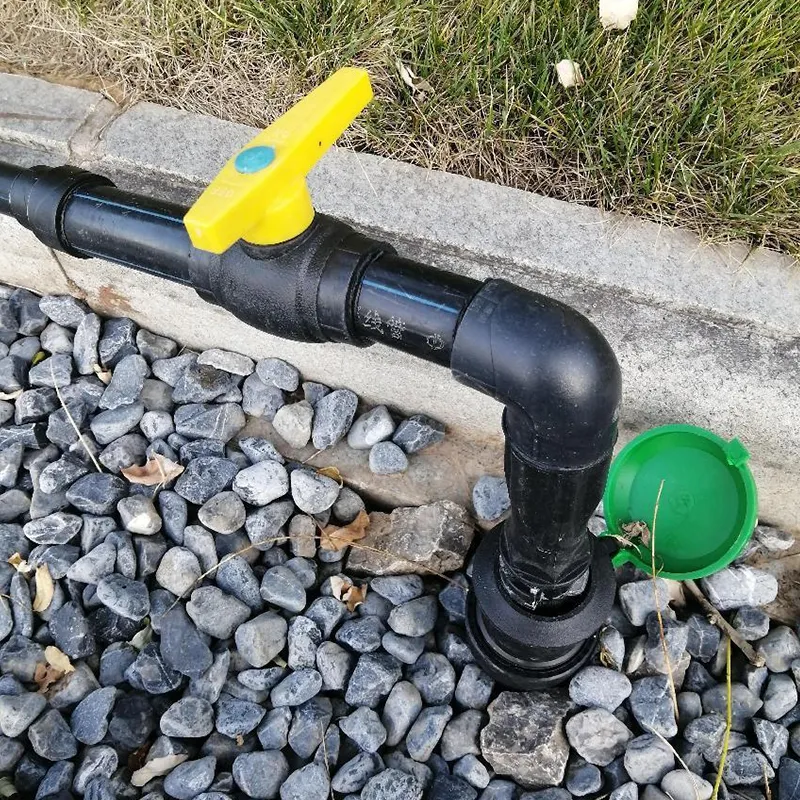
The performance of an HDPE reducer coupling is primarily dictated by its ability to withstand internal pressure, resist external loads, and maintain a leak-proof seal throughout its operational lifespan. Force analysis involves evaluating hoop stress induced by internal pressure, considering the coupling's geometry and material properties. The Barlow's formula is commonly used for this calculation: σ = (PD)/(2t), where σ is hoop stress, P is internal pressure, D is the outer diameter, and t is the wall thickness. External loads, such as soil loading or traffic load, require assessment of the coupling's bending strength and resistance to deformation. Finite Element Analysis (FEA) is frequently employed to model these stresses and optimize the coupling's design for maximum load-bearing capacity. Environmental resistance is a key consideration, particularly in applications involving exposure to ultraviolet (UV) radiation, temperature fluctuations, and aggressive chemicals. HDPE exhibits good UV resistance but prolonged exposure can lead to degradation. UV stabilizers are often incorporated into the resin formulation to mitigate this effect. Temperature fluctuations induce thermal expansion and contraction, which must be accommodated by the coupling's design to prevent stress cracking. Chemical compatibility is critical; HDPE is generally resistant to most acids and bases, but prolonged exposure to strong oxidizing agents or aromatic hydrocarbons can cause swelling or degradation. Compliance requirements vary by region and application. For potable water systems, the coupling must comply with NSF/ANSI 61 standards, ensuring the material does not leach harmful contaminants into the water supply. For gas transmission, compliance with EN 12201 is essential, guaranteeing leak tightness and resistance to gas permeation.
Technical Specifications
| Parameter | Unit | PE80 | PE100 |
|---|---|---|---|
| Material Standard | - | ISO 4427-1 | ISO 4427-1 |
| Pressure Rating (PN) | Bar | 10 | 16 |
| Operating Temperature | °C | -20 to 40 | -20 to 60 |
| Tensile Strength | MPa | 3.8 | 5.0 |
| Elongation at Break | % | 300 | 400 |
| Stress Crack Resistance (ESCR) | Hours | 100 | 1000 |
Failure Mode & Maintenance
HDPE reducer couplings, while durable, are susceptible to certain failure modes. Stress crack failure, initiated by tensile stresses and exacerbated by environmental factors, is a common concern. This typically occurs at stress concentrators, such as sharp corners or gasket seating areas. Fatigue cracking can develop under cyclical pressure loading, particularly in applications involving frequent pressure surges. Degradation due to UV exposure leads to embrittlement and loss of mechanical properties, especially in above-ground installations. Oxidation, caused by exposure to high temperatures and oxygen, can also degrade the material over time. Leakage around the gasket is a frequent failure mode, often resulting from gasket degradation, improper installation, or damage to the gasket seating surface. Delamination can occur in couplings manufactured with insufficient bonding between layers. Maintenance typically involves visual inspection for cracks, deformations, or gasket leakage. Regular pressure testing can identify potential weaknesses before catastrophic failure. Preventative measures include protecting couplings from UV exposure, avoiding excessive pressure fluctuations, and ensuring proper installation procedures are followed. If leakage is detected, the gasket should be replaced, and the seating surface cleaned. For significant damage, the entire coupling should be replaced. Corrective action should also assess the overall pipeline system for contributing factors like excessive ground movement or corrosion in adjacent metallic components.
Industry FAQ
Q: What is the impact of varying fluid temperatures on the long-term performance of an HDPE reducer coupling?
A: Fluctuating fluid temperatures induce thermal expansion and contraction in the HDPE material. While HDPE has a relatively low coefficient of thermal expansion, repeated cycles can induce stress, particularly at the joints. Extreme temperatures exceeding the specified operating range can lead to material degradation. For higher temperature applications, PE100 is preferred due to its higher temperature resistance, and proper allowance for thermal expansion must be incorporated into the pipeline design to prevent stress cracking.
Q: How does the quality of the rubber gasket impact the leak-proof performance of the coupling?
A: The gasket is a critical component for maintaining a leak-proof seal. The gasket material’s chemical compatibility with the conveyed fluid, its compression set resistance, and its ability to conform to the sealing surfaces are crucial. Inferior quality gaskets can degrade prematurely, lose elasticity, and create leakage paths. EPDM and nitrile rubber are commonly used due to their excellent chemical resistance and sealing properties. Proper installation torque is also vital to ensure adequate gasket compression without causing damage.
Q: What are the critical quality control checks during the manufacturing process?
A: Critical quality control checks include raw material inspection for resin properties, dimensional accuracy of the molded coupling, hydrostatic pressure testing to verify leak tightness, and visual inspection for defects such as cracks or inclusions. Melt flow index testing is performed to ensure consistent resin properties. Gasket integrity is also assessed. Dimensional measurements are compared against established tolerances, often using coordinate measuring machines (CMMs).
Q: What are the recommended installation procedures to prevent premature failure?
A: Proper pipe preparation is crucial, ensuring clean, smooth pipe ends free from burrs or sharp edges. Adequate support must be provided to the pipeline to prevent excessive stress on the coupling. Proper insertion depth of the pipe into the coupling is vital to ensure secure engagement with the gasket. Recommended torque values for bolt tightening, if applicable, must be strictly adhered to. Avoid over-tightening, which can damage the gasket or coupling. Avoid dragging or dropping the coupling during handling, as this can cause damage.
Q: How does the ground condition affect the long-term durability of buried HDPE reducer couplings?
A: Ground conditions significantly impact durability. Unstable soil, rocky terrain, or corrosive soil can induce stress and damage to the coupling. Proper bedding and backfilling are essential to provide adequate support and prevent external loads from concentrating on the coupling. Corrosive soils can accelerate degradation, especially if the surrounding metallic components are not adequately protected. Geotechnical surveys are recommended to assess soil conditions before installation.
Conclusion
HDPE reducer couplings are a robust and reliable solution for joining HDPE pipes of different diameters, offering significant advantages over traditional materials in many applications. Their performance relies heavily on the quality of the HDPE resin used, precise manufacturing controls, and adherence to industry standards. Understanding the potential failure modes – including stress cracking, gasket failure, and environmental degradation – is crucial for ensuring long-term system integrity.
Ongoing research and development are focused on enhancing the performance of HDPE couplings, particularly in areas such as improved UV resistance, enhanced gasket materials, and optimized designs for high-pressure applications. Proper installation, regular inspection, and preventative maintenance are essential for maximizing the service life of these critical pipeline components. The Chinese manufacturing sector continues to play a key role in supplying high-quality HDPE reducer couplings to global markets, driven by advancements in material science and manufacturing technology.
-
DN25 HDPE Compression Fitting-HORON INTERNATIONAL|Reliable Irrigation Solutions
NewsFeb.11,2026
-
china hdpe reducer coupling Performance Analysis
News2026-05-06
-
china ppr pipe cost Performance Analysis
News2026-05-06
-
china pvc pipe for sale Performance Analysis
News2026-05-06
-
china 6 double wall corrugated pipe Performance Analysis
News2026-05-06
-
china hdpe conduit fittings Performance Analysis
News2026-05-06
-
china pvc pipe class 7 Performance Analysis
News2026-05-05
-
china 63mm pvc pipe Performance Analysis
News2026-05-05
-
china hdpe to steel transition coupling Performance Analysis
News2026-05-05
-
china kitchen water pipe Performance Analysis
News2026-05-05
-
china ppr 14 pipe Performance Analysis
News2026-05-05
-
china hdpe pipe for drip irrigation Performance Analysis
News2026-05-04
-
china hdpe pipe for agriculture Performance Analysis
News2026-05-04
-
china hdpe sprinkler pipe price Performance Analysis
News2026-05-04
-
china 2 ppr pipe Performance Analysis
News2026-05-04
-
china pvc pipe price per foot Performance Analysis
News2026-05-04