

Feb . 11, 2026 00:01 Back to list
china pvc pipe class 7 Performance Analysis
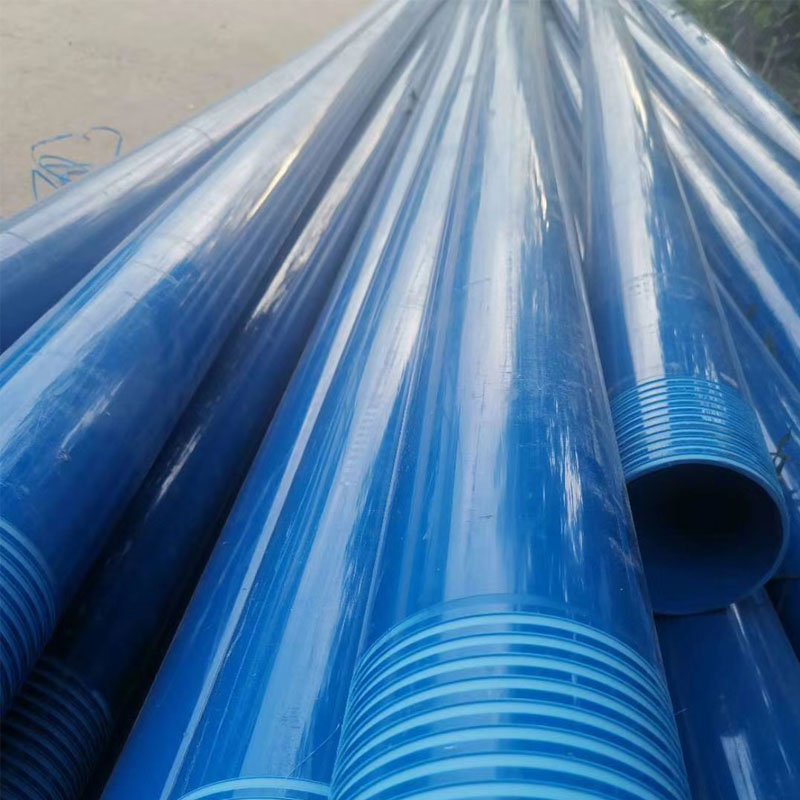
Introduction
China PVC Pipe Class 7 designates a category of Polyvinyl Chloride (PVC) pipes manufactured to specific national standards (GB/T 10002.1-2018 primarily, with cross-references to ISO 4427-1) intended for potable water distribution and general industrial applications. Positioned within the broader PVC piping industry, Class 7 distinguishes itself through enhanced mechanical properties, specifically higher pressure ratings and impact resistance, compared to lower classifications (e.g., Class 5). This pipe utilizes a rigid PVC formulation, typically incorporating stabilizers, lubricants, and impact modifiers. Core performance characteristics include sustained pressure capability, tensile strength, and resistance to chemical degradation. A key industry pain point is ensuring consistent quality control across diverse manufacturers to meet increasingly stringent regulatory demands related to water safety and long-term durability, along with navigating fluctuating raw material costs and their impact on production economics.
Material Science & Manufacturing
China PVC Pipe Class 7 relies on a complex interplay of materials science and precise manufacturing techniques. The primary raw material is Polyvinyl Chloride (PVC) resin, specifically a copolymer of vinyl chloride monomer. Additives critical to performance include calcium-zinc stabilizers (replacing previously common lead-based stabilizers for health and environmental reasons), impact modifiers such as acrylic polymers (to enhance toughness and prevent brittle failure), processing aids (lubricants like stearic acid to improve flow during extrusion), and pigments for color coding (typically blue for potable water applications).
Manufacturing predominantly employs extrusion processes. PVC compound is fed into a twin-screw extruder where it is heated, homogenized, and forced through a die to form the pipe's shape. Precise temperature control within the extruder’s heating zones is paramount – typically ranging from 170°C to 210°C – to ensure complete fusion and prevent degradation. Key parameters controlled include screw speed, die temperature, and haul-off speed. Subsequent cooling, often using vacuum sizing tanks, ensures dimensional accuracy and maintains pipe circularity. Hydrostatic testing is standard, subjecting pipes to internal pressure exceeding their rated working pressure to verify integrity. Quality control at this stage includes wall thickness measurements (using ultrasonic or eddy current methods), diameter checks, and visual inspection for defects like cracks or inclusions. The raw material’s K-value (a measure of molecular weight) is critically monitored as it directly impacts impact resistance and long-term creep resistance.
Performance & Engineering
The performance of China PVC Pipe Class 7 is dictated by several engineering considerations. Stress analysis under internal hydrostatic pressure is crucial, utilizing the Barlow’s formula (σ = PD/2t, where σ is hoop stress, P is pressure, D is diameter, and t is wall thickness) to determine the required wall thickness for a given pressure rating. Factor of Safety is typically >2.5 to account for surge pressures and long-term degradation. Environmental resistance is a major concern; prolonged exposure to ultraviolet (UV) radiation can cause embrittlement and discoloration. Therefore, pipes intended for outdoor use often incorporate UV stabilizers (e.g., titanium dioxide).
Soil loading and external impact resistance are also critical, especially for buried applications. Finite Element Analysis (FEA) is used to model pipe behavior under various loading scenarios, including concentrated loads from heavy machinery. Chemical compatibility is assessed based on the intended application. While PVC exhibits good resistance to many acids and bases, it is susceptible to swelling and degradation by certain solvents and hydrocarbons. Compliance with relevant standards, such as GB/T 10002.1-2018 (China) and ISO 4427-1 (International), mandates specific performance criteria for tensile strength, elongation at break, impact strength (Charpy or Izod tests), and hydrostatic pressure resistance. The pipe’s Long Term Hydrostatic Strength (LTHS) is a critical performance indicator, determining its lifespan under sustained pressure at elevated temperatures. This is typically assessed through accelerated aging tests.
Technical Specifications
| Parameter | Unit | Class 7 Specification (Typical) | Test Standard |
|---|---|---|---|
| Nominal Diameter | mm | 50 - 630 | GB/T 10002.1-2018 |
| Pressure Rating (PN) | MPa | 1.0, 1.6, 2.0, 2.5 | GB/T 10002.2-2018 |
| Wall Thickness | mm | 2.3 – 8.7 (dependent on PN & DN) | GB/T 10002.3-2018 |
| Tensile Strength | MPa | ≥ 45 | GB/T 8898-2008 |
| Elongation at Break | % | ≥ 300 | GB/T 8898-2008 |
| Impact Strength (Charpy, 20°C) | kJ/m² | ≥ 5 | GB/T 8898-2008 |
Failure Mode & Maintenance
China PVC Pipe Class 7, while robust, is susceptible to several failure modes. Long-term hydrostatic stress can induce slow crack propagation (SCP), particularly in the presence of residual stresses from manufacturing or installation. This is exacerbated by the ingress of aggressive chemicals. Fatigue cracking can occur under cyclic pressure loads, such as those experienced in pumping systems. UV degradation, as mentioned previously, leads to surface embrittlement and reduced impact resistance. Soil-induced corrosion, particularly in aggressive soil environments with high sulfate content, can cause chemical attack. Joint failures, often due to improper solvent cementing techniques or gasket degradation, are a common occurrence. Delamination can occur if the PVC compound isn't thoroughly mixed during extrusion, creating internal weaknesses.
Preventative maintenance includes regular visual inspections for cracks, discoloration, or leaks. Pressure testing should be conducted periodically to verify system integrity. Proper jointing procedures, adhering to manufacturer's instructions, are crucial. For buried pipes, cathodic protection may be necessary in corrosive soil environments. Avoiding excessive bending radii during installation minimizes residual stresses. If cracking is detected, localized repairs using PVC repair couplings are possible, but extensive cracking necessitates pipe replacement. Thorough flushing of the pipe system prevents sediment buildup, reducing the risk of abrasion and corrosion. Long-term monitoring of water quality parameters (pH, chloride levels) aids in identifying potential corrosion risks.
Industry FAQ
Q: What is the difference between Class 7 and Class 5 PVC pipe in terms of long-term performance?
A: Class 7 PVC pipe utilizes a more robust formulation with higher molecular weight PVC resin and increased impact modifiers. This translates to significantly improved long-term hydrostatic strength (LTHS) and resistance to slow crack propagation (SCP) compared to Class 5. Class 7 is preferred for applications requiring higher sustained pressure and longer service life, particularly in demanding environments.
Q: How does the calcium-zinc stabilization system compare to the older lead-based systems regarding durability and environmental impact?
A: Calcium-zinc stabilization is a significant improvement over lead-based systems. While lead stabilizers provided excellent thermal stability, they pose severe environmental and health risks. Calcium-zinc stabilizers, although slightly less thermally stable, are non-toxic and environmentally friendly. Modern calcium-zinc formulations, coupled with optimized processing conditions, offer comparable long-term durability and heat resistance to older lead-based systems.
Q: What are the key considerations when selecting a solvent cement for joining Class 7 PVC pipe?
A: The solvent cement must be specifically formulated for PVC, compatible with the pipe material, and appropriate for the intended application (pressure rating, temperature). Ensure the cement is listed for potable water use if applicable. Follow the manufacturer’s instructions precisely regarding surface preparation, application temperature, and curing time. Improper solvent cementing is a primary cause of joint failures.
Q: How can I mitigate the risk of UV degradation in outdoor Class 7 PVC pipe installations?
A: Use pipe specifically formulated with UV stabilizers (typically titanium dioxide). Avoid direct and prolonged exposure to sunlight whenever possible. Painting the pipe with a reflective coating can reduce UV absorption. Burying the pipe provides the most effective protection against UV degradation. If burial isn’t possible, regular inspection and recoating may be necessary.
Q: What are the common causes of hydrostatic test failures in Class 7 PVC pipe?
A: Common causes include manufacturing defects (e.g., incomplete fusion, voids), damage during handling or installation (e.g., cracking, gouging), improper jointing, and exceeding the specified test pressure. A thorough visual inspection before testing is crucial to identify potential weak points. Slow leaks may indicate hairline cracks that are difficult to detect visually.
Conclusion
China PVC Pipe Class 7 represents a significant advancement in PVC piping technology, offering a robust and reliable solution for various water distribution and industrial applications. Its enhanced mechanical properties, coupled with the adoption of environmentally friendly stabilization systems, address key industry challenges related to durability, safety, and sustainability. Understanding the material science, manufacturing processes, and potential failure modes is crucial for ensuring optimal performance and long-term reliability.
Future advancements in PVC formulation, including the development of nano-enhanced composites, promise further improvements in strength, toughness, and resistance to degradation. Continued adherence to stringent quality control standards and the implementation of preventative maintenance programs will be essential for maximizing the lifespan and minimizing the life-cycle cost of China PVC Pipe Class 7 systems. The ongoing evolution of industry standards will continue to drive innovation and ensure the continued suitability of this material for critical infrastructure applications.
-
DN25 HDPE Compression Fitting-HORON INTERNATIONAL|Reliable Irrigation Solutions
NewsFeb.11,2026
-
china pvc pipe class 7 Performance Analysis
News2026-05-05
-
china 63mm pvc pipe Performance Analysis
News2026-05-05
-
china hdpe to steel transition coupling Performance Analysis
News2026-05-05
-
china kitchen water pipe Performance Analysis
News2026-05-05
-
china ppr 14 pipe Performance Analysis
News2026-05-05
-
china hdpe pipe for drip irrigation Performance Analysis
News2026-05-04
-
china hdpe pipe for agriculture Performance Analysis
News2026-05-04
-
china hdpe sprinkler pipe price Performance Analysis
News2026-05-04
-
china 2 ppr pipe Performance Analysis
News2026-05-04
-
china pvc pipe price per foot Performance Analysis
News2026-05-04
-
china long pvc pipe Performance Analysis
News2026-05-03
-
china plumbing kitchen sink water lines Performance Analysis
News2026-05-03
-
china hdpe drip irrigation Performance Analysis
News2026-05-03
-
china hot water ppr pipe Performance Analysis
News2026-05-03
-
china ppr plumbing Technical Analysis
News2026-05-03