

Feb . 11, 2026 00:01 Back to list
china 63mm pvc pipe Performance Analysis
Introduction
Polyvinyl Chloride (PVC) pipe, specifically 63mm diameter manufactured in China, represents a crucial component in a wide range of fluid conveyance systems. Positioned within the broader infrastructure supply chain, it serves as a cost-effective and durable alternative to metallic piping in applications including water distribution, irrigation, drainage, and chemical transport. This guide provides a comprehensive technical overview of 63mm PVC pipe, detailing its material science, manufacturing processes, performance characteristics, potential failure modes, and relevant industry standards. The 63mm dimension is particularly significant as it balances flow capacity with manageable weight and installation requirements for many common applications, making it a staple product in both domestic and international markets. Key performance indicators include pressure rating, tensile strength, impact resistance, and long-term hydrolytic stability. Addressing concerns surrounding plasticizer leaching and environmental impact is also paramount within current industry discourse.
Material Science & Manufacturing
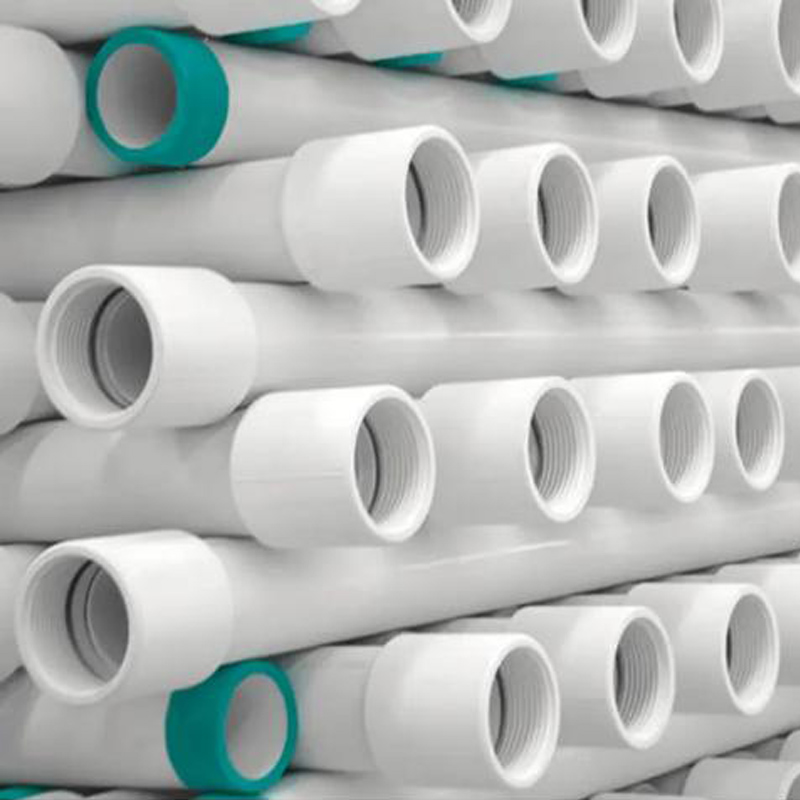
63mm PVC pipe is primarily composed of Polyvinyl Chloride resin, a thermoplastic polymer formed through the polymerization of vinyl chloride monomer. The resin's inherent rigidity is typically modified through the addition of plasticizers – predominantly phthalates or increasingly, bio-based alternatives – to enhance flexibility and impact resistance. Other additives include stabilizers (typically lead-based or calcium-zinc based to prevent degradation from heat and UV exposure), lubricants to aid processing, and pigments for color coding. Raw material quality is critical; variations in resin molecular weight and additive composition directly impact the final pipe’s performance. Manufacturing commonly employs extrusion processes. PVC compound is fed into a single-screw extruder where it is heated and plasticized. The molten PVC is then forced through a die to form a seamless pipe. Critical parameters during extrusion include barrel temperature profiles (typically ranging from 160°C to 210°C), screw speed, and die pressure. Maintaining consistent dimensions (63mm outer diameter, specified wall thickness) requires precise control of these parameters. Cooling is achieved through water tanks, followed by cutting to desired lengths and quality control inspections. Post-processing may include socketing or threading for joining.
Performance & Engineering
The performance of 63mm PVC pipe is largely governed by its ability to withstand internal hydrostatic pressure and external loads. Stress analysis, employing the Barlow formula (σ = PD/2t, where σ is hoop stress, P is pressure, D is diameter, and t is wall thickness), is fundamental in determining the pipe’s pressure rating. Finite Element Analysis (FEA) is used to model more complex loading scenarios, including soil loading for buried applications and bending moments during installation. Long-term performance is significantly affected by creep – the tendency of PVC to deform slowly under sustained stress. Hydrolytic stability, the resistance to degradation due to reaction with water, is another critical factor, especially in potable water systems. PVC’s relatively low tensile strength (typically 50-70 MPa) necessitates careful consideration of joint design and installation practices. Furthermore, temperature fluctuations induce thermal expansion and contraction; appropriate expansion loops and joint allowances must be incorporated to prevent stress concentrations. Chemical compatibility is also vital; while PVC exhibits good resistance to many chemicals, it can be attacked by strong oxidizing agents, aromatic hydrocarbons, and certain ketones. Soil conditions can influence performance; corrosive soils can accelerate degradation.
Technical Specifications
| Parameter | Unit | Typical Value (Schedule 40) | Typical Value (Schedule 80) |
|---|---|---|---|
| Outer Diameter | mm | 63 | 63 |
| Inner Diameter (Schedule 40) | mm | 54.8 | 48.3 |
| Inner Diameter (Schedule 80) | mm | N/A | 42.8 |
| Wall Thickness (Schedule 40) | mm | 4.25 | N/A |
| Wall Thickness (Schedule 80) | mm | N/A | 6.35 |
| Pressure Rating (23°C) | MPa | 1.0 | 1.6 |
| Tensile Strength | MPa | 55 | 55 |
| Impact Strength (Izod Notched) | kJ/m2 | 5 | 7 |
| Hydrolytic Stability | % Reduction in Tensile Strength after 50 years at 23°C | <10 | <8 |
Failure Mode & Maintenance
Common failure modes for 63mm PVC pipe include: Brittle Fracture: Induced by impact, particularly at lower temperatures. Cracking: Stress cracking resulting from sustained tensile stress and exposure to certain chemicals. Hydrolytic Degradation: Long-term weakening of the material due to reaction with water. UV Degradation: Surface embrittlement and discoloration caused by prolonged exposure to ultraviolet radiation. Joint Failure: Leakage or separation at solvent-welded or threaded joints. Slow Crack Growth (SCG): Propagates slowly over time due to sustained tensile stress and the presence of certain contaminants. Maintenance primarily involves visual inspection for cracks, leaks, or discoloration. For minor cracks, repair can be attempted using PVC repair compounds. For significant damage, pipe replacement is generally recommended. Preventative maintenance includes protecting the pipe from direct sunlight (using coatings or burial) and ensuring proper jointing techniques. Regular pressure testing can identify potential leaks before they become critical. In areas with corrosive soils, protective wraps or coatings should be considered. Avoiding excessive bending radii during installation minimizes stress concentrations and reduces the risk of cracking.
Industry FAQ
Q: What is the impact of plasticizer migration on the long-term performance of PVC pipe?
A: Plasticizer migration, the leaching of plasticizers from the PVC matrix, reduces flexibility and impact resistance over time, leading to embrittlement and increased susceptibility to cracking. The rate of migration is influenced by temperature, exposure to chemicals, and the type of plasticizer used. Phthalate plasticizers are known to migrate more readily than newer alternatives like DINCH. Proper formulation and the use of stabilizers can mitigate this effect, but it remains a long-term consideration.
Q: How does the Schedule number (40 or 80) affect the pipe’s suitability for different applications?
A: The Schedule number refers to the pipe’s wall thickness. Schedule 80 pipes have thicker walls than Schedule 40 pipes, resulting in higher pressure ratings and increased resistance to impact and corrosion. Schedule 40 is suitable for lower-pressure applications like irrigation and drainage, while Schedule 80 is preferred for higher-pressure systems, such as industrial water supply and chemical transport.
Q: What are the primary differences between PVC and CPVC pipe, and when would CPVC be the preferred choice?
A: CPVC (Chlorinated Polyvinyl Chloride) exhibits higher temperature resistance than PVC, making it suitable for hot water applications. CPVC also possesses enhanced fire resistance. However, CPVC is generally more expensive and requires specialized joining techniques. It is preferred for applications involving temperatures exceeding 60°C, such as industrial process piping and hot water distribution.
Q: What considerations should be given to soil conditions when burying 63mm PVC pipe?
A: Corrosive soils containing high levels of sulfates or chlorides can accelerate the degradation of PVC. In such environments, protective coatings or wraps should be applied to the pipe. Proper bedding and backfill materials are also crucial to provide support and prevent damage from rocks or other debris. Furthermore, consider the potential for soil settlement and thermal expansion/contraction.
Q: What are the environmental concerns associated with PVC production and disposal?
A: The production of PVC involves the use of vinyl chloride monomer, a known carcinogen. Furthermore, the disposal of PVC waste can pose environmental challenges due to its slow biodegradation and the potential for releasing harmful chemicals during incineration. However, advancements in recycling technologies and the development of bio-based plasticizers are addressing these concerns. Responsible manufacturers are adopting sustainable production practices and promoting PVC recycling programs.
Conclusion
63mm PVC pipe manufactured in China represents a robust and cost-effective solution for a diverse range of fluid conveyance applications. Its performance is dictated by a complex interplay of material science, manufacturing control, and engineering design considerations. Understanding the material's inherent properties, potential failure modes, and relevant industry standards is crucial for ensuring long-term reliability and safety.
Moving forward, innovations in PVC formulation, particularly the development of more sustainable plasticizers and enhanced stabilization systems, will further improve the material’s environmental profile and extend its service life. Continued adoption of quality control measures throughout the manufacturing process, coupled with adherence to international standards, will ensure the continued suitability of 63mm PVC pipe for critical infrastructure projects globally.
-
DN25 HDPE Compression Fitting-HORON INTERNATIONAL|Reliable Irrigation Solutions
NewsFeb.11,2026
-
china pvc pipe class 7 Performance Analysis
News2026-05-05
-
china 63mm pvc pipe Performance Analysis
News2026-05-05
-
china hdpe to steel transition coupling Performance Analysis
News2026-05-05
-
china kitchen water pipe Performance Analysis
News2026-05-05
-
china ppr 14 pipe Performance Analysis
News2026-05-05
-
china hdpe pipe for drip irrigation Performance Analysis
News2026-05-04
-
china hdpe pipe for agriculture Performance Analysis
News2026-05-04
-
china hdpe sprinkler pipe price Performance Analysis
News2026-05-04
-
china 2 ppr pipe Performance Analysis
News2026-05-04
-
china pvc pipe price per foot Performance Analysis
News2026-05-04
-
china long pvc pipe Performance Analysis
News2026-05-03
-
china plumbing kitchen sink water lines Performance Analysis
News2026-05-03
-
china hdpe drip irrigation Performance Analysis
News2026-05-03
-
china hot water ppr pipe Performance Analysis
News2026-05-03
-
china ppr plumbing Technical Analysis
News2026-05-03