

Feb . 11, 2026 00:01 Back to list
pvc pipe price per foot products Performance Analysis
Introduction
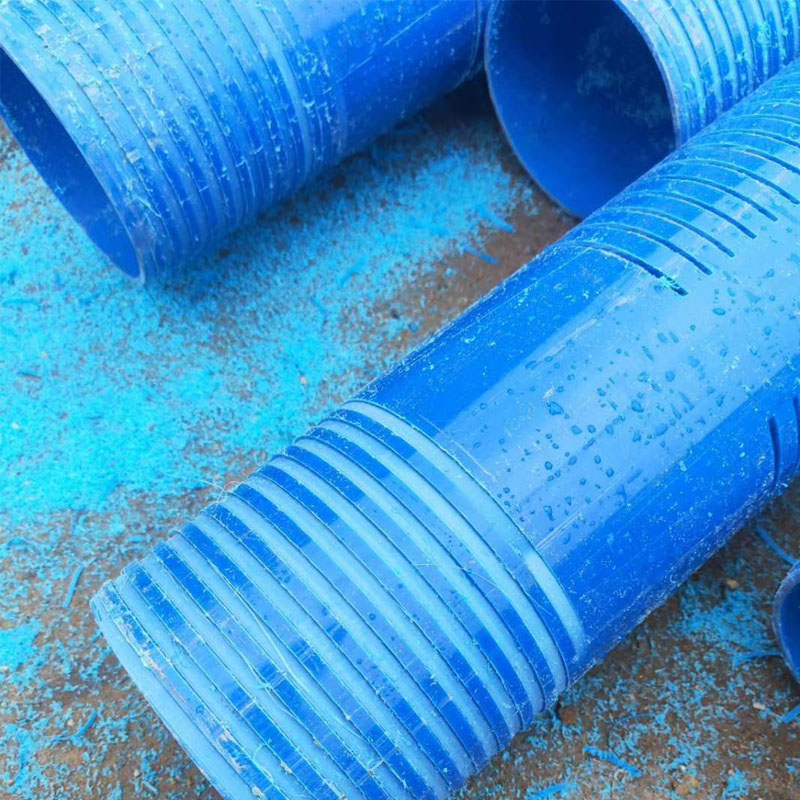
Polyvinyl chloride (PVC) pipe, assessed at price per foot, represents a ubiquitous material within fluid conveyance systems across diverse industries. Its primary application spans potable water distribution, wastewater management, irrigation, and increasingly, industrial chemical transfer. PVC pipe’s position in the value chain stems from its cost-effectiveness, corrosion resistance, and ease of installation, replacing traditional materials like ductile iron, steel, and concrete in numerous applications. Core performance characteristics center around pressure rating (PSI), dimensional accuracy adhering to defined schedules (e.g., Schedule 40, Schedule 80), and long-term durability under varying environmental conditions. Understanding the nuances of PVC formulation, manufacturing processes, and adherence to industry standards is critical for ensuring system reliability and minimizing life-cycle costs. The price per foot is directly influenced by diameter, schedule, material grade, and geographical location, necessitating a detailed technical understanding for informed procurement decisions.
Material Science & Manufacturing
PVC pipe manufacturing relies on the polymerization of vinyl chloride monomer (VCM). The resulting PVC resin is a thermoplastic polymer exhibiting inherent rigidity and brittleness. To enhance its properties for pipe applications, plasticizers – typically phthalates or alternative non-phthalate esters – are incorporated during compounding. These plasticizers impart flexibility, impact resistance, and processability. Fillers, such as calcium carbonate, are added to reduce cost and improve stiffness, while stabilizers (e.g., organotin compounds, calcium-zinc stabilizers) prevent thermal degradation during processing and prolong service life. Lubricants aid in extrusion.
Manufacturing primarily occurs through extrusion. PVC compound is fed into a single-screw or twin-screw extruder where it's heated and homogenized. The molten PVC is then forced through a die, shaping it into the desired pipe diameter and wall thickness. Critical parameters include die temperature (180-210°C), extrusion speed (controlling melt viscosity and output rate), and cooling rate (dictating crystallinity and dimensional stability). Pipe diameter and schedule determine the die design. Post-extrusion, pipes are cooled in water baths, printed with identification markings (size, schedule, standard, manufacturer), and cut to specified lengths. Quality control involves rigorous testing of hydrostatic pressure, impact resistance (Charpy or Izod), and dimensional accuracy. Compounding consistency is paramount; variations in plasticizer content or stabilizer concentration can significantly impact long-term performance.
Performance & Engineering
The engineering performance of PVC pipe is governed by its mechanical strength, chemical resistance, and ability to withstand hydrostatic pressure. Tensile strength, typically around 55-75 MPa for rigid PVC, dictates its resistance to cracking under load. Impact strength, particularly critical in cold weather applications, is enhanced by plasticizer content. The modulus of elasticity (Young's Modulus) determines the pipe’s stiffness and resistance to deflection.
Hydrostatic pressure testing is a fundamental performance criterion, verifying the pipe's ability to contain fluids without failure. ASTM D1597 outlines standard testing procedures. Long-term performance is assessed through hydrostatic stress rupture testing, predicting the pipe's life under sustained pressure. PVC’s chemical resistance is generally excellent, withstanding acids, bases, and salts; however, prolonged exposure to aromatic hydrocarbons and chlorinated solvents can cause swelling and degradation. Environmental resistance is affected by UV exposure, leading to embrittlement; UV stabilizers are added to mitigate this effect. Installation practices significantly impact performance; proper bedding and backfilling are essential to prevent stress concentrations and potential failure. Finite element analysis (FEA) is used to optimize pipe designs and assess stress distribution under various loading conditions, including soil load, internal pressure, and temperature fluctuations. Compliance with relevant codes (e.g., Uniform Plumbing Code, International Plumbing Code) is mandatory.
Technical Specifications
| Parameter | Schedule 40 (in.) | Schedule 80 (in.) | ASTM D1785 |
|---|---|---|---|
| Nominal Pipe Size (NPS) 1/2 | 0.625 | 0.750 | Specifies dimensions and markings |
| Nominal Pipe Size (NPS) 1 | 1.050 | 1.125 | Defines material requirements |
| Nominal Pipe Size (NPS) 2 | 2.375 | 2.625 | Covers hydrostatic design stress |
| Nominal Pipe Size (NPS) 3 | 3.500 | 3.875 | Outlines testing procedures |
| Nominal Pipe Size (NPS) 4 | 4.500 | 4.875 | Addresses long-term performance |
| Hydrostatic Design Stress (psi) | 2000 | 3200 | Varies based on temperature |
Failure Mode & Maintenance
PVC pipe failures typically manifest as cracking, splitting, or leakage. Common failure modes include slow crack growth (SCG) induced by sustained tensile stress and aggressive environments (e.g., soils with high chlorine content). This is particularly prevalent in older PVC formulations. Impact damage, especially at low temperatures, can lead to brittle fracture. UV degradation causes embrittlement, increasing susceptibility to cracking. Joint failures, stemming from improper solvent cementing or gasket degradation, are also frequent.
Failure analysis should involve visual inspection for cracks, discoloration, or deformation. Fractographic analysis can determine the failure mechanism (e.g., brittle fracture, ductile fracture, fatigue). Chemical analysis can identify contaminants contributing to degradation. Preventative maintenance includes regular visual inspections, proper support and bedding, and protection from UV exposure. For solvent-cemented joints, ensure adequate ventilation during application and confirm compatibility between the cement and the pipe material. Damaged sections should be replaced with compatible PVC pipe and fittings. Periodic pressure testing can identify leaks and potential weaknesses. Avoiding excessive bending radii during installation minimizes stress concentrations. Addressing corrosive soil conditions with appropriate backfill materials or protective coatings extends service life.
Industry FAQ
Q: What is the impact of temperature on PVC pipe’s pressure rating?
A: Elevated temperatures reduce the hydrostatic design stress of PVC pipe. ASTM D1785 provides derating factors based on operating temperature. Higher temperatures decrease the pipe’s tensile strength and impact resistance, necessitating a reduction in allowable operating pressure to maintain safety.
Q: How does the plasticizer content affect the long-term durability of PVC pipe?
A: While plasticizers enhance flexibility and impact resistance, they can migrate over time, leading to embrittlement and reduced long-term performance. Modern PVC formulations utilize more stable plasticizers and incorporate UV stabilizers to mitigate these effects, but monitoring plasticizer migration remains critical for long-term applications.
Q: What is the difference between Schedule 40 and Schedule 80 PVC pipe?
A: Schedule 40 and Schedule 80 refer to the pipe wall thickness. Schedule 80 has a thicker wall than Schedule 40, providing greater pressure rating and impact resistance. Schedule 80 is typically used for higher-pressure applications or where increased durability is required.
Q: What are the common causes of slow crack growth in PVC pipe?
A: Slow crack growth (SCG) is often initiated by sustained tensile stress, particularly in the presence of aggressive environments containing chlorine or other chemicals. Notches, scratches, or pre-existing defects can act as stress concentrators, accelerating SCG. Using appropriate PVC formulations and avoiding installation stresses are crucial for preventing SCG.
Q: What is the role of solvent cement in PVC pipe joining, and what are the potential failure modes related to its use?
A: Solvent cement chemically welds PVC pipe and fittings together, creating a strong, leak-proof joint. It works by partially dissolving the surfaces of both components, allowing them to fuse upon solvent evaporation. Failure modes include insufficient cement application, improper curing time, incompatible cement-pipe combinations, and contamination of the joint surfaces. Proper surface preparation, adequate ventilation, and adherence to manufacturer’s instructions are vital for successful solvent cementing.
Conclusion
PVC pipe, evaluated on a price per foot basis, remains a dominant material in fluid transfer systems due to its balance of cost, performance, and ease of installation. However, a comprehensive understanding of its material science, manufacturing processes, and potential failure modes is paramount for ensuring long-term reliability and minimizing life-cycle costs. The selection of appropriate schedules, the consideration of operating temperatures and chemical environments, and adherence to industry standards are crucial for successful implementation.
Future developments in PVC technology will likely focus on enhancing durability through advanced stabilizer systems, exploring bio-based plasticizers, and optimizing manufacturing processes to reduce environmental impact. Continued research into SCG mechanisms and improved jointing technologies will further enhance the performance and longevity of PVC pipe systems. Ultimately, a technically informed approach to material selection and installation practices will maximize the value derived from this versatile and widely used material.
-
DN25 HDPE Compression Fitting-HORON INTERNATIONAL|Reliable Irrigation Solutions
NewsFeb.11,2026
-
china pvc pipe cost per foot Technical Analysis
News2026-04-26
-
china double walled corrugated pipe Performance Analysis
News2026-04-26
-
china hdpe sprinkler pipe price list Performance Analysis
News2026-04-26
-
china water pipe in kitchen Performance Analysis
News2026-04-26
-
china hdpe to pvc pipe coupling Performance Analysis
News2026-04-26
-
china 32 mm ppr pipe Performance Analysis
News2026-04-25
-
china ppr pipe for hot water supply Performance Analysis
News2026-04-25
-
china double walled drainage pipe Performance Analysis
News2026-04-25
-
china black hdpe pipe Manufacturing Analysis
News2026-04-25
-
china dn25 ppr hot water pipes for kitchen Performance Analysis
News2026-04-25
-
china pvc to hdpe connection Performance Analysis
News2026-04-24
-
china ppr pipe elbow Performance Analysis
News2026-04-24
-
china hdpe straight coupler Performance Analysis
News2026-04-24
-
china what are pvc pipes used for Performance Analysis
News2026-04-24
-
china hdpe flexible irrigation pipe Performance Analysis
News2026-04-24