

Feb . 11, 2026 00:01 Back to list
pvc pipe price per foot Product Performance Analysis
Introduction
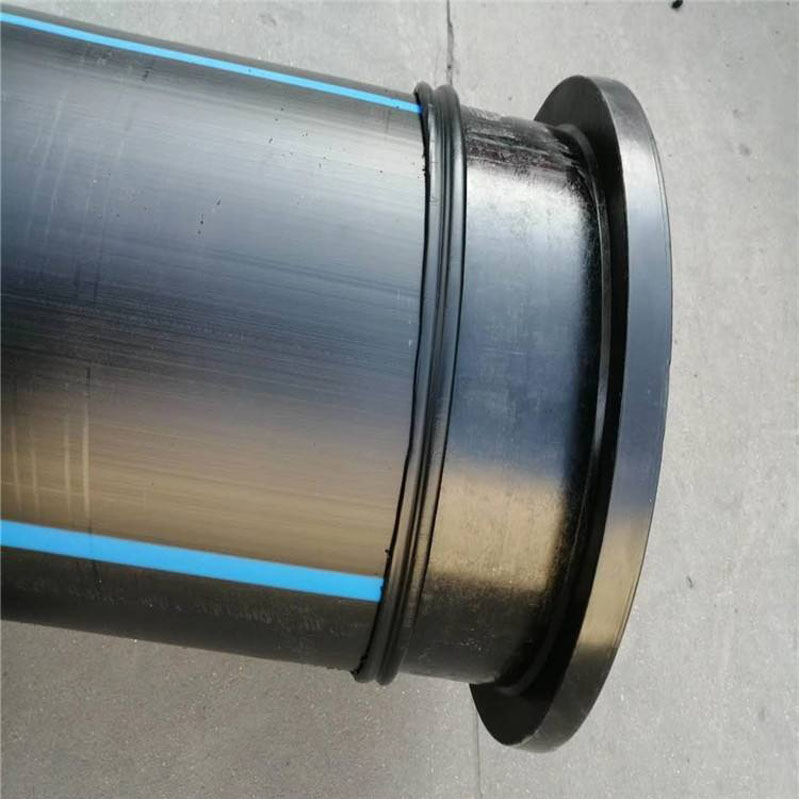
Polyvinyl chloride (PVC) pipe represents a ubiquitous material in modern infrastructure, serving critical roles in potable water distribution, wastewater management, irrigation, and increasingly, industrial fluid conveyance. The “price per foot” metric, while seemingly simple, encapsulates a complex interplay of resin costs, manufacturing processes, dimensional specifications (schedule number, diameter), and regional market dynamics. PVC’s inherent properties—corrosion resistance, low cost, ease of installation, and high flow capacity—have solidified its position as a primary alternative to metallic piping systems. However, a comprehensive understanding of PVC pipe necessitates examining its material composition, manufacturing nuances, performance characteristics under various loading conditions, and potential degradation mechanisms. This guide provides an in-depth technical analysis of PVC pipe, covering material science, manufacturing techniques, performance engineering, failure modes, and relevant industry standards, going beyond simple pricing considerations to address critical engineering concerns.
Material Science & Manufacturing
PVC pipe is fundamentally derived from the polymerization of vinyl chloride monomer (VCM). The resulting PVC resin is a thermoplastic polymer exhibiting excellent chemical resistance and mechanical strength. Formulations typically incorporate stabilizers (e.g., tin-based compounds, calcium-zinc stabilizers) to prevent thermal degradation during processing, lubricants to aid in extrusion, and impact modifiers (e.g., chlorinated polyethylene – CPE) to enhance toughness, particularly at lower temperatures. The specific blend of additives significantly influences the final pipe characteristics, impacting its long-term durability and suitability for different applications. Manufacturing primarily employs extrusion processes. PVC resin, along with additives, is fed into an extruder where it’s heated and plasticized. A die shapes the molten PVC into the desired pipe dimensions. Critical process parameters include extrusion temperature (typically 180-220°C), screw speed, die pressure, and cooling rates. Consistent temperature control is paramount to prevent localized degradation and ensure uniform material properties. Calibration sleeves and vacuum tanks maintain dimensional accuracy. Post-extrusion, pipes undergo cutting, beveling, and quality control inspections, including hydrostatic pressure testing to verify burst resistance. The choice of VCM source, stabilizer package, and precise control of extrusion parameters all contribute to the “price per foot,” alongside the quantity produced. Variations in resin grade (e.g., PVC-40, PVC-80) dictate wall thickness and pressure-bearing capabilities.
Performance & Engineering
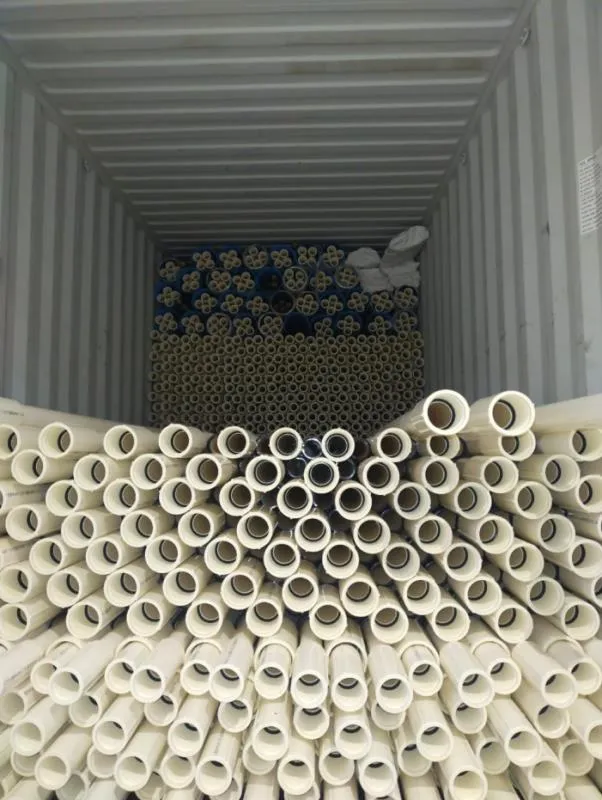
The performance of PVC pipe is dictated by several engineering considerations. Stress analysis, particularly concerning internal pressure, is crucial for determining safe operating limits. Hoop stress, the circumferential stress within the pipe wall due to internal pressure, is a primary design factor. The Barlow’s formula (σ = PD/2t, where σ is hoop stress, P is internal pressure, D is pipe diameter, and t is wall thickness) provides a fundamental basis for calculating this stress. Long-term hydrostatic strength is further affected by creep, a time-dependent deformation under sustained stress. PVC exhibits creep behavior, necessitating derating factors in design codes to account for stress relaxation over the pipe’s service life. External loads, such as soil burial or traffic loading, also contribute to stress. Soil stiffness (modulus of subgrade reaction) and burial depth impact the bending stress experienced by the pipe. Temperature variations influence PVC’s mechanical properties; lower temperatures increase brittleness, while elevated temperatures reduce strength and increase creep. Chemical compatibility is a significant concern. While PVC exhibits excellent resistance to many common chemicals, prolonged exposure to certain solvents or hydrocarbons can cause swelling, softening, or cracking. Environmental stress cracking (ESC), induced by the combined action of stress and aggressive chemicals, is a critical failure mechanism. Standards like ASTM D1785 specify hydrostatic design basis (HDB) and pressure ratings for PVC pipe, ensuring structural integrity under various operating conditions.
Technical Specifications
| Parameter | PVC Schedule 40 | PVC Schedule 80 | CPVC (Chlorinated PVC) | Units |
|---|---|---|---|---|
| Pressure Rating | Up to 200 psi | Up to 600 psi | Up to 300 psi (at 73°F) | psi |
| Tensile Strength | 6,000 - 7,500 | 6,500 - 8,000 | 7,500 - 9,000 | psi |
| Flexural Modulus | 300,000 - 350,000 | 320,000 - 380,000 | 350,000 - 420,000 | psi |
| Impact Strength (Izod Notched) | 8 - 12 | 10 - 15 | 15 - 20 | ft-lb/in |
| Water Absorption (24 hr) | 0.2 - 0.5 | 0.2 - 0.5 | 0.1 - 0.3 | % |
| Operating Temperature Range | -40°F to 140°F | -40°F to 140°F | -40°F to 180°F | °F |
Failure Mode & Maintenance
PVC pipe, despite its durability, is susceptible to several failure modes. Brittle fracture, particularly at low temperatures or due to impact damage, is a common occurrence. Environmental stress cracking (ESC) results from the synergistic effect of sustained stress and chemical exposure, leading to slow crack propagation. Ultraviolet (UV) degradation causes surface chalking and embrittlement, reducing the pipe's mechanical properties. Long-term creep deformation can lead to gradual reduction in internal diameter and potential joint failures. Chemical attack by incompatible substances (e.g., some adhesives, solvents) can cause swelling, softening, or dissolution. Joint failures can occur due to improper solvent cementing, thermal expansion/contraction stresses, or ground movement. Maintenance strategies include regular visual inspections for cracks, discoloration, or leaks. Protecting pipes from direct sunlight (e.g., with paint or coatings) mitigates UV degradation. Proper bedding and backfilling procedures minimize stress from external loads. Avoiding the use of incompatible chemicals and ensuring correct solvent cementing techniques are crucial. For buried pipelines, cathodic protection is not typically required due to PVC’s non-metallic nature, but grounding may be necessary in certain applications to dissipate static electricity. Hydrostatic testing can proactively identify weak points or leaks before they lead to catastrophic failures.
Industry FAQ
Q: What is the significance of Schedule number (e.g., Schedule 40 vs. Schedule 80) in PVC pipe?
A: Schedule number refers to the pipe wall thickness. Higher schedule numbers indicate thicker walls, which correspond to higher pressure ratings and greater structural strength. Schedule 80 pipe, for example, has a significantly thicker wall than Schedule 40 pipe, making it suitable for applications requiring higher pressure containment or enhanced resistance to external loads. The 'schedule' is based on an older system of internal diameters for steel pipe, and is now largely a dimensional standard, but it directly impacts the pipe's pressure bearing capacity.
Q: How does temperature affect the long-term performance of PVC pipe?
A: Elevated temperatures accelerate creep deformation in PVC, reducing its long-term hydrostatic strength and potentially leading to premature failure. Conversely, low temperatures increase brittleness, making the pipe more susceptible to cracking under impact or stress. Maintaining operating temperatures within the specified range (typically -40°F to 140°F for standard PVC) is critical for ensuring long-term performance.
Q: What are the key considerations when solvent cementing PVC pipe?
A: Proper solvent cementing is crucial for creating leak-proof joints. Surface preparation is paramount; surfaces must be clean, dry, and free of contaminants. Using the correct primer and cement for the specific PVC formulation is essential. Applying the primer and cement evenly and within the recommended time window is critical. Adequate ventilation is required due to the volatile organic compounds (VOCs) released during the process. Following manufacturer’s instructions regarding curing time and temperature is also vital.
Q: Can PVC pipe be used in direct sunlight? What are the potential drawbacks?
A: While PVC pipe can be used in direct sunlight, prolonged exposure will lead to UV degradation, causing surface chalking, discoloration, and embrittlement. This reduces the pipe’s mechanical properties and shortens its service life. Protecting PVC pipe from direct sunlight with paint, coatings, or burial is recommended to mitigate UV degradation.
Q: What is the difference between PVC and CPVC, and when would you choose one over the other?
A: CPVC (Chlorinated PVC) is PVC that has been further chlorinated, resulting in increased chlorine content. This modification enhances its heat resistance, allowing it to be used at higher temperatures (up to 180°F). CPVC also exhibits improved chemical resistance compared to standard PVC. CPVC is typically chosen for hot water distribution systems, industrial applications involving corrosive fluids, and situations where higher temperature operation is required. PVC is more cost-effective for cold water or drainage applications.
Conclusion
PVC pipe’s widespread adoption is fundamentally rooted in its favorable cost-performance ratio, coupled with inherent resistance to corrosion. However, a holistic understanding extends beyond simple price per foot; it requires a detailed assessment of material properties, manufacturing control, performance under varying operational conditions, and potential failure mechanisms. The selection of the appropriate PVC formulation (e.g., Schedule 40, Schedule 80, CPVC) and adherence to proper installation practices are critical for ensuring long-term reliability and minimizing life-cycle costs.
Future advancements in PVC technology will likely focus on enhancing impact resistance, improving UV stability, and developing more sustainable formulations utilizing recycled materials. Furthermore, ongoing research into predictive modeling of creep behavior and ESC will refine design guidelines and extend the service life of PVC piping systems. A continued commitment to rigorous quality control and adherence to industry standards is paramount for maintaining the integrity and reliability of this essential infrastructure component.
-
DN25 HDPE Compression Fitting-HORON INTERNATIONAL|Reliable Irrigation Solutions
NewsFeb.11,2026
-
china pvc pipe cost per foot Technical Analysis
News2026-04-26
-
china double walled corrugated pipe Performance Analysis
News2026-04-26
-
china hdpe sprinkler pipe price list Performance Analysis
News2026-04-26
-
china water pipe in kitchen Performance Analysis
News2026-04-26
-
china hdpe to pvc pipe coupling Performance Analysis
News2026-04-26
-
china 32 mm ppr pipe Performance Analysis
News2026-04-25
-
china ppr pipe for hot water supply Performance Analysis
News2026-04-25
-
china double walled drainage pipe Performance Analysis
News2026-04-25
-
china black hdpe pipe Manufacturing Analysis
News2026-04-25
-
china dn25 ppr hot water pipes for kitchen Performance Analysis
News2026-04-25
-
china pvc to hdpe connection Performance Analysis
News2026-04-24
-
china ppr pipe elbow Performance Analysis
News2026-04-24
-
china hdpe straight coupler Performance Analysis
News2026-04-24
-
china what are pvc pipes used for Performance Analysis
News2026-04-24
-
china hdpe flexible irrigation pipe Performance Analysis
News2026-04-24