

Feb . 11, 2026 00:01 Back to list
pvc pipe price per foot factories Performance Analysis
Introduction
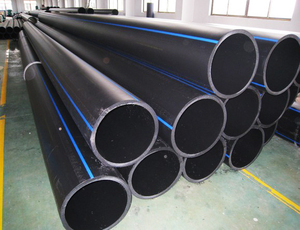
Polyvinyl Chloride (PVC) pipe, assessed on a price per foot basis, represents a cornerstone material in modern infrastructure, spanning applications from potable water distribution and irrigation to wastewater management and electrical conduit. The manufacturing landscape is dominated by factories focusing on efficient production methods and material formulation to optimize cost-effectiveness while adhering to stringent performance standards. This guide provides a comprehensive technical overview of PVC pipe, detailing material science, manufacturing processes, performance characteristics, failure modes, and relevant industry standards. Understanding these elements is crucial for procurement managers, engineers, and project stakeholders involved in selecting and implementing PVC piping systems. Price per foot is influenced by diameter, schedule (wall thickness), material grade, and quantity ordered, making a thorough understanding of these factors essential for informed purchasing decisions. The industry faces constant challenges related to material degradation due to UV exposure, chemical attack, and mechanical stress, necessitating ongoing advancements in PVC formulation and protective measures.
Material Science & Manufacturing
PVC is a thermoplastic polymer produced by the polymerization of vinyl chloride monomer (VCM). The base resin exhibits inherent brittleness, therefore plasticizers, stabilizers, and lubricants are added to enhance flexibility, durability, and processability. Common plasticizers include phthalates and increasingly, bio-based alternatives due to environmental concerns. Stabilizers, such as organotin compounds or calcium-zinc formulations, protect against thermal degradation during processing and prolonged UV exposure. Lubricants facilitate extrusion and reduce friction. Manufacturing primarily employs extrusion processes. PVC compound is fed into a single or twin-screw extruder, where it’s heated and homogenized. The molten PVC is then forced through a die that shapes the pipe to the desired diameter and wall thickness. Critical process parameters include barrel temperature profiles (typically ranging from 130°C to 200°C), screw speed, die pressure, and cooling rate. Proper cooling is vital to prevent warping and maintain dimensional accuracy. Subsequent operations include cutting to length, socketing (for solvent welding), and marking with relevant specifications (size, schedule, material grade, and manufacturer information). The molecular weight distribution of the PVC resin significantly impacts its mechanical properties; higher molecular weight generally correlates with improved impact resistance and tensile strength. Chemical compatibility of the plasticizers and additives with the intended transported fluid is paramount to prevent leaching and maintain water quality.
Performance & Engineering
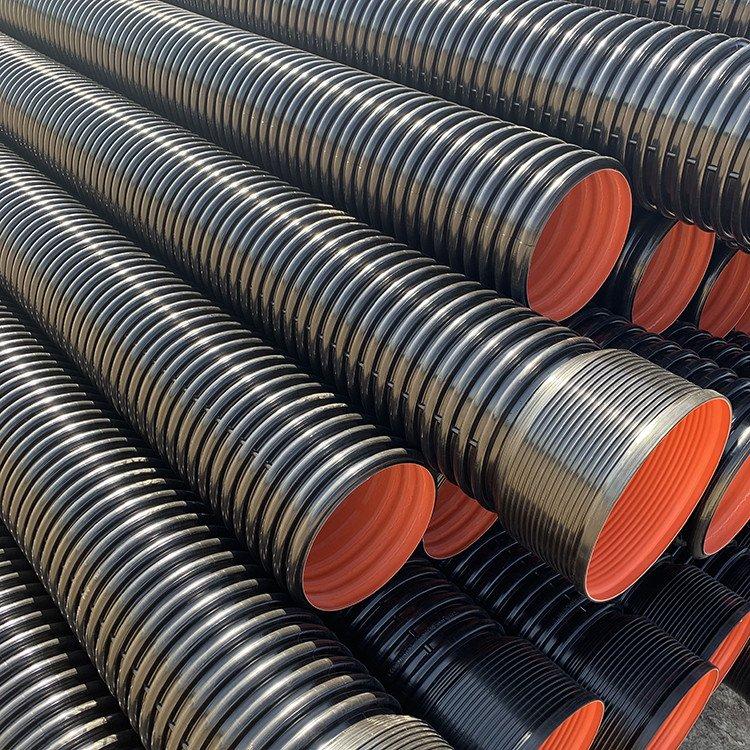
PVC pipe performance is largely dictated by its ability to withstand internal hydrostatic pressure (IHP), external loads, and environmental stressors. IHP is determined through burst pressure testing and long-term hydrostatic strength testing according to ASTM D1597. The pipe schedule (e.g., Schedule 40, Schedule 80) defines the wall thickness and directly correlates with pressure-bearing capacity. External loads, such as soil loading and traffic loads, require careful consideration during installation to prevent pipe deformation or failure. Engineering design must account for factors like soil type, burial depth, and anticipated traffic volume. PVC’s thermal expansion and contraction coefficients are relatively high, necessitating the use of expansion joints in long runs to mitigate stresses induced by temperature fluctuations. Chemical resistance is a key performance attribute; PVC exhibits excellent resistance to acids, alkalis, and salts, but is susceptible to degradation by certain organic solvents and chlorinated hydrocarbons. UV degradation is a significant concern, requiring the incorporation of UV stabilizers and/or protective coatings for above-ground applications. Finite element analysis (FEA) is increasingly used to model stress distributions in PVC pipes under various loading conditions, optimizing design and ensuring structural integrity. Compliance with local plumbing codes and industry standards (e.g., NSF/ANSI 61 for potable water systems) is non-negotiable.
Technical Specifications
| Parameter | Schedule 40 (IPS) | Schedule 80 (IPS) | ASTM D1785 |
|---|---|---|---|
| Material | PVC (Polyvinyl Chloride) | PVC (Polyvinyl Chloride) | PVC Compound |
| Pressure Rating (psi at 73°F) | 400 | 600 | Varies by size and material |
| Temperature Rating (°F) | 140 | 140 | Up to 140°F |
| Wall Thickness (Typical) | 0.133" (3.37 mm) | 0.179" (4.55 mm) | Varies by size and schedule |
| Tensile Strength (psi) | 6,000 - 8,000 | 6,000 - 8,000 | >5,500 |
| Flexural Modulus (psi) | 300,000 - 400,000 | 300,000 - 400,000 | >400,000 |
Failure Mode & Maintenance
PVC pipe is susceptible to several failure modes. Brittle Fracture: Occurs at low temperatures or due to impact loads, particularly in rigid PVC formulations. Environmental Stress Cracking (ESC): Initiated by sustained tensile stress in the presence of certain chemicals, leading to crack propagation. UV Degradation: Prolonged exposure to ultraviolet radiation causes chain scission and embrittlement. Chemical Attack: Exposure to incompatible solvents can cause swelling, softening, and eventual failure. Joint Failure: Improper solvent welding techniques or use of incompatible solvents can result in weak joints prone to leakage. Ground Movement: Settlement or shifting of surrounding soil can induce bending stresses and lead to cracking. Maintenance primarily focuses on preventative measures. Regular visual inspections for cracks, leaks, or deformation are crucial. Proper backfilling procedures are essential to provide adequate support and prevent excessive stress. Above-ground pipes should be shielded from direct sunlight using protective coatings or sleeves. Avoid exposing PVC pipes to incompatible chemicals. For solvent-welded joints, ensure proper surface preparation, solvent application, and curing time. When repairing minor cracks, use compatible PVC repair compounds. For significant damage, pipe replacement is typically the most reliable solution. Periodic pressure testing can identify leaks and assess the overall integrity of the piping system.
Industry FAQ
Q: What is the impact of plasticizer migration on the long-term performance of PVC pipe?
A: Plasticizer migration, the gradual leaching of plasticizers from the PVC matrix, leads to increased brittleness and reduced flexibility over time. This can compromise the pipe's impact resistance and ability to withstand bending stresses. High-quality PVC formulations utilize plasticizers with lower migration rates, and modern formulations are incorporating bio-based plasticizers with improved performance characteristics. Regular monitoring and adherence to material specifications are crucial to mitigate this issue.
Q: How does the soil pH affect the longevity of buried PVC pipe?
A: Extreme soil pH levels (highly acidic or alkaline) can accelerate the degradation of PVC. Acidic soils can promote hydrolysis of the polymer chains, while alkaline soils can promote chain scission. Selecting PVC formulations with enhanced chemical resistance and applying protective coatings can help mitigate this effect. Conducting a soil analysis prior to installation is recommended.
Q: What are the key considerations when selecting PVC pipe for potable water applications?
A: The PVC pipe must meet NSF/ANSI 61 standards for potable water systems, ensuring that it does not leach harmful contaminants into the water supply. The formulation should be lead-free and compliant with relevant regulations. The pipe should also be resistant to chlorine and other disinfectants commonly used in water treatment. Regular flushing of the system can also help maintain water quality.
Q: What is the difference between rigid and flexible PVC pipe, and where are they best applied?
A: Rigid PVC pipe, typically Schedule 40 or 80, maintains its shape without support and is ideal for pressure applications like water distribution and drainage. Flexible PVC pipe, containing a higher plasticizer content, is more pliable and is often used for irrigation and low-pressure applications where bending is required. Attempting to use rigid PVC in situations requiring flexibility can lead to cracking and failure.
Q: How can I determine the correct pipe schedule for a specific application?
A: The appropriate pipe schedule is determined by the maximum operating pressure, temperature, and external loads. Consult engineering tables and relevant industry standards (e.g., ASTM D1785) to calculate the required wall thickness. Factors like fluid velocity, surge pressures, and potential impact loads should also be considered. Always err on the side of caution and select a schedule that provides an adequate safety margin.
Conclusion
PVC pipe remains a dominant material in piping systems due to its cost-effectiveness, durability, and versatility. However, its long-term performance is intrinsically linked to material selection, manufacturing quality, proper installation practices, and environmental considerations. Understanding the principles of material science, failure modes, and relevant industry standards is crucial for optimizing the lifespan and reliability of PVC piping systems. Continued advancements in PVC formulations, particularly in the area of plasticizers and UV stabilizers, will further enhance its performance and expand its applications.
Looking ahead, the industry will likely see a greater emphasis on sustainable PVC production methods, including the use of bio-based materials and recycling initiatives. Increased adoption of predictive maintenance technologies, such as non-destructive testing and data analytics, will also play a role in minimizing downtime and extending the service life of PVC infrastructure. Collaboration between material scientists, engineers, and regulatory bodies will be essential to ensure the continued safe and efficient use of PVC pipe in critical applications.
-
DN25 HDPE Compression Fitting-HORON INTERNATIONAL|Reliable Irrigation Solutions
NewsFeb.11,2026
-
china 32 mm ppr pipe Performance Analysis
News2026-04-25
-
china ppr pipe for hot water supply Performance Analysis
News2026-04-25
-
china double walled drainage pipe Performance Analysis
News2026-04-25
-
china black hdpe pipe Manufacturing Analysis
News2026-04-25
-
china dn25 ppr hot water pipes for kitchen Performance Analysis
News2026-04-25
-
china pvc to hdpe connection Performance Analysis
News2026-04-24
-
china ppr pipe elbow Performance Analysis
News2026-04-24
-
china hdpe straight coupler Performance Analysis
News2026-04-24
-
china what are pvc pipes used for Performance Analysis
News2026-04-24
-
china hdpe flexible irrigation pipe Performance Analysis
News2026-04-24
-
china 40mm pvc pipe Material and Manufacturing
News2026-04-23
-
china hdpe to pvc connection Performance Analysis
News2026-04-23
-
china ppr pipe 1 price Performance Analysis
News2026-04-23
-
china colored pvc pipe Performance Analysis
News2026-04-23
-
china hdpe pipe price list pdf Performance Analysis
News2026-04-23