

Feb . 11, 2026 00:01 Back to list
china hdpe corrugated sewer pipe Performance Analysis
Introduction
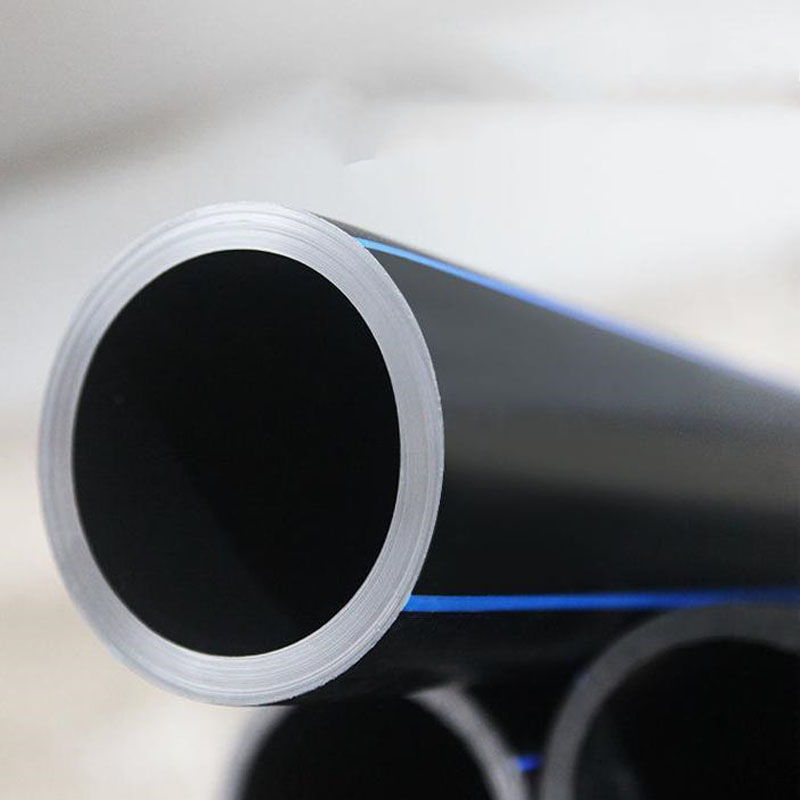
High-Density Polyethylene (HDPE) corrugated sewer pipe represents a significant advancement in underground drainage infrastructure. Positioned within the broader industrial chain of municipal engineering and wastewater management, it serves as a crucial component for gravity-fed sewage systems, stormwater drainage, and industrial effluent conveyance. Unlike traditional materials like concrete, cast iron, or PVC, HDPE corrugated pipe offers a compelling combination of lightweight construction, exceptional durability, and inherent corrosion resistance. Its primary performance characteristics stem from its ability to withstand substantial external loads while maintaining a smooth internal bore for efficient fluid flow. The corrugated outer wall provides structural rigidity, while the polyethylene material ensures long-term chemical inertness and resistance to abrasion. China’s manufacturing capacity has become a dominant force in the global supply of this product, driven by competitive pricing and increasingly sophisticated production technologies. This guide will provide an in-depth examination of the material science, manufacturing processes, performance specifications, failure modes, and maintenance considerations for china hdpe corrugated sewer pipe.
Material Science & Manufacturing
The foundation of hdpe corrugated sewer pipe lies in the properties of high-density polyethylene (HDPE). HDPE is a thermoplastic polymer produced from the polymerization of ethylene. Its high density, achieved through controlled polymerization conditions, results in a material with superior tensile strength, impact resistance, and a higher melting point compared to lower-density polyethylene. Key raw material properties include a density range of 0.941 – 0.965 g/cm³, a tensile strength typically exceeding 30 MPa, and a relatively low coefficient of friction. These properties directly translate into the pipe's ability to withstand burial stresses and facilitate efficient wastewater flow.
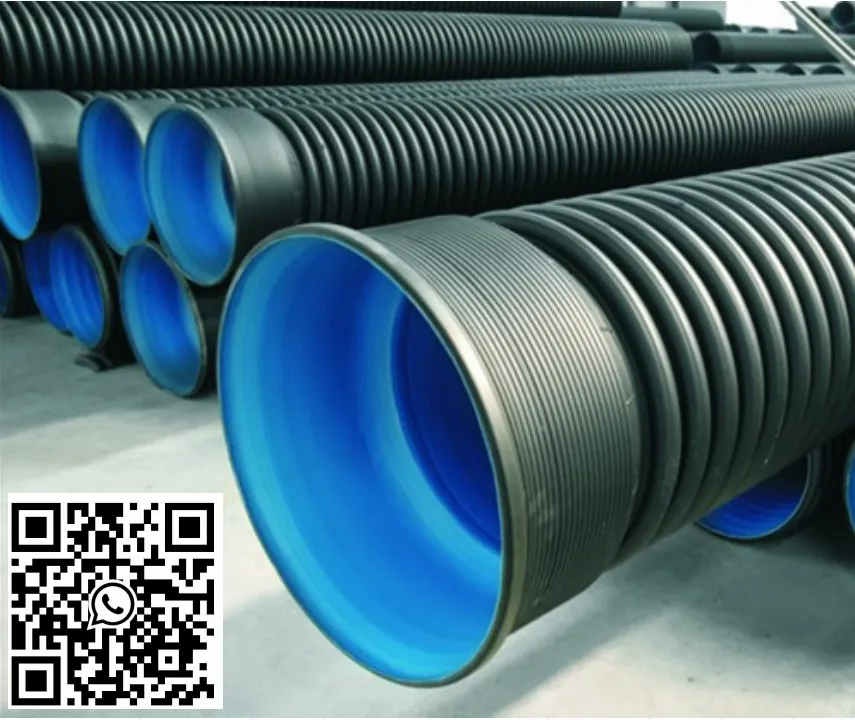
The manufacturing process typically involves several stages. First, HDPE resin pellets are melted and extruded through a circular die to form a continuous pipe profile. Crucially, this pipe then enters a corrugation machine. This machine uses a series of shaped rollers to compress the pipe, creating the characteristic corrugated outer surface. Precise control of roller temperature, speed, and pressure is vital to achieving consistent corrugation profiles and wall thicknesses. The corrugation depth and pitch are engineered to maximize structural ring stiffness. Following corrugation, the pipe may undergo a surface treatment to enhance abrasion resistance, particularly for applications involving sand or grit. Quality control throughout the process focuses on dimensions (diameter, corrugation height, wall thickness), material density, and ring stiffness testing. Advanced manufacturing facilities employ in-line ultrasonic testing to detect any structural defects within the pipe wall. The final stage often involves socketing, where pre-fabricated HDPE sockets are thermally welded onto the pipe ends, providing leak-proof joints.
Performance & Engineering
The performance of hdpe corrugated sewer pipe is governed by several critical engineering principles. The primary load experienced by buried pipe is external pressure from soil overburden and surface loads (traffic, structures). The corrugated structure dramatically increases the pipe's ring stiffness, its resistance to flattening under these loads. Ring stiffness, measured in psi or kPa, is a key design parameter. Higher ring stiffness allows for deeper burial depths and heavier traffic loads. Force analysis relies on the Boussinesq equation and other soil-structure interaction models to predict stress distribution around the pipe.
Environmental resistance is another crucial aspect. HDPE exhibits excellent resistance to most chemicals commonly found in wastewater and soil, including acids, alkalis, and solvents. However, long-term exposure to concentrated hydrocarbons or chlorinated solvents can lead to material degradation. Furthermore, UV radiation can cause embrittlement, necessitating UV stabilizers in the HDPE formulation, particularly for exposed pipe sections. Compliance requirements are dictated by regional and national standards (detailed in the footer). These standards specify minimum ring stiffness values, dimensional tolerances, and performance testing protocols (e.g., hydrostatic pressure testing, impact resistance testing, long-term creep testing). Proper installation, including adequate bedding and backfill compaction, is essential to achieve the designed performance and prevent premature failure. Functional implementation also considers hydraulic capacity; the smooth internal bore minimizes friction losses, reducing pumping costs and maximizing flow rates.
Technical Specifications
| Parameter | Units | Typical Value (DN/ID 300mm Pipe) | Testing Standard |
|---|---|---|---|
| Nominal Diameter (DN) | mm | 300 | ISO 4437 |
| Internal Diameter (ID) | mm | 290 | ASTM F2306 |
| Corrugation Height | mm | 6-12 | EN 13476 |
| Wall Thickness (Plain Section) | mm | 3.7 | ISO 4437 |
| Ring Stiffness | kPa | 8.0 | ASTM D2412 |
| Tensile Strength | MPa | >30 | ISO 527 |
| Impact Resistance (Charpy) | kJ/m² | >50 | ISO 148-M |
Failure Mode & Maintenance
Several failure modes can affect hdpe corrugated sewer pipe in practical applications. Fatigue cracking, induced by repeated loading and unloading (e.g., traffic loads, soil settlement), is a common concern. This is exacerbated by improper installation or inadequate bedding support. Delamination, the separation of the corrugated layers, can occur due to poor adhesion during manufacturing or exposure to excessive shear stresses. Degradation resulting from long-term UV exposure can lead to embrittlement and reduced impact resistance. Oxidation, particularly in the presence of residual catalysts from the manufacturing process, can slowly degrade the polymer matrix. Chemical attack from aggressive substances in wastewater can also contribute to material degradation. Another mode is joint failure, often arising from improper welding techniques or socket damage during installation.
Professional maintenance solutions include regular visual inspections to identify potential damage (cracks, deformation, leaks). Ground Penetrating Radar (GPR) can be used to non-destructively assess the condition of buried pipes. For minor cracks, resin-based patching compounds can provide a temporary repair. More significant damage may require excavation and pipe replacement. Prevention is paramount: ensure proper installation practices, adequate bedding and backfill compaction, and avoid exposure to incompatible chemicals. Routine cleaning to remove sediment buildup minimizes corrosion potential and maintains hydraulic capacity. Pressure testing after installation and periodically thereafter can identify leaks and structural weaknesses.
Industry FAQ
Q: What is the impact of soil corrosivity on the long-term performance of HDPE corrugated pipe?
A: Soil corrosivity, particularly the presence of sulfates and chlorides, can accelerate the degradation of some pipe materials. HDPE is inherently resistant to most soil chemicals, but prolonged exposure to high concentrations of aggressive substances can lead to stress cracking or reduced polymer strength. Proper selection of HDPE formulations with appropriate chemical resistance, combined with protective coatings, can mitigate this risk. Geotechnical investigations should be conducted to assess soil chemistry before installation.
Q: How does the pipe’s ring stiffness affect its allowable burial depth?
A: Ring stiffness is directly correlated to the pipe’s ability to withstand external loads. Higher ring stiffness allows for greater burial depths without exceeding the allowable stress limits. Design calculations based on soil properties, traffic loads, and pipe dimensions determine the maximum safe burial depth. Exceeding this depth can lead to pipe flattening and structural failure.
Q: What are the key differences between single-wall and double-wall corrugated HDPE pipe?
A: Single-wall pipe offers lower ring stiffness and is typically used for shallower burial depths and less demanding applications. Double-wall pipe, featuring an inner and outer corrugated layer, provides significantly higher ring stiffness and enhanced structural integrity. It's suitable for deeper burial depths, heavy traffic loads, and applications requiring greater hydraulic capacity.
Q: What quality control measures are typically employed during the manufacturing of HDPE corrugated pipe?
A: Rigorous quality control measures include raw material testing (density, melt flow index), dimensional inspections (diameter, wall thickness, corrugation height), ring stiffness testing, hydrostatic pressure testing, impact resistance testing, and visual inspections for defects. Advanced manufacturers utilize statistical process control (SPC) to monitor and maintain consistent product quality.
Q: What is the typical service life of properly installed and maintained HDPE corrugated sewer pipe?
A: Properly installed and maintained HDPE corrugated sewer pipe can have a service life exceeding 50 years, and potentially up to 100 years, in non-aggressive environments. Factors influencing service life include soil conditions, traffic loads, wastewater composition, UV exposure, and adherence to proper installation and maintenance practices.
Conclusion
China hdpe corrugated sewer pipe represents a robust and cost-effective solution for modern drainage infrastructure. Its inherent material properties – high density polyethylene’s chemical resistance, strength, and durability – coupled with the structural benefits of corrugated design, make it a superior alternative to traditional materials in many applications. Effective performance hinges not only on the quality of the pipe itself but also on meticulous attention to design considerations, proper installation techniques, and ongoing maintenance protocols.
Looking forward, advancements in HDPE formulations, including the incorporation of recycled materials and enhanced UV stabilizers, will further improve the sustainability and longevity of these systems. Continued research into soil-structure interaction models and improved non-destructive testing methods will also contribute to optimizing pipe design and ensuring long-term performance reliability. As municipal infrastructure continues to age and demand for efficient wastewater management increases, hdpe corrugated sewer pipe will undoubtedly play an increasingly vital role in safeguarding public health and environmental quality.
-
DN25 HDPE Compression Fitting-HORON INTERNATIONAL|Reliable Irrigation Solutions
NewsFeb.11,2026
-
china 24 inch diameter pvc pipe price Performance Engineering
News2026-04-27
-
china 4 hdpe drain pipe Performance Analysis
News2026-04-27
-
china 12 hdpe pipe Performance Analysis
News2026-04-27
-
china hdpe reducing coupling Performance Analysis
News2026-04-27
-
china hdpe corrugated sewer pipe Performance Analysis
News2026-04-27
-
china pvc pipe cost per foot Technical Analysis
News2026-04-26
-
china double walled corrugated pipe Performance Analysis
News2026-04-26
-
china hdpe sprinkler pipe price list Performance Analysis
News2026-04-26
-
china water pipe in kitchen Performance Analysis
News2026-04-26
-
china hdpe to pvc pipe coupling Performance Analysis
News2026-04-26
-
china 32 mm ppr pipe Performance Analysis
News2026-04-25
-
china ppr pipe for hot water supply Performance Analysis
News2026-04-25
-
china double walled drainage pipe Performance Analysis
News2026-04-25
-
china black hdpe pipe Manufacturing Analysis
News2026-04-25
-
china dn25 ppr hot water pipes for kitchen Performance Analysis
News2026-04-25