

Feb . 11, 2026 00:01 Back to list
china gray pvc pipe Performance Analysis
Introduction
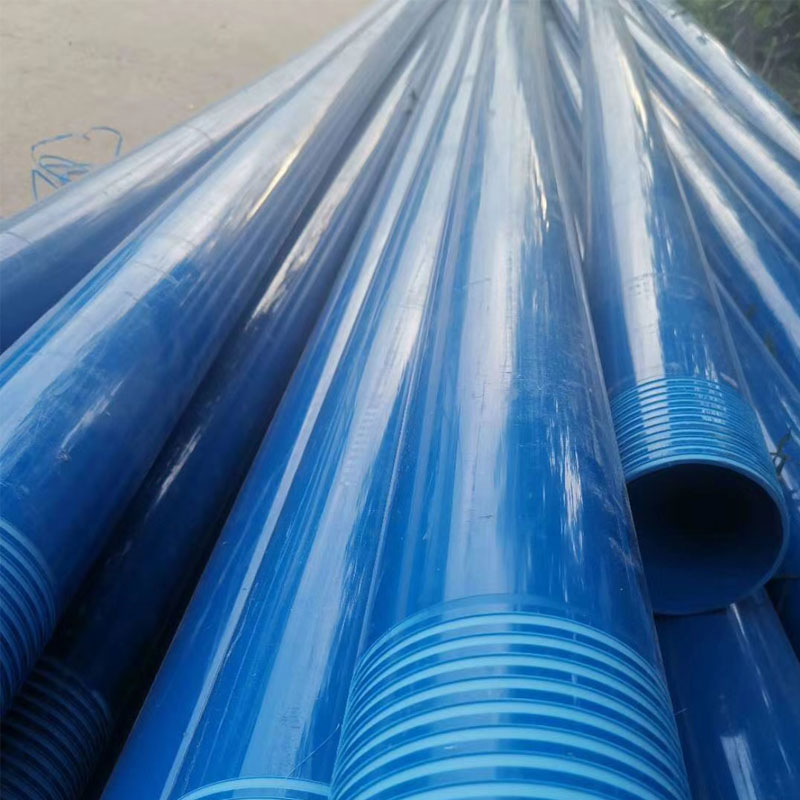
China Gray Polyvinyl Chloride (PVC) pipe is a widely utilized thermoplastic piping system primarily employed in non-pressure applications such as drainage, waste, and vent (DWV) systems, irrigation, and conduit. Its prevalence stems from a combination of cost-effectiveness, ease of installation, and sufficient mechanical properties for specified operating conditions. Distinguished by its grey coloration, a result of specific pigment additions during manufacturing, this PVC formulation offers UV resistance that is superior to standard white PVC, making it suitable for above-ground exposure in certain applications. Within the broader piping industry chain, China Gray PVC pipe occupies a mid-range position, serving as a functional alternative to more expensive materials like ductile iron, stainless steel, or CPVC where high-pressure or extreme temperature resistance is not paramount. Core performance characteristics include fluid conveyance, structural load bearing (when properly supported), and resistance to a range of chemical environments. Understanding the nuances of its material composition, manufacturing processes, and potential failure modes is critical for engineers and procurement professionals to ensure optimal system longevity and performance.
Material Science & Manufacturing
China Gray PVC pipe is primarily composed of Polyvinyl Chloride resin, a thermoplastic polymer produced via the polymerization of vinyl chloride monomer. The addition of plasticizers, typically phthalates or alternative non-phthalate esters, imparts flexibility and impact resistance to the otherwise brittle PVC. Stabilizers, including metal-based compounds like tin stabilizers or calcium-zinc stabilizers, are essential to prevent degradation during processing and extended service life, protecting against thermal and UV-induced decomposition. Pigments, specifically carbon black and titanium dioxide, contribute to the grey coloration and enhance UV resistance. Fillers, such as calcium carbonate, are incorporated to reduce cost and modify mechanical properties. The manufacturing process predominantly utilizes extrusion. PVC resin, along with additives, is blended and fed into a single-screw extruder where it is heated, melted, and forced through a die to create a continuous pipe profile. Critical parameters in extrusion include barrel temperature profiles (typically ranging from 160°C to 220°C depending on formulation), screw speed, and die pressure, all impacting the pipe’s dimensional accuracy, surface finish, and material homogeneity. Post-extrusion, the pipe is cooled via water baths, sized using calibrators, and cut to specified lengths. Quality control focuses on maintaining consistent wall thickness, diameter, and the absence of defects like voids or delamination. Chemical compatibility of additives must be carefully considered; incompatible plasticizers can cause blooming or exudation, leading to surface tackiness and reduced performance. The specific gravity of the compound typically falls between 1.3 and 1.4 g/cm³.
Performance & Engineering
The performance of China Gray PVC pipe is governed by several key engineering considerations. Hydrostatic pressure resistance, defined by the pipe’s ability to withstand internal fluid pressure without failure, is critical in drainage and irrigation systems. This resistance is directly correlated to the pipe’s Schedule number (e.g., Schedule 40, Schedule 80), which denotes wall thickness. Tensile strength, typically around 50-60 MPa for standard formulations, dictates the pipe’s ability to resist longitudinal stress. Impact strength, measured using Izod or Charpy tests, assesses its resistance to sudden forces, particularly important in buried applications susceptible to ground movement or accidental impact. Environmental resistance is significant. While PVC is generally resistant to acids and alkalis, prolonged exposure to certain solvents (ketones, esters) can cause swelling and degradation. The grey pigmentation offers enhanced UV resistance compared to white PVC, mitigating yellowing and embrittlement upon prolonged sunlight exposure. Installation practices are paramount. Proper bedding and backfill are required to distribute load and prevent localized stress concentrations that can lead to cracking. Thermal expansion and contraction coefficients (approximately 8 x 10⁻⁵ /°C) must be accounted for in long pipeline runs to prevent buckling or joint separation. Compliance requirements, such as ASTM D1785 (for PVC pipe) and local building codes, mandate specific material properties, dimensional tolerances, and testing procedures. Force analysis during installation and operation must consider bending moments, shear stresses, and longitudinal loads to ensure structural integrity.
Technical Specifications
| Parameter | Schedule 40 | Schedule 80 | ASTM D1785 |
|---|---|---|---|
| Nominal Pipe Size (inches) | 0.5 - 12 | 0.5 - 12 | 0.5 - 24 |
| Wall Thickness (minimum, inches) | 0.05 - 0.30 | 0.065 - 0.375 | Specified per size & schedule |
| Hydrostatic Design Stress (HDS, psi) | 4000 | 6000 | Variable, based on temperature & material |
| Tensile Strength (MPa) | 55 | 60 | Minimum 55 |
| Impact Strength (Izod Notched, J/m) | 400 | 500 | Minimum 300 |
| Service Temperature Range (°C) | -10 to 60 | -10 to 60 | -10 to 60 (degradation may occur outside this range) |
Failure Mode & Maintenance
China Gray PVC pipe, while durable, is susceptible to several failure modes. Long-term hydrostatic pressure can lead to slow crack growth (SCG), particularly in systems with residual stress from improper installation or fluctuating pressures. UV degradation, despite the grey pigmentation, can still occur over decades of continuous exposure, causing embrittlement and reduced impact resistance. Chemical attack from aggressive solvents or prolonged exposure to certain industrial effluents can induce swelling, cracking, or dissolution of the PVC material. Mechanical damage, such as impact from heavy objects or soil settlement, can cause cracking or puncture. Joint failures can arise from improper solvent cementing (insufficient solvent, incorrect application, or contaminated surfaces), leading to leaks. Fatigue cracking can occur in pipelines subjected to repeated bending or vibration. Delamination can manifest in substandard manufacturing where layers within the pipe wall do not bond correctly. Maintenance involves regular visual inspections for cracks, leaks, or signs of degradation. Proper support and bedding are crucial to minimize stress. Avoid using incompatible solvents or harsh cleaning agents. For repairs, utilize approved PVC cement and fittings. In instances of severe degradation or SCG, complete pipe replacement is recommended. Preventive measures include proper installation techniques, selection of appropriate pipe schedules for the intended application, and regular monitoring of system conditions.
Industry FAQ
Q: What is the primary advantage of China Gray PVC over standard white PVC in outdoor applications?
A: The primary advantage lies in the enhanced UV resistance imparted by the carbon black pigment in the grey formulation. Carbon black absorbs UV radiation, preventing it from degrading the PVC polymer, thus extending the service life of the pipe when exposed to sunlight.
Q: Can China Gray PVC pipe be used for potable water applications?
A: While some formulations are certified for potable water, it’s critical to verify the specific PVC compound’s certification (e.g., NSF/ANSI 61) before using it for drinking water conveyance. Not all China Gray PVC is manufactured to meet potable water standards.
Q: What is the impact of temperature on the performance of China Gray PVC pipe?
A: Elevated temperatures reduce the pipe’s strength and increase its susceptibility to creep and deformation. Low temperatures can cause the pipe to become more brittle and prone to cracking, particularly under impact. Maintaining temperatures within the specified service range (-10 to 60°C) is crucial.
Q: What are the key considerations for solvent cementing China Gray PVC pipe?
A: Proper surface preparation (cleaning and drying), the use of a compatible PVC cement, and sufficient ventilation are essential. Apply the cement evenly to both the pipe and fitting surfaces, ensuring complete coverage. Allow adequate curing time before pressurizing the system.
Q: What is the typical lifespan of a properly installed China Gray PVC pipe system?
A: A properly installed and maintained system can realistically achieve a service life of 50 years or more, although this is contingent on factors such as soil conditions, operating pressure, temperature exposure, and the quality of the initial installation.
Conclusion
China Gray PVC pipe represents a cost-effective and versatile solution for a wide range of non-pressure piping applications. Its inherent resistance to chemical corrosion, ease of installation, and improved UV stability compared to standard PVC make it a preferred choice in many scenarios. However, understanding its limitations regarding temperature resistance, susceptibility to specific solvents, and potential failure modes is paramount for ensuring long-term performance and system reliability.
Engineers and procurement managers must prioritize adherence to relevant industry standards (ASTM D1785 being central) and best practices for installation and maintenance. Careful material selection, considering the specific operating conditions and environmental factors, is crucial. Continual advancements in PVC formulations and manufacturing techniques are further enhancing the durability and performance of these systems, solidifying their position as a mainstay in modern infrastructure.
-
DN25 HDPE Compression Fitting-HORON INTERNATIONAL|Reliable Irrigation Solutions
NewsFeb.11,2026
-
china hdpe pipe list Manufacturing and Performance
News2026-05-07
-
china gray pvc pipe Performance Analysis
News2026-05-07
-
china ppr pipe heating time Performance Analysis
News2026-05-07
-
china what is pvc pipe used for in plumbing Material Science and Performance Analysis
News2026-05-07
-
china upvc column pipes price list Technical Analysis
News2026-05-07
-
china hdpe reducer coupling Performance Analysis
News2026-05-06
-
china ppr pipe cost Performance Analysis
News2026-05-06
-
china pvc pipe for sale Performance Analysis
News2026-05-06
-
china 6 double wall corrugated pipe Performance Analysis
News2026-05-06
-
china hdpe conduit fittings Performance Analysis
News2026-05-06
-
china pvc pipe class 7 Performance Analysis
News2026-05-05
-
china 63mm pvc pipe Performance Analysis
News2026-05-05
-
china hdpe to steel transition coupling Performance Analysis
News2026-05-05
-
china kitchen water pipe Performance Analysis
News2026-05-05
-
china ppr 14 pipe Performance Analysis
News2026-05-05