

Feb . 11, 2026 00:01 Back to list
ppr 14 pipe manufacturer Performance Analysis
Introduction
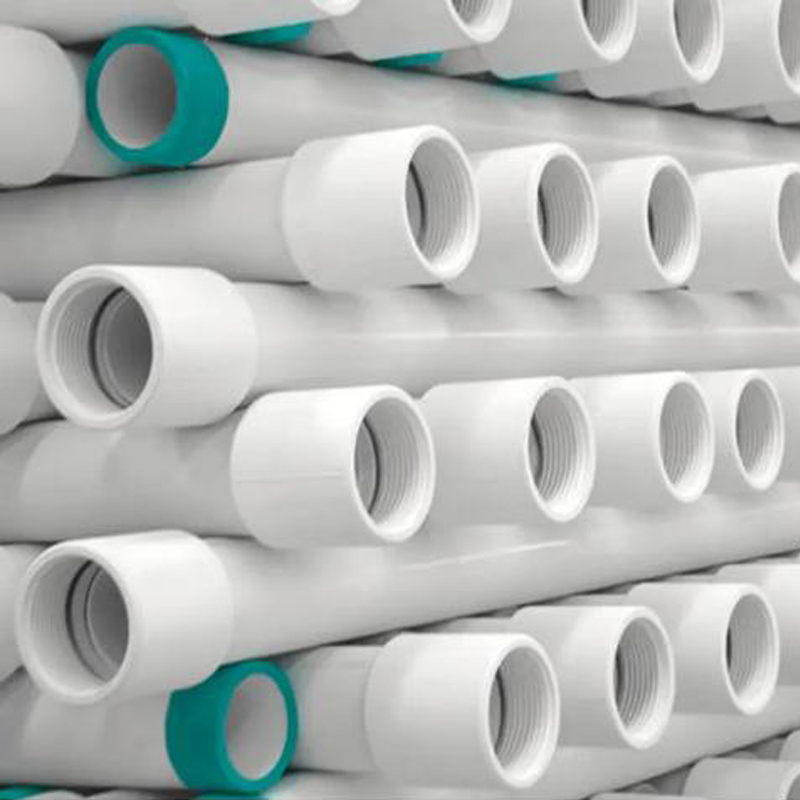
Polypropylene Random (PPR) pipe, specifically PPR 14, represents a significant advancement in thermoplastic piping systems for fluid conveyance. Defined by its ISO designation and nominal diameter of 14mm (approximately 1/2 inch), PPR 14 pipe is utilized extensively in hot and cold water distribution, industrial applications, and increasingly, in heating systems. Its position within the industry chain is as a direct replacement for traditional metallic piping – copper, galvanized steel – offering advantages in cost, corrosion resistance, and ease of installation. Core performance characteristics revolve around pressure resistance, thermal stability, and chemical inertness, making it a versatile solution for a broad spectrum of fluid handling needs. The 14mm dimension addresses applications requiring smaller flow rates or tight spatial constraints, commonly found in residential plumbing or specific process lines. This technical guide provides a comprehensive overview of PPR 14 pipe, encompassing its material science, manufacturing, performance attributes, potential failure modes, and relevant industry standards.
Material Science & Manufacturing
PPR 14 pipe is manufactured from polypropylene random copolymer, a thermoplastic polymer characterized by its random distribution of comonomers. The primary raw material is polypropylene homopolymer and ethylene, which are polymerized using Ziegler-Natta or metallocene catalysts. The resulting copolymer exhibits improved flexibility, crack resistance, and lower melting temperatures compared to homopolymer polypropylene. Key physical properties include a density typically ranging from 0.905 to 0.92 g/cm³, a tensile strength between 25-35 MPa, and a flexural modulus of 800-1200 MPa. Its chemical compatibility is excellent with a wide range of fluids, including potable water, acids, alkalis, and many industrial chemicals.
Manufacturing processes for PPR 14 pipe generally involve extrusion. Polypropylene granules are fed into an extruder, where they are heated and melted. The molten polymer is then forced through a circular die to form a continuous pipe. Critical parameters during extrusion include barrel temperature (typically 190-230°C), die temperature, and extrusion speed. Precise control of these parameters is essential to ensure consistent wall thickness, dimensional accuracy, and a smooth surface finish. The pipe is subsequently cooled using a water bath, calibrated to maintain its diameter, and cut to length. Hydrostatic testing is a crucial quality control step, where pipes are pressurized to several times their working pressure to verify their integrity and leak-proofness. Welding parameters, crucial for joining PPR 14 pipes, rely on socket fusion or electrofusion methods, demanding controlled temperature and pressure settings to create homogenous, structurally sound joints.
Performance & Engineering
The performance of PPR 14 pipe is dictated by its ability to withstand internal pressure, temperature fluctuations, and external loads. Force analysis reveals that hoop stress, resulting from internal pressure, is the primary stress component. The pipe's wall thickness is engineered to provide sufficient resistance to this stress, ensuring long-term structural integrity. According to the Barlow's formula (σ = PD/2t, where σ is hoop stress, P is internal pressure, D is pipe diameter, and t is wall thickness), a higher wall thickness is required for higher operating pressures.
Environmental resistance is a key consideration. PPR exhibits good resistance to UV degradation, but prolonged exposure to direct sunlight can cause embrittlement. Therefore, pipes installed outdoors should be shielded or formulated with UV stabilizers. Chemical resistance is broadly excellent, but exposure to strong oxidizing agents should be avoided. Compliance requirements are stringent, dictated by standards like EN ISO 15876, which defines the minimum performance criteria for PPR piping systems. These standards address hydrostatic pressure, thermal stability, reversion-resistant properties, and resistance to slow crack growth. Functional implementation relies heavily on proper jointing techniques. Socket fusion welding, the most common method, requires precise temperature control to achieve a homogeneous weld, ensuring the joint's strength matches or exceeds that of the pipe itself. Improper welding can lead to weak points and potential leakage.
Technical Specifications
| Parameter | Value (Typical) | Testing Standard | Unit |
|---|---|---|---|
| Nominal Diameter | 14 | ISO 15876 | mm |
| Pressure Rating (PN) | 20 | ISO 15876 | bar |
| Wall Thickness | 2.3 | ISO 15876 | mm |
| Tensile Strength | 32 | ISO 527-2 | MPa |
| Elongation at Break | 250 | ISO 527-2 | % |
| Service Temperature (Water) | -20 to 95 | DIN 1988 | °C |
Failure Mode & Maintenance
PPR 14 pipe, while robust, is susceptible to several failure modes. Fatigue cracking can occur due to repeated pressure cycles, particularly at elevated temperatures. This is exacerbated by improper installation or the presence of stress concentrators. Slow Crack Growth (SCG) is a common issue, driven by the combined effects of sustained stress and exposure to certain chemicals or aggressive water compositions. Oxidation, while less prevalent in PPR compared to some other polymers, can occur at very high temperatures over extended periods, leading to material degradation. Delamination can occur in poorly welded joints, where insufficient fusion compromises the bond between the pipe and fitting.
Maintenance strategies focus on preventative measures. Regular visual inspections should be conducted to identify any signs of cracking, leakage, or deformation. Water quality should be monitored to prevent aggressive chemical exposure. Proper support and anchoring of the piping system are crucial to minimize stress. For minor leaks, repair can often be achieved using appropriate PPR repair fittings and welding techniques. In cases of significant damage or SCG, complete pipe replacement is recommended. Avoid using abrasive cleaners or solvents, as these can damage the pipe's surface. Periodic pressure testing can help identify hidden leaks or weaknesses within the system. Maintaining detailed records of installation dates, water quality, and inspection results is essential for proactive maintenance and extending the service life of the PPR 14 piping system.
Industry FAQ
Q: What is the impact of water hardness on the long-term performance of PPR 14 pipe?
A: High water hardness, characterized by a high concentration of calcium and magnesium ions, can lead to scale buildup inside the pipe. While PPR is generally resistant to scale, significant accumulation can reduce the internal diameter, increasing flow resistance and potentially affecting pressure. Additionally, scale can create localized stress points, contributing to SCG. Water softening or regular flushing can mitigate these effects.
Q: Can PPR 14 pipe be used for compressed air lines?
A: Generally, no. PPR is not typically recommended for compressed air lines due to its limited air-tightness and susceptibility to permeation. Compressed air applications require materials with a lower permeability rate to prevent air loss. Polyethylene (PE) or nylon tubing are more suitable for compressed air systems.
Q: What are the key considerations when selecting a welding temperature for PPR 14 fittings?
A: The optimal welding temperature depends on the pipe and fitting dimensions, as well as the specific welding tool used. Manufacturers typically provide recommended temperature and welding time guidelines. Insufficient temperature results in incomplete fusion and a weak joint, while excessive temperature can cause material degradation and distortion. Accurate temperature control is paramount.
Q: How does the coefficient of thermal expansion of PPR 14 pipe affect installation design?
A: PPR has a relatively high coefficient of thermal expansion, meaning it expands and contracts significantly with temperature changes. This expansion and contraction must be accommodated in the installation design to prevent stress on the pipe and joints. Expansion loops or flexible connectors should be incorporated into long pipe runs, particularly in systems subject to large temperature fluctuations.
Q: What are the primary differences between PPR Type 1, Type 2 and Type 3, and which is most suitable for potable water?
A: PPR Types are categorized based on their reversion-resistant properties. Type 1 is suitable for cold water only, Type 2 is for hot and cold water, and Type 3 boasts the highest reversion resistance and is ideal for applications involving sustained high temperatures and pressures, such as industrial processes. For potable water systems, PPR Type 2 is typically the most suitable, balancing cost-effectiveness with adequate performance characteristics.
Conclusion
PPR 14 pipe represents a compelling alternative to traditional metallic piping systems, offering a combination of cost-effectiveness, corrosion resistance, and ease of installation. Its performance is directly linked to the quality of the material, meticulous manufacturing processes, and adherence to industry standards like ISO 15876. Understanding the material science underpinning PPR 14, including its physical and chemical properties, is crucial for effective engineering design and application.
Long-term reliability hinges on recognizing and mitigating potential failure modes, such as fatigue cracking and slow crack growth, through proactive maintenance and careful consideration of environmental factors and water quality. Continued advancements in PPR formulation and welding technologies promise further enhancements in performance and durability, solidifying its position as a preferred material for a wide range of fluid conveyance applications.
-
DN25 HDPE Compression Fitting-HORON INTERNATIONAL|Reliable Irrigation Solutions
NewsFeb.11,2026
-
china 24 inch diameter pvc pipe price Performance Engineering
News2026-04-27
-
china 4 hdpe drain pipe Performance Analysis
News2026-04-27
-
china 12 hdpe pipe Performance Analysis
News2026-04-27
-
china hdpe reducing coupling Performance Analysis
News2026-04-27
-
china hdpe corrugated sewer pipe Performance Analysis
News2026-04-27
-
china pvc pipe cost per foot Technical Analysis
News2026-04-26
-
china double walled corrugated pipe Performance Analysis
News2026-04-26
-
china hdpe sprinkler pipe price list Performance Analysis
News2026-04-26
-
china water pipe in kitchen Performance Analysis
News2026-04-26
-
china hdpe to pvc pipe coupling Performance Analysis
News2026-04-26
-
china 32 mm ppr pipe Performance Analysis
News2026-04-25
-
china ppr pipe for hot water supply Performance Analysis
News2026-04-25
-
china double walled drainage pipe Performance Analysis
News2026-04-25
-
china black hdpe pipe Manufacturing Analysis
News2026-04-25
-
china dn25 ppr hot water pipes for kitchen Performance Analysis
News2026-04-25