

Feb . 11, 2026 00:01 Back to list
hdpe pipe size chart manufacturers Technical Analysis
Introduction
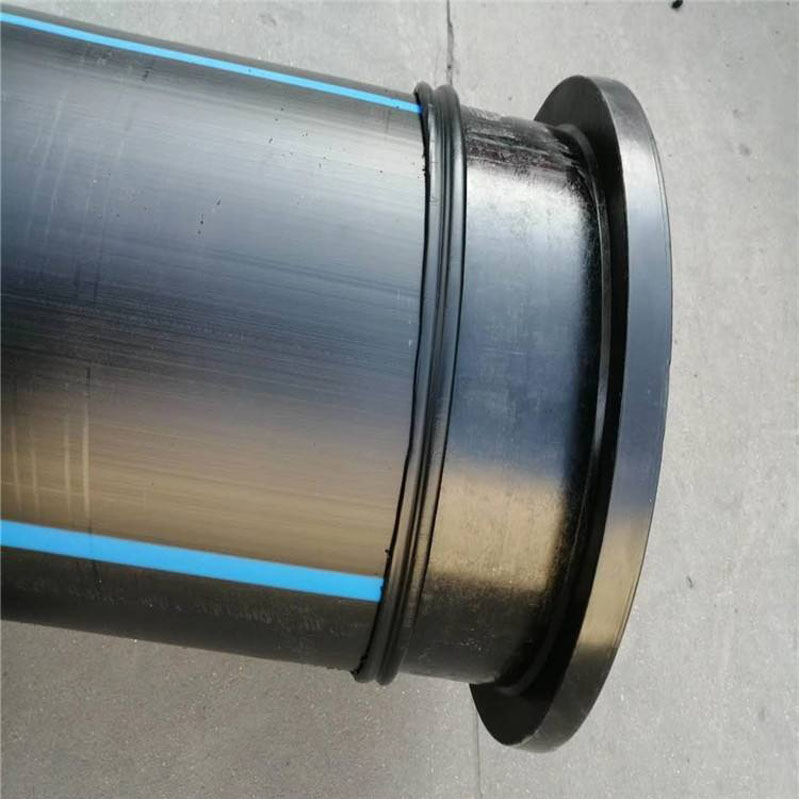
High-Density Polyethylene (HDPE) pipe size charts are critical documentation for manufacturers and end-users alike, facilitating correct material selection and system design in a broad range of applications including water distribution, gas transmission, industrial piping, and drainage systems. These charts aren’t merely a listing of dimensions; they represent a complex interplay between pressure rating, pipe schedule, outside diameter, inside diameter, and wall thickness, all conforming to stringent industry standards. The accuracy of these charts directly impacts system integrity, flow efficiency, and long-term operational reliability. The manufacturing process of HDPE pipe itself is influenced by the targeted size and schedule, requiring precise control of extrusion parameters and cooling rates. This guide provides an in-depth technical analysis of HDPE pipe sizing, manufacturing considerations, performance characteristics, failure modes, and relevant industry standards for manufacturers involved in the production and distribution of HDPE piping solutions. The core pain point in this sector centers around maintaining dimensional accuracy across a wide size range, ensuring consistent material properties, and adhering to evolving regulatory landscapes.
Material Science & Manufacturing
HDPE pipe is manufactured from polyethylene resin, typically a high-density grade exhibiting a molecular weight range of 500,000 to 1,000,000 g/mol. The resin’s density typically falls between 0.93 to 0.97 g/cm³. The selection of resin grade dictates the pipe's mechanical properties, chemical resistance, and long-term hydrostatic strength. Key material properties include tensile strength (typically 20-30 MPa), elongation at break (greater than 500%), and impact resistance (measured by notched impact strength, often exceeding 10 kJ/m²). Manufacturing predominantly utilizes extrusion processes. The process begins with feeding the HDPE resin into a hopper, followed by melting and homogenizing the material within an extruder barrel. Die design is paramount, dictating the final pipe dimensions and wall thickness. Extrusion parameters, including barrel temperature profiles (typically 180-220°C), screw speed, and die pressure, are meticulously controlled to ensure dimensional accuracy and avoid defects like ovality or inconsistent wall thickness. Cooling is critical; pipes are often submerged in water tanks to rapidly reduce temperature, stabilizing the pipe’s shape and crystalline structure. Post-extrusion, pipes undergo quality control checks including dimensional measurements, hydrostatic pressure testing (as per ASTM D1597), and slow crack growth resistance testing (SCG, ASTM D1673). The manufacturing process also needs to account for the presence of carbon black, often added for UV resistance. Its distribution needs to be uniform for consistent protection.
Performance & Engineering
The performance of HDPE pipes is primarily governed by their ability to withstand internal pressure, external loads, and environmental stresses. Internal pressure resistance is calculated using Barlow’s formula: P = (2 S t) / D, where P is the allowable pressure, S is the hoop stress (based on the material’s Minimum Required Strength, MRS), t is the wall thickness, and D is the outside diameter. External loads, such as soil loads in buried applications, require careful consideration of pipe stiffness (measured by the modulus of pipe, E) and the surrounding soil properties. Engineering calculations must account for bedding conditions, trench depth, and potential for differential settlement. HDPE exhibits excellent chemical resistance to most acids, bases, and solvents, making it suitable for a wide range of industrial applications. However, exposure to strong oxidizing agents should be avoided. Long-term performance is affected by creep, a time-dependent deformation under sustained stress. HDPE manufacturers utilize hydrostatic stress cracking (HSC) tests (ISO 1167) to predict long-term creep behavior and establish design stress limits. Jointing methods, such as butt fusion, socket fusion, and electrofusion, significantly influence system performance. Proper fusion parameters are crucial to achieving a weld strength equivalent to the base pipe material. Environmental factors like UV exposure and temperature variations require consideration. UV degradation can be mitigated through the incorporation of carbon black or UV stabilizers. Temperature affects the material's MRS and can influence pipe flexibility.
Technical Specifications
| Nominal Pipe Size (inches) | Schedule Number | Outside Diameter (inches) | Wall Thickness (inches) | Pressure Rating (PSI) @ 73°F |
|---|---|---|---|---|
| 1/2 | 40 | 0.625 | 0.062 | 200 |
| 3/4 | 40 | 0.840 | 0.083 | 160 |
| 1 | 40 | 1.050 | 0.095 | 140 |
| 1 1/2 | 40 | 1.250 | 0.113 | 120 |
| 2 | 40 | 2.067 | 0.154 | 100 |
| 4 | 40 | 4.500 | 0.218 | 80 |
Failure Mode & Maintenance
HDPE pipes, while durable, are susceptible to several failure modes. Slow Crack Growth (SCG), as previously mentioned, is a primary concern, particularly in applications involving sustained tensile stress and exposure to certain chemicals. This is often initiated by scratches or imperfections on the pipe’s inner surface. Fatigue cracking can occur under cyclic pressure or bending loads, especially at joints or fittings. Environmental Stress Cracking (ESC) is similar to SCG but accelerated by the presence of specific environmental stressors. Oxidation, particularly at elevated temperatures, can lead to material degradation and embrittlement. UV degradation, though mitigated by carbon black, can still cause surface cracking and discoloration over prolonged exposure. Third-party damage during installation or excavation is also a common cause of failure. Maintenance primarily involves regular inspections for visual signs of damage, such as cracks, deformations, or discoloration. Leak detection methods, including pressure testing and acoustic monitoring, can identify hidden leaks. For minor surface scratches, a qualified technician can perform localized repairs using HDPE welding techniques. Preventive maintenance includes proper bedding and backfill procedures during installation to minimize external stresses, surge protection to mitigate water hammer effects, and cathodic protection in corrosive environments. Proper handling and storage of the pipes are crucial to prevent damage before installation.
Industry FAQ
Q: What is the significance of the PE4710, PE100, and PE3408 designations, and how do they impact pipe selection?
A: These designations refer to the Minimum Required Strength (MRS) of the HDPE resin, measured in Pascals. PE4710 (MRS 4.71 MPa) is typically used for non-pressure applications like drainage. PE100 (MRS 10.0 MPa) is the most common grade for pressure applications, offering a balance of strength and cost. PE3408 (MRS 3.48 MPa) finds use in certain specialized applications. Higher MRS values translate to increased pressure rating and improved long-term performance, but also generally higher material cost.
Q: How does the choice of jointing method (butt fusion, socket fusion, electrofusion) affect the overall system integrity?
A: Butt fusion provides the strongest and most reliable joint, suitable for larger diameter pipes and critical applications. It requires skilled operators and precise equipment. Socket fusion is appropriate for smaller diameter pipes and offers a simpler process, but the weld strength is typically lower. Electrofusion utilizes an electrical heating element to melt the pipe and fitting, providing consistent weld parameters and good weld strength, but it is typically more expensive than socket fusion.
Q: What are the key considerations when installing HDPE pipe in cold weather conditions?
A: HDPE becomes more brittle at low temperatures, increasing the risk of cracking during installation. Pipes should be stored in a heated environment before installation. Avoid impact during handling and ensure proper jointing procedures are followed, potentially adjusting fusion parameters to compensate for the lower temperature. Backfilling should be deferred until the pipe has warmed up to avoid stress concentration.
Q: How does the pipe schedule (e.g., Schedule 40, Schedule 80) influence the pipe’s pressure rating and cost?
A: The pipe schedule dictates the wall thickness. A higher schedule number (e.g., Schedule 80) corresponds to a thicker wall, resulting in a higher pressure rating. However, thicker walls also increase material cost and pipe weight. Schedule selection should be based on the operating pressure, external loads, and application requirements.
Q: What is the role of hydrostatic testing in ensuring the quality and integrity of HDPE pipe systems?
A: Hydrostatic testing involves pressurizing the completed pipe system with water to a level significantly higher than the operating pressure. This test verifies the absence of leaks, identifies weak points, and confirms the overall structural integrity of the system. It is a critical quality control step mandated by many industry standards and regulations.
Conclusion
HDPE pipe sizing is a multifaceted engineering discipline rooted in material science, manufacturing precision, and adherence to stringent industry standards. Accurate pipe size selection, considering factors like pressure rating, external loads, and environmental conditions, is paramount to ensuring long-term system reliability and minimizing the risk of failure. The manufacturing process, from resin selection to fusion jointing, critically impacts the final product's performance.
Future trends in HDPE pipe technology are likely to focus on the development of enhanced resin formulations with improved creep resistance and increased MRS values. Greater emphasis will be placed on smart pipe technologies incorporating sensors for leak detection and structural health monitoring. Continued refinement of fusion techniques and the adoption of advanced non-destructive testing methods will further enhance quality control and system integrity. Ultimately, a thorough understanding of the technical aspects outlined in this guide is essential for manufacturers and engineers seeking to deliver robust and sustainable HDPE piping solutions.
-
DN25 HDPE Compression Fitting-HORON INTERNATIONAL|Reliable Irrigation Solutions
NewsFeb.11,2026
-
china hdpe pipe list Manufacturing and Performance
News2026-05-07
-
china gray pvc pipe Performance Analysis
News2026-05-07
-
china ppr pipe heating time Performance Analysis
News2026-05-07
-
china what is pvc pipe used for in plumbing Material Science and Performance Analysis
News2026-05-07
-
china upvc column pipes price list Technical Analysis
News2026-05-07
-
china hdpe reducer coupling Performance Analysis
News2026-05-06
-
china ppr pipe cost Performance Analysis
News2026-05-06
-
china pvc pipe for sale Performance Analysis
News2026-05-06
-
china 6 double wall corrugated pipe Performance Analysis
News2026-05-06
-
china hdpe conduit fittings Performance Analysis
News2026-05-06
-
china pvc pipe class 7 Performance Analysis
News2026-05-05
-
china 63mm pvc pipe Performance Analysis
News2026-05-05
-
china hdpe to steel transition coupling Performance Analysis
News2026-05-05
-
china kitchen water pipe Performance Analysis
News2026-05-05
-
china ppr 14 pipe Performance Analysis
News2026-05-05