

Feb . 11, 2026 00:01 Back to list
hdpe drip pipe products Manufacturing Process and Performance Analysis
Introduction
High-Density Polyethylene (HDPE) drip pipe represents a significant advancement in precision irrigation technology. Positioned within the agricultural infrastructure supply chain, it serves as the critical delivery mechanism for water and nutrient solutions directly to plant root zones. HDPE drip pipes are characterized by their inherent flexibility, durability, and resistance to chemical degradation, making them a superior alternative to traditional irrigation methods. Core performance attributes include uniform flow rate distribution, minimized water loss through evaporation, and optimized nutrient uptake, ultimately enhancing crop yield and resource efficiency. The industry currently faces challenges related to UV degradation, clogging mitigation, and ensuring long-term system integrity, driving ongoing material science and engineering refinements in HDPE drip pipe production and deployment. This guide provides a comprehensive technical overview of HDPE drip pipe, covering material properties, manufacturing processes, performance characteristics, potential failure modes, and industry standards.
Material Science & Manufacturing
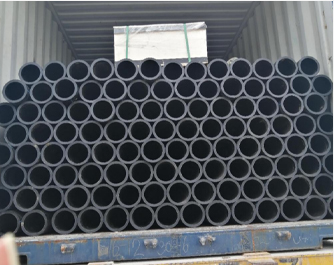
HDPE drip pipes are primarily fabricated from high-density polyethylene resin, a thermoplastic polymer derived from the polymerization of ethylene. Key raw material properties influencing performance include molecular weight distribution, density (typically ranging from 0.941 to 0.965 g/cm³), and melt flow index (MFI). Higher molecular weight HDPE contributes to improved tensile strength and creep resistance, while density impacts barrier properties and chemical inertness. Manufacturing typically involves extrusion, where HDPE resin is melted and forced through a die to create a continuous pipe profile. Critical process parameters include extrusion temperature (maintained between 180°C and 240°C to achieve optimal melt viscosity), die pressure (controlled to ensure dimensional accuracy and prevent melt fracture), and cooling rate (regulated to minimize residual stress and maintain amorphous structure). The incorporation of carbon black is common practice to enhance UV resistance, extending the pipe’s lifespan under sunlight exposure. Emitter integration – the creation of precisely sized and spaced orifices for water delivery – is achieved through punching, laser drilling, or mold insertion during or immediately following extrusion. Post-extrusion processes include diameter control, length cutting, and quality control testing to ensure adherence to specified tolerances and performance criteria. Chemical compatibility with fertilizers and agricultural chemicals is a vital consideration, requiring HDPE formulations resistant to common agrochemical agents.
Performance & Engineering
The performance of HDPE drip pipe is fundamentally governed by its ability to withstand hydrostatic pressure and maintain structural integrity under varying environmental conditions. Force analysis considers hoop stress (resulting from internal water pressure) and longitudinal stress (arising from temperature variations and soil constraints). Burst pressure, typically measured according to ASTM D1597, is a critical performance parameter, indicating the maximum pressure the pipe can withstand before failure. Environmental resistance is paramount; HDPE exhibits excellent resistance to most acids and alkalis commonly encountered in agricultural settings, but prolonged exposure to strong oxidizing agents can induce stress cracking. UV degradation is a major concern, necessitating the inclusion of UV stabilizers (such as carbon black) in the HDPE formulation. Compliance requirements vary by region, but typically include adherence to standards for water quality (ensuring no leaching of harmful substances into the irrigation water) and dimensional accuracy. Functional implementation involves system design considerations such as emitter spacing, flow rate requirements, and pressure compensation. Proper filtration is essential to prevent clogging of emitters, while pressure regulation ensures uniform water distribution across the entire irrigation system. The long-term creep resistance of HDPE must be considered, especially in systems operating at elevated temperatures or under sustained pressure.
Technical Specifications
| Parameter | Unit | Typical Value | Testing Standard |
|---|---|---|---|
| Nominal Diameter | mm | 16, 20, 25 | ISO 1452-2 |
| Wall Thickness | mm | 0.5 - 1.5 | ASTM D2412 |
| Burst Pressure | MPa | 1.0 - 3.0 | ASTM D1597 |
| Hydrostatic Design Stress (HDS) | MPa | 0.4 - 1.25 | ISO 1452-2 |
| Tensile Strength at Yield | MPa | 10 - 20 | ASTM D638 |
| Elongation at Break | % | 500 - 1000 | ASTM D638 |
Failure Mode & Maintenance
HDPE drip pipe is susceptible to several failure modes in practical applications. Fatigue cracking can occur due to repeated flexing and bending, especially during installation and retrieval. Delamination can arise from inadequate bonding between layers in multilayer pipes, leading to structural weakness. Degradation due to UV exposure results in embrittlement and reduced tensile strength. Oxidation, particularly at elevated temperatures, can accelerate material degradation. Clogging of emitters is a frequent issue, caused by particulate matter, algae growth, or mineral precipitation in the irrigation water. Preventive maintenance is crucial for maximizing system lifespan. Regular flushing of the system removes accumulated debris and prevents emitter blockage. The use of filters is essential to minimize particulate matter entering the pipes. UV protection measures, such as burying the pipes or applying UV-resistant coatings, can mitigate degradation. Periodic inspection for leaks, cracks, and emitter malfunctions allows for timely repairs and prevents catastrophic failures. In case of significant damage, pipe sections should be replaced using appropriate compression fittings or heat fusion techniques. Proper winterization, involving draining the system to prevent freezing and cracking, is critical in cold climates.
Industry FAQ
Q: What is the impact of soil pH on the lifespan of HDPE drip pipe?
A: Extremely acidic or alkaline soil conditions can accelerate the degradation of HDPE. While HDPE is generally chemically inert, prolonged exposure to pH levels outside the range of 6.0 to 8.0 can induce stress cracking and reduce the pipe's long-term durability. Soil testing and appropriate buffering strategies are recommended in problematic areas.
Q: How does the type of fertilizer used affect the drip pipe's performance?
A: Certain fertilizers, particularly those containing high concentrations of ammonia or sulfates, can contribute to clogging of emitters. Using fully soluble fertilizers and implementing proper filtration systems minimizes this risk. It’s crucial to check the compatibility of fertilizers with HDPE materials.
Q: What are the best practices for connecting HDPE drip pipe sections?
A: The preferred methods for joining HDPE drip pipe are compression fittings and heat fusion welding. Compression fittings provide a reliable, non-permanent connection, while heat fusion creates a homogenous joint with superior strength and leak resistance. Improperly installed barbed fittings can create stress points and potential failure areas.
Q: What is the effect of water temperature on the performance and lifespan of the pipe?
A: Elevated water temperatures can increase the rate of creep deformation and accelerate oxidation processes within the HDPE material. This can lead to dimensional instability and reduced burst pressure over time. Maintaining water temperatures within a reasonable range, if possible, can extend the pipe's service life.
Q: How can I identify and address the issue of bio-fouling within the drip pipe system?
A: Bio-fouling, the accumulation of microorganisms within the pipe, can significantly reduce flow rates and clog emitters. Regular chlorination or treatment with biocides can prevent bio-fouling. The installation of a media filter or disc filter is also a preventive measure. Backflushing the system periodically helps to remove accumulated biofilm.
Conclusion
HDPE drip pipe represents a crucial component in modern precision irrigation systems, offering significant advantages in water conservation and crop yield enhancement. Its performance is intricately linked to material science principles, manufacturing process control, and adherence to relevant engineering standards. Understanding the potential failure modes – ranging from UV degradation and clogging to fatigue cracking – is essential for implementing effective maintenance strategies and maximizing system longevity.
Looking forward, ongoing advancements in HDPE formulations, incorporating enhanced UV stabilizers and anti-fouling agents, will further improve the durability and reliability of drip irrigation systems. Furthermore, the integration of smart sensor technologies for real-time monitoring of pressure, flow rate, and water quality will enable predictive maintenance and optimize system performance. The continued development and adoption of industry best practices will remain critical for ensuring the sustainable and efficient use of this valuable irrigation technology.
-
DN25 HDPE Compression Fitting-HORON INTERNATIONAL|Reliable Irrigation Solutions
NewsFeb.11,2026
-
china 24 inch diameter pvc pipe price Performance Engineering
News2026-04-27
-
china 4 hdpe drain pipe Performance Analysis
News2026-04-27
-
china 12 hdpe pipe Performance Analysis
News2026-04-27
-
china hdpe reducing coupling Performance Analysis
News2026-04-27
-
china hdpe corrugated sewer pipe Performance Analysis
News2026-04-27
-
china pvc pipe cost per foot Technical Analysis
News2026-04-26
-
china double walled corrugated pipe Performance Analysis
News2026-04-26
-
china hdpe sprinkler pipe price list Performance Analysis
News2026-04-26
-
china water pipe in kitchen Performance Analysis
News2026-04-26
-
china hdpe to pvc pipe coupling Performance Analysis
News2026-04-26
-
china 32 mm ppr pipe Performance Analysis
News2026-04-25
-
china ppr pipe for hot water supply Performance Analysis
News2026-04-25
-
china double walled drainage pipe Performance Analysis
News2026-04-25
-
china black hdpe pipe Manufacturing Analysis
News2026-04-25
-
china dn25 ppr hot water pipes for kitchen Performance Analysis
News2026-04-25