

Feb . 11, 2026 00:01 Back to list
9 inch pvc pipe price product Performance Analysis
Introduction
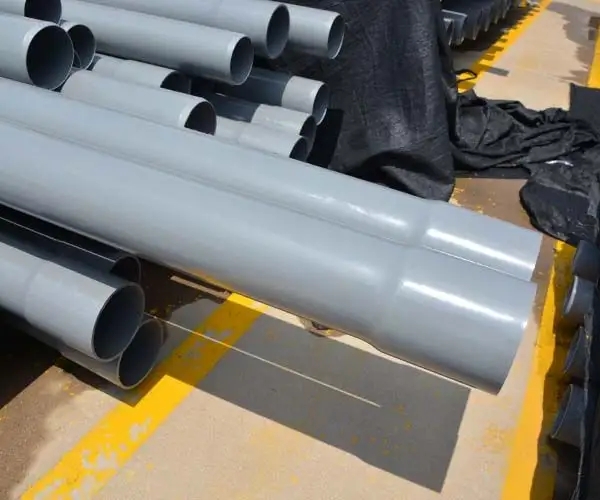
Polyvinyl Chloride (PVC) pipe, specifically 9-inch diameter Schedule 40 and Schedule 80 varieties, represents a cornerstone material in modern infrastructure. Its primary application lies within gravity-fed drainage, waste, vent, and irrigation systems, as well as certain industrial liquid transfer applications. This technical guide provides a comprehensive overview of 9-inch PVC pipe, focusing on its material science, manufacturing processes, performance characteristics, potential failure modes, and relevant industry standards. The consistent pricing of '9 inch pvc pipe price product' reflects the material's balance of cost-effectiveness, durability, and ease of installation, making it a preferred choice over traditional materials like cast iron in many applications. Understanding its limitations, however, is critical for proper specification and long-term performance. This guide targets engineers, procurement managers, and installation professionals involved in specifying and deploying PVC piping systems.
Material Science & Manufacturing
9-inch PVC pipe is primarily manufactured from Polyvinyl Chloride resin, a thermoplastic polymer created through the polymerization of vinyl chloride monomer (VCM). The resin is rarely used in its pure form; instead, it’s compounded with additives to enhance its properties. Key additives include plasticizers (typically phthalates or non-phthalate alternatives to improve flexibility, especially in flexible PVC applications - which are less common in 9” pipe), stabilizers (typically lead-based, calcium-zinc based, or organic-based to prevent degradation from heat and UV exposure), lubricants (to aid processing), and impact modifiers (to increase toughness). For 9-inch pipe, rigid PVC formulations dominate, minimizing plasticizer content.
The manufacturing process typically employs extrusion. PVC resin and additives are blended and fed into a single-screw or twin-screw extruder. Inside the extruder, the material is heated, melted, and homogenized. The molten PVC is then forced through a die that shapes it into a pipe. Critical parameters during extrusion include temperature control (maintaining consistent melt temperature to prevent degradation), die pressure (influencing wall thickness and dimensional accuracy), and cooling rates (controlling the rate of solidification to minimize internal stresses). Following extrusion, the pipe is calibrated (to achieve precise dimensions), printed with markings (size, schedule, manufacturer, and relevant standards), and cut to length.
The Schedule designation (40 or 80) indicates the pipe's pressure rating. Schedule 80 pipe has thicker walls than Schedule 40, resulting in a higher pressure capacity but also increased material cost and weight. Material properties such as tensile strength (typically 6,900-8,200 psi for rigid PVC), flexural modulus (around 260,000-320,000 psi), and hardness (Shore D scale) are tightly controlled during the compounding and extrusion processes to meet relevant ASTM standards.
Performance & Engineering
The performance of 9-inch PVC pipe is governed by several engineering principles. Hydrostatic pressure resistance is paramount, determined by the Schedule (40 or 80) and the operating temperature. Higher temperatures reduce the pipe’s pressure rating. The pipe’s ability to withstand soil loads (in buried applications) depends on its stiffness, typically measured by the pipe's flexural modulus. Backfilling procedures are critical to prevent deformation and cracking.
Chemical resistance is generally excellent for a wide range of chemicals, but PVC is susceptible to degradation by strong oxidizing acids, aromatic hydrocarbons, and chlorinated solvents. Long-term exposure to these substances should be avoided. Thermal expansion and contraction are also important considerations, especially in long pipe runs. PVC has a relatively high coefficient of thermal expansion (approximately 3 x 10^-5 in/°F), requiring expansion joints or flexible connections to accommodate temperature fluctuations and prevent stress buildup. Jointing methods, typically solvent cementing or gasketed joints, must be performed correctly to ensure a watertight seal and prevent leakage. Proper solvent cement application (temperature, humidity, dwell time) is crucial for achieving optimal bond strength. Gasketed joints rely on the compression of elastomeric gaskets (typically EPDM or nitrile rubber) to create a seal. The selection of the appropriate gasket material depends on the fluid being conveyed.
Fatigue analysis is essential in applications involving cyclical loading (e.g., pump pulsations). PVC can exhibit fatigue cracking under prolonged cyclical stress, especially at stress concentrators (e.g., fittings, joints). UV exposure can also degrade PVC over time, leading to embrittlement and reduced impact resistance. Protective coatings or burying the pipe can mitigate UV degradation. The structural integrity of the piping system must be verified through appropriate calculations and, if necessary, finite element analysis (FEA) to ensure it can withstand anticipated loads and stresses.
Technical Specifications
| Parameter | Schedule 40 (Imperial) | Schedule 80 (Imperial) | ASTM D1785 Standard |
|---|---|---|---|
| Nominal Pipe Size | 9 inches (228.6 mm) | 9 inches (228.6 mm) | Specifies dimensions & tolerances |
| Outside Diameter | 9.625 inches (244.475 mm) | 10.000 inches (254 mm) | Defines OD requirements |
| Wall Thickness | 0.375 inches (9.525 mm) | 0.438 inches (11.122 mm) | Specifies minimum wall thickness |
| Pressure Rating (at 73°F) | 60 psi | 80 psi | Establishes pressure-bearing capability |
| Weight per Foot | 1.12 lbs/ft (1.67 kg/m) | 1.32 lbs/ft (1.97 kg/m) | Provides material weight for installation |
| Temperature Range | -40°F to 140°F (-40°C to 60°C) | -40°F to 140°F (-40°C to 60°C) | Defines operational temperature limits |
Failure Mode & Maintenance
9-inch PVC pipe is generally reliable, but several failure modes can occur. Cracking, particularly stress cracking, is a common failure mode, often initiated at stress concentrators (e.g., fitting connections, penetrations) due to sustained tensile stresses or aggressive chemical exposure. Impact damage, especially during handling and installation, can cause cracking or perforation. UV degradation leads to embrittlement and reduced impact resistance over prolonged exposure. Solvent weld joint failures can occur due to improper application (insufficient solvent cement, improper dwell time, contamination) resulting in leakage. Ground movement or excessive soil loads can cause deformation and cracking, especially in areas with poor backfill compaction.
Preventative maintenance is critical for long-term performance. Regular inspections should be conducted to identify any signs of cracking, deformation, or leakage. Protective coatings can be applied to mitigate UV degradation. Proper backfilling procedures are essential to provide adequate support and prevent stress on the pipe. Prompt repair of any leaks or cracks is necessary to prevent further damage. For minor cracks, patching compounds specifically designed for PVC can be used. For larger cracks or significant damage, pipe replacement may be required. Periodic testing of the piping system (e.g., hydrostatic testing) can help identify potential weaknesses before they lead to catastrophic failure. Avoid storing PVC pipe in direct sunlight for extended periods. Ensure proper handling procedures are followed to prevent impact damage during transportation and installation.
Industry FAQ
Q: What is the impact of soil corrosivity on the longevity of 9-inch PVC pipe?
A: Highly corrosive soils (high sulfate content, acidic pH) can lead to chemical attack on the PVC material, particularly at joints and buried connections. This can result in material degradation, cracking, and eventual failure. Soil testing prior to installation is crucial. Consider using a protective coating or a more chemically resistant pipe material in corrosive environments.
Q: How does the operating temperature affect the pressure rating of 9-inch Schedule 40 PVC pipe?
A: As temperature increases, the pressure rating of PVC pipe decreases. This is due to the reduction in the material’s tensile strength and modulus of elasticity at higher temperatures. Consult the manufacturer's specifications and relevant standards (ASTM D1785) for derating factors at different temperatures.
Q: What are the key differences between Schedule 40 and Schedule 80 PVC pipe in terms of application?
A: Schedule 80 pipe is preferred for higher pressure applications, industrial processes, and situations where greater mechanical strength is required. Schedule 40 is generally sufficient for gravity-fed drainage, waste, and vent systems and irrigation where pressure requirements are lower. Schedule 80 is more expensive and heavier.
Q: What is the correct procedure for solvent cementing 9-inch PVC pipe?
A: The correct procedure involves cleaning and priming both the pipe and fitting surfaces, applying a uniform layer of solvent cement, quickly inserting the pipe into the fitting with a slight twisting motion, holding it firmly for 30 seconds, and allowing sufficient curing time (typically 24 hours) before pressure testing. Temperature and humidity play a significant role; follow the cement manufacturer’s instructions precisely.
Q: Can 9-inch PVC pipe be used for potable water applications?
A: Yes, certain formulations of PVC pipe are certified for potable water applications, meeting NSF/ANSI Standard 61. Ensure the pipe is specifically labeled and certified for this purpose. The PVC compound must not leach harmful substances into the water.
Conclusion
9-inch PVC pipe offers a robust and cost-effective solution for numerous piping applications. Its strength lies in its combination of chemical resistance, durability, and relatively simple installation. However, successful implementation requires a thorough understanding of its material properties, manufacturing considerations, and potential failure modes. Proper specification based on pressure requirements, temperature conditions, and soil corrosivity is paramount.
Long-term performance depends on adherence to industry standards, correct installation procedures, and preventative maintenance practices. By addressing potential risks such as UV degradation, stress cracking, and improper jointing, the service life of 9-inch PVC piping systems can be maximized. Continued research and development in PVC formulations and manufacturing techniques will further enhance the performance and sustainability of this essential infrastructure component.
-
DN25 HDPE Compression Fitting-HORON INTERNATIONAL|Reliable Irrigation Solutions
NewsFeb.11,2026
-
china pvc pipe class 7 Performance Analysis
News2026-05-05
-
china 63mm pvc pipe Performance Analysis
News2026-05-05
-
china hdpe to steel transition coupling Performance Analysis
News2026-05-05
-
china kitchen water pipe Performance Analysis
News2026-05-05
-
china ppr 14 pipe Performance Analysis
News2026-05-05
-
china hdpe pipe for drip irrigation Performance Analysis
News2026-05-04
-
china hdpe pipe for agriculture Performance Analysis
News2026-05-04
-
china hdpe sprinkler pipe price Performance Analysis
News2026-05-04
-
china 2 ppr pipe Performance Analysis
News2026-05-04
-
china pvc pipe price per foot Performance Analysis
News2026-05-04
-
china long pvc pipe Performance Analysis
News2026-05-03
-
china plumbing kitchen sink water lines Performance Analysis
News2026-05-03
-
china hdpe drip irrigation Performance Analysis
News2026-05-03
-
china hot water ppr pipe Performance Analysis
News2026-05-03
-
china ppr plumbing Technical Analysis
News2026-05-03