

Feb . 11, 2026 00:01 Back to list
discount water pipe in kitchen Technical Analysis

Introduction
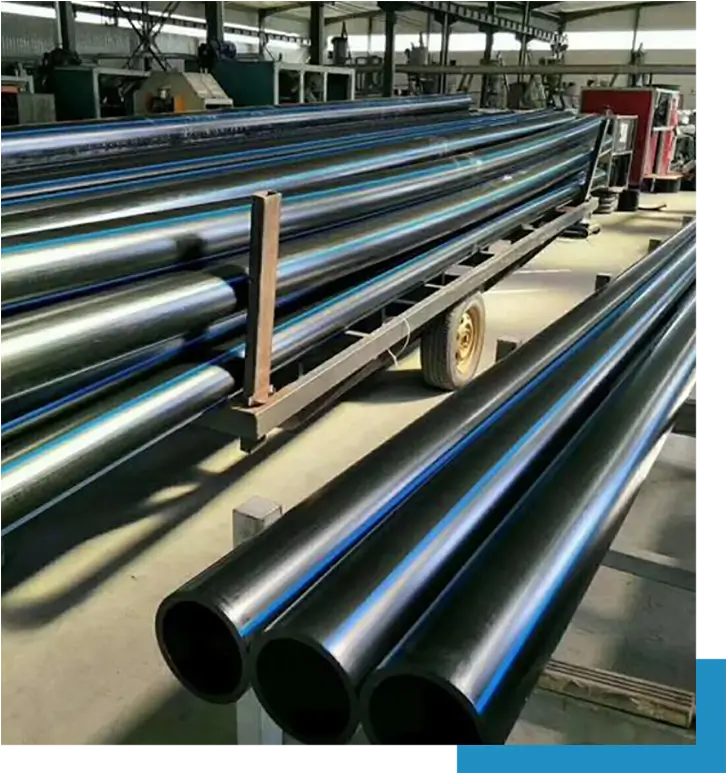
Polyethylene (PE) water pipes represent a cost-effective solution for residential kitchen plumbing, specifically for cold water distribution. These pipes, often marketed as “discount” options, utilize the inherent properties of PE to deliver potable water efficiently. Technically positioned as a lower-cost alternative to copper, PEX, and CPVC, PE pipes find application in under-sink connections, refrigerator water lines, and simple fixture supply lines. Their performance centers around flexibility, ease of installation utilizing compression or barbed fittings, and resistance to corrosion in suitable water chemistries. However, performance characteristics are directly tied to PE grade (HDPE, LDPE, XLPE) and wall thickness, necessitating careful selection based on intended pressure and temperature requirements. This guide provides a comprehensive technical overview of PE water pipes used in kitchen applications, covering material science, manufacturing processes, performance considerations, potential failure modes, and applicable industry standards.
Material Science & Manufacturing
The primary material for discount water pipes in kitchen applications is typically Low-Density Polyethylene (LDPE) or High-Density Polyethylene (HDPE). LDPE exhibits greater flexibility due to its lower crystallinity, but also lower tensile strength and temperature resistance. HDPE, conversely, demonstrates higher strength and rigidity. Raw material properties directly impact pipe performance. LDPE has a density of 0.910 – 0.940 g/cm³, a tensile strength of 8-20 MPa, and a softening point around 110-115°C. HDPE boasts a density of 0.941 – 0.965 g/cm³, a tensile strength of 20-40 MPa, and a softening point of 125-135°C. Manufacturing commonly employs extrusion. PE resin pellets are fed into an extruder, melted, and forced through a die to create a continuous pipe. Critical parameters during extrusion include melt temperature (typically 180-260°C, varying by PE grade), die pressure, and cooling rate. Precise control of these parameters is vital for achieving uniform wall thickness and consistent material properties. Post-extrusion, pipes are often subjected to dimensional checks and hydrostatic pressure testing to ensure compliance with specifications. The use of recycled PE in discount pipes is common but must be carefully managed to avoid compromising mechanical properties. Additives such as UV stabilizers are often incorporated to mitigate degradation from sunlight exposure, although typically not a significant concern in indoor kitchen plumbing.
Performance & Engineering
The performance of PE water pipes is dictated by several engineering considerations. Hydrostatic pressure rating, determined by the PE grade, wall thickness (Schedule 40, Schedule 80 are common benchmarks, though often thinner walls are used in discount pipes), and temperature, is paramount. Burst pressure is typically four times the operating pressure. Force analysis reveals that hoop stress (stress in the circumferential direction) is the primary failure mechanism under pressure. The Barlow’s formula (P = 2St/D, where P=pressure, S=tensile strength, t=wall thickness, D=diameter) provides a foundational understanding of pressure containment. Environmental resistance is critical. While PE is generally chemically inert to potable water, prolonged exposure to certain cleaning agents or high chlorine concentrations can induce stress cracking. Temperature fluctuations cause thermal expansion and contraction. While PE’s low coefficient of thermal expansion (typically 0.2 x 10⁻³ /°C) minimizes stress, proper support and allowance for movement are essential to prevent strain on connections. Compliance with plumbing codes (UPC, IPC) dictates maximum allowable operating pressures and requires proper support and anchoring of pipes to prevent sagging and stress. Installation methods significantly impact long-term performance. Improperly tightened compression fittings can lead to leaks, while excessive bending radius can induce stress concentrations and potential failure.
Technical Specifications
| Parameter | LDPE (Typical) | HDPE (Typical) | Unit |
|---|---|---|---|
| Density | 0.925 | 0.950 | g/cm³ |
| Tensile Strength | 12 | 30 | MPa |
| Burst Pressure (1/2" Pipe) | 200 | 400 | psi |
| Operating Temperature Range | 0-60 | 0-80 | °C |
| Wall Thickness (Common) | 1.8 | 2.3 | mm |
| Outside Diameter (1/2") | 12.7 | 12.7 | mm |
Failure Mode & Maintenance
PE water pipes are susceptible to several failure modes. Stress cracking, induced by prolonged exposure to aggressive chemicals or sustained mechanical stress, is a common issue. Fatigue cracking can occur due to repeated pressure fluctuations and vibration. Delamination, while less frequent, can occur if the PE material is contaminated or improperly processed during extrusion. Oxidation, particularly at elevated temperatures and in the presence of oxygen, can degrade the material, leading to brittleness and reduced strength. A critical failure mode is related to improper fitting installation – over-tightening can deform the pipe and fitting, creating leak paths, while under-tightening obviously leads to immediate leakage. Maintenance primarily involves visual inspection for leaks, cracks, or deformation. For minor leaks at fittings, re-tightening (if compression fitting) or replacement of the fitting is usually sufficient. For cracks in the pipe itself, replacement of the affected section is necessary. Avoid using abrasive cleaners or solvents, as they can accelerate degradation. Periodic flushing of the system can remove sediment buildup and maintain water quality, preventing potential corrosion issues in associated metal components. Regular inspection of pipe supports is also essential to ensure they remain secure and prevent undue stress on the piping system.
Industry FAQ
Q: What is the primary difference between LDPE and HDPE pipes for kitchen use, and which is preferable?
A: HDPE offers superior tensile strength and temperature resistance compared to LDPE. While LDPE is more flexible, making it easier to install in tight spaces, HDPE provides greater long-term durability and is less prone to failure under pressure or thermal stress. For critical applications or higher-pressure situations, HDPE is generally the preferable choice, even with the slightly increased cost. Discount pipes often utilize LDPE to reduce material costs, impacting longevity.
Q: How does water quality (chlorine levels, pH) affect the lifespan of PE pipes?
A: High chlorine levels or extreme pH values (very acidic or alkaline) can accelerate the degradation of PE pipes, leading to stress cracking and reduced lifespan. While PE is generally resistant to typical potable water conditions, consistently high concentrations of these chemicals can compromise the material's integrity. Maintaining water chemistry within acceptable limits is crucial.
Q: What is the recommended bending radius for PE water pipes to avoid kinking or failure?
A: The minimum bending radius for PE pipes is generally six times the outside diameter of the pipe. Exceeding this radius creates excessive stress on the material, increasing the risk of kinking, cracking, and ultimately, failure. Proper installation techniques and adherence to bending radius guidelines are essential.
Q: Are PE pipes suitable for hot water applications in a kitchen?
A: Generally, no. While some specialized cross-linked polyethylene (PEX) pipes are designed for hot water, standard LDPE and HDPE pipes have limited temperature resistance. Exposure to hot water (above 60°C/140°F) can cause softening, deformation, and potentially failure. PE pipes should be strictly limited to cold water applications in a kitchen.
Q: What type of fittings are compatible with PE water pipes, and what are the potential failure points with each type?
A: Compression fittings and barbed fittings are commonly used with PE pipes. Compression fittings rely on a tight seal created by compressing a ferrule onto the pipe. Potential failure points include improper tightening (leading to leaks) or over-tightening (damaging the pipe). Barbed fittings use barbs to grip the pipe; ensuring the pipe is fully seated onto the barb and a clamp is used for security is critical to prevent pull-out. Avoid using fittings made from incompatible materials that could cause galvanic corrosion or chemical reactions.
Conclusion
Polyethylene water pipes offer a cost-effective solution for basic kitchen cold-water plumbing needs. Understanding the nuances of material science – particularly the differences between LDPE and HDPE – is crucial for selecting the appropriate pipe for the application. Careful attention to manufacturing parameters, proper installation techniques, and awareness of potential failure modes are paramount to ensuring long-term reliability and preventing costly leaks. While "discount" pricing offers initial savings, compromising on material quality or installation can lead to premature failure and increased maintenance costs.
The performance of PE piping systems relies heavily on adherence to industry standards and best practices. Regular inspection and preventative maintenance are essential for maximizing lifespan and safeguarding water quality. Future developments may focus on enhancing PE formulations with improved chemical resistance and temperature tolerance, potentially expanding their application range. However, for standard kitchen applications, a well-informed approach to material selection and installation remains the most effective strategy.
-
DN25 HDPE Compression Fitting-HORON INTERNATIONAL|Reliable Irrigation Solutions
NewsFeb.11,2026
-
discount 24 inch diameter pvc pipe price Performance Analysis
News2026-06-24
-
discount 4 hdpe drain pipe Performance Analysis
News2026-06-24
-
discount 12 hdpe pipe Performance Analysis
News2026-06-24
-
discount hdpe reducing coupling Performance Analysis
News2026-06-24
-
discount hdpe corrugated sewer pipe Performance Engineering
News2026-06-24
-
discount pvc pipe cost per foot Material and Performance Analysis
News2026-06-23
-
discount double walled corrugated pipe Performance Analysis
News2026-06-23
-
discount hdpe sprinkler pipe price list Performance and Engineering
News2026-06-23
-
discount water pipe in kitchen Technical Analysis
News2026-06-23
-
discount hdpe to pvc pipe coupling Performance Engineering
News2026-06-23
-
discount 32 mm ppr pipe Performance Analysis
News2026-06-22
-
discount ppr pipe for hot water supply Performance Analysis
News2026-06-22
-
discount double walled drainage pipe Performance Analysis
News2026-06-22
-
discount black hdpe pipe Performance Analysis
News2026-06-22
-
discount dn25 ppr hot water pipes for kitchen Performance Analysis
News2026-06-22