

Feb . 11, 2026 00:01 Back to list
discount 12 hdpe pipe Performance Analysis

Introduction
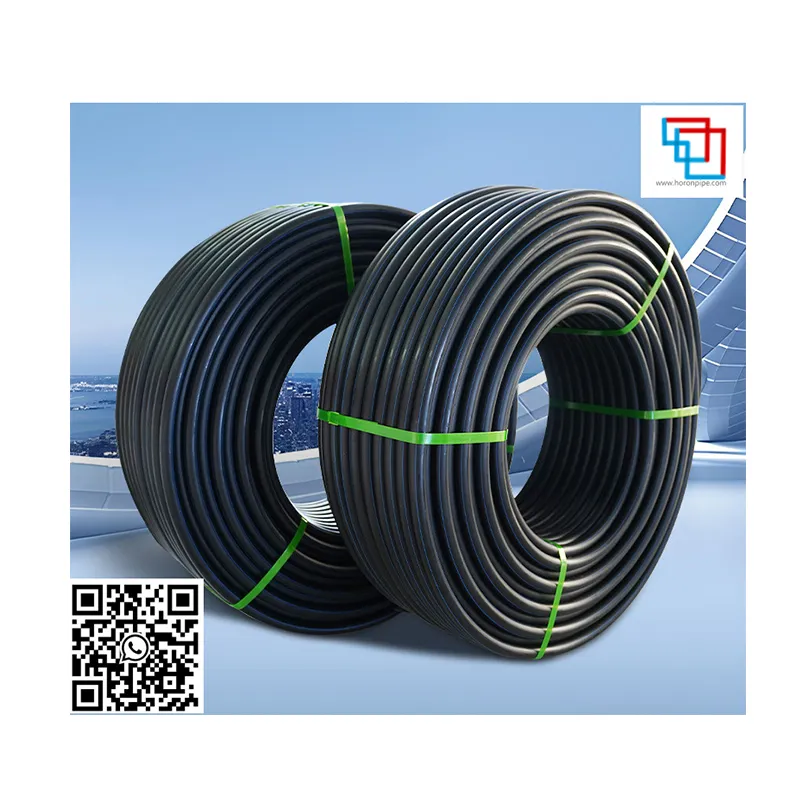
High-Density Polyethylene (HDPE) pipe, specifically Schedule 12 HDPE, represents a crucial component in fluid transfer systems across diverse industries including municipal water distribution, industrial processing, irrigation, and oil & gas. Classified by its pressure rating – indicated by the ‘12’ in its designation – this pipe exhibits a balance of cost-effectiveness and performance, making it a preferred alternative to traditional materials like ductile iron and steel. HDPE’s inherent properties, including corrosion resistance, flexibility, and lightweight nature, contribute to reduced installation costs and long-term operational benefits. This guide provides an in-depth technical analysis of Schedule 12 HDPE pipe, covering material science, manufacturing processes, performance characteristics, failure modes, and relevant industry standards. A critical industry pain point addressed is the need for durable, long-lasting piping solutions that minimize lifecycle costs and environmental impact, particularly in corrosive environments or areas prone to seismic activity. Schedule 12 HDPE addresses these needs effectively.
Material Science & Manufacturing
HDPE is a thermoplastic polymer produced from the polymerization of ethylene. Its high density (typically 0.941 to 0.965 g/cm³) provides excellent tensile strength and rigidity compared to lower-density polyethylene. Raw material selection is paramount; the HDPE resin must meet ASTM D3350 PE345434C or equivalent specifications, ensuring consistent molecular weight distribution and purity. Manufacturing Schedule 12 HDPE pipe generally involves extrusion. The process begins with HDPE pellets being fed into a single-screw extruder. The pellets are heated and melted, then forced through a die that shapes the molten plastic into a continuous pipe. Key parameters requiring strict control include die temperature (180-210°C), screw speed (30-60 RPM), and haul-off speed, which dictate pipe diameter, wall thickness, and overall dimensions. Cooling is achieved through water immersion, followed by coiling or cutting to length. The polyethylene grade’s melt flow index (MFI) significantly impacts processability. Lower MFI grades offer improved environmental stress crack resistance (ESCR) but are more challenging to extrude. Post-extrusion quality control includes hydrostatic pressure testing (as per ASTM D1597) to verify structural integrity and dimensional accuracy. Understanding the impact of molecular weight distribution (MWD) is crucial; a broader MWD generally improves processability and impact resistance. The presence of carbon black additives is common, providing UV protection and enhancing long-term durability.
Performance & Engineering
The performance of Schedule 12 HDPE pipe is dictated by its pressure-bearing capacity, resistance to chemical attack, and ability to withstand environmental stressors. Force analysis under internal pressure is governed by Barlow's formula: P = (2Sσ)/D, where P is internal pressure, S is hoop stress, σ is tensile strength, and D is pipe diameter. The Schedule 12 designation refers to a standardized wall thickness that corresponds to a specific pressure rating at a given temperature. HDPE exhibits excellent chemical resistance to a wide range of acids, bases, and solvents, making it suitable for demanding industrial applications. However, prolonged exposure to strong oxidizing agents can lead to degradation. Environmental resistance is a critical consideration; UV radiation can cause embrittlement over time, necessitating the use of carbon black additives or protective coatings. HDPE’s flexibility allows for some degree of ground movement without causing catastrophic failure, making it advantageous in seismic zones. Compliance requirements are dictated by industry-specific regulations, such as NSF/ANSI 61 for potable water systems and DOT regulations for gas distribution. Long-term hydrostatic strength (LTHS) is a key performance metric, evaluated through accelerated aging tests as per ISO 11679. Creep rupture, a time-dependent failure mode, must be considered in long-term design calculations.
Technical Specifications
| Parameter | Units | Schedule 12 HDPE (4-inch) | Schedule 12 HDPE (6-inch) |
|---|---|---|---|
| Nominal Pipe Size | inches | 4 | 6 |
| Outside Diameter | inches | 4.500 | 6.625 |
| Wall Thickness | inches | 0.154 | 0.218 |
| Pressure Rating (at 73°F) | psi | 100 | 80 |
| Density | g/cm³ | 0.950 - 0.965 | 0.950 - 0.965 |
| Melt Flow Index | g/10min | Typically 0.5-1.0 | Typically 0.5-1.0 |
Failure Mode & Maintenance
Schedule 12 HDPE pipe, while durable, is susceptible to several failure modes. Slow Crack Growth (SCG), also known as Environmental Stress Cracking (ESC), is a common issue, particularly in applications involving sustained tensile stress and exposure to aggressive chemicals. Fatigue cracking can occur under cyclical pressure fluctuations. Oxidation, induced by high temperatures or UV exposure, degrades the polymer matrix, reducing its mechanical properties. Joint failures are also prevalent, often stemming from improper fusion welding techniques or inadequate surface preparation. Delamination can occur if the layers of the pipe are not adequately bonded during manufacturing. Maintenance strategies include regular visual inspections for cracks or deformations, particularly at joints and around fittings. Hydrostatic testing should be periodically performed to verify pressure-bearing capacity. For applications involving aggressive chemicals, compatibility testing is crucial. Preventative measures include proper installation techniques (avoiding sharp bends and excessive stress), UV protection (using carbon black additives or coatings), and surge protection to mitigate hydraulic transients. Failure analysis should involve microscopic examination of fracture surfaces to identify the root cause of failure.
Industry FAQ
Q: What is the impact of temperature on the pressure rating of Schedule 12 HDPE pipe?
A: The pressure rating decreases as temperature increases. HDPE’s strength diminishes at elevated temperatures due to a reduction in its tensile modulus and yield strength. De-rating factors are typically applied based on operating temperature, as outlined in ASTM D3261. For example, a pipe rated for 100 psi at 73°F might be de-rated to 60 psi at 140°F.
Q: How does HDPE pipe compare to ductile iron pipe in terms of corrosion resistance?
A: HDPE exhibits significantly superior corrosion resistance compared to ductile iron. Ductile iron is prone to rusting in the presence of oxygen and moisture, requiring protective coatings. HDPE, being a plastic, is inherently resistant to corrosion from most chemicals and environmental factors, minimizing maintenance costs and extending service life.
Q: What welding methods are commonly used for joining Schedule 12 HDPE pipe?
A: Butt fusion and socket fusion are the most common welding methods. Butt fusion involves heating the pipe ends and fusing them together under pressure, creating a homogeneous weld. Socket fusion is used for smaller diameter pipes and fittings, utilizing a heating tool to melt the socket and pipe end before joining. Electrofusion welding is also employed, using an electrical current to heat and fuse the components.
Q: What measures can be taken to prevent SCG in HDPE pipe systems?
A: Preventing SCG involves minimizing sustained tensile stress, avoiding exposure to aggressive chemicals, and using HDPE resins with high ESCR resistance. Proper bedding and backfill support are crucial to reduce stress. Pressure surges should be mitigated using surge arrestors. Selecting the appropriate HDPE grade with a higher molecular weight distribution can also enhance ESCR performance.
Q: What is the expected service life of Schedule 12 HDPE pipe under typical operating conditions?
A: Under typical operating conditions (moderate temperatures, non-aggressive chemicals, proper installation), Schedule 12 HDPE pipe can have a service life exceeding 50 years. However, actual service life is dependent on factors such as operating pressure, temperature, exposure to UV radiation, and the presence of corrosive substances. Regular inspections and preventative maintenance can further extend service life.
Conclusion
Schedule 12 HDPE pipe presents a robust and cost-effective solution for a wide range of fluid transfer applications. Its inherent properties – corrosion resistance, flexibility, and relatively lightweight nature – offer significant advantages over traditional materials, reducing installation costs and minimizing long-term maintenance. However, careful consideration must be given to potential failure modes such as SCG and oxidation, and appropriate preventative measures implemented.
The proper selection of HDPE resin grade, adherence to stringent manufacturing and installation standards, and regular inspection protocols are essential to maximizing the service life and ensuring the reliable performance of Schedule 12 HDPE pipe systems. Continued advancements in polymer technology and welding techniques will further enhance the capabilities and broaden the application scope of this versatile material.
-
DN25 HDPE Compression Fitting-HORON INTERNATIONAL|Reliable Irrigation Solutions
NewsFeb.11,2026
-
discount ppr for hot water Performance Analysis
News2026-06-25
-
discount bulk pvc pipe Material Performance
News2026-06-25
-
discount pvc pipes price list Material Science and Manufacturing
News2026-06-25
-
discount 20 ft pvc pipe Performance Analysis
News2026-06-25
-
discount ppr cold water pipe Performance Analysis
News2026-06-25
-
discount 24 inch diameter pvc pipe price Performance Analysis
News2026-06-24
-
discount 4 hdpe drain pipe Performance Analysis
News2026-06-24
-
discount 12 hdpe pipe Performance Analysis
News2026-06-24
-
discount hdpe reducing coupling Performance Analysis
News2026-06-24
-
discount hdpe corrugated sewer pipe Performance Engineering
News2026-06-24
-
discount pvc pipe cost per foot Material and Performance Analysis
News2026-06-23
-
discount double walled corrugated pipe Performance Analysis
News2026-06-23
-
discount hdpe sprinkler pipe price list Performance and Engineering
News2026-06-23
-
discount water pipe in kitchen Technical Analysis
News2026-06-23
-
discount hdpe to pvc pipe coupling Performance Engineering
News2026-06-23