

Feb . 11, 2026 00:01 Back to list
discount black hdpe pipe Performance Analysis

Introduction
High-Density Polyethylene (HDPE) pipe, particularly in its black, cost-reduced formulations, represents a critical component in a wide range of infrastructure projects. This technical guide focuses on “discount black HDPE pipe,” acknowledging its market position as a value-engineered solution for non-pressure and low-pressure applications. While often perceived as a lower-tier product, understanding its material science, manufacturing nuances, and performance limitations is crucial for ensuring long-term reliability and adherence to safety standards. Black HDPE pipe differentiates itself primarily through the addition of carbon black, providing UV protection but also influencing mechanical properties. It finds extensive application in irrigation, drainage, telecommunications conduit, and as a cost-effective alternative to traditional materials like PVC or ductile iron in specific scenarios. The core performance characteristics – tensile strength, burst pressure, and environmental stress crack resistance (ESCR) – define its suitability for particular applications. This guide details these aspects and analyzes the trade-offs inherent in utilizing a discount-oriented HDPE pipe formulation.
Material Science & Manufacturing
The foundation of discount black HDPE pipe lies in the polyethylene resin itself, typically a High-Density Polyethylene (HDPE) grade with a density range of 0.941 to 0.965 g/cm³. Lower-cost formulations often utilize resin with a slightly lower molecular weight distribution, impacting long-term creep resistance. The addition of 2-5% carbon black is integral, primarily serving as a UV stabilizer, absorbing radiation that would otherwise cause polymer degradation. This carbon black is typically a furnace black, chosen for its dispersion properties and cost-effectiveness.
Manufacturing typically involves extrusion. The process starts with the melting of HDPE resin and carbon black in a single-screw or twin-screw extruder. Precise temperature control is critical; excessively high temperatures can lead to polymer degradation, while insufficient temperatures result in incomplete mixing and inconsistent material properties. The molten polymer is then forced through a die, shaping it into the desired pipe diameter and wall thickness. Cooling is achieved through water baths or air cooling, followed by dimensional stabilization and cutting to length. Key parameters controlled during extrusion include die temperature, melt temperature, puller speed (affecting wall thickness), and cooling water temperature. The quality of the carbon black dispersion, often verified via microscopic analysis, directly impacts the pipe’s UV resistance and mechanical properties. Lower-grade, poorly dispersed carbon black can lead to localized weak points and premature failure. Pressure rating is directly linked to the Pipe Design Equation (PDE), which incorporates dimensions and minimum strength ratings, including hydrostatic design stress (HDS).
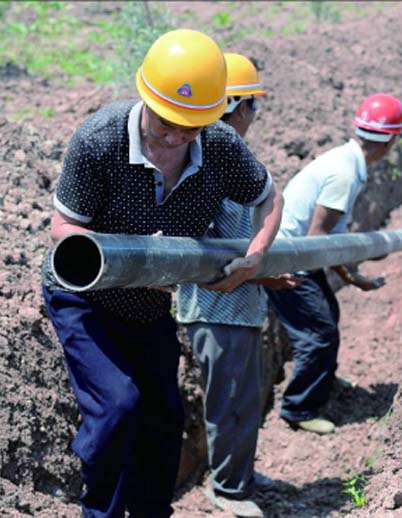
Performance & Engineering
The performance of discount black HDPE pipe is governed by several key engineering considerations. Tensile strength, typically ranging from 18 to 24 MPa, dictates its ability to withstand pulling forces during installation and operation. However, tensile strength alone doesn’t encapsulate the full picture. Long-term hydrostatic strength, crucial for pressure applications, is evaluated through hydrostatic design basis (HDB) and pressure testing standards. Creep rupture, the slow deformation under sustained stress, is a significant concern, particularly at elevated temperatures. Lower molecular weight HDPE resins are more susceptible to creep. The pipe’s resistance to Environmental Stress Cracking (ESCR) is also paramount, influenced by the quality of the resin, the presence of stress concentrators (scratches, gouges), and the chemical environment.
Force analysis during installation must account for soil loading, burial depth, and potential external impacts. The pipe’s ability to withstand these loads without deformation or failure is critical. Environmental resistance is primarily dictated by the carbon black content; however, long-term exposure to harsh chemicals or extreme temperatures can still lead to degradation. Compliance requirements vary by region and application, often mandating adherence to standards like ASTM D3350 (for polyethylene pipes for irrigation) or relevant sections of EN 12201 (for water supply). Furthermore, proper jointing techniques – heat fusion welding or mechanical couplings – are vital for maintaining the structural integrity of the pipeline. Improperly executed joints are often the point of failure.
Technical Specifications
| Parameter | Typical Value (Discount Black HDPE) | Test Method | Units |
|---|---|---|---|
| Density | 0.945 – 0.955 | ASTM D1505 | g/cm³ |
| Carbon Black Content | 2.0 – 3.5 | ASTM D1603 | % by weight |
| Tensile Strength at Yield | 18 – 22 | ASTM D638 | MPa |
| Hydrostatic Design Stress (HDS) | 8 – 12 | ASTM D1597 | MPa |
| Environmental Stress Crack Resistance (ESCR) | Pass (F50) | ASTM D1694 | Hours to Failure |
| Melt Index | 0.5 – 1.0 | ASTM D1238 | g/10min |
Failure Mode & Maintenance
Discount black HDPE pipe is susceptible to several failure modes. Brittle fracture, especially at low temperatures, can occur due to impact or excessive stress. Environmental Stress Cracking (ESCR) remains a primary concern, initiated by stress concentrations and exacerbated by exposure to aggressive chemicals (e.g., solvents, detergents). Long-term creep rupture is particularly problematic in pressurized systems, leading to slow deformation and eventual failure. UV degradation, while mitigated by the carbon black, can still occur over extended periods, especially in areas with high UV exposure. Oxidation, caused by exposure to oxygen and heat, can lead to polymer chain scission and reduced mechanical properties.
Maintenance focuses on preventative measures. Regular visual inspections should identify any cracks, gouges, or signs of deformation. Proper backfilling procedures during installation are crucial to prevent stress concentrations. Avoid exposing the pipe to incompatible chemicals. For pressurized systems, periodic pressure testing can help identify potential weaknesses. Repairs, when necessary, should be performed by qualified personnel using compatible HDPE welding rods or mechanical couplings. Complete replacement is often the most reliable long-term solution for significant damage or widespread degradation. Furthermore, maintaining accurate records of pipe specifications, installation details, and inspection reports is essential for effective lifecycle management.
Industry FAQ
Q: What is the primary trade-off when selecting discount black HDPE pipe over higher-grade formulations?
A: The primary trade-off is reduced long-term durability and resistance to creep. Higher-grade formulations utilize higher molecular weight resins and often incorporate more sophisticated stabilization packages, providing superior performance under sustained stress and prolonged environmental exposure. Discount versions prioritize initial cost savings, potentially sacrificing lifespan and reliability in demanding applications.
Q: How does carbon black content affect the pipe's performance beyond UV protection?
A: While primarily a UV stabilizer, carbon black also influences the pipe’s electrical conductivity and can subtly affect its mechanical properties. Higher concentrations can improve stiffness but may also increase the risk of stress cracking if not properly dispersed. The type of carbon black (furnace black, acetylene black) also affects performance characteristics.
Q: What are the critical considerations for joining discount black HDPE pipe?
A: Proper jointing is paramount. Heat fusion welding (butt fusion, socket fusion) is the preferred method, ensuring a homogenous, structurally sound joint. Mechanical couplings can be used, but require careful selection and installation to avoid stress concentrations and potential leaks. Following the manufacturer's recommendations for welding parameters (temperature, pressure, dwell time) is essential.
Q: What chemical environments are particularly problematic for discount black HDPE pipe?
A: Strong oxidizing agents, solvents, and certain hydrocarbons can accelerate degradation. Exposure to these chemicals can lead to swelling, cracking, and a loss of mechanical properties. Refer to chemical compatibility charts to ensure the pipe is suitable for the intended application.
Q: How does temperature affect the long-term performance of this pipe?
A: Elevated temperatures accelerate creep and oxidation, reducing the pipe's lifespan. Low temperatures can make the material more brittle and susceptible to fracture. Operating within the manufacturer's specified temperature range is crucial for maintaining performance.
Conclusion
Discount black HDPE pipe represents a viable solution for specific applications where cost is a primary driver and long-term performance demands are moderate. Its effectiveness hinges on a thorough understanding of its material properties, manufacturing processes, and potential failure modes. Proper installation techniques, coupled with diligent maintenance and careful consideration of the operating environment, are critical for maximizing its service life.
Ultimately, the decision to utilize discount black HDPE pipe necessitates a comprehensive risk assessment. Engineers and procurement managers must weigh the initial cost savings against the potential long-term consequences of premature failure, including downtime, repair costs, and environmental impact. Adherence to relevant industry standards and best practices remains paramount for ensuring the safe and reliable operation of any HDPE pipeline system.
-
DN25 HDPE Compression Fitting-HORON INTERNATIONAL|Reliable Irrigation Solutions
NewsFeb.11,2026
-
discount hdpe pipe coupling Performance Analysis
News2026-06-27
-
discount kitchen sink water lines Performance Analysis
News2026-06-27
-
discount dn25 hdpe Performance Analysis
News2026-06-27
-
discount hdpe sprinkler coupler Performance Analysis
News2026-06-27
-
discount black pvc pipe for sale Performance Analysis
News2026-06-27
-
discount 40mm pvc pipe Performance Analysis
News2026-06-26
-
discount hdpe to pvc connection Performance Analysis
News2026-06-26
-
discount ppr pipe 1 price Technical Analysis
News2026-06-26
-
discount colored pvc pipe Material Science and Manufacturing
News2026-06-26
-
discount hdpe pipe price list pdf Performance and Engineering
News2026-06-26
-
discount ppr for hot water Performance Analysis
News2026-06-25
-
discount bulk pvc pipe Material Performance
News2026-06-25
-
discount pvc pipes price list Material Science and Manufacturing
News2026-06-25
-
discount 20 ft pvc pipe Performance Analysis
News2026-06-25
-
discount ppr cold water pipe Performance Analysis
News2026-06-25