

Feb . 11, 2026 00:01 Back to list
china upvc column pipes Performance Analysis
Introduction
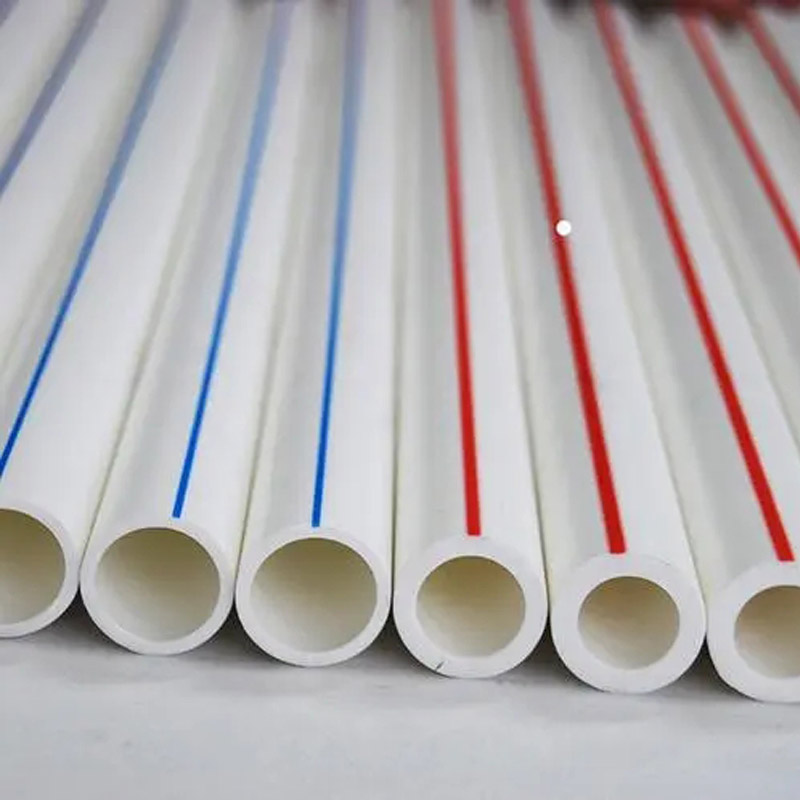
Unplasticized Polyvinyl Chloride (UPVC) column pipes manufactured in China represent a significant component in modern infrastructure, particularly in water management, drainage, and increasingly, structural applications. These pipes differ fundamentally from traditional metal or concrete columns, offering a compelling balance of cost-effectiveness, corrosion resistance, and ease of installation. Positioned within the building materials supply chain, UPVC column pipes serve as a critical load-bearing element in both residential and commercial construction. Their core performance characteristics – encompassing static load capacity, impact strength, and long-term durability – directly address key industry pain points related to material longevity and maintenance costs. Unlike materials susceptible to rust or alkali-silica reaction, UPVC demonstrates inherent resistance to many forms of degradation, reducing lifecycle costs. The increasing demand for sustainable building materials further drives adoption, as UPVC offers a recyclable alternative to traditional options. This guide provides an in-depth technical assessment of China-manufactured UPVC column pipes, covering material science, manufacturing processes, performance characteristics, potential failure modes, and relevant industry standards.
Material Science & Manufacturing
UPVC column pipes derive their structural integrity from a carefully formulated blend of PVC resin, impact modifiers, stabilizers, and lubricants. The primary raw material, PVC, is a thermoplastic polymer produced by the polymerization of vinyl chloride monomer. The quality of the PVC resin is paramount; manufacturers typically utilize grades conforming to ISO 1060-1 standards. Impact modifiers, commonly acrylic or chlorinated polyethylene (CPE), are incorporated to enhance toughness and resistance to brittle fracture, especially at lower temperatures. Stabilizers, such as calcium-zinc or lead-based compounds (though lead-based are declining due to environmental concerns), prevent thermal degradation during processing and extend the service life of the pipe. Lubricants facilitate processing and improve surface finish. Manufacturing typically employs extrusion processes. PVC compound is fed into a single-screw or twin-screw extruder, where it is heated and plasticized. The molten PVC is then forced through a die, shaping it into a hollow column profile. Critical parameters during extrusion include die temperature (180-220°C), screw speed (30-60 RPM), and puller speed, which dictate pipe dimensions and wall thickness. Post-extrusion, pipes undergo cooling (typically water bath cooling) to solidify the profile and dimensional stabilization. Quality control involves rigorous testing of material composition, dimensions, and mechanical properties at various stages of production. Proper control of these parameters dictates the final mechanical and chemical resistance of the pipe. The degree of crystallinity, influenced by cooling rate, directly impacts tensile strength and impact resistance.
Performance & Engineering
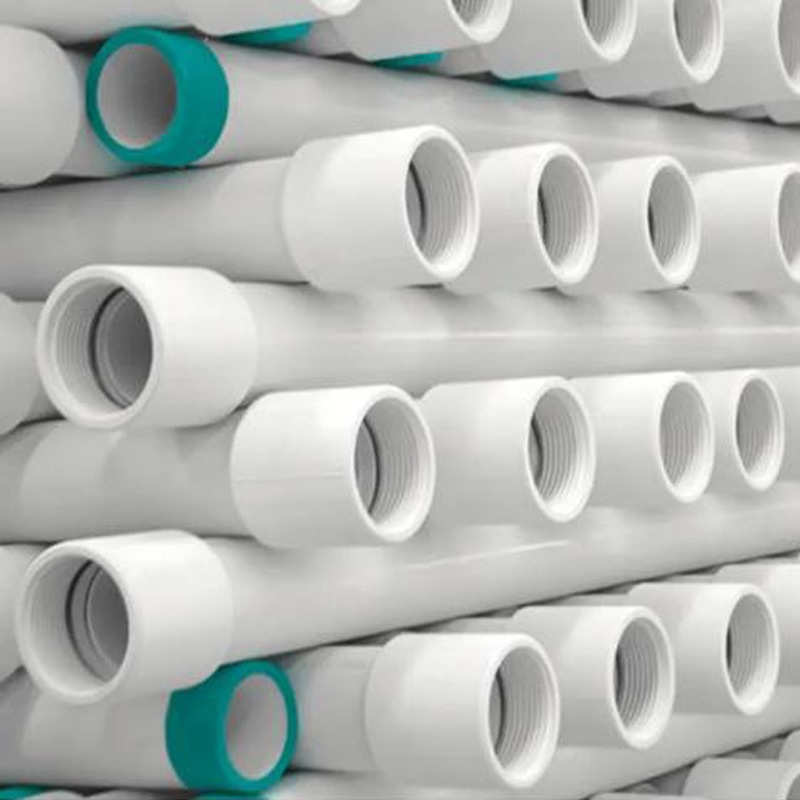
The performance of UPVC column pipes is fundamentally governed by their ability to withstand axial loads, bending moments, and external stresses. Force analysis, often employing Finite Element Analysis (FEA), is crucial in determining load-bearing capacity and deflection characteristics. Key engineering considerations include the pipe’s section modulus, which directly relates to bending resistance, and its moment of inertia, impacting its resistance to buckling. Environmental resistance is a critical factor; UPVC exhibits excellent resistance to UV degradation when formulated with appropriate UV stabilizers, preventing embrittlement and discoloration. However, prolonged exposure to extreme temperatures (above 60°C) can lead to softening and reduced load capacity. Chemical resistance is also significant. UPVC is generally inert to most acids, alkalis, and salts, making it suitable for various applications. Compliance requirements vary based on geographic location and application. In many regions, UPVC pipes must meet standards for water quality (ensuring no leaching of harmful substances) and fire resistance (limiting flame spread and smoke generation). The long-term creep resistance of UPVC is a concern, particularly under sustained load. Creep deformation, though slow, can lead to dimensional changes and reduced load-bearing capacity over time. Reinforcement with steel or composite materials is sometimes employed in applications requiring exceptionally high load-bearing capacity or enhanced rigidity. Design calculations must account for factors of safety to mitigate risks associated with material variability and unforeseen loads.
Technical Specifications
| Parameter | Unit | Standard Specification (Typical) | Testing Method |
|---|---|---|---|
| Outside Diameter | mm | 110, 130, 160, 200 | GB/T 10002.1 |
| Wall Thickness | mm | 3.2, 4.2, 5.6 | GB/T 10002.1 |
| Hydrostatic Pressure Test | MPa | ≥ 0.8 | GB/T 10002.2 |
| Impact Resistance (Charpy) | kJ/m² | ≥ 5 | ISO 148-1 |
| Tensile Strength | MPa | ≥ 50 | GB/T 1043.1 |
| Elongation at Break | % | ≥ 30 | GB/T 1043.1 |
Failure Mode & Maintenance
UPVC column pipes, while durable, are susceptible to specific failure modes. Fatigue cracking, induced by cyclical loading, can occur around stress concentrators such as joints or imperfections. Delamination, particularly in pipes with inadequate material mixing during manufacturing, can lead to a gradual loss of structural integrity. UV degradation, despite the use of stabilizers, can eventually cause embrittlement and surface cracking, especially in regions with high UV exposure. Chemical attack from aggressive substances (certain solvents, strong oxidizers) can lead to swelling, softening, and reduced mechanical properties. Oxidation, while slow, can occur over long periods, particularly at elevated temperatures, leading to material degradation. Maintenance should focus on preventative measures. Regular visual inspections for cracks, discoloration, or deformation are crucial. Proper joint sealing and support are essential to prevent stress concentrations and water ingress. Avoid exposing UPVC pipes to excessive heat or direct contact with incompatible chemicals. For minor surface scratches, specialized UPVC repair compounds can be used. In cases of significant damage, complete pipe replacement is generally recommended. Proper storage of pipes before installation, protecting them from direct sunlight and extreme temperatures, is vital for maintaining material quality. Periodic cleaning to remove dirt and debris can also extend service life.
Industry FAQ
Q: What is the expected service life of a China-manufactured UPVC column pipe under typical soil conditions?
A: Under typical soil conditions, with proper installation and minimal exposure to aggressive chemicals or extreme temperatures, a China-manufactured UPVC column pipe can reasonably be expected to have a service life of 50-100 years. However, this is highly dependent on the quality of the material, the manufacturing process, and the specific environmental conditions. Regular inspections are crucial to identify any signs of degradation.
Q: How does the quality of UPVC column pipes manufactured in China compare to those from Western European manufacturers?
A: The quality gap has narrowed considerably in recent years. Many Chinese manufacturers have invested heavily in modern production equipment and quality control systems. However, variability remains. Reputable Chinese manufacturers adhering to international standards (ISO, ASTM) can produce UPVC pipes comparable in quality to those from Western Europe. It’s crucial to verify certifications and conduct thorough due diligence on the supplier.
Q: What are the primary considerations when selecting a UPVC column pipe for a highly corrosive environment?
A: In highly corrosive environments, it’s essential to select a UPVC compound specifically formulated for chemical resistance. The specific chemicals present must be considered, as even UPVC has limitations. Thicker wall thicknesses may also be necessary to provide an added barrier against chemical attack. Additionally, the quality of the jointing system is critical to prevent ingress of corrosive fluids.
Q: Can UPVC column pipes be used in seismic zones? If so, what design considerations are necessary?
A: UPVC pipes can be used in seismic zones, but require specific design considerations. Flexibility in the piping system is crucial to accommodate ground movement. Flexible joints and appropriately sized supports are essential to prevent stress concentrations and potential failure. Detailed seismic analysis, conducted by a qualified structural engineer, is required to ensure the system’s integrity.
Q: What is the impact of temperature fluctuations on the structural performance of UPVC column pipes?
A: UPVC exhibits a coefficient of thermal expansion, meaning it expands and contracts with temperature changes. While generally not a significant issue, this expansion and contraction can induce stresses in the piping system, particularly if restrained. Proper allowance for thermal expansion in the design, using expansion joints and flexible couplings, is critical. Exposure to excessively high temperatures can also lead to a reduction in load-bearing capacity.
Conclusion
China-manufactured UPVC column pipes represent a viable and increasingly competitive solution for various infrastructure applications. Their inherent corrosion resistance, relatively low cost, and ease of installation offer significant advantages over traditional materials. However, a thorough understanding of the material’s properties, manufacturing processes, potential failure modes, and relevant industry standards is paramount for ensuring long-term performance and reliability. Careful consideration must be given to design factors such as load-bearing capacity, environmental conditions, and seismic activity.
Future developments in UPVC technology are likely to focus on enhancing impact resistance, improving UV stability, and developing more sustainable formulations. The continued refinement of manufacturing processes and quality control procedures will further solidify the position of China as a key supplier of UPVC column pipes in the global market. A proactive approach to maintenance and regular inspections are essential for maximizing the service life and minimizing the risk of failure, ultimately contributing to the long-term sustainability of infrastructure projects.
-
DN25 HDPE Compression Fitting-HORON INTERNATIONAL|Reliable Irrigation Solutions
NewsFeb.11,2026
-
china corrugated hdpe pipe fittings Performance Analysis
News2026-05-22
-
china ppr pipe for hot water Performance Analysis
News2026-05-22
-
china ppr Technical Performance Analysis
News2026-05-22
-
china corrugated dual wall pipe Performance Analysis
News2026-05-22
-
china sink inlet pipe Material Performance Analysis
News2026-05-22
-
china 1 2 inch pvc Performance Analysis
News2026-05-21
-
china hdpe pipe joint coupler Performance Analysis
News2026-05-21
-
china ppr pipes and fittings price list Technical Analysis
News2026-05-21
-
china 9 inch pvc pipe price Performance Analysis
News2026-05-21
-
china 2 inch borewell column pipe price Performance Engineering
News2026-05-21
-
china hdpe pipe suppliers Performance Analysis
News2026-05-20
-
china submersible pump column pipe Performance Engineering
News2026-05-20
-
china 8 hdpe corrugated pipe Manufacturing Analysis
News2026-05-20
-
china dual wall hdpe pipe Performance Analysis
News2026-05-20
-
china water lines under sink Performance Analysis
News2026-05-20