

Feb . 11, 2026 00:01 Back to list
china 80mm pvc pipe Performance Analysis
Introduction
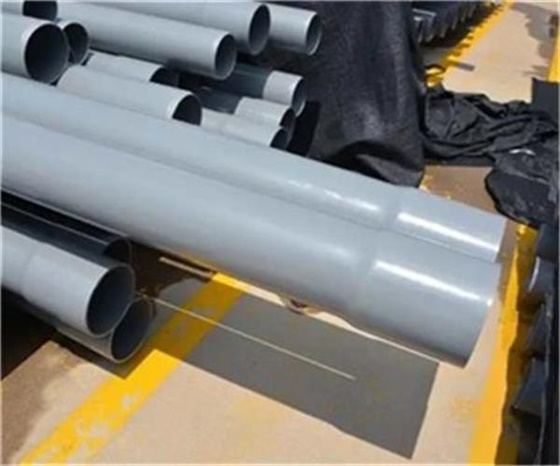
80mm Polyvinyl Chloride (PVC) pipe, commonly manufactured in China, represents a fundamental component in a diverse range of infrastructure applications, including potable water distribution, irrigation, drainage, and wastewater management. This diameter is widely utilized due to its balance between flow capacity and cost-effectiveness. Its technical position within the industry chain sits between the polymerization of vinyl chloride monomer (VCM) and the final installed system. Core performance characteristics center around its pressure rating, chemical resistance, and long-term durability. A critical industry pain point revolves around maintaining consistent quality control across various manufacturing facilities to ensure adherence to international standards and prevent premature failures due to substandard material composition or processing. Furthermore, concerns regarding the environmental impact of PVC production and disposal are increasingly driving demand for improved recycling technologies and bio-based alternatives.
Material Science & Manufacturing
The primary raw material for 80mm PVC pipe is Polyvinyl Chloride (PVC), a thermoplastic polymer derived from vinyl chloride monomer (VCM). PVC's physical properties are heavily influenced by the addition of various additives, including plasticizers (like phthalates or DINP) for flexibility, stabilizers (typically lead-based, calcium-zinc based, or organic-based) to prevent thermal degradation during processing, lubricants to aid extrusion, and impact modifiers to enhance toughness. The manufacturing process typically involves extrusion. PVC compound is fed into a single-screw extruder where it is heated and homogenized. The molten PVC is then forced through a die that shapes it into a pipe. Critical parameters include maintaining precise temperature control along the extruder barrel (typically between 180°C and 220°C) to prevent degradation and ensure complete fusion of the PVC compound. Cooling is achieved using water jackets surrounding the die. Following extrusion, the pipe is cut to length, tested for dimensional accuracy and pressure resistance, and marked with relevant specifications. Quality control measures include regular testing of raw material composition, melt flow index, and impact strength. The surface finish must be smooth and free from defects, and consistent wall thickness is paramount for maintaining structural integrity. Improper control of these parameters can lead to defects such as porosity, surface cracks, and dimensional inconsistencies.
Performance & Engineering
The performance of 80mm PVC pipe is heavily dependent on its ability to withstand internal hydrostatic pressure, external soil loads, and environmental stresses. Force analysis involves calculating hoop stress (σh = PD/2t, where P is pressure, D is diameter, and t is wall thickness) to determine the required wall thickness for a given operating pressure. PVC's relatively low tensile strength (typically 50-70 MPa) necessitates careful consideration of wall thickness to prevent rupture. Environmental resistance is a key factor, with prolonged exposure to ultraviolet (UV) radiation causing degradation and embrittlement. The addition of UV stabilizers to the PVC compound mitigates this effect, but long-term exposure still requires protective measures such as burial or coating. Chemical resistance is generally excellent for many common chemicals, but PVC can be affected by strong oxidizing agents and certain solvents. Compliance requirements vary by region, but generally adhere to standards such as ASTM D1785 (for rigid PVC pipe) and EN 1452 (for PVC-U pipes and fittings). Long-term creep resistance is also critical; PVC can exhibit time-dependent deformation under sustained load, necessitating a safety factor in design calculations. The pipe’s resistance to ground movement, thermal expansion, and contraction must also be factored into installation designs, often requiring expansion joints or flexible couplings.
Technical Specifications
| Parameter | Typical Value (China 80mm PVC Pipe) | Testing Standard | Units |
|---|---|---|---|
| Nominal Diameter | 80 | GB/T 5836.1 | mm |
| Wall Thickness | 3.2 - 4.5 | GB/T 5836.1 | mm |
| Pressure Rating (PN) | 10, 16 | GB/T 5836.1 | bar |
| Tensile Strength | 60 - 70 | GB/T 8803 | MPa |
| Impact Strength (Charpy) | 5 - 10 | GB/T 1043 | kJ/m² |
| Melt Flow Index | 20-30 | GB/T 1235 | g/10min |
Failure Mode & Maintenance
Common failure modes in 80mm PVC pipe include brittle fracture due to impact damage, cracking resulting from excessive stress or creep, and degradation caused by UV exposure or chemical attack. Fatigue cracking can occur in pipelines subjected to cyclical pressure fluctuations. Delamination can occur in pipes with insufficient fusion during extrusion. Oxidation of the PVC compound over long periods leads to embrittlement and reduced strength. Soil-induced stress, particularly in unstable ground conditions, can cause longitudinal cracking or deformation. Maintenance involves regular visual inspections for cracks, leaks, or signs of degradation. Pressure testing should be performed periodically to verify system integrity. For minor cracks, epoxy-based repair compounds can be used. For more significant damage, pipe replacement is typically necessary. Prevention strategies include proper installation techniques, adequate soil bedding, and the use of UV protective coatings or burial. Avoiding the use of aggressive chemicals in contact with the pipe and ensuring appropriate support structures are crucial. A proactive maintenance program based on regular inspections and timely repairs will significantly extend the lifespan of the PVC pipeline system.
Industry FAQ
Q: What is the expected service life of a properly installed 80mm PVC pipe?
A: A properly installed and maintained 80mm PVC pipe can have a service life of 50 to 100 years, depending on the application, soil conditions, operating pressure, and exposure to UV radiation and chemicals. Regular inspections and adherence to best practices significantly contribute to maximizing its lifespan.
Q: How does temperature affect the performance of PVC pipe?
A: Increased temperatures reduce the pressure-bearing capacity of PVC and increase its susceptibility to creep. Conversely, low temperatures can make PVC more brittle and prone to fracture. The allowable operating temperature range for PVC pipe is typically between 0°C and 60°C, although this can vary depending on the specific compound formulation.
Q: What are the environmental concerns associated with PVC production and disposal?
A: PVC production involves the use of chlorine and ethylene, and the disposal of PVC waste can release harmful dioxins if incinerated improperly. However, significant advancements have been made in reducing emissions and promoting PVC recycling. Mechanical recycling is commonly used, and research is ongoing into chemical recycling methods to recover valuable monomers.
Q: What is the difference between Schedule 40 and Schedule 80 PVC pipe?
A: Schedule 40 and Schedule 80 refer to the pipe's wall thickness. Schedule 80 pipe has a thicker wall than Schedule 40 pipe, resulting in a higher pressure rating and greater structural strength. Schedule 80 is generally used for higher-pressure applications or when greater durability is required.
Q: What type of jointing methods are commonly used for 80mm PVC pipe?
A: Common jointing methods include solvent welding (cementing), rubber ring joints (push-fit), and flanged connections. Solvent welding creates a permanent, watertight seal by chemically bonding the pipe and fitting materials. Rubber ring joints offer a quick and easy installation, while flanged connections provide a removable connection for maintenance or repair.
Conclusion
80mm PVC pipe manufactured in China represents a cost-effective and reliable solution for a wide range of fluid conveyance applications. Its performance is intrinsically linked to material science, manufacturing process control, and adherence to stringent quality standards. Understanding the fundamental properties of PVC, its susceptibility to environmental factors, and potential failure modes is paramount for ensuring long-term system integrity.
Future advancements in PVC technology will likely focus on developing more sustainable formulations, enhancing recycling capabilities, and improving resistance to degradation. Continued investment in quality control and standardization will remain crucial for maintaining the reliability and performance of 80mm PVC pipe in critical infrastructure systems. The industry must prioritize environmentally responsible practices to mitigate the impact of PVC production and disposal.
-
DN25 HDPE Compression Fitting-HORON INTERNATIONAL|Reliable Irrigation Solutions
NewsFeb.11,2026
-
china corrugated hdpe pipe fittings Performance Analysis
News2026-05-22
-
china ppr pipe for hot water Performance Analysis
News2026-05-22
-
china ppr Technical Performance Analysis
News2026-05-22
-
china corrugated dual wall pipe Performance Analysis
News2026-05-22
-
china sink inlet pipe Material Performance Analysis
News2026-05-22
-
china 1 2 inch pvc Performance Analysis
News2026-05-21
-
china hdpe pipe joint coupler Performance Analysis
News2026-05-21
-
china ppr pipes and fittings price list Technical Analysis
News2026-05-21
-
china 9 inch pvc pipe price Performance Analysis
News2026-05-21
-
china 2 inch borewell column pipe price Performance Engineering
News2026-05-21
-
china hdpe pipe suppliers Performance Analysis
News2026-05-20
-
china submersible pump column pipe Performance Engineering
News2026-05-20
-
china 8 hdpe corrugated pipe Manufacturing Analysis
News2026-05-20
-
china dual wall hdpe pipe Performance Analysis
News2026-05-20
-
china water lines under sink Performance Analysis
News2026-05-20