

Feb . 11, 2026 00:01 Back to list
china hdpe couplings Performance Analysis
Introduction
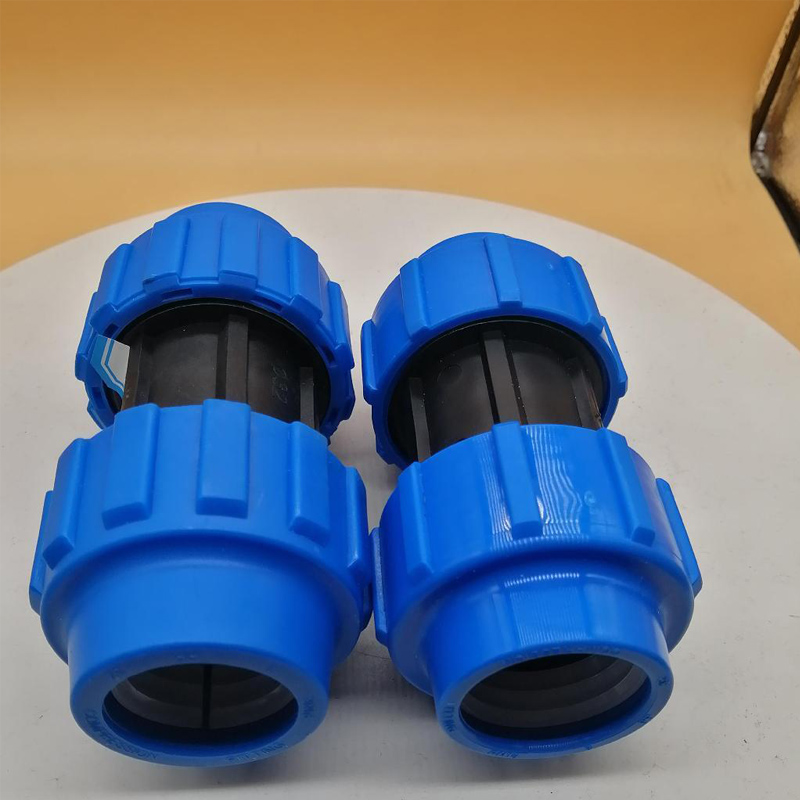
High-Density Polyethylene (HDPE) couplings, manufactured in China, represent a critical joining component within fluid transfer systems across diverse industries including water distribution, gas pipelines, irrigation, and chemical processing. These couplings facilitate the secure and leak-proof connection of HDPE pipes, offering a robust and cost-effective alternative to traditional metallic joining methods. Positioned within the broader pipeline infrastructure supply chain, HDPE couplings are integral to ensuring system integrity and operational longevity. Core performance characteristics center around pressure containment, chemical resistance, and long-term durability, increasingly demanded by stringent industry regulations and environmental considerations. The prevalence of electrofusion and butt fusion welding techniques drives the demand for high-quality, precisely manufactured HDPE couplings capable of consistently achieving reliable, structurally sound joints. Concerns regarding material consistency, weldability, and long-term creep resistance are primary drivers for focused quality control and material traceability within Chinese manufacturing.
Material Science & Manufacturing
HDPE couplings are primarily constructed from high-density polyethylene resin, typically conforming to PE100 or PE80 standards. The raw material's molecular weight distribution and density directly impact the final coupling's mechanical properties, particularly its resistance to slow crack growth and environmental stress cracking. PE100, exhibiting higher molecular weight, offers superior performance in demanding applications. Manufacturing processes largely fall into two categories: injection molding and rotational molding. Injection molding is favored for producing dimensionally accurate, complex geometries commonly found in electrofusion fittings. This process requires precise control of melt temperature (typically 200-250°C), injection pressure (ranging from 50-150 MPa), and mold temperature (30-60°C) to minimize residual stresses and ensure uniform material distribution. Rotational molding, while less precise, is used for larger diameter couplings and offers cost advantages for lower-volume production. Critical parameters in rotational molding include mold rotation speed, oven temperature profiles (typically 180-220°C), and cooling rates. Post-molding operations often include machining to achieve precise dimensions, surface finishing to optimize weldability, and rigorous quality control checks encompassing hydrostatic pressure testing and dimensional verification. The presence of additives, such as carbon black for UV resistance and antioxidants to prevent thermal degradation, is carefully controlled to maintain material integrity and longevity.
Performance & Engineering
The performance of HDPE couplings is fundamentally governed by their ability to withstand internal pressure, external loads, and environmental stressors. Hydrostatic pressure testing, conducted according to ISO 1167, verifies the coupling’s resistance to burst and sustained pressure. Finite element analysis (FEA) is increasingly utilized during the design phase to optimize geometry and minimize stress concentrations, particularly around weld zones. Environmental resistance is a crucial consideration, with HDPE couplings needing to withstand prolonged exposure to UV radiation, temperature fluctuations (ranging from -40°C to +60°C, depending on the grade), and potentially corrosive chemicals. The long-term creep resistance of HDPE is a critical design parameter, as sustained hydrostatic pressure can lead to dimensional changes and potential joint failure. Engineering calculations must account for the time-dependent behavior of HDPE, utilizing established creep models. Compatibility with the connected HDPE pipe material is paramount; mismatch in material properties or dimensions can induce stress and compromise joint integrity. Compliance with industry standards, such as ASTM D3261 (for polyethylene fittings) and AWWA C906 (for HDPE pipe and fittings), is essential to ensure consistent performance and reliability. The saddle connection design, a common coupling application, requires meticulous engineering to prevent localized stress concentrations and ensure uniform load distribution on the host pipe.
Technical Specifications
| Parameter | PE80 | PE100 | Unit |
|---|---|---|---|
| Minimum Tensile Strength | 20 | 25 | MPa |
| Hydrostatic Pressure (Short Term) | 12.5 | 16 | MPa |
| Hydrostatic Pressure (Long Term, 50°C) | 6.3 | 8 | MPa |
| Slow Crack Growth Resistance (SCGR) | >200 | >400 | Hours |
| Operating Temperature Range | -40 to +40 | -40 to +60 | °C |
| Density | 0.930 – 0.941 | 0.941 – 0.965 | g/cm³ |
Failure Mode & Maintenance
HDPE couplings can experience several failure modes in practical applications. Slow crack growth (SCG), induced by sustained tensile stress and environmental factors, is a common long-term failure mechanism. Environmental Stress Cracking (ESC) can occur in the presence of certain chemicals, leading to brittle fracture. Fatigue cracking can arise from cyclic pressure fluctuations or mechanical vibrations, particularly in applications involving frequent start-stop operations. Weld defects, such as incomplete fusion or porosity, significantly reduce joint strength and can initiate failure. Corrosion, although HDPE is inherently corrosion-resistant, can be induced by certain aggressive chemicals or prolonged exposure to ultraviolet radiation, leading to material degradation. Maintenance primarily focuses on visual inspection for cracks, leaks, or deformation. Regular pressure testing can identify potential weaknesses before catastrophic failure occurs. For electrofusion couplings, proper welding parameters (voltage, current, and fusion time) are crucial; inadequate welding can compromise joint integrity. Preventative maintenance programs should include monitoring environmental conditions and ensuring compatibility with transported fluids. In the event of a detected crack, complete replacement of the coupling and potentially the adjacent pipe section is recommended to prevent further propagation. Proper handling and storage are vital to prevent physical damage and contamination.
Industry FAQ
Q: What is the impact of varying pipe SDR (Standard Dimension Ratio) on coupling selection?
A: Pipe SDR dictates the wall thickness relative to its diameter. Couplings must be compatible with the SDR of the connected pipe. Using a coupling designed for a lower SDR (thicker wall) on a higher SDR pipe (thinner wall) results in a weak point. Conversely, using a coupling for a higher SDR on a lower SDR pipe doesn’t fully utilize the coupling’s strength but isn't as critical a failure mode. Verification of SDR compatibility is fundamental to ensuring joint integrity and preventing premature failure.
Q: How does the presence of chlorine in water affect the long-term performance of HDPE couplings?
A: While HDPE is generally resistant to chlorine, prolonged exposure to high concentrations of chlorine can lead to oxidative degradation, reducing the material’s molecular weight and increasing its susceptibility to SCG. The rate of degradation depends on chlorine concentration, water temperature, and exposure duration. Incorporating UV stabilizers and antioxidants in the HDPE formulation can mitigate the effects of chlorine exposure, and routine water quality monitoring is essential.
Q: What are the best practices for storing HDPE couplings to prevent degradation?
A: HDPE couplings should be stored in a cool, dry, and well-ventilated area, protected from direct sunlight and extreme temperatures. Avoid storing them in contact with incompatible materials, such as solvents or strong oxidizing agents. Couplings should be stacked properly to prevent deformation or damage. Long-term storage exceeding six months is not recommended without periodic inspection for signs of degradation.
Q: What quality control measures are typically employed by Chinese HDPE coupling manufacturers?
A: Reputable Chinese manufacturers employ a multi-tiered quality control system including raw material inspection (verifying resin grade and properties), in-process inspection (monitoring molding parameters and dimensional accuracy), hydrostatic pressure testing (100% testing to specified pressure levels), and visual inspection for defects. Traceability systems are increasingly implemented to track material batches and manufacturing dates. ISO 9001 certification is a common indicator of quality management systems.
Q: Can HDPE couplings be used in vacuum applications?
A: HDPE couplings can be used in certain vacuum applications, but the design must account for the potential for radial contraction under negative pressure. Couplings should be reinforced or designed with features to prevent implosion. The degree of vacuum and the coupling’s geometry are critical factors. Thorough engineering analysis and testing are essential to ensure the coupling can withstand the applied vacuum loads.
Conclusion
HDPE couplings, manufactured in China, have become a cornerstone of modern fluid transfer systems due to their durability, cost-effectiveness, and chemical resistance. The material science governing their performance, coupled with precise manufacturing techniques like injection molding and rotational molding, dictates their suitability for a wide range of applications. Understanding the potential failure modes, such as slow crack growth and weld defects, and implementing appropriate preventative maintenance practices are crucial for maximizing their service life.
The continued evolution of HDPE coupling technology focuses on enhancing material properties, optimizing weldability, and improving long-term creep resistance. Adherence to international standards (ASTM, ISO) and rigorous quality control protocols remain paramount to ensuring the consistent performance and reliability of these critical components within the global pipeline infrastructure.
-
DN25 HDPE Compression Fitting-HORON INTERNATIONAL|Reliable Irrigation Solutions
NewsFeb.11,2026
-
china 3 4 ppr pipe in mm Performance Analysis
News2026-04-28
-
china hdpe couplings Performance Analysis
News2026-04-28
-
china 75mm pvc pipe Performance Analysis
News2026-04-28
-
china pvc pipe price per meter Technical Analysis
News2026-04-28
-
china hdpe pipe for drinking water Performance Analysis
News2026-04-28
-
china 24 inch diameter pvc pipe price Performance Engineering
News2026-04-27
-
china 4 hdpe drain pipe Performance Analysis
News2026-04-27
-
china 12 hdpe pipe Performance Analysis
News2026-04-27
-
china hdpe reducing coupling Performance Analysis
News2026-04-27
-
china hdpe corrugated sewer pipe Performance Analysis
News2026-04-27
-
china pvc pipe cost per foot Technical Analysis
News2026-04-26
-
china double walled corrugated pipe Performance Analysis
News2026-04-26
-
china hdpe sprinkler pipe price list Performance Analysis
News2026-04-26
-
china water pipe in kitchen Performance Analysis
News2026-04-26
-
china hdpe to pvc pipe coupling Performance Analysis
News2026-04-26