

Feb . 11, 2026 00:01 Back to list
china hdpe pipe for irrigation Performance Analysis
Introduction
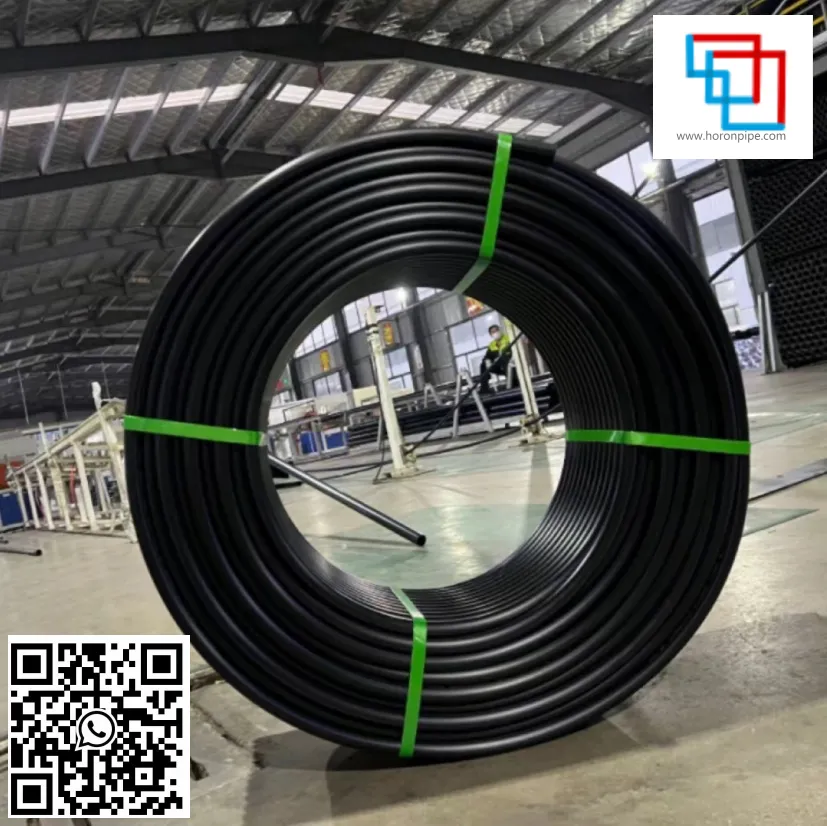
High-Density Polyethylene (HDPE) pipe for irrigation represents a significant advancement in water conveyance technology within the agricultural sector. Positioned as a direct replacement for traditional materials like PVC, metal, and concrete, HDPE pipe offers a compelling combination of durability, flexibility, and cost-effectiveness. This guide provides a comprehensive technical overview of China-manufactured HDPE pipe specifically designed for irrigation systems, detailing its material properties, manufacturing processes, performance characteristics, potential failure modes, and relevant industry standards. The core performance metrics center around pressure resistance, flow capacity, UV stability, and long-term durability in soil environments. A primary industry pain point is the need for irrigation systems that minimize water loss through leakage and are resistant to corrosion and scaling, especially in areas with aggressive soil chemistry. HDPE addresses these concerns, offering a robust solution that reduces maintenance requirements and maximizes irrigation efficiency.
Material Science & Manufacturing
HDPE pipe is manufactured from high-density polyethylene resin, typically grades designated as PE3408, PE3408E, or PE3412, conforming to ISO/TS 10732. These resins exhibit a high molecular weight and a narrow molecular weight distribution, contributing to enhanced mechanical properties. Raw material properties include a density of approximately 0.953 – 0.965 g/cm³, a tensile strength between 26-35 MPa, and a Rockwell hardness ranging from 55-65. The manufacturing process predominantly employs extrusion techniques. Resin pellets are fed into a hopper, conveyed through a barrel heated by multiple zones, melted, and then forced through a die to form a continuous pipe. Key parameters controlled during extrusion include melt temperature (typically 180-220°C), extrusion speed, die pressure, and cooling rate. Butt fusion, electrofusion, and socket fusion are the common joining methods. Butt fusion, frequently used for larger diameter pipes, involves heating the pipe ends and pressing them together under controlled pressure. Electrofusion utilizes resistive heating within a fitting to create a homogeneous weld. Cooling rates are critical to prevent deformation and ensure dimensional stability. Post-extrusion processes include diameter control, surface inspection, and quality assurance testing, including hydrostatic pressure testing and dimensional checks.
Performance & Engineering
The performance of HDPE pipe in irrigation applications is directly linked to its ability to withstand internal pressure, external loads, and environmental stressors. Force analysis considers hoop stress induced by internal water pressure, longitudinal stress due to external loads (soil overburden, traffic loads), and bending stress caused by pipeline deflection. The Hazen-Williams equation is commonly used to calculate head loss and flow capacity within the pipe, factoring in pipe roughness coefficient (typically 0.000007 for HDPE). Environmental resistance is a critical aspect. UV degradation can occur upon prolonged exposure to sunlight; therefore, HDPE pipe used in above-ground applications often incorporates UV stabilizers (typically carbon black). Long-term hydrostatic strength is assessed using hydrostatic stress rupture testing, predicting the pipe’s lifespan under constant pressure and temperature. Compliance requirements vary depending on regional regulations, but typically involve adherence to pressure ratings (PN – Nominal Pressure), dimensional standards (ISO 4427), and material specifications (ISO/TS 10732). Specifically, irrigation systems require pipes capable of withstanding surge pressures generated by pump start/stop cycles, necessitating surge protection devices and appropriate pipe wall thicknesses.
Technical Specifications
| Parameter | Units | Specification (Typical) | Test Standard |
|---|---|---|---|
| Nominal Diameter | mm | 20 – 630 | GB/T 5817.1 |
| Pressure Rating (PN) | bar | PN6, PN10, PN16 | ISO 4427 |
| Material | - | PE3408, PE3408E, PE3412 | ISO/TS 10732 |
| Density | g/cm³ | 0.953 - 0.965 | GB/T 1843 |
| Tensile Strength | MPa | 26 – 35 | GB/T 16885 |
| Hydrostatic Pressure Test | MPa | ≥ 1.5 x PN for 2 hours | GB/T 20707 |
Failure Mode & Maintenance
HDPE pipe, while robust, is susceptible to specific failure modes. Slow Crack Growth (SCG) is a primary concern, induced by sustained tensile stress in conjunction with aggressive environmental factors (e.g., alkaline soils, certain chemicals). Fatigue cracking can occur due to cyclic pressure fluctuations or repeated bending. Delamination can arise from inadequate fusion during joining processes. Oxidation, while slow, can degrade the material over extended periods, especially at elevated temperatures. A significant failure mode relates to incorrect installation, specifically insufficient bedding support leading to localized stress concentrations and potential pipe rupture. Maintenance primarily involves regular visual inspections for cracks, leaks, or deformation. Pressure testing should be conducted periodically to identify potential weaknesses. For SCG prevention, proper bedding materials and stress reduction techniques are crucial. Damaged sections should be repaired using compatible HDPE fittings and appropriate fusion methods. Preventative maintenance includes ensuring adequate UV protection for exposed pipe sections and avoiding exposure to incompatible chemicals. Soil analysis is recommended prior to installation to assess potential corrosive elements.
Industry FAQ
Q: What is the long-term impact of soil acidity on the lifespan of HDPE irrigation pipes?
A: Prolonged exposure to acidic soil can lead to a gradual reduction in the molecular weight of the HDPE, potentially increasing the susceptibility to SCG. While HDPE is generally resistant to many chemicals, highly acidic conditions can accelerate degradation. Selecting HDPE grades with enhanced chemical resistance and ensuring adequate pipe bedding with a neutral pH can mitigate these effects.
Q: How does the pipe's wall thickness affect its ability to withstand surge pressures in an irrigation system?
A: Increasing the pipe wall thickness directly enhances its ability to withstand surge pressures. Surge pressures are transient pressure spikes caused by rapid changes in flow velocity, such as pump starts and stops. A thicker wall provides greater hoop strength and resistance to burst. Proper surge protection devices should always be used in conjunction with appropriate pipe wall thickness selection.
Q: What are the key considerations for selecting the appropriate HDPE pipe joining method (butt fusion, electrofusion, socket fusion)?
A: Butt fusion is generally preferred for larger diameter pipes (typically >125mm) due to its faster fusion times and lower material waste. Electrofusion provides a more controlled and reliable weld, particularly for complex geometries or smaller diameters. Socket fusion is suitable for smaller diameter pipes and quick repairs. The chosen method must be performed by certified technicians following the manufacturer's specifications.
Q: How does UV exposure affect the mechanical properties of HDPE pipe, and what mitigation strategies are recommended?
A: Prolonged UV exposure can cause chain scission in the HDPE polymer, leading to embrittlement and reduced tensile strength. The inclusion of carbon black as a UV stabilizer significantly improves resistance. For above-ground applications, using UV-stabilized HDPE pipe or applying a protective coating is essential. Burying the pipe also provides effective UV protection.
Q: What quality control procedures are typically implemented during the manufacturing of HDPE irrigation pipes to ensure conformity to industry standards?
A: Manufacturing quality control procedures include raw material inspection (verification of resin grade and properties), dimensional checks throughout the extrusion process, hydrostatic pressure testing to verify burst strength, and impact resistance testing. Regular calibration of extrusion equipment and adherence to ISO 9001 quality management systems are also crucial.
Conclusion
China-manufactured HDPE pipe represents a durable and efficient solution for irrigation systems, offering significant advantages over traditional materials. Its inherent properties, coupled with controlled manufacturing processes, ensure resistance to corrosion, chemical degradation, and mechanical stress. Careful consideration of material selection, installation practices, and maintenance procedures are paramount to maximizing its lifespan and performance.
Looking forward, advancements in HDPE resin technology and improved joining techniques will further enhance the reliability and cost-effectiveness of these systems. Increased adoption of smart irrigation technologies, coupled with the durability of HDPE, will contribute to sustainable water management practices in agriculture. Selecting reputable manufacturers adhering to stringent quality control standards is crucial for long-term success.
-
DN25 HDPE Compression Fitting-HORON INTERNATIONAL|Reliable Irrigation Solutions
NewsFeb.11,2026
-
china corrugated hdpe pipe fittings Performance Analysis
News2026-05-22
-
china ppr pipe for hot water Performance Analysis
News2026-05-22
-
china ppr Technical Performance Analysis
News2026-05-22
-
china corrugated dual wall pipe Performance Analysis
News2026-05-22
-
china sink inlet pipe Material Performance Analysis
News2026-05-22
-
china 1 2 inch pvc Performance Analysis
News2026-05-21
-
china hdpe pipe joint coupler Performance Analysis
News2026-05-21
-
china ppr pipes and fittings price list Technical Analysis
News2026-05-21
-
china 9 inch pvc pipe price Performance Analysis
News2026-05-21
-
china 2 inch borewell column pipe price Performance Engineering
News2026-05-21
-
china hdpe pipe suppliers Performance Analysis
News2026-05-20
-
china submersible pump column pipe Performance Engineering
News2026-05-20
-
china 8 hdpe corrugated pipe Manufacturing Analysis
News2026-05-20
-
china dual wall hdpe pipe Performance Analysis
News2026-05-20
-
china water lines under sink Performance Analysis
News2026-05-20