

Feb . 11, 2026 00:01 Back to list
china hdpe sprinkler pipe fittings Performance Analysis
Introduction
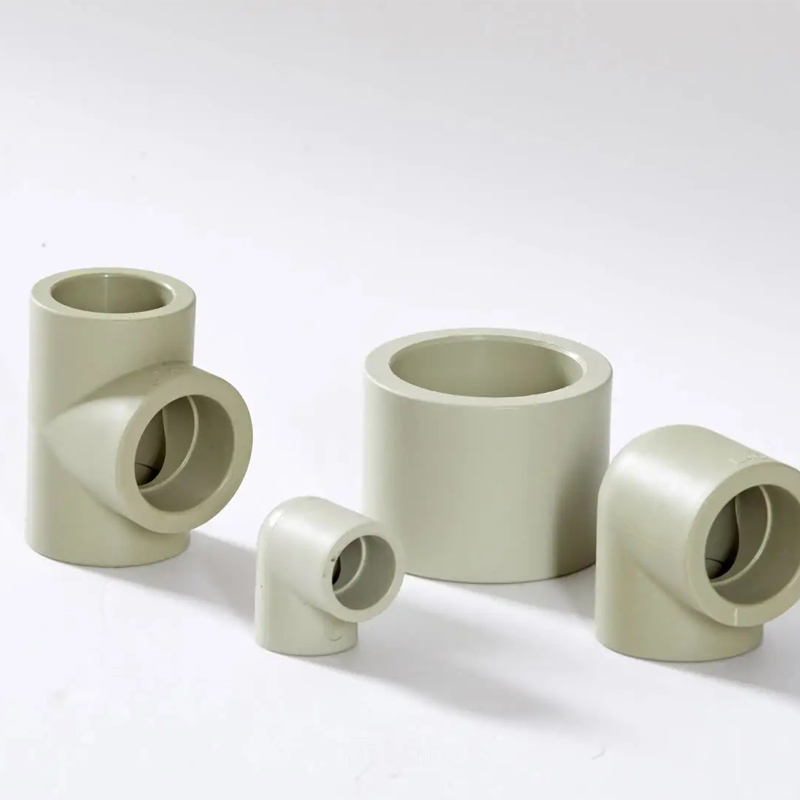
High-Density Polyethylene (HDPE) sprinkler pipe fittings represent a critical component in irrigation systems, particularly within agricultural, commercial landscaping, and residential applications. These fittings, manufactured extensively in China, facilitate the connection of HDPE pipes, enabling efficient water distribution for sprinkler systems. Their increasing adoption stems from HDPE's inherent properties – corrosion resistance, flexibility, and cost-effectiveness – compared to traditional materials like metal or PVC. This guide provides an in-depth examination of Chinese-manufactured HDPE sprinkler pipe fittings, covering material science, manufacturing processes, performance characteristics, potential failure modes, maintenance protocols, and relevant industry standards. A key industry pain point is ensuring consistent quality control and adherence to international standards given varying manufacturing capabilities among Chinese suppliers. Understanding these aspects is crucial for procurement managers and engineers seeking reliable and durable irrigation solutions.
Material Science & Manufacturing
HDPE sprinkler pipe fittings are primarily composed of high-density polyethylene, a thermoplastic polymer produced from the polymerization of ethylene. The HDPE resin used typically exhibits a density between 0.93 and 0.97 g/cm³. Key material properties influencing fitting performance include molecular weight distribution, melt flow index (MFI), and resistance to environmental stress cracking (ESCR). Higher molecular weight HDPE generally exhibits greater tensile strength and impact resistance, while lower MFI facilitates easier processing. ESCR is paramount, as fittings are often exposed to soil chemicals and UV radiation. Manufacturing processes commonly employed include injection molding and compression molding. Injection molding is favored for producing complex fitting geometries with high precision and repeatability. Critical parameters in injection molding include melt temperature (typically 180-220°C), mold temperature (30-50°C), injection pressure (70-100 MPa), and cooling rate. Proper control of these parameters is vital to minimize warpage, shrinkage, and internal stresses. Compression molding, while slower, is suitable for larger fittings and can yield improved material density. Post-molding processes often include stress relieving and dimensional inspection. The source of the HDPE resin is also a critical factor, with reputable suppliers guaranteeing consistent quality and traceability. Industry challenges revolve around maintaining uniform wall thickness and minimizing the formation of weld lines, which can act as potential failure points.
Performance & Engineering
The performance of HDPE sprinkler pipe fittings is dictated by their ability to withstand hydrostatic pressure, tensile stress, and environmental factors. Hydrostatic pressure testing, typically conducted at 1.5 times the working pressure, is crucial to verify the integrity of the fittings. Tensile strength, measured in MPa, determines the fitting's resistance to cracking under load. The fittings must also exhibit adequate impact resistance, particularly during installation and operation. Engineering considerations encompass pipe joining methods – socket fusion, butt fusion, and electrofusion – each with its specific strength and application parameters. Socket fusion is commonly used for smaller diameter fittings, while butt fusion is preferred for larger diameters, providing a homogenous weld with superior strength. Electrofusion utilizes an electrical current to melt and fuse the pipe and fitting, offering precise control and enhanced weld quality. Environmental resistance is a significant factor, with HDPE demonstrating excellent resistance to most chemicals commonly found in soil and water. However, prolonged exposure to strong oxidizing agents or UV radiation can lead to degradation. The design of the fitting itself – including wall thickness, ribbing, and connection geometry – plays a critical role in stress distribution and overall performance. Finite element analysis (FEA) is increasingly employed to optimize fitting designs and predict performance under various loading conditions. A primary industry concern is ensuring the long-term performance of electrofusion welds in varying soil conditions and temperatures.
Technical Specifications
| Parameter | Unit | Typical Value (Chinese HDPE Fittings) | Testing Standard |
|---|---|---|---|
| Material | - | HDPE (PE100, PE80) | GB/T 7558.1-2008 |
| Pressure Rating | MPa | 0.6 - 1.6 | ISO 14236 |
| Operating Temperature | °C | -40 to +60 | ASTM D1694 |
| Tensile Strength | MPa | > 20 | GB/T 10001 |
| Elongation at Break | % | > 300 | GB/T 10001 |
| Hydrostatic Pressure Test | MPa | ≥ 1.5 x Working Pressure (Hold for 10 mins) | ISO 11671 |
Failure Mode & Maintenance
HDPE sprinkler pipe fittings, while durable, are susceptible to several failure modes. These include: 1) Stress Cracking: Caused by prolonged exposure to chemicals or mechanical stress, leading to cracks initiating at stress concentrations. 2) UV Degradation: Prolonged UV exposure can embrittle the material, reducing its impact resistance and tensile strength. 3) Fatigue Cracking: Repeated pressure cycling can lead to fatigue cracks, particularly around weld areas or threaded connections. 4) Weld Defects: Improper fusion welding can result in weak or porous welds, prone to leakage or failure. 5) Impact Damage: Physical impacts during installation or operation can cause cracks or deformation. 6) Soil Settlement: Differential soil settlement can induce bending stresses on the fittings, leading to cracking. Maintenance protocols include: regular visual inspections for cracks or leaks, pressure testing to verify system integrity, proper backfilling procedures to support the pipes and fittings, and protection from UV exposure (e.g., burying the pipes or using UV-resistant coatings). Failure analysis should involve microscopic examination of fracture surfaces to identify the root cause of failure. Preventative maintenance, such as applying protective sleeves to exposed fittings and ensuring proper weld quality control, is crucial to extend service life. A frequent industry issue is identifying the origin of stress cracking – distinguishing between material defects and external chemical attack.
Industry FAQ
Q: What is the expected service life of a Chinese-manufactured HDPE sprinkler pipe fitting under typical agricultural conditions?
A: Under typical agricultural conditions – including moderate soil chemistry, UV exposure, and operating pressures – a properly installed and maintained HDPE sprinkler pipe fitting can be expected to have a service life of 20-30 years. However, this is heavily dependent on the quality of the HDPE resin, the manufacturing process, and the specific environmental conditions. Regular inspections and preventative maintenance are crucial to maximizing lifespan.
Q: How does the quality control process vary among different Chinese HDPE fitting manufacturers?
A: Quality control practices vary significantly. Tier-1 manufacturers typically employ rigorous quality control systems, including in-process inspections, hydrostatic testing, and material certification. Lower-tier manufacturers may have less stringent quality control, leading to inconsistencies in product quality. Independent third-party certification (e.g., ISO 9001) can provide some assurance of quality.
Q: What are the key considerations when selecting a pipe joining method (socket fusion, butt fusion, electrofusion) for HDPE sprinkler fittings?
A: Pipe diameter, fitting size, and required strength are key considerations. Socket fusion is suitable for smaller diameters and simpler connections. Butt fusion is preferred for larger diameters and provides a stronger, more homogenous weld. Electrofusion offers precise control and is suitable for complex geometries or critical applications. Cost and operator skill level are also important factors.
Q: What measures can be taken to mitigate the risk of stress cracking in HDPE sprinkler fittings?
A: Mitigation strategies include selecting HDPE resin with high ESCR resistance, avoiding exposure to harsh chemicals, providing adequate support to prevent bending stresses, and using appropriate joining methods. Ensuring proper installation procedures, including avoiding over-tightening of fittings, is also crucial. Shielding fittings from prolonged UV exposure can also help.
Q: What testing should be conducted upon receipt of HDPE sprinkler fittings to verify quality?
A: Upon receipt, visual inspection for defects is essential. Conduct dimensional checks to ensure compliance with specifications. Hydrostatic testing on a representative sample of fittings is recommended to verify pressure integrity. Material certification from the manufacturer should also be reviewed to confirm the HDPE resin grade and properties.
Conclusion
Chinese-manufactured HDPE sprinkler pipe fittings represent a cost-effective and durable solution for irrigation systems, provided that stringent quality control measures are observed. The material science underpinning HDPE – its flexibility, chemical resistance, and weldability – makes it a preferred alternative to traditional piping materials. However, understanding the manufacturing processes, potential failure modes, and relevant industry standards is paramount for ensuring long-term performance and reliability.
Procurement managers and engineers must prioritize suppliers with robust quality management systems and independent certifications. Careful attention to installation procedures, proper maintenance protocols, and preventative measures will significantly extend the service life of these critical components. Ongoing research and development in HDPE resin formulations and welding technologies will continue to improve the performance and durability of these fittings, addressing current industry pain points related to long-term reliability and ESCR.
-
DN25 HDPE Compression Fitting-HORON INTERNATIONAL|Reliable Irrigation Solutions
NewsFeb.11,2026
-
china corrugated hdpe pipe fittings Performance Analysis
News2026-05-22
-
china ppr pipe for hot water Performance Analysis
News2026-05-22
-
china ppr Technical Performance Analysis
News2026-05-22
-
china corrugated dual wall pipe Performance Analysis
News2026-05-22
-
china sink inlet pipe Material Performance Analysis
News2026-05-22
-
china 1 2 inch pvc Performance Analysis
News2026-05-21
-
china hdpe pipe joint coupler Performance Analysis
News2026-05-21
-
china ppr pipes and fittings price list Technical Analysis
News2026-05-21
-
china 9 inch pvc pipe price Performance Analysis
News2026-05-21
-
china 2 inch borewell column pipe price Performance Engineering
News2026-05-21
-
china hdpe pipe suppliers Performance Analysis
News2026-05-20
-
china submersible pump column pipe Performance Engineering
News2026-05-20
-
china 8 hdpe corrugated pipe Manufacturing Analysis
News2026-05-20
-
china dual wall hdpe pipe Performance Analysis
News2026-05-20
-
china water lines under sink Performance Analysis
News2026-05-20