

Feb . 11, 2026 00:01 Back to list
china water supply hdpe pipe Performance Analysis
Introduction
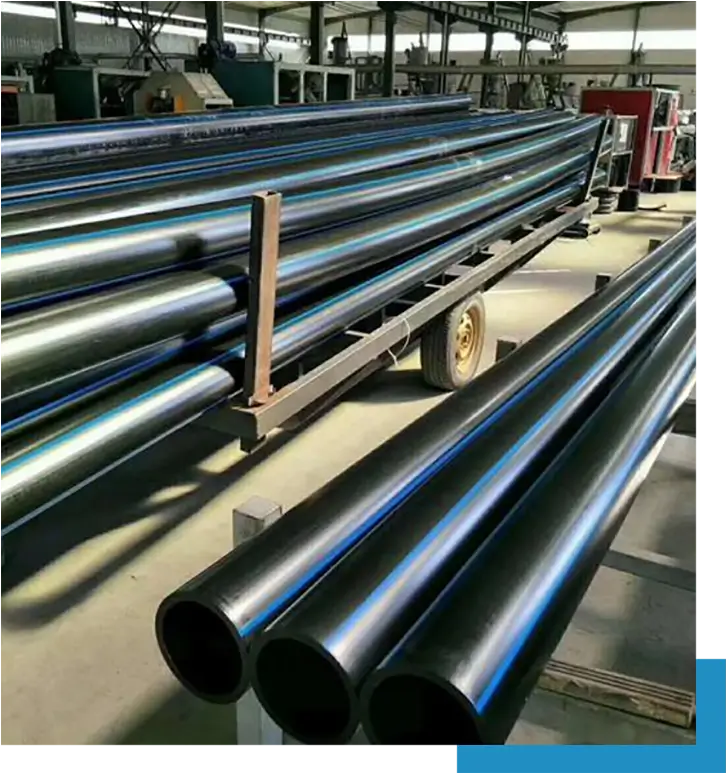
High-Density Polyethylene (HDPE) pipe for water supply represents a significant advancement in municipal and industrial fluid transfer systems. Originating as a cost-effective alternative to traditional metallic piping, HDPE has become the preferred material in numerous applications due to its corrosion resistance, durability, and ease of installation. In the context of China's expansive infrastructure development, domestically produced HDPE water supply pipe fulfills a critical need for reliable and long-lasting water distribution networks. This guide details the material science, manufacturing processes, performance characteristics, potential failure modes, and maintenance protocols specific to Chinese-manufactured HDPE water supply pipe, emphasizing compliance with international standards. A core pain point within the industry is ensuring consistent quality across a large number of manufacturers, and verifying adherence to performance benchmarks, particularly regarding long-term hydrostatic strength and environmental stress cracking resistance. This document aims to provide a comprehensive technical understanding to address these concerns.
Material Science & Manufacturing
HDPE pipe is derived from the polymerization of ethylene, a process that results in a thermoplastic resin with a high degree of crystallinity. The density of the polyethylene, typically ranging from 0.93 to 0.97 g/cm³, dictates its mechanical properties and suitability for pressure applications. For water supply, PE100 is the predominant grade used in Chinese manufacturing, characterized by a molecular weight distribution and density optimized for prolonged hydrostatic strength. Raw material quality control, focusing on molecular weight distribution (MWD) and melt flow index (MFI), is paramount. The manufacturing process typically involves extrusion. Polyethylene resin is fed into an extruder, where it is heated and melted before being forced through a die to form a continuous pipe. Key parameters during extrusion include die temperature, extrusion pressure, haul-off speed, and cooling rate. Precise control of these parameters is vital to ensure uniform wall thickness, dimensional accuracy, and minimized residual stress. Post-extrusion processes include butt fusion or electrofusion jointing for connecting pipe sections. The use of carbon black as a UV stabilizer is common, imparting a black color to the pipe and extending its service life in exposed applications. The degree of carbon black dispersion influences UV protection effectiveness; ensuring homogenous dispersion during compounding is a critical manufacturing step. Furthermore, the inclusion of antioxidant additives stabilizes the polymer against oxidative degradation, crucial for long-term performance, particularly in elevated temperature environments.
Performance & Engineering
The performance of HDPE water supply pipe is governed by its ability to withstand internal pressure, external loads, and environmental stressors. Hydrostatic strength, determined through long-term hydrostatic pressure tests (LTHS) according to ISO 11679, is a critical parameter. The SDR (Standard Dimension Ratio – the ratio of pipe diameter to wall thickness) directly influences this strength. Lower SDR values indicate thicker walls and higher pressure ratings. Force analysis must consider hoop stress due to internal pressure, longitudinal stress from end thrust, and bending stresses from soil loading or traffic loads. HDPE's inherent flexibility allows it to accommodate ground movement and thermal expansion/contraction without fracturing. However, proper anchoring and restraint systems are essential to prevent excessive displacement. Environmental resistance is a key consideration. While HDPE is inherently corrosion-resistant to most chemicals found in water, susceptibility to Environmental Stress Cracking (ESC) must be addressed. ESC occurs when sustained tensile stress, combined with exposure to certain chemicals (detergents, solvents), leads to crack initiation and propagation. HDPE’s performance is also affected by temperature. Elevated temperatures reduce the pipe's strength and increase its creep rate. Compliance requirements vary by region, but generally adhere to standards like GB/T 5817.1 (for polyethylene pipes for water supply – general requirements) and relevant local water authority regulations. Furthermore, UV exposure degrades HDPE, necessitating either burial or the use of UV-stabilized formulations for above-ground applications.
Technical Specifications
| Parameter | Unit | PE100 (Common Chinese Standard) | PE80 (Older/Lower Grade) |
|---|---|---|---|
| Hydrostatic Design Stress (HDS) | MPa | 12.5 | 8.0 |
| Minimum Required Strength (MRS) | MPa | 10.0 | 6.3 |
| Density | g/cm³ | 0.955 - 0.97 | 0.925 - 0.94 |
| SDR (Standard Dimension Ratio) | - | 6.3 - 17.6 | 6.3 - 17.6 |
| Operating Temperature | °C | -20 to +60 | -10 to +40 |
| Environmental Stress Cracking Resistance (ESCR) | Hours to Failure (F50) | >1000 | >500 |
Failure Mode & Maintenance
HDPE water supply pipe, while durable, is susceptible to several failure modes. Slow Crack Growth (SCG), a form of ESC, is a common concern, particularly in areas with aggressive soil conditions or contaminated water. This manifests as longitudinal cracks that propagate slowly over time. Fatigue cracking can occur due to repeated pressure fluctuations or external loading, especially at joints. Oxidation, although slow, can degrade the polymer matrix over extended exposure to high temperatures and oxygen. Joint failures, particularly those resulting from improper fusion techniques, are a significant cause of leaks. UV degradation leads to embrittlement and surface cracking in exposed sections. Maintenance primarily focuses on preventative measures. Regular pressure testing can identify leaks and potential weaknesses. Visual inspection for cracks, deformation, and UV damage is crucial. Proper backfilling and soil compaction around the pipe are essential to prevent external loading. For minor leaks, heat fusion repair sleeves can provide a localized repair. For significant damage, pipe replacement is typically necessary. Consideration should be given to cathodic protection in areas with stray currents to mitigate corrosion of any metallic components used in conjunction with the HDPE pipe (e.g., fittings). Periodic monitoring of water quality is also recommended to identify potential ESC-inducing contaminants.
Industry FAQ
Q: What is the impact of varying soil pH on the long-term performance of HDPE pipe?
A: Highly acidic or alkaline soils can accelerate ESC. Acidic conditions can promote hydrolytic degradation of the polymer, while alkaline conditions can enhance the penetration of contaminants. It is recommended to conduct soil analysis and select HDPE formulations with enhanced ESC resistance or provide a protective barrier layer (e.g., sand bedding) in aggressive soil environments.
Q: How does the quality of the fusion welding process affect the pipe’s pressure rating?
A: Improper fusion welding significantly reduces the pipe's pressure rating. Incomplete fusion, inadequate heating temperatures, or excessive cooling rates can create weak points prone to failure. Qualified and certified fusion technicians, adherence to proper welding procedures (ISO 21307), and rigorous quality control (destructive and non-destructive testing of welds) are essential.
Q: What methods are used to assess the long-term hydrostatic strength of HDPE pipe?
A: Long-Term Hydrostatic Strength (LTHS) is determined through accelerated aging tests according to ISO 11679. These tests involve subjecting pipe samples to elevated temperatures and pressures for extended periods to predict their performance over a 50-year service life. The Hydrostatic Design Stress (HDS) is derived from these tests.
Q: What measures can be taken to mitigate the risk of surge pressure damaging HDPE pipe?
A: Surge pressure, caused by rapid changes in flow velocity, can exceed the pipe's pressure rating. Mitigation strategies include installing surge arrestors (air valves, pressure relief valves), controlling pump start/stop rates, and using slow-closing valves. Proper system design that minimizes flow velocity changes is also crucial.
Q: How does the presence of chlorine in the water affect the lifespan of HDPE pipe?
A: While HDPE is generally resistant to chlorine, high concentrations and prolonged exposure can lead to oxidative degradation, particularly at elevated temperatures. The selection of HDPE formulations with enhanced oxidation resistance and the monitoring of chlorine levels in the water are recommended.
Conclusion
China-manufactured HDPE water supply pipe represents a robust and cost-effective solution for water distribution, predicated on the inherent advantages of the HDPE material itself. However, realizing its full potential requires stringent quality control throughout the manufacturing process, adherence to international standards, and a thorough understanding of potential failure modes. Proper material selection (PE100 is preferred), meticulous extrusion parameter control, and qualified fusion welding are critical to ensure long-term performance and reliability.
Future development will likely focus on incorporating advanced additives to enhance ESC resistance, improve UV stability, and reduce the environmental impact of HDPE production. Furthermore, the adoption of more sophisticated non-destructive testing methods for quality assurance and the implementation of smart monitoring systems for leak detection and performance assessment will contribute to extending the service life and optimizing the operational efficiency of HDPE water supply networks.
-
DN25 HDPE Compression Fitting-HORON INTERNATIONAL|Reliable Irrigation Solutions
NewsFeb.11,2026
-
china corrugated hdpe pipe fittings Performance Analysis
News2026-05-22
-
china ppr pipe for hot water Performance Analysis
News2026-05-22
-
china ppr Technical Performance Analysis
News2026-05-22
-
china corrugated dual wall pipe Performance Analysis
News2026-05-22
-
china sink inlet pipe Material Performance Analysis
News2026-05-22
-
china 1 2 inch pvc Performance Analysis
News2026-05-21
-
china hdpe pipe joint coupler Performance Analysis
News2026-05-21
-
china ppr pipes and fittings price list Technical Analysis
News2026-05-21
-
china 9 inch pvc pipe price Performance Analysis
News2026-05-21
-
china 2 inch borewell column pipe price Performance Engineering
News2026-05-21
-
china hdpe pipe suppliers Performance Analysis
News2026-05-20
-
china submersible pump column pipe Performance Engineering
News2026-05-20
-
china 8 hdpe corrugated pipe Manufacturing Analysis
News2026-05-20
-
china dual wall hdpe pipe Performance Analysis
News2026-05-20
-
china water lines under sink Performance Analysis
News2026-05-20