

Feb . 11, 2026 00:01 Back to list
china hdpe corrugated pipe price Performance Analysis
Introduction
High-Density Polyethylene (HDPE) corrugated pipe represents a significant advancement in subsurface drainage and infrastructure solutions. Manufactured extensively in China, these pipes are utilized globally for applications including stormwater management, sanitary sewer systems, agricultural drainage, and as conduit for utility lines. Their popularity stems from a combination of cost-effectiveness, durability, and ease of installation. Within the broader piping industry, HDPE corrugated pipe occupies a niche offering a compelling alternative to traditional materials like concrete, PVC, and ductile iron, particularly in scenarios demanding flexibility, lightweight construction, and resistance to chemical degradation. The ‘price’ aspect of ‘china hdpe corrugated pipe price’ is directly tied to raw material costs (HDPE resin), manufacturing scale, shipping logistics, and adherence to international quality standards. This guide provides an in-depth technical exploration of these pipes, encompassing material science, manufacturing processes, performance characteristics, failure modes, and relevant industry standards.
Material Science & Manufacturing
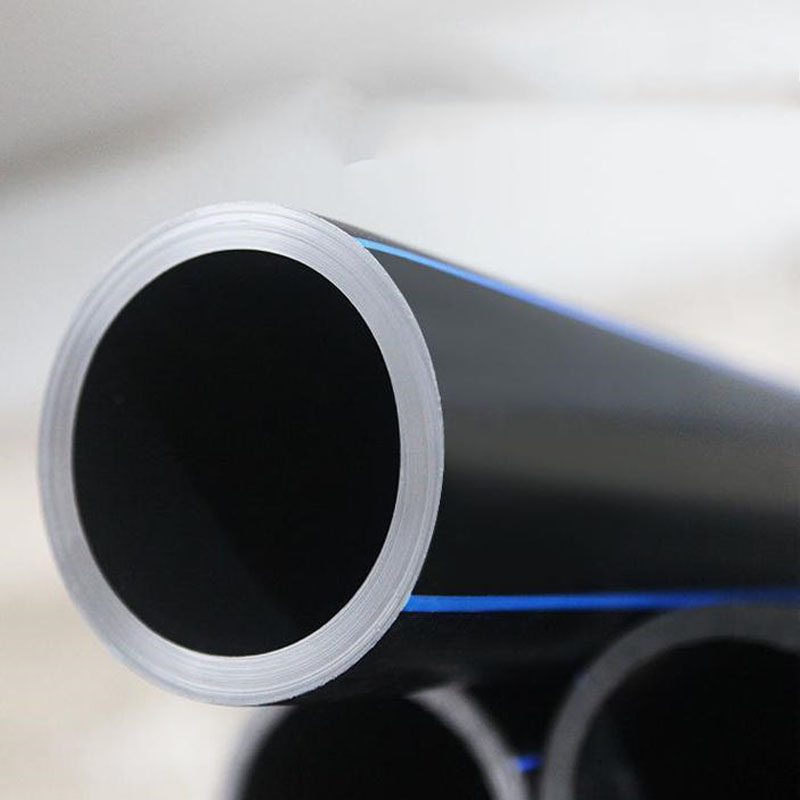
HDPE corrugated pipe begins with the raw material, high-density polyethylene, a thermoplastic polymer created from the polymerization of ethylene. HDPE is favored for its high strength-to-density ratio, excellent chemical resistance, and flexibility. Crucially, the grade of HDPE utilized (typically HDPE resins conforming to PE 100 standards) dictates the pipe’s long-term performance characteristics. Manufacturing generally involves extrusion. HDPE resin is melted and extruded through a circular die to form a continuous pipe. Corrugations are formed simultaneously using a series of rollers or molds integrated into the extrusion process. This corrugation dramatically increases the pipe’s ring stiffness, allowing it to withstand external loads from soil and traffic. Parameter control during extrusion is paramount. Melt temperature, extrusion pressure, cooling rate, and corrugation profile are all critical. Deviations from optimal settings can lead to inconsistencies in wall thickness, corrugation geometry, and ultimately, compromised structural integrity. Post-extrusion, pipes are often subjected to quality control checks, including dimensional accuracy, hydrostatic pressure testing, and impact resistance assessments. The choice of additives during the HDPE compounding stage, such as UV stabilizers and antioxidants, also impacts the pipe’s lifespan and resistance to environmental degradation.
Performance & Engineering
The performance of HDPE corrugated pipe is heavily reliant on its structural integrity under load. Key engineering considerations include ring stiffness, which defines the pipe’s resistance to flattening under external pressure, and longitudinal tensile strength, which determines its ability to withstand pulling forces during installation and operation. Finite Element Analysis (FEA) is frequently employed to model the stress distribution within the pipe under various loading conditions, optimizing the corrugation profile and wall thickness for specific applications. Environmental resistance is another crucial factor. While HDPE exhibits excellent resistance to many chemicals, prolonged exposure to certain solvents and oxidizing agents can induce stress cracking. Burial depth dictates the external hydrostatic pressure the pipe must withstand. Furthermore, temperature fluctuations cause expansion and contraction, which must be accounted for in the system design to prevent joint failure. Compliance requirements, such as those outlined in ASTM F2306 (Standard Specification for Corrugated Polyethylene (PE) Pipe for Sanitary and Storm Sewers), dictate minimum performance criteria for various pipe diameters and applications. Soil conditions significantly influence performance; proper bedding and backfill procedures are essential to distribute loads evenly and prevent point loading that could lead to deformation or cracking.
Technical Specifications
| Parameter | Units | Typical Value (DN/ID 1200mm) | Test Standard |
|---|---|---|---|
| Nominal Diameter (DN) | mm | 1200 | ISO 4427 |
| Internal Diameter (ID) | mm | 1140 | ASTM F2306 |
| Outer Diameter (OD) | mm | 1300 | ASTM F2306 |
| Ring Stiffness | kPa | 8.0 | ASTM F2412 |
| Longitudinal Tensile Strength | MPa | 18.0 | ASTM D638 |
| Impact Resistance (Charpy Notched) | kJ/m² | 15.0 | ISO 145-A |
| Operating Temperature Range | °C | -40 to +60 | Manufacturer’s Data Sheet |
Failure Mode & Maintenance
HDPE corrugated pipe, while durable, is susceptible to several failure modes. Fatigue cracking can occur due to repeated loading and unloading, particularly in areas of stress concentration, such as joints or areas with poor bedding. Delamination, the separation of layers within the corrugated structure, can result from improper manufacturing or impact damage. Environmental stress cracking, as mentioned earlier, is induced by exposure to aggressive chemicals or sustained tensile stress in the presence of certain substances. Oxidation, particularly UV degradation, can embrittle the HDPE material over extended periods of sunlight exposure. Creep, the slow deformation under sustained load, can lead to pipe distortion and reduced service life. Maintenance primarily focuses on preventative measures. Ensuring proper installation practices, including adequate bedding and backfill compaction, is paramount. Regular inspections for signs of deformation, cracking, or joint leakage are recommended. Damage resulting from external forces (e.g., construction activities) should be repaired promptly using approved joining methods (e.g., heat fusion welding). In cases of significant degradation, complete pipe replacement may be necessary. Utilizing a cathodic protection system in corrosive soil environments can extend service life by mitigating corrosion of any metallic components within the system. Proper drainage control prevents hydrostatic pressure build-up.
Industry FAQ
Q: What is the typical service life of HDPE corrugated pipe installed in a sanitary sewer application?
A: The typical service life is projected to be 50-100 years, contingent upon proper installation, soil conditions, and the absence of aggressive chemical exposure. Regular inspections and adherence to recommended maintenance practices will maximize longevity.
Q: How does the ring stiffness of HDPE corrugated pipe compare to concrete pipe of equivalent diameter?
A: HDPE corrugated pipe generally exhibits a lower ring stiffness than concrete pipe. However, the flexibility of HDPE allows it to better accommodate differential settlement and ground movement. Proper bedding and backfill are crucial to achieve equivalent load-bearing capacity.
Q: What joining methods are commonly used for HDPE corrugated pipe?
A: Common joining methods include split-bell couplings with gaskets for quick connections and heat fusion welding for creating a permanent, leak-proof joint. Heat fusion is preferred for critical applications demanding high structural integrity.
Q: What are the key factors influencing the price of china hdpe corrugated pipe price?
A: The price is heavily influenced by the fluctuating cost of HDPE resin, manufacturing volume, pipe diameter, wall thickness, the complexity of the corrugation profile, shipping costs, and the level of quality control implemented by the manufacturer.
Q: Are there any specific concerns regarding the use of HDPE corrugated pipe in areas prone to seismic activity?
A: HDPE’s flexibility is advantageous in seismic zones as it can accommodate ground movement without fracturing. However, careful consideration must be given to joint integrity and the potential for pipe buckling under large deformations. Utilizing flexible couplings and ensuring adequate anchoring are critical.
Conclusion
HDPE corrugated pipe represents a viable and increasingly preferred solution for a wide range of subsurface drainage and infrastructure applications. Its combination of lightweight construction, durability, chemical resistance, and cost-effectiveness positions it as a strong competitor to traditional piping materials. However, optimal performance relies heavily on meticulous attention to detail during all phases – from material selection and manufacturing parameter control to proper installation procedures and ongoing maintenance.
Future advancements in HDPE resin technology, including the development of enhanced UV stabilizers and impact modifiers, are poised to further extend the service life and expand the application scope of these pipes. Increased adoption of advanced modeling techniques, such as FEA, will enable more precise optimization of pipe designs for specific site conditions and loading requirements. Ultimately, a thorough understanding of the material science, engineering principles, and potential failure modes is essential for maximizing the long-term value and sustainability of HDPE corrugated pipe infrastructure.
-
DN25 HDPE Compression Fitting-HORON INTERNATIONAL|Reliable Irrigation Solutions
NewsFeb.11,2026
-
china corrugated hdpe pipe fittings Performance Analysis
News2026-05-22
-
china ppr pipe for hot water Performance Analysis
News2026-05-22
-
china ppr Technical Performance Analysis
News2026-05-22
-
china corrugated dual wall pipe Performance Analysis
News2026-05-22
-
china sink inlet pipe Material Performance Analysis
News2026-05-22
-
china 1 2 inch pvc Performance Analysis
News2026-05-21
-
china hdpe pipe joint coupler Performance Analysis
News2026-05-21
-
china ppr pipes and fittings price list Technical Analysis
News2026-05-21
-
china 9 inch pvc pipe price Performance Analysis
News2026-05-21
-
china 2 inch borewell column pipe price Performance Engineering
News2026-05-21
-
china hdpe pipe suppliers Performance Analysis
News2026-05-20
-
china submersible pump column pipe Performance Engineering
News2026-05-20
-
china 8 hdpe corrugated pipe Manufacturing Analysis
News2026-05-20
-
china dual wall hdpe pipe Performance Analysis
News2026-05-20
-
china water lines under sink Performance Analysis
News2026-05-20