

Feb . 11, 2026 00:01 Back to list
china type of pvc pipe Material and Manufacturing Analysis
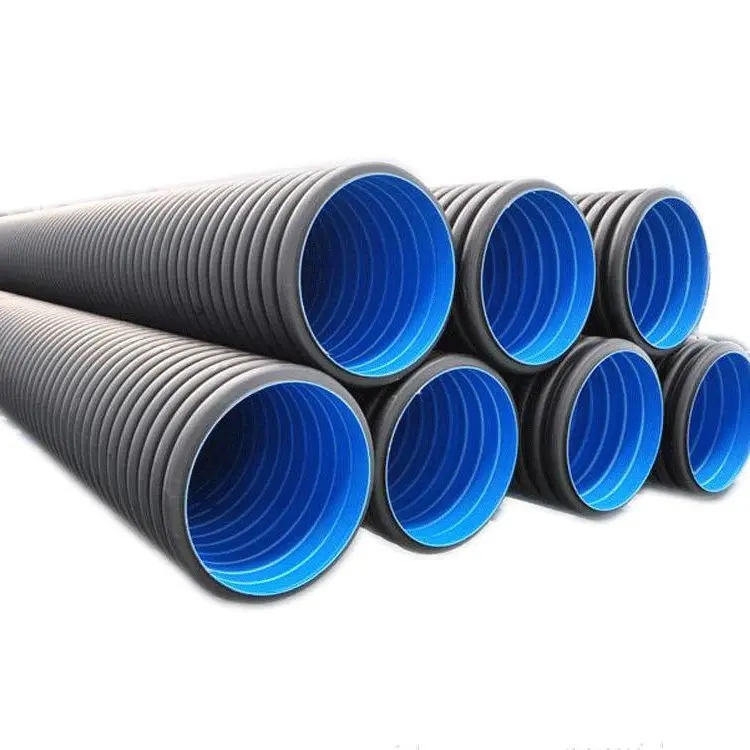
Introduction
Polyvinyl Chloride (PVC) pipe manufactured in China, commonly referred to as ‘china type PVC pipe’, represents a significant portion of the global PVC piping market. These pipes are primarily utilized in a wide range of applications, including water supply, drainage, irrigation, and sewage systems. This technical guide provides an in-depth analysis of the material science, manufacturing processes, performance characteristics, potential failure modes, and relevant industry standards associated with china type PVC pipe. Unlike schedules 40 or 80 PVC commonly found in North American markets, china type PVC pipe often adheres to different dimensional ratios (DR) and wall thicknesses tailored for specific regional infrastructure requirements. Core performance characteristics revolve around cost-effectiveness, ease of installation, and acceptable levels of chemical resistance. This document addresses the crucial need for understanding the nuances of this product category, mitigating risks associated with material variability, and ensuring long-term operational reliability.
Material Science & Manufacturing
China type PVC pipe is fundamentally composed of PVC resin, typically Suspension PVC (S-PVC), combined with a variety of additives. The PVC resin provides the base polymer with inherent rigidity and chemical resistance. Key additives include plasticizers (e.g., DOP, DINP) to enhance flexibility and impact resistance, stabilizers (e.g., calcium-zinc stabilizers, lead-based stabilizers - though increasingly regulated) to prevent thermal degradation during processing and service life, lubricants (e.g., stearic acid) to improve processing flow, and impact modifiers (e.g., chlorinated polyethylene - CPE) to increase toughness. Fillers, such as calcium carbonate, are frequently incorporated to reduce cost and modify physical properties.
The manufacturing process typically involves extrusion. The PVC compound is fed into a single-screw or twin-screw extruder where it is heated and homogenized. The molten PVC is then forced through a die, shaping it into the desired pipe diameter and wall thickness. Critical parameters during extrusion include barrel temperature profile, screw speed, die pressure, and cooling rate. Precise control of these parameters is crucial for maintaining consistent dimensions, minimizing internal stresses, and ensuring adequate fusion of the PVC compound. Following extrusion, pipes are often subjected to hydrostatic testing to verify pressure resistance and dimensional integrity, adhering to standards like GB/T 5836.2. Subsequent processes may involve marking, cutting to length, and quality control inspections. The DR (Dimensional Ratio) – the ratio of outside diameter to wall thickness – is a key manufacturing consideration, dictating the pipe's pressure-bearing capacity.
Performance & Engineering
The performance of china type PVC pipe is dictated by several engineering principles. Tensile strength, typically ranging from 50-65 MPa, determines the pipe’s resistance to cracking under tensile stress. Impact strength, measured using methods like Izod or Charpy impact testing, assesses the pipe's ability to withstand sudden impacts, particularly important during installation and in environments prone to accidental damage. The hydrostatic pressure rating, determined by the DR and material properties, specifies the maximum internal pressure the pipe can safely withstand. Long-term hydrostatic strength is a critical consideration, as PVC can exhibit creep behavior over time, leading to a gradual reduction in pressure-bearing capacity. This is often evaluated through hydrostatic stress rupture testing.
Environmental resistance is another key factor. PVC is generally resistant to acids, alkalis, and many salts, but can be affected by prolonged exposure to certain organic solvents and UV radiation. UV degradation can cause embrittlement and discoloration, necessitating the use of UV stabilizers in outdoor applications. Thermal expansion and contraction are also important considerations, particularly in long pipe runs. Proper expansion joints and bedding are essential to accommodate these movements and prevent stress cracking. Furthermore, soil loading and external pressures from traffic or burial depth must be accounted for in the design and installation process to prevent pipe collapse. The relevant standards (see section 7) dictate allowable bending stresses and load-bearing capacities.
Technical Specifications
| Parameter | Typical Value (DN/ID 110mm, SDR 17.6) | Test Standard | Unit |
|---|---|---|---|
| Outside Diameter | 110 | GB/T 5836.1-2006 | mm |
| Inside Diameter | 94.3 | GB/T 5836.1-2006 | mm |
| Wall Thickness | 8.35 | GB/T 5836.1-2006 | mm |
| Specific Gravity | 1.42 | ASTM D792 | - |
| Tensile Strength | 55 | GB/T 5836.4-2006 | MPa |
| Impact Strength (Izod) | 8 | GB/T 5836.4-2006 | kJ/m2 |
| Hydrostatic Pressure Rating (20°C) | 1.0 | GB/T 5836.2-2006 | MPa |
Failure Mode & Maintenance
China type PVC pipe is susceptible to several failure modes. Long-term hydrostatic stress can lead to slow crack growth (SCG), particularly in areas of stress concentration, such as joints or fittings. This is exacerbated by exposure to aggressive chemicals or elevated temperatures. Brittle fracture can occur due to impact damage, especially at low temperatures. UV degradation causes embrittlement and surface cracking. Chemical attack from specific solvents or corrosive substances can lead to material dissolution or swelling. Joint failures are common, arising from improper solvent cementing, inadequate thread sealing, or mechanical stress.
Preventive maintenance is crucial. Regular visual inspections should be conducted to identify signs of cracking, discoloration, or deformation. Pressure testing can detect leaks and assess the pipe’s integrity. Proper bedding and backfill materials should be used during installation to provide adequate support and prevent external stresses. Avoid exposing PVC to incompatible chemicals. Protect outdoor pipes from UV radiation with coatings or shading. For solvent-cemented joints, ensure proper surface preparation and use of compatible adhesives. In cases of minor cracking, repairs can be made using specialized PVC repair compounds. Significant damage necessitates pipe replacement. Thorough cleaning and inspection of joints and fittings are also essential during routine maintenance to prevent leaks and ensure the longevity of the system.
Industry FAQ
Q: What are the key differences between china type PVC pipe and Schedule 40/80 PVC pipe commonly used in North America?
A: China type PVC pipe often utilizes different dimensional ratios (DR) resulting in varying wall thicknesses for the same nominal pipe size. Schedule 40 and 80 PVC adhere to specific wall thickness standards defined by ASTM, prioritizing pressure ratings and rigidity. China type PVC pipes often prioritize cost-effectiveness, and may have different pressure ratings and chemical resistance profiles depending on the specific manufacturer and intended application. Material formulations and additive packages can also vary, impacting long-term performance characteristics.
Q: How does the quality control process for china type PVC pipe compare to internationally recognized standards?
A: Quality control can vary significantly between manufacturers. Reputable manufacturers will adhere to GB/T standards (China National Standards), including rigorous testing for hydrostatic pressure, tensile strength, impact resistance, and dimensional accuracy. However, independent third-party certification is not always standard practice. It’s crucial to verify that the manufacturer possesses valid certifications and performs regular testing to ensure compliance with relevant international standards like ISO 4427.
Q: What are the common stabilizer systems used in china type PVC pipe, and what are the environmental concerns associated with them?
A: Historically, lead-based stabilizers were common. However, due to environmental regulations, there is a growing trend towards calcium-zinc (Ca/Zn) stabilizer systems. While Ca/Zn stabilizers are more environmentally friendly, they can sometimes result in reduced thermal stability and discoloration. The specific stabilizer system used directly impacts the pipe’s long-term durability and potential leaching of harmful substances.
Q: What is the typical service life expectancy for properly installed and maintained china type PVC pipe?
A: The service life expectancy varies depending on the application, operating conditions, and material quality. Under typical conditions (moderate temperature, non-aggressive environment, proper installation), a well-manufactured china type PVC pipe can have a service life of 50-75 years. However, exposure to extreme temperatures, corrosive chemicals, or excessive mechanical stress can significantly reduce this lifespan.
Q: What considerations should be made regarding solvent cementing when installing china type PVC pipe?
A: Proper solvent cementing is critical. Ensure surfaces are clean, dry, and free of debris. Use a primer and solvent cement specifically designed for PVC. Apply the cement evenly and avoid excessive application. Allow sufficient curing time before pressurizing the system. Compatibility between the PVC resin and the solvent cement is essential; consult the manufacturer’s recommendations.
Conclusion
China type PVC pipe represents a cost-effective and versatile solution for a wide array of piping applications. However, understanding its material composition, manufacturing nuances, and potential failure modes is critical for ensuring long-term reliability and performance. Variations in manufacturing processes and material formulations necessitate careful evaluation of product specifications and adherence to industry best practices during installation and maintenance.
Future advancements in PVC technology, particularly in stabilizer systems and impact modifiers, will likely enhance the durability and environmental performance of china type PVC pipe. Increased emphasis on third-party certification and stricter quality control measures are also essential for bolstering confidence in this important segment of the global piping market. Proper material selection, coupled with meticulous installation and proactive maintenance, will maximize the service life and minimize the risks associated with this widely utilized piping material.
-
DN25 HDPE Compression Fitting-HORON INTERNATIONAL|Reliable Irrigation Solutions
NewsFeb.11,2026
-
china hdpe coupling fittings Performance Analysis
News2026-05-10
-
china hdpe pipe use Performance Analysis
News2026-05-10
-
china hdpe water supply pipe Performance Analysis
News2026-05-10
-
china 1.5 inch pvc pipe Performance Analysis
News2026-05-10
-
china hdpe double wall corrugated pipe Performance Analysis
News2026-05-10
-
china 10mm pvc pipe Performance Analysis
News2026-05-09
-
china ppr pipe for cold water Material Performance
News2026-05-09
-
china type of pvc pipe Material and Manufacturing Analysis
News2026-05-09
-
china hdpe pipe sizes Performance Analysis
News2026-05-09
-
china 50mm pvc pipe Performance Analysis
News2026-05-09
-
china water supply lines under kitchen sink Material Science and Manufacturing
News2026-05-08
-
china green pvc pipe Performance Analysis
News2026-05-08
-
china coupler hdpe pipe Performance Analysis
News2026-05-08
-
china ppr pipe 32mm price Performance Analysis
News2026-05-08
-
china ppr piping system Performance Analysis
News2026-05-08