

Feb . 11, 2026 00:01 Back to list
china hdpe double wall corrugated pipe Performance Analysis
Introduction
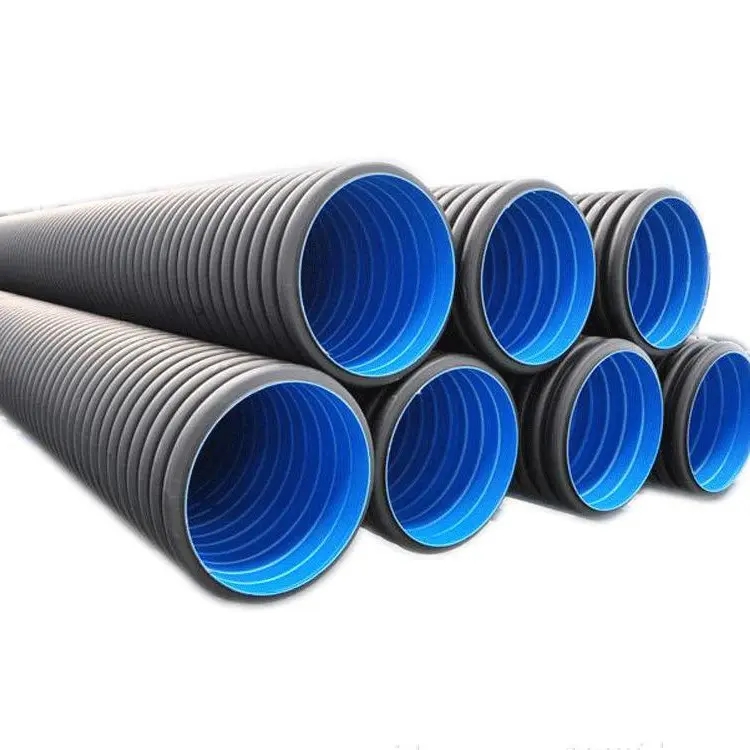
High-Density Polyethylene (HDPE) double wall corrugated pipe represents a significant advancement in subsurface drainage and infrastructure solutions. Positioned as a replacement for traditional materials like concrete, clay, and galvanized steel, it offers a lighter weight, more durable, and cost-effective alternative. This pipe system, commonly manufactured in China to meet international standards, is engineered for gravity flow applications, primarily focused on stormwater management, sanitary sewer systems, agricultural drainage, and culvert applications. Its double-wall structure – a smooth inner wall for optimal flow and a corrugated outer wall for structural strength – provides superior ring stiffness and load-bearing capacity. Core performance characteristics center around its hydraulic capacity, resistance to corrosion and abrasion, and long-term durability, addressing critical infrastructure needs with a sustainable and reliable solution. The growing demand is driven by increasing urbanization, stringent environmental regulations related to water management, and the need for extended service life with reduced maintenance requirements.
Material Science & Manufacturing
The fundamental material for HDPE double wall corrugated pipe is high-density polyethylene (HDPE), a thermoplastic polymer produced from the polymerization of ethylene. HDPE resin is chosen for its high strength-to-density ratio, excellent chemical resistance, and flexibility. Specific grades of HDPE are selected based on the pipe’s intended application and required performance characteristics, typically falling within ASTM D3350 PE345434C or equivalent standards. The manufacturing process begins with the extrusion of both the inner and outer layers. The inner layer, often employing a smooth extrusion process, ensures minimal friction and optimal hydraulic flow. The outer layer utilizes a corrugated extrusion die to create the characteristic ribbed structure. These two layers are then combined through a co-extrusion process, bonding them securely to form the double-wall configuration. Key parameters rigorously controlled during manufacturing include resin melt temperature, extrusion speed, cooling rate, and corrugated profile dimensions. Improper control can lead to inconsistencies in wall thickness, reduced ring stiffness, and potential premature failure. Furthermore, the use of virgin HDPE material or a carefully controlled blend of virgin and recycled HDPE is crucial to maintain long-term performance and prevent degradation from UV exposure or chemical attack. Quality control involves hydrostatic pressure testing to verify the pipe's ability to withstand internal pressure and ring stiffness testing to ensure structural integrity under load. The polyethylene raw materials’ molecular weight distribution, density, and melt flow index are vital to the manufacturing process.
Performance & Engineering
The performance of HDPE double wall corrugated pipe is critically determined by its structural and hydraulic characteristics. Force analysis focuses on the pipe's ability to withstand external loads, including soil overburden, traffic loads (in the case of culverts), and hydrostatic pressure. Ring stiffness, measured in PSI, is a key parameter indicating the pipe’s resistance to flattening under load. A higher ring stiffness denotes greater load-bearing capacity. Hydraulic performance is governed by the Manning’s equation, which relates flow velocity to pipe diameter, slope, and roughness coefficient. The smooth inner wall of HDPE pipe minimizes friction, resulting in a higher flow capacity compared to traditional materials. Environmental resistance is a crucial consideration; HDPE exhibits excellent resistance to a wide range of chemicals, including acids, bases, and salts commonly found in soil and wastewater. However, prolonged exposure to certain solvents or extreme temperatures can cause degradation. Compliance requirements are dictated by regional and national standards, such as ASTM F894 (Standard Specification for Corrugated Polyethylene (PE) Pipe, With or Without Fittings), AASHTO M294 (Corrugated Polyethylene Drainage Pipe, Solid Wall), and EN 13476 (Underground drainage – Polyethylene (PE) pipes and fittings). Furthermore, detailed engineering calculations are essential to determine the appropriate pipe diameter, wall thickness, and bedding configuration based on site-specific conditions and anticipated loads. Proper installation, including adequate bedding and backfill compaction, is critical to ensure long-term performance and prevent deformation or failure.
Technical Specifications
| Parameter | Unit | Typical Value (DN/ID 300mm) | Testing Standard |
|---|---|---|---|
| Nominal Diameter (DN) | mm | 300 | ISO 4427 |
| Internal Diameter (ID) | mm | 290 | ASTM F894 |
| Outer Diameter (OD) | mm | 324 | ASTM F894 |
| Wall Thickness (Inner/Outer) | mm | 3.2/2.5 | ASTM D3350 |
| Ring Stiffness | PSI | 60 | ASTM D2412 |
| Longitudinal Reversion | % | ≤2 | ASTM D2412 |
| Impact Resistance (Standard Impact) | ft-lbs | >10 | ASTM D2444 |
Failure Mode & Maintenance
HDPE double wall corrugated pipe, while highly durable, is susceptible to several potential failure modes. Fatigue cracking can occur due to repeated loading and unloading, particularly in applications subjected to heavy traffic or seismic activity. This is often initiated at stress concentrators, such as bell and spigot joints or areas of localized damage. Delamination, the separation of the inner and outer layers, can result from poor manufacturing processes, inadequate bonding, or exposure to harsh chemicals. Degradation, primarily caused by long-term UV exposure, leads to embrittlement and loss of mechanical properties. Oxidation, accelerated by high temperatures and exposure to oxygen, can also contribute to material degradation. Another failure mode is joint failure, often resulting from improper installation, inadequate compaction of bedding material, or the use of incompatible fittings. Maintenance typically involves regular visual inspections to identify signs of damage, such as cracks, deformation, or joint separation. Preventive measures include ensuring proper installation techniques, providing adequate bedding and backfill support, and protecting the pipe from direct sunlight. In cases of minor damage, repairs can be made using specialized HDPE repair sleeves or couplings. For significant failures, complete pipe replacement may be necessary. Furthermore, maintaining proper drainage slopes and preventing the accumulation of debris within the pipe system are essential for long-term functionality. Root intrusion is also a common issue, and preventative measures such as root barriers should be considered.
Industry FAQ
Q: What is the expected service life of HDPE double wall corrugated pipe in a typical stormwater application?
A: Under normal operating conditions and with proper installation, HDPE double wall corrugated pipe can be expected to have a service life exceeding 50 years. This is based on accelerated aging tests and long-term field performance data. However, the actual service life can vary depending on factors such as soil conditions, traffic loads, and exposure to chemicals.
Q: How does HDPE pipe compare to concrete pipe in terms of installation costs?
A: HDPE pipe generally offers lower installation costs compared to concrete pipe due to its lighter weight, which reduces the need for heavy equipment and labor. The corrugated design also allows for greater flexibility, minimizing the need for fittings and reducing excavation requirements. However, the cost of fittings can sometimes offset some of these savings.
Q: What is the effect of temperature on the performance of HDPE pipe?
A: While HDPE exhibits good performance over a wide temperature range, extreme temperatures can affect its mechanical properties. Low temperatures can increase brittleness, while high temperatures can reduce strength and stiffness. However, HDPE generally maintains adequate performance within typical operating temperature ranges for subsurface drainage applications.
Q: Is HDPE pipe suitable for applications involving corrosive soils or wastewater?
A: Yes, HDPE pipe is highly resistant to a wide range of chemicals commonly found in soils and wastewater, making it an excellent choice for corrosive environments. However, it is essential to verify the compatibility of HDPE with specific chemicals present at the site.
Q: What bedding and backfill materials are recommended for HDPE pipe installation?
A: Bedding and backfill materials should be non-aggressive, granular materials that provide adequate support and compaction around the pipe. Recommended materials include sand, gravel, and crushed stone. Proper compaction is crucial to prevent deformation and ensure long-term stability. Avoid using materials containing large rocks or debris that could damage the pipe.
Conclusion
HDPE double wall corrugated pipe represents a robust and cost-effective solution for a wide array of drainage and infrastructure applications. Its inherent material properties – high strength-to-density ratio, chemical resistance, and flexibility – combined with advanced manufacturing techniques, deliver a product that surpasses traditional materials in many key performance areas. The detailed understanding of its material science, manufacturing processes, and potential failure modes is crucial for ensuring long-term reliability and optimal system performance.
Looking forward, advancements in HDPE resin technology, such as the development of enhanced UV stabilizers and impact modifiers, will further improve the durability and longevity of these pipe systems. Continued adoption of standardized testing procedures and quality control measures will ensure consistent product quality and facilitate wider acceptance across the industry. Proper installation practices and ongoing maintenance will remain critical to maximizing the service life and realizing the full potential of HDPE double wall corrugated pipe in sustainable infrastructure solutions.
-
DN25 HDPE Compression Fitting-HORON INTERNATIONAL|Reliable Irrigation Solutions
NewsFeb.11,2026
-
china hdpe coupling fittings Performance Analysis
News2026-05-10
-
china hdpe pipe use Performance Analysis
News2026-05-10
-
china hdpe water supply pipe Performance Analysis
News2026-05-10
-
china 1.5 inch pvc pipe Performance Analysis
News2026-05-10
-
china hdpe double wall corrugated pipe Performance Analysis
News2026-05-10
-
china 10mm pvc pipe Performance Analysis
News2026-05-09
-
china ppr pipe for cold water Material Performance
News2026-05-09
-
china type of pvc pipe Material and Manufacturing Analysis
News2026-05-09
-
china hdpe pipe sizes Performance Analysis
News2026-05-09
-
china 50mm pvc pipe Performance Analysis
News2026-05-09
-
china water supply lines under kitchen sink Material Science and Manufacturing
News2026-05-08
-
china green pvc pipe Performance Analysis
News2026-05-08
-
china coupler hdpe pipe Performance Analysis
News2026-05-08
-
china ppr pipe 32mm price Performance Analysis
News2026-05-08
-
china ppr piping system Performance Analysis
News2026-05-08