

Feb . 11, 2026 00:01 Back to list
china pvc pipe used for plumbing Technical Analysis
Introduction
Polyvinyl Chloride (PVC) pipe manufactured in China represents a significant portion of the global plumbing infrastructure supply. This guide provides an in-depth technical overview of PVC pipe utilized in plumbing applications, encompassing material science, manufacturing processes, performance characteristics, failure modes, and relevant industry standards. PVC’s prominence stems from its cost-effectiveness, durability, and resistance to a wide range of chemicals. However, variations in manufacturing quality and adherence to international standards necessitate a thorough understanding of the material’s properties and limitations. This document aims to provide plumbing engineers, procurement managers, and regulatory personnel with the technical information required for informed decision-making when sourcing and deploying Chinese-manufactured PVC pipe. The core performance attributes considered are hydrostatic strength, impact resistance, and long-term durability within various operating environments.
Material Science & Manufacturing
PVC pipe’s material basis is the thermoplastic polymer polyvinyl chloride. The raw material is produced through the polymerization of vinyl chloride monomer (VCM). The properties of the final PVC pipe are heavily influenced by the grade of PVC resin used, typically categorized as Type I (Cell Classification 12454) for potable water systems and Type II (Cell Classification 12364) for non-potable water and irrigation. Additives, including stabilizers (typically lead-based or calcium-zinc based), lubricants, and impact modifiers, are compounded with the PVC resin to enhance processing and performance.
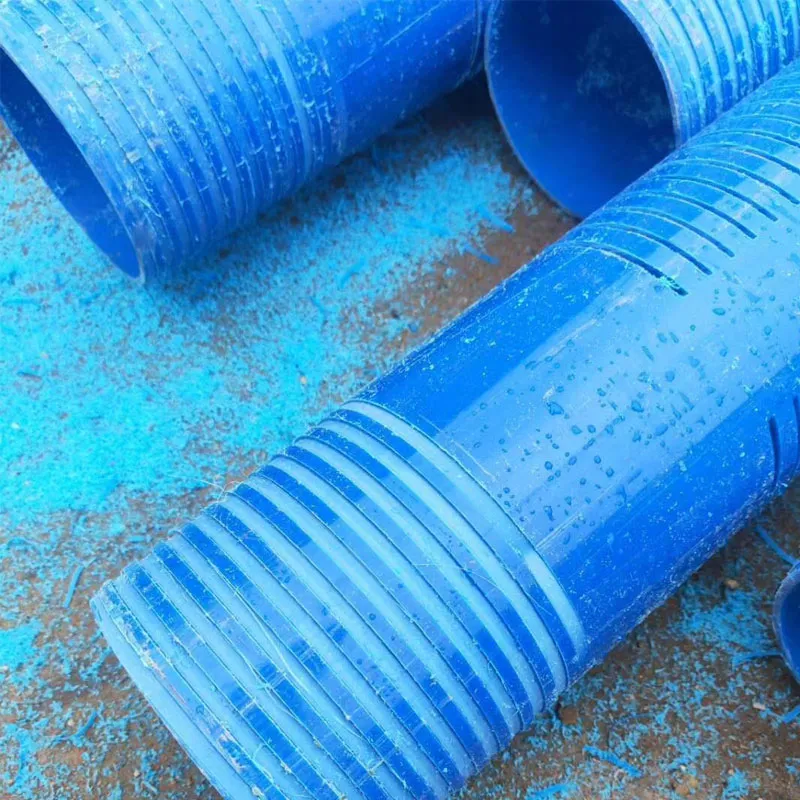
Manufacturing primarily utilizes extrusion processes. PVC compound is fed into a single-screw or twin-screw extruder, where it is heated, melted, and homogenized. The molten PVC is then forced through a die to create the desired pipe diameter and wall thickness. Critical process parameters include extrusion temperature, screw speed, die pressure, and cooling rate. Proper control of these parameters is essential to achieve dimensional accuracy, consistent material properties, and a smooth surface finish. After extrusion, pipes are typically marked with identification information (manufacturer, date, standard compliance, pressure rating) using laser or inkjet printing. Jointing methods commonly employed include solvent welding (using PVC cement), threaded connections, and gasketed joints, each requiring specific surface preparation and application techniques. The quality of the PVC compound, particularly the stabilizer system, significantly impacts the long-term performance and resistance to degradation, particularly in elevated temperature environments.
Performance & Engineering
The performance of PVC pipe in plumbing applications is primarily dictated by its ability to withstand internal hydrostatic pressure, external loads, and environmental stressors. Hydrostatic pressure testing, typically conducted according to ASTM D1597, verifies the pipe’s short-term burst strength and long-term sustained pressure capability. The pipe’s resistance to impact is assessed using impact testing methodologies (ASTM D2444), crucial for preventing brittle failure during installation and operation.
Engineering design considerations include soil loading (for buried pipes), traffic loads (for pipes under roadways), and thermal expansion/contraction. PVC has a relatively high coefficient of thermal expansion, necessitating the incorporation of expansion joints or flexible connections to prevent stress buildup and potential cracking. Chemical resistance is generally excellent, but prolonged exposure to certain solvents or aggressive chemicals can cause swelling, softening, or degradation. Furthermore, the long-term creep resistance of PVC is an important factor, particularly in pressurized systems. Creep is the tendency of the material to deform slowly under sustained stress, potentially leading to a reduction in internal diameter and increased flow resistance over time. The selection of appropriate pipe schedule (wall thickness) and the use of proper support structures are essential for ensuring long-term structural integrity and preventing premature failure. Compliance with local plumbing codes and regulations, which often specify minimum pressure ratings, material requirements, and installation procedures, is mandatory.
Technical Specifications
| Parameter | Schedule 40 (in/mm) | Schedule 80 (in/mm) | ASTM D1785 Standard | Typical Pressure Rating (psi) |
|---|---|---|---|---|
| 1/2 inch | 0.625 / 15.88 | 0.840 / 21.34 | Compliant | 450 |
| 3/4 inch | 0.840 / 21.34 | 1.050 / 26.67 | Compliant | 400 |
| 1 inch | 1.050 / 26.67 | 1.280 / 32.51 | Compliant | 350 |
| 1.5 inch | 1.280 / 32.51 | 1.610 / 40.89 | Compliant | 300 |
| 2 inch | 1.610 / 40.89 | 2.067 / 52.48 | Compliant | 260 |
| 4 inch | 2.375 / 60.33 | 3.268 / 82.96 | Compliant | 200 |
Failure Mode & Maintenance
PVC pipe is susceptible to several failure modes, including brittle fracture, crazing, stress cracking, and chemical degradation. Brittle fracture can occur due to impact loading or excessive stress concentration, particularly at low temperatures. Crazing, the formation of micro-cracks on the surface, is often initiated by stress cracking in the presence of certain chemicals or detergents. Long-term exposure to UV radiation can cause discoloration and embrittlement, reducing the pipe’s impact resistance. Degradation of the PVC compound, especially if lead-based stabilizers are used and subjected to high temperatures, can lead to a loss of ductility and increased susceptibility to cracking. Hydrostatic stress combined with environmental factors can lead to slow crack propagation.
Preventative maintenance includes visual inspection for cracks, leaks, or discoloration. Proper backfilling techniques and the use of appropriate bedding materials are crucial to prevent external loads from causing excessive stress on the pipe. Avoid the use of incompatible solvents or chemicals in the vicinity of PVC pipe. Regularly check solvent-welded joints for leaks and re-cement if necessary. For systems exposed to elevated temperatures, consider using CPVC (chlorinated polyvinyl chloride) pipe, which offers improved temperature resistance. If damage is detected, localized repairs can be made using PVC repair couplings or by replacing the damaged section of pipe. Periodic pressure testing can help identify potential leaks or weaknesses in the system before they escalate into major failures. Proper installation adhering to manufacturer’s specifications and local plumbing codes is the most effective preventative measure.
Industry FAQ
Q: What is the impact of different PVC formulations (e.g., lead-stabilized vs. calcium-zinc stabilized) on long-term durability?
A: Lead-stabilized PVC offers excellent processing characteristics and low cost but is increasingly restricted due to environmental concerns. Calcium-zinc stabilization provides a more environmentally friendly alternative, but can exhibit reduced thermal stability and potentially lead to faster degradation in high-temperature applications. Long-term durability assessments, including accelerated aging tests, are crucial to compare the performance of different formulations.
Q: How does water hammer affect PVC piping systems and what mitigation strategies are recommended?
A: Water hammer, the pressure surge caused by sudden changes in flow velocity, can induce significant stress on PVC pipes, potentially leading to cracking or joint failure. Mitigation strategies include the installation of water hammer arrestors, pressure reducing valves, and ensuring proper pipe anchoring and support. Slow-closing valves can also help reduce the magnitude of pressure surges.
Q: What are the key considerations when using PVC pipe in seismic zones?
A: In seismic zones, PVC piping systems must be designed to accommodate ground movement and prevent breakage. Flexible joints, expansion loops, and proper anchoring are essential. Consideration should be given to the pipe’s ductility and ability to withstand cyclic loading. Soil conditions and potential for liquefaction also need to be assessed.
Q: What is the acceptable temperature range for standard PVC pipe in potable water applications?
A: Standard PVC pipe is typically recommended for potable water applications with temperatures up to 140°F (60°C). Exceeding this temperature can lead to softening, deformation, and a reduction in pressure rating. For higher temperature applications, CPVC pipe should be used.
Q: How do I verify the quality and compliance of PVC pipe sourced from China?
A: Verify compliance with relevant international standards (ASTM D1785, ISO 4422). Request material certificates and test reports from the manufacturer. Conduct independent laboratory testing to confirm material properties and performance characteristics. Ensure the manufacturer has a robust quality control system and is certified to ISO 9001. Verify that the pipe is properly marked with relevant identification information.
Conclusion
Chinese-manufactured PVC pipe represents a viable and cost-effective solution for plumbing applications, provided that careful attention is paid to material selection, manufacturing quality, and adherence to relevant industry standards. Understanding the material’s inherent properties, potential failure modes, and proper installation techniques is paramount for ensuring long-term reliability and preventing costly failures. The key to successful deployment lies in rigorous quality control, independent verification of specifications, and a thorough understanding of the specific application requirements.
Future developments in PVC pipe technology may focus on enhancing impact resistance, improving thermal stability, and utilizing more environmentally friendly stabilizer systems. The increasing adoption of advanced manufacturing techniques, such as inline quality monitoring and automated inspection systems, will further enhance the consistency and reliability of PVC pipe produced in China. Continued research and development efforts are essential to address the evolving needs of the plumbing industry and ensure the sustainable use of this versatile material.
-
DN25 HDPE Compression Fitting-HORON INTERNATIONAL|Reliable Irrigation Solutions
NewsFeb.11,2026
-
china corrugated hdpe pipe fittings Performance Analysis
News2026-05-22
-
china ppr pipe for hot water Performance Analysis
News2026-05-22
-
china ppr Technical Performance Analysis
News2026-05-22
-
china corrugated dual wall pipe Performance Analysis
News2026-05-22
-
china sink inlet pipe Material Performance Analysis
News2026-05-22
-
china 1 2 inch pvc Performance Analysis
News2026-05-21
-
china hdpe pipe joint coupler Performance Analysis
News2026-05-21
-
china ppr pipes and fittings price list Technical Analysis
News2026-05-21
-
china 9 inch pvc pipe price Performance Analysis
News2026-05-21
-
china 2 inch borewell column pipe price Performance Engineering
News2026-05-21
-
china hdpe pipe suppliers Performance Analysis
News2026-05-20
-
china submersible pump column pipe Performance Engineering
News2026-05-20
-
china 8 hdpe corrugated pipe Manufacturing Analysis
News2026-05-20
-
china dual wall hdpe pipe Performance Analysis
News2026-05-20
-
china water lines under sink Performance Analysis
News2026-05-20