

Feb . 11, 2026 00:01 Back to list
china pvc down pipe Performance Analysis
Introduction
China PVC downpipes are a ubiquitous component of residential, commercial, and industrial rainwater drainage systems. Positioned within the building materials supply chain, they represent the final conduit for directing water runoff from roof surfaces to ground-level drainage infrastructure. PVC (Polyvinyl Chloride) is favored for its cost-effectiveness, corrosion resistance, and ease of installation. Core performance characteristics include flow capacity, UV resistance, impact strength, and long-term durability. However, variations in PVC formulations and manufacturing processes, particularly those originating from different Chinese manufacturers, lead to significant disparities in performance and compliance with international standards. This guide provides an in-depth technical assessment of China PVC downpipes, covering material science, manufacturing, performance, failure modes, and relevant industry standards.
Material Science & Manufacturing
China PVC downpipes are predominantly manufactured from PVC resin, typically suspension PVC (S-PVC), chosen for its balance of properties. The base PVC is compounded with various additives to enhance performance characteristics. Key additives include plasticizers (primarily phthalates or alternative non-phthalate plasticizers like DINCH), heat stabilizers (typically lead-based, calcium-zinc, or organotin compounds – the use of lead is decreasing due to environmental regulations), UV stabilizers (hindered amine light stabilizers - HALS and UV absorbers), impact modifiers (modified acrylics or chlorinated polyethylene - CPE), and processing aids (lubricants and dispersing agents). The ratio of these additives directly impacts the downpipe’s flexibility, weather resistance, and impact strength.
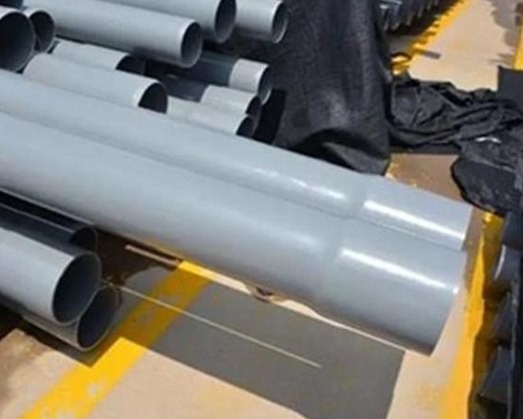
Manufacturing commonly employs extrusion processes. PVC compound is fed into a twin-screw extruder where it’s heated, melted, and homogenized. The molten PVC is then forced through a die to form the desired downpipe profile. Critical process parameters include extruder screw speed, barrel temperature profile (typically ranging from 160°C to 220°C), die temperature, and cooling rates. Variations in these parameters impact the pipe's wall thickness consistency, surface finish, and overall dimensional accuracy. Subsequent processes may include bell-end forming (for joining sections), cutting to length, and quality control inspections, often involving hydrostatic pressure testing and visual inspection for defects. Injection molding is used for fittings like bends and couplings. Material shrinkage during cooling is a critical factor in injection molding, requiring precise mold design and temperature control to ensure dimensional tolerances are met. The quality of the PVC resin source is a major determinant of the finished product’s long-term performance.
Performance & Engineering
The primary engineering consideration for PVC downpipes is hydraulic capacity – the ability to efficiently convey rainwater runoff. Flow rate is dictated by pipe diameter, slope, and the roughness of the inner surface. Larger diameter pipes and steeper slopes increase flow capacity. Roughness is influenced by the manufacturing process; a smoother inner surface reduces friction and maximizes flow. Force analysis considers hydrostatic pressure from water accumulation and external loads such as wind and snow. PVC downpipes must withstand these forces without deformation or failure. Impact resistance is crucial, particularly during installation and in regions prone to hail. UV resistance is paramount, as prolonged exposure to sunlight degrades PVC, leading to embrittlement and cracking. Proper UV stabilization is essential for long-term outdoor performance.
Compliance with building codes and local regulations is critical. These regulations often specify minimum pipe diameter, maximum runoff velocity, and requirements for connections to the stormwater drainage system. A key aspect of performance relates to thermal expansion and contraction. PVC exhibits a relatively high coefficient of thermal expansion. Downpipe systems must accommodate this expansion and contraction to prevent stress buildup and potential joint failures. This is typically achieved through flexible joints or expansion loops. The chemical compatibility of PVC with common building materials (e.g., roofing materials, gutter materials) is also important to consider. Some roofing materials can leach chemicals that can degrade PVC over time.
Technical Specifications
| Parameter | Unit | Typical Value (DN75 Pipe) | Testing Standard |
|---|---|---|---|
| Nominal Diameter | mm | 75 | GB/T 9832.1 |
| Wall Thickness | mm | 2.5 - 3.5 | GB/T 9832.1 |
| Hydrostatic Pressure Resistance | MPa | 0.6 | GB/T 9832.2 |
| Impact Resistance (Charpy) | kJ/m2 | 5 | ISO 145-6 |
| Tensile Strength | MPa | 50 | GB/T 8804.1 |
| Elongation at Break | % | 20 | GB/T 8804.1 |
Failure Mode & Maintenance
Common failure modes for China PVC downpipes include cracking due to UV degradation, impact damage (especially during handling and installation), joint failures (caused by improper installation or thermal expansion/contraction), and chemical attack from aggressive roofing materials. Fatigue cracking can occur in areas subjected to repeated stress, such as near fittings or at connection points. Delamination, although less common, can occur in lower-quality pipes with inadequate mixing of additives. Oxidation, especially at elevated temperatures, can lead to embrittlement and loss of impact strength. Microbial growth within the pipe can contribute to blockages and reduce flow capacity.
Preventative maintenance involves regular inspection for cracks, leaks, and blockages. Cleaning downpipes to remove debris (leaves, twigs, sediment) is essential. UV protection can be enhanced by applying UV-resistant coatings, though this is rarely practiced. Proper installation is paramount. Joints should be securely bonded with appropriate PVC cement and allowed to cure completely. Expansion loops or flexible joints should be used to accommodate thermal expansion and contraction. When replacing sections, it is critical to use compatible PVC materials and adhesives. If lead-based stabilizers are present, handling precautions should be observed. For pipes showing signs of significant degradation, complete replacement is recommended rather than attempting repairs.
Industry FAQ
Q: What is the difference between Schedule 40 and Schedule 80 PVC downpipes, and which is suitable for a typical residential application?
A: Schedule 40 and Schedule 80 refer to the wall thickness of the PVC pipe. Schedule 80 has a thicker wall than Schedule 40, providing greater pressure resistance and impact strength. For typical residential rainwater drainage, Schedule 40 is generally sufficient. Schedule 80 is usually reserved for applications requiring higher pressure capacity or increased durability, such as industrial wastewater systems or underground installations.
Q: How does the quality of PVC resin affect the long-term performance of downpipes?
A: The quality of the PVC resin is arguably the most critical factor. Virgin PVC resin provides superior performance compared to recycled PVC. The molecular weight and purity of the resin directly impact the pipe’s strength, durability, and resistance to degradation. Lower-quality resins can contain impurities that reduce these properties. Reputable manufacturers will specify the type and grade of PVC resin used in their products.
Q: What are the environmental concerns associated with PVC, and are there alternatives?
A: PVC production and disposal raise environmental concerns due to the use of chlorine and the potential release of dioxins during incineration. Phthalate plasticizers, commonly used in PVC, are also facing increasing scrutiny due to their potential health effects. Alternatives include HDPE (High-Density Polyethylene), polypropylene, and metal downpipes (aluminum or steel). However, these alternatives often come with their own environmental and cost considerations.
Q: What testing should be performed to ensure the quality of China PVC downpipes before installation?
A: Essential testing includes visual inspection for defects (cracks, voids, inconsistencies), hydrostatic pressure testing to verify leak-proofness, impact resistance testing (to ensure adequate strength), and UV resistance testing (to assess long-term durability). It's also advisable to request documentation confirming compliance with relevant standards (e.g., GB/T standards, ISO standards).
Q: How do I determine the correct downpipe size for my roof?
A: Downpipe sizing depends on the roof area, rainfall intensity, and local building codes. A qualified roofing contractor or civil engineer can perform a hydraulic calculation to determine the appropriate downpipe diameter and number of downpipes needed to effectively handle the expected rainwater runoff. Factors to consider include the roof’s pitch, the type of roofing material, and the presence of any obstructions that might impede water flow.
Conclusion
China PVC downpipes represent a cost-effective and widely used solution for rainwater drainage, but performance variability is a significant concern. The quality of raw materials, adherence to manufacturing best practices, and the inclusion of appropriate additives are critical determinants of long-term durability and resistance to environmental degradation. Understanding the underlying material science and potential failure modes is essential for selecting and installing downpipes that meet the specific requirements of the application.
Future advancements in PVC technology may focus on developing more sustainable formulations, utilizing bio-based plasticizers, and improving UV stabilization techniques. Increased emphasis on quality control and independent testing will be crucial for ensuring the reliability and performance of China PVC downpipes in the global market. Properly specified, installed, and maintained, these systems can provide decades of reliable service.
-
DN25 HDPE Compression Fitting-HORON INTERNATIONAL|Reliable Irrigation Solutions
NewsFeb.11,2026
-
china corrugated hdpe pipe fittings Performance Analysis
News2026-05-22
-
china ppr pipe for hot water Performance Analysis
News2026-05-22
-
china ppr Technical Performance Analysis
News2026-05-22
-
china corrugated dual wall pipe Performance Analysis
News2026-05-22
-
china sink inlet pipe Material Performance Analysis
News2026-05-22
-
china 1 2 inch pvc Performance Analysis
News2026-05-21
-
china hdpe pipe joint coupler Performance Analysis
News2026-05-21
-
china ppr pipes and fittings price list Technical Analysis
News2026-05-21
-
china 9 inch pvc pipe price Performance Analysis
News2026-05-21
-
china 2 inch borewell column pipe price Performance Engineering
News2026-05-21
-
china hdpe pipe suppliers Performance Analysis
News2026-05-20
-
china submersible pump column pipe Performance Engineering
News2026-05-20
-
china 8 hdpe corrugated pipe Manufacturing Analysis
News2026-05-20
-
china dual wall hdpe pipe Performance Analysis
News2026-05-20
-
china water lines under sink Performance Analysis
News2026-05-20