

Feb . 11, 2026 00:01 Back to list
china hdpe tubing Performance Analysis
Introduction
High-Density Polyethylene (HDPE) tubing manufactured in China represents a significant component of modern fluid conveyance systems, finding application across diverse sectors including water distribution, gas transmission, mining, irrigation, and industrial processing. Positioned within the polymer piping industry, Chinese HDPE tubing leverages cost-effective production capabilities alongside increasingly stringent quality control standards. This guide provides an in-depth technical overview of Chinese HDPE tubing, encompassing material science, manufacturing processes, performance characteristics, potential failure modes, and relevant industry standards. Core performance metrics center around pressure resistance, chemical inertness, flexibility, and long-term durability. A key industry pain point revolves around ensuring consistent quality and traceability of materials used in manufacturing, particularly relating to resin grade, UV stabilization additives, and weldability. Another is navigating varying international compliance standards and maintaining consistent performance across a wide range of operating conditions and fluid types.
Material Science & Manufacturing
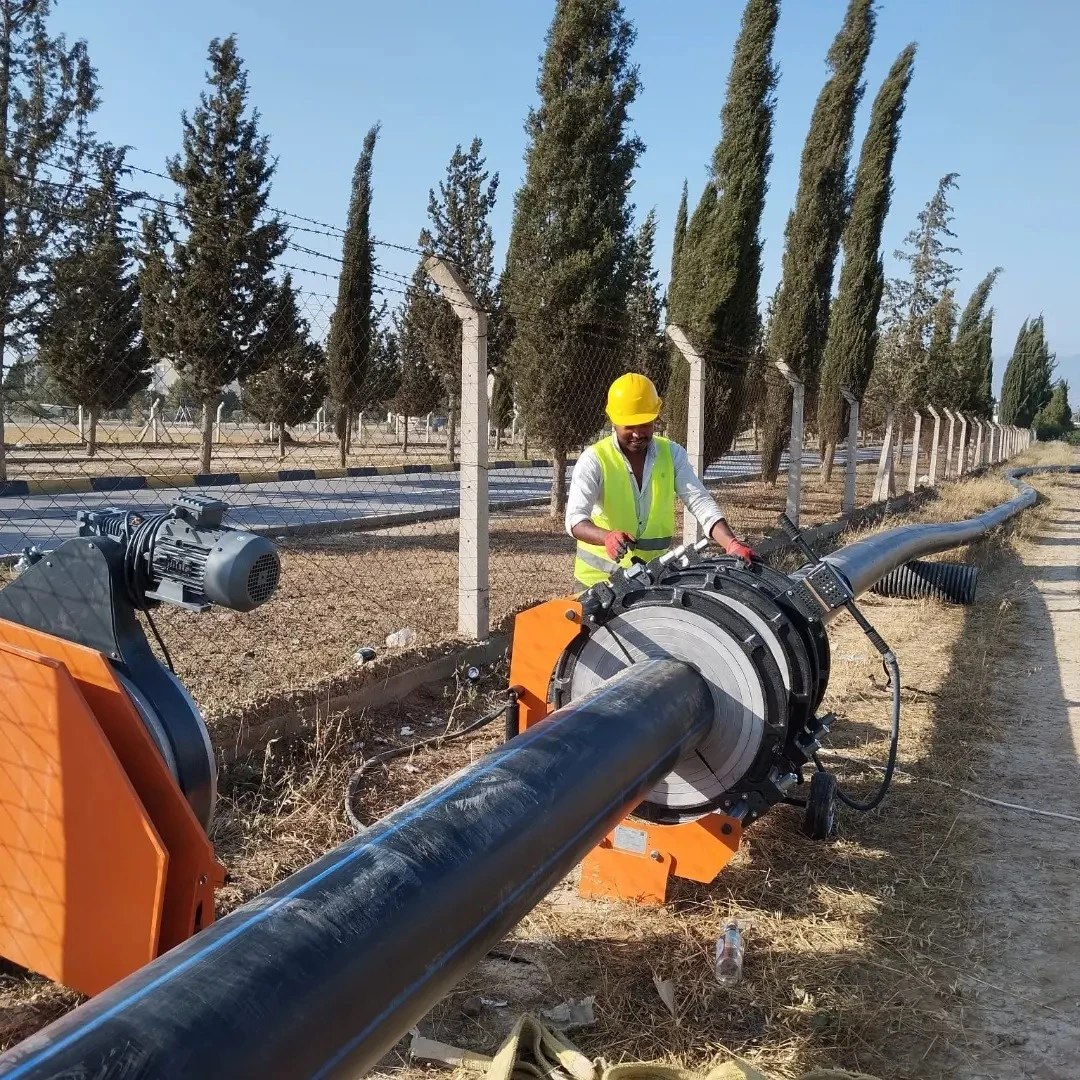
Chinese HDPE tubing is typically produced from high-density polyethylene resin, characterized by a linear polymer structure resulting in high tensile strength and excellent chemical resistance. The raw material, polyethylene, is derived from the polymerization of ethylene gas, with the density controlled through process parameters. HDPE resins used in tubing production typically have a density ranging from 0.941 to 0.965 g/cm³. Key additives include carbon black for UV protection, antioxidants to prevent thermal degradation, and stabilizers to enhance long-term performance. The manufacturing process commonly employs extrusion techniques. The HDPE resin is melted and forced through a die to create a continuous tube. Critical parameters during extrusion include melt temperature (typically 180-210°C), die pressure, and cooling rates. Butt fusion, electrofusion, and mechanical fittings are common joining methods. Butt fusion requires precise temperature and pressure control to ensure a homogeneous weld, while electrofusion utilizes electrical resistance heating. Post-extrusion quality control includes hydrostatic pressure testing to verify burst strength and dimensional accuracy, confirming adherence to standards like GB/T 9751.2. The resin’s Molecular Weight Distribution (MWD) profoundly affects the tubing’s processability and mechanical properties. A broader MWD can improve processability but may compromise long-term creep resistance. Furthermore, the level of short-chain branching influences flexibility and stress crack resistance.
Performance & Engineering
The performance of HDPE tubing is governed by its mechanical and chemical properties under various operational stresses. Tensile strength, typically ranging from 35-50 MPa, dictates its ability to withstand internal pressure and external loads. The hydrostatic design stress (HDS), a crucial engineering parameter, is determined based on the tubing’s service life and safety factor, conforming to standards like ISO 4427. HDPE exhibits excellent chemical resistance to a broad spectrum of acids, bases, and solvents, making it suitable for transporting aggressive media. However, prolonged exposure to oxidizing agents can lead to degradation. Environmental stress cracking resistance (ESCR) is a critical factor, particularly when conveying fluids containing detergents or hydrocarbons. Creep resistance, the tendency to deform under sustained load, is also crucial, especially in applications involving buried pipelines. Force analysis considers hoop stress due to internal pressure, longitudinal stress due to external loads, and bending stress induced by soil settlement. UV radiation can degrade HDPE over time, necessitating the inclusion of carbon black or UV stabilizers in the resin formulation. Furthermore, the thermal expansion coefficient of HDPE (approximately 0.2 mm/m°C) must be accounted for in pipeline design to prevent stress buildup due to temperature fluctuations.
Technical Specifications
| Parameter | Unit | Typical Value (China HDPE Tubing) | Test Standard |
|---|---|---|---|
| Outside Diameter | mm | 20-630 | GB/T 9751.1 |
| Wall Thickness | mm | 2.3-25 | GB/T 9751.1 |
| Hydrostatic Design Stress (HDS) | MPa | 8-16 | ISO 4427 |
| Tensile Strength at Yield | MPa | 35-50 | GB/T 10009 |
| Elongation at Break | % | 300-700 | GB/T 10009 |
| Environmental Stress Crack Resistance (ESCR) | Hours to Failure | >1000 | ISO 13439 |
Failure Mode & Maintenance
Common failure modes in Chinese HDPE tubing include slow crack growth (SCG) due to sustained tensile stress and environmental factors, particularly in the presence of surfactants or aggressive chemicals. Fatigue cracking can occur from cyclic pressure fluctuations or external loads. Oxidative degradation, induced by UV exposure and elevated temperatures, leads to embrittlement and loss of mechanical properties. Joint failures are also prevalent, often stemming from improper welding techniques (incomplete fusion, excessive oxidation) or material incompatibility. Delamination can occur in multi-layered tubing due to inadequate bonding between layers. Corrosion, while HDPE itself is corrosion-resistant, can affect metallic fittings or joining components. Maintenance involves regular visual inspections for cracks, leaks, or discoloration. Hydrostatic testing can be performed periodically to assess the tubing’s integrity. Proper jointing procedures, adhering to standards like DVS 2208, are critical to prevent failures. For buried pipelines, cathodic protection may be necessary to mitigate corrosion of metallic components. UV protection should be maintained through surface coatings or the use of carbon black in the resin formulation. Furthermore, preventative measures, like pressure surge control, can minimize fatigue stresses.
Industry FAQ
Q: What is the typical service life expectancy of Chinese HDPE tubing used in potable water distribution?
A: Under normal operating conditions (moderate pressure, water temperature below 60°C, and proper UV protection), Chinese HDPE tubing can have a service life exceeding 50 years. However, this is contingent on the resin grade, installation quality, and adherence to relevant standards like NSF/ANSI 61 for potable water applications.
Q: How does the quality of Chinese HDPE tubing compare to tubing manufactured in Europe or North America?
A: Historically, there were concerns regarding the consistency of quality in Chinese HDPE tubing. However, significant advancements have been made in recent years, with many Chinese manufacturers adopting international quality control systems and certifications (ISO 9001, CE marking). While some lower-cost options may still exhibit variability, reputable Chinese manufacturers now produce tubing that meets or exceeds international standards.
Q: What precautions should be taken when storing HDPE tubing to prevent degradation?
A: HDPE tubing should be stored in a cool, dry, and well-ventilated area, away from direct sunlight and extreme temperatures. Exposure to UV radiation can cause degradation, even in the absence of load. The tubing should be covered with an opaque material or stored indoors. It is crucial to avoid storing the tubing in contact with incompatible materials that could cause chemical degradation.
Q: What is the impact of different welding techniques (butt fusion vs. electrofusion) on the long-term performance of HDPE pipelines?
A: Both butt fusion and electrofusion are viable joining methods for HDPE pipelines. Butt fusion generally provides a stronger weld with lower residual stress, making it suitable for larger diameter pipes and high-pressure applications. Electrofusion offers more precise control over the welding process and is often preferred for smaller diameter pipes and complex geometries. Proper training and adherence to welding standards (DVS 2208) are critical for both techniques.
Q: What are the key considerations when selecting HDPE tubing for transporting corrosive fluids?
A: The chemical compatibility of HDPE with the specific fluid must be verified. While HDPE has broad chemical resistance, prolonged exposure to strong oxidizing agents or certain hydrocarbons can cause degradation. It's essential to consult chemical resistance charts and conduct compatibility testing. The tubing’s wall thickness and hydrostatic design stress should be appropriately selected to withstand the internal pressure and corrosive attack. Consider utilizing HDPE formulations with enhanced chemical resistance additives.
Conclusion
Chinese HDPE tubing has emerged as a cost-effective and increasingly reliable solution for a broad range of fluid conveyance applications. Advancements in manufacturing processes, quality control, and material science have mitigated historical concerns, positioning Chinese HDPE tubing as a viable alternative to products from more established regions. Understanding the interplay between material properties, manufacturing parameters, and operational conditions is paramount to ensuring long-term performance and preventing premature failure.
Continued focus on adherence to international standards, rigorous quality assurance procedures, and ongoing research into improved HDPE formulations will further solidify the position of Chinese HDPE tubing within the global market. The increasing demand for durable, corrosion-resistant, and cost-effective piping solutions will undoubtedly drive further innovation in this sector.
-
DN25 HDPE Compression Fitting-HORON INTERNATIONAL|Reliable Irrigation Solutions
NewsFeb.11,2026
-
china corrugated hdpe pipe fittings Performance Analysis
News2026-05-22
-
china ppr pipe for hot water Performance Analysis
News2026-05-22
-
china ppr Technical Performance Analysis
News2026-05-22
-
china corrugated dual wall pipe Performance Analysis
News2026-05-22
-
china sink inlet pipe Material Performance Analysis
News2026-05-22
-
china 1 2 inch pvc Performance Analysis
News2026-05-21
-
china hdpe pipe joint coupler Performance Analysis
News2026-05-21
-
china ppr pipes and fittings price list Technical Analysis
News2026-05-21
-
china 9 inch pvc pipe price Performance Analysis
News2026-05-21
-
china 2 inch borewell column pipe price Performance Engineering
News2026-05-21
-
china hdpe pipe suppliers Performance Analysis
News2026-05-20
-
china submersible pump column pipe Performance Engineering
News2026-05-20
-
china 8 hdpe corrugated pipe Manufacturing Analysis
News2026-05-20
-
china dual wall hdpe pipe Performance Analysis
News2026-05-20
-
china water lines under sink Performance Analysis
News2026-05-20