

Feb . 11, 2026 00:01 Back to list
china hdpe transition coupling Performance Analysis
Introduction
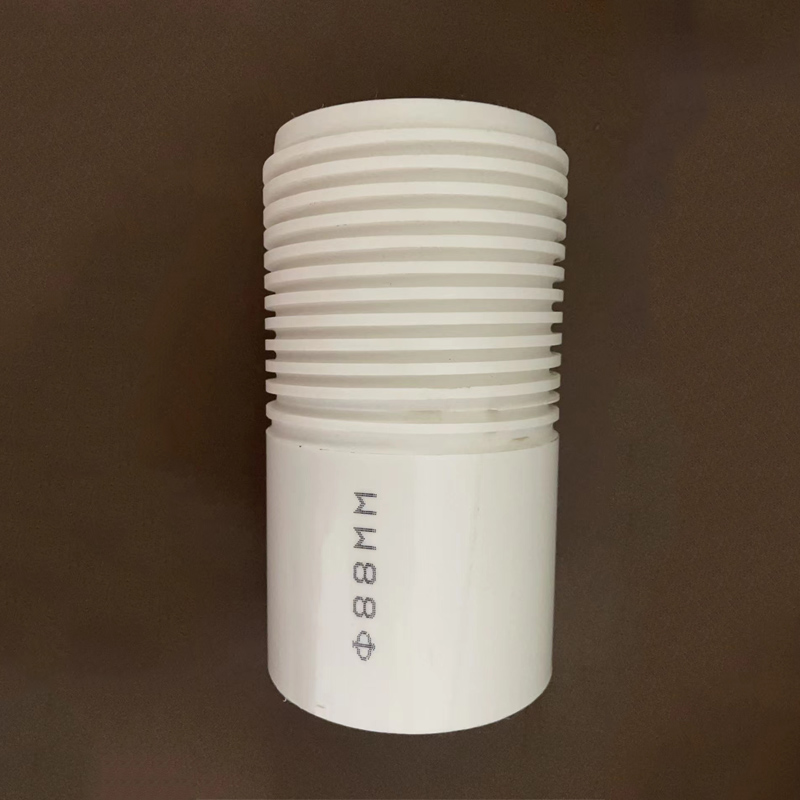
China HDPE transition couplings are critical components in polyethylene (HDPE) piping systems, facilitating the connection between HDPE pipes of differing diameters, or between HDPE pipes and other pipe materials like PVC or ductile iron. These couplings serve a vital function in diverse applications including water distribution, irrigation, drainage, sewage, and industrial fluid transfer. Their significance stems from the inherent flexibility and corrosion resistance of HDPE, demanding robust and reliable joining methods. The transition coupling’s performance is directly linked to the integrity of the entire piping system, influencing flow rate, pressure handling capacity, and long-term operational reliability. Unlike welded HDPE joints, these couplings offer field adjustability and are particularly useful in retrofit scenarios or where welding isn't practical. This guide will provide a comprehensive technical overview of these couplings, encompassing material science, manufacturing processes, performance characteristics, failure modes, and relevant industry standards. A core pain point for engineers and procurement managers lies in ensuring the coupling’s chemical compatibility with the conveyed fluid and the long-term stability of the sealing mechanism under varying environmental conditions.
Material Science & Manufacturing
The primary material for China HDPE transition couplings is high-density polyethylene (HDPE), typically conforming to PE100 or PE80 standards. HDPE's inherent properties – high tensile strength, flexibility, chemical resistance, and low coefficient of friction – make it ideal for pressure piping applications. The raw HDPE resin undergoes a compounding process, often incorporating UV stabilizers (typically carbon black, though hindered amine light stabilizers (HALS) are increasingly used for improved long-term UV resistance), antioxidants to prevent thermal degradation during processing, and sometimes reinforcing fillers like glass fiber to enhance stiffness. The manufacturing process typically involves injection molding. Molten HDPE is injected into a precisely engineered mold cavity under high pressure. Critical parameters during injection molding include melt temperature (typically between 200-240°C), mold temperature (30-50°C), injection pressure (70-100 MPa), and cooling rate. These parameters directly impact the crystallinity of the HDPE, and thus its mechanical properties. The sealing element, crucial to the coupling’s performance, is often composed of a nitrile rubber (NBR) or ethylene propylene diene monomer (EPDM) gasket, selected for their chemical compatibility with a wide range of fluids and their ability to maintain a tight seal under pressure fluctuations. Proper gasket compression is maintained through precisely machined coupling components and tightening torque specifications. The metal components, often used for clamping or threading, are typically carbon steel with a protective coating (e.g., epoxy, zinc plating) to prevent corrosion.
Performance & Engineering
The performance of a China HDPE transition coupling is governed by several engineering principles. The pressure rating is dictated by the pipe's pressure class and the coupling’s design. Force analysis involves evaluating the hoop stress in the pipe wall at the coupling location, the tensile stress on the sealing gasket, and the shear stress on any bolted connections. Finite element analysis (FEA) is often used to optimize the coupling’s geometry and material distribution to minimize stress concentrations. Environmental resistance is paramount; HDPE can become brittle at low temperatures, impacting impact resistance. UV exposure can lead to polymer chain scission and cracking, necessitating UV stabilizers. Chemical compatibility is critical. Prolonged exposure to certain solvents or aggressive chemicals can cause swelling or degradation of the HDPE or the gasket material. Compliance requirements vary by region and application. For potable water systems, materials must meet NSF/ANSI 61 standards for lead content and extractables. For pressure applications, couplings must conform to relevant pressure vessel codes (e.g., ASME B31.3 for process piping). The coupling’s ability to accommodate pipe misalignment is also a key performance factor. A flexible gasket and a well-designed coupling body can tolerate a certain degree of angular and axial misalignment without compromising the seal.
Technical Specifications
| Parameter | Unit | PE100 Coupling | PE80 Coupling |
|---|---|---|---|
| Nominal Pipe Size | mm | 50-630 | 50-630 |
| Pressure Rating (PN) | bar | PN10, PN16, PN20 | PN6, PN10, PN16 |
| Material | - | PE100 | PE80 |
| Gasket Material | - | NBR, EPDM | NBR, EPDM |
| Operating Temperature | °C | -20 to +60 | -10 to +40 |
| UV Resistance | - | Excellent (with Carbon Black) | Good (with Carbon Black) |
Failure Mode & Maintenance
Several failure modes can affect China HDPE transition couplings. Gasket failure is a common issue, arising from degradation due to chemical attack, UV exposure, or mechanical compression set. Cracking of the HDPE body can occur due to excessive stress, particularly at sharp corners or where the coupling is subjected to impact. Corrosion of metal components (e.g., bolts, clamping rings) can lead to loosening and loss of sealing pressure. Delamination can occur if the HDPE material is poorly compounded or if the injection molding process is not adequately controlled. Oxidation of the HDPE, particularly at elevated temperatures, can reduce its mechanical properties. Maintenance involves regular visual inspections for cracks, corrosion, or gasket extrusion. Torque checks on bolted connections are crucial to ensure proper gasket compression. Preventive maintenance should include protecting the coupling from direct sunlight and harsh chemicals. In the event of a leak, the gasket should be replaced. If cracking is observed in the HDPE body, the entire coupling should be replaced. Proper storage of the coupling, shielded from UV light and extreme temperatures, is also critical. Failure analysis should include material testing to verify the HDPE grade and gasket composition, as well as a visual inspection for manufacturing defects.
Industry FAQ
Q: What is the impact of varying fluid temperatures on the long-term performance of the NBR gasket within the HDPE transition coupling?
A: Nitrile rubber (NBR) gaskets exhibit a temperature-dependent performance. Elevated temperatures accelerate degradation, reducing elasticity and increasing the risk of leaks. Conversely, low temperatures can cause the NBR to become brittle and lose its sealing ability. For applications involving temperatures outside the -20°C to +60°C range, EPDM gaskets are recommended due to their superior temperature resistance. Long-term exposure to even moderately elevated temperatures can cause the NBR to harden, leading to compression set and reduced sealing efficiency.
Q: How does the degree of UV exposure affect the mechanical properties of the HDPE coupling itself, and what mitigation strategies are employed?
A: Prolonged UV exposure causes chain scission within the HDPE polymer, leading to a reduction in tensile strength, elongation at break, and impact resistance. This manifests as surface cracking and embrittlement. Mitigation strategies include incorporating UV stabilizers (typically carbon black) into the HDPE compound during manufacturing. The concentration of carbon black is crucial; insufficient amounts provide inadequate protection. Alternative stabilizers, like hindered amine light stabilizers (HALS), are also used but are often more expensive. Coating the coupling with a UV-resistant paint or shielding it from direct sunlight also provides protection.
Q: What are the critical torque specifications for the bolts used in flanged HDPE transition couplings, and how are they determined?
A: Torque specifications vary based on bolt size, material, and coupling design, but typically range from 20 Nm to 80 Nm. Under-torquing results in insufficient gasket compression, leading to leaks. Over-torquing can damage the gasket or strip the bolt threads. Torque specifications are determined through FEA analysis and empirical testing, considering the required gasket compression force to achieve a reliable seal. Manufacturers provide specific torque values in their installation manuals. A calibrated torque wrench should always be used to ensure accurate tightening.
Q: What is the expected lifespan of a properly installed and maintained HDPE transition coupling in a typical potable water distribution system?
A: A properly installed and maintained HDPE transition coupling in a potable water distribution system can have an expected lifespan of 50 years or more. However, this is contingent upon several factors, including water quality (pH, chlorine levels), operating pressure, temperature fluctuations, and UV exposure. Regular inspections and maintenance, including torque checks and gasket replacements as needed, are crucial to maximizing lifespan. The material quality (PE100 is preferred over PE80) also significantly impacts longevity.
Q: How does the choice of gasket material (NBR vs. EPDM) impact the coupling's compatibility with different types of conveyed fluids, such as wastewater or industrial chemicals?
A: NBR gaskets offer good resistance to oils, fuels, and aliphatic hydrocarbons, making them suitable for some industrial applications. However, they have limited resistance to ozone, weathering, and certain chemicals like strong acids and ketones. EPDM gaskets exhibit superior resistance to ozone, weathering, and a broader range of chemicals, including acids, alkalis, and polar solvents. For wastewater applications containing biological matter and various chemicals, EPDM is generally the preferred choice. The fluid's chemical composition must be carefully considered when selecting the appropriate gasket material to prevent swelling, degradation, or loss of sealing properties.
Conclusion
China HDPE transition couplings represent a vital component in modern piping systems, offering a durable, flexible, and chemically resistant solution for connecting HDPE pipes and dissimilar materials. Their performance hinges on a combination of material properties, precise manufacturing control, and appropriate engineering design. Understanding the potential failure modes – gasket degradation, HDPE cracking, and corrosion – is paramount for ensuring long-term operational reliability. Proactive maintenance, including regular inspections and torque checks, significantly extends the service life of these couplings.
Future advancements in HDPE coupling technology are likely to focus on improved gasket materials with enhanced chemical resistance and temperature stability, as well as the incorporation of smart sensors for real-time monitoring of coupling performance. Adherence to relevant industry standards (detailed below) and a thorough understanding of the application-specific requirements are crucial for selecting and implementing the optimal HDPE transition coupling solution.
-
DN25 HDPE Compression Fitting-HORON INTERNATIONAL|Reliable Irrigation Solutions
NewsFeb.11,2026
-
china corrugated hdpe pipe fittings Performance Analysis
News2026-05-22
-
china ppr pipe for hot water Performance Analysis
News2026-05-22
-
china ppr Technical Performance Analysis
News2026-05-22
-
china corrugated dual wall pipe Performance Analysis
News2026-05-22
-
china sink inlet pipe Material Performance Analysis
News2026-05-22
-
china 1 2 inch pvc Performance Analysis
News2026-05-21
-
china hdpe pipe joint coupler Performance Analysis
News2026-05-21
-
china ppr pipes and fittings price list Technical Analysis
News2026-05-21
-
china 9 inch pvc pipe price Performance Analysis
News2026-05-21
-
china 2 inch borewell column pipe price Performance Engineering
News2026-05-21
-
china hdpe pipe suppliers Performance Analysis
News2026-05-20
-
china submersible pump column pipe Performance Engineering
News2026-05-20
-
china 8 hdpe corrugated pipe Manufacturing Analysis
News2026-05-20
-
china dual wall hdpe pipe Performance Analysis
News2026-05-20
-
china water lines under sink Performance Analysis
News2026-05-20