

Feb . 11, 2026 00:01 Back to list
china hdpe n 12 corrugated dual wall pipe Performance Analysis
Introduction
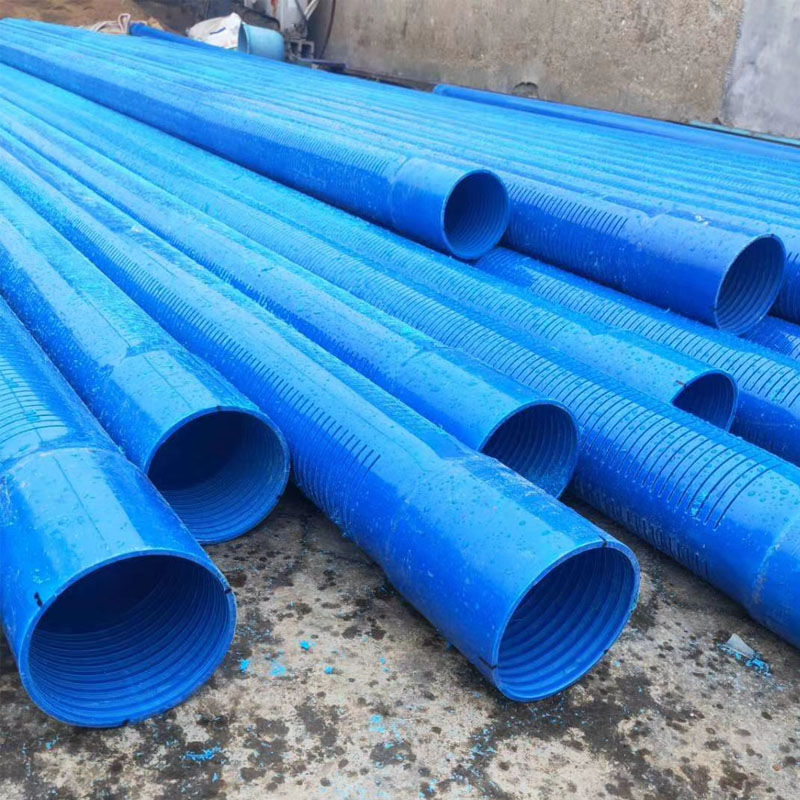
China HDPE N 12 corrugated dual wall pipe represents a significant advancement in subsurface drainage and conveyance systems. Classified within the broader family of polyethylene (PE) piping, this specific configuration – possessing a smooth inner wall and a corrugated outer wall – is engineered for superior structural performance under load while maintaining hydraulic efficiency. Positioned within the infrastructure supply chain, it serves primarily the civil engineering, agricultural, and construction sectors, offering a lightweight, durable, and cost-effective alternative to traditional materials like concrete, steel, and PVC. Core performance characteristics center around its high ring stiffness, allowing it to withstand substantial backfill loads, coupled with its excellent flow capacity due to the smooth internal bore. The ‘N 12’ designation indicates a specific level of stiffness, critical for defining load-bearing capacity and suitability for diverse applications, ranging from stormwater management to agricultural drainage and culvert applications. This guide provides a detailed technical overview of the material science, manufacturing processes, performance metrics, potential failure modes, and relevant industry standards associated with this product.
Material Science & Manufacturing
The primary raw material for China HDPE N 12 corrugated dual wall pipe is High-Density Polyethylene (HDPE), a thermoplastic polymer known for its high strength-to-density ratio. HDPE resin typically conforms to standards like ASTM D3350 or equivalent international specifications. Key physical properties include a density ranging from 0.941 to 0.965 g/cm³, a tensile strength of 20-30 MPa, and a relatively high resistance to chemical degradation. The corrugated outer wall is formed using a specialized extrusion process. Initially, the HDPE resin is melted and extruded through a circular die to create the smooth inner liner. Simultaneously, a separate extrusion process forms the corrugated outer layer utilizing a series of contoured dies. These two layers are then continuously laminated together in a single operation, often employing a co-extrusion technique to ensure strong adhesion. Critical parameters during manufacturing include melt temperature control (typically between 180-220°C), extrusion speed, cooling rate, and the precise dimensions of the corrugations. Variations in these parameters directly impact the pipe’s ring stiffness, wall thickness, and overall dimensional accuracy. Post-extrusion, the pipe undergoes quality control checks including hydrostatic pressure testing and dimensional inspections to verify conformance to relevant standards. The inclusion of UV stabilizers and carbon black is common practice to enhance resistance to environmental degradation and prolong service life. Proper control of these additives is vital to long-term performance.
Performance & Engineering
The performance of HDPE N 12 corrugated dual wall pipe is heavily influenced by its structural integrity and hydraulic efficiency. Ring stiffness, measured in psi or kPa, is a crucial engineering parameter, defining the pipe’s ability to resist flattening under external loads such as soil cover and traffic. A higher ring stiffness corresponds to a greater load-bearing capacity. Force analysis, often employing Finite Element Analysis (FEA), is used to model the stress distribution within the pipe under various loading scenarios, informing design decisions and ensuring structural stability. Environmental resistance is also paramount. HDPE exhibits excellent resistance to a wide range of chemicals commonly found in soil and wastewater, but prolonged exposure to concentrated oxidizing agents should be avoided. The pipe’s ability to maintain its structural integrity and hydraulic capacity over its design life is a key consideration. Compliance requirements vary depending on the application and geographical location. For stormwater management, adherence to local regulations regarding peak flow rates and detention volumes is essential. For agricultural drainage, considerations include soil type, groundwater levels, and the potential for root intrusion. The corrugated outer wall provides increased buckling resistance compared to smooth-walled pipes, enabling shallower burial depths and reducing excavation costs. Proper installation practices, including adequate bedding and backfill compaction, are vital to maximizing performance and preventing premature failure.
Technical Specifications
| Diameter (mm) | Ring Stiffness (psi) | Wall Thickness (mm) – Inner/Outer | Longitudinal Load Resistance (kN/m) |
|---|---|---|---|
| 300 | 58 | 3.7/6.5 | 25 |
| 400 | 58 | 4.6/7.6 | 35 |
| 600 | 58 | 5.8/9.8 | 55 |
| 800 | 58 | 6.9/11.8 | 75 |
| 1000 | 58 | 8.0/13.8 | 95 |
| 1200 | 58 | 9.1/15.8 | 115 |
Failure Mode & Maintenance
Failure of China HDPE N 12 corrugated dual wall pipe can occur through several mechanisms. Fatigue cracking, resulting from repeated stress cycles due to traffic loads or soil settlement, is a common concern. This is often initiated at points of stress concentration, such as corrugation peaks. Delamination, the separation of the inner and outer layers, can occur due to inadequate adhesion during manufacturing or exposure to excessive shear stresses. Environmental degradation, including UV exposure and oxidation, can lead to embrittlement and a reduction in impact resistance. Oxidation is accelerated by elevated temperatures. Poor installation practices, such as inadequate bedding support or improper jointing, can also contribute to premature failure. Root intrusion, particularly in agricultural applications, can compromise the pipe’s integrity by blocking flow and exerting pressure on the walls. Maintenance typically involves periodic visual inspections to identify signs of damage, such as cracks, deformations, or joint leaks. Minor cracks can often be repaired using specialized HDPE welding techniques. For significant damage, replacement of the affected pipe section is usually necessary. Preventative measures include ensuring proper installation, providing adequate soil cover, and implementing weed control to minimize root intrusion. Regular cleaning to remove sediment buildup can also extend the pipe’s service life. Correct pipe storage, shielded from UV rays and physical damage, is crucial prior to installation.
Industry FAQ
Q: What is the long-term creep resistance of HDPE N12 pipe, and how does it impact buried applications?
A: Creep, the tendency of a material to deform permanently under sustained stress, is a relevant consideration for HDPE N12 pipe. While HDPE exhibits good creep resistance, it's not entirely immune. Long-term creep can lead to ovalization of the pipe and a reduction in its effective flow area, particularly under high backfill loads. Manufacturers typically provide creep rupture data based on accelerated aging tests. Proper design incorporating adequate bedding support and backfill compaction minimizes stress on the pipe and mitigates creep effects. Consideration of soil properties and long-term settlement projections is also vital.
Q: How does the corrugated outer wall contribute to the overall structural performance compared to a smooth-walled HDPE pipe of the same diameter?
A: The corrugated outer wall significantly enhances the pipe's buckling resistance. The corrugations act as reinforcing elements, increasing the pipe's moment of inertia and preventing it from collapsing under external loads. A smooth-walled pipe of the same diameter and wall thickness would have a substantially lower ring stiffness and be more susceptible to buckling, requiring deeper burial depths and more extensive excavation. The corrugations allow the pipe to deflect slightly under load without permanent deformation, distributing the stress more evenly.
Q: What are the recommended jointing methods for HDPE N12 pipe, and what are the potential failure points associated with each method?
A: Common jointing methods include electrofusion welding, butt fusion welding, and socket fusion welding. Electrofusion welding, using pre-installed heating elements within the fitting, provides a reliable and consistent weld. Butt fusion welding, where the pipe ends are heated and pressed together, is suitable for larger diameters. Socket fusion welding is used for smaller diameters. Potential failure points include inadequate weld penetration, misalignment during welding, and contamination of the welding surfaces. Proper operator training and adherence to manufacturer's specifications are critical for ensuring joint integrity. Regular visual inspection of welds is also recommended.
Q: What is the impact of temperature variations on the performance of HDPE N12 pipe, particularly in regions with extreme climates?
A: HDPE is susceptible to thermal expansion and contraction. Significant temperature fluctuations can induce stresses within the pipe and at the joints. While HDPE has a relatively low coefficient of thermal expansion, large diameter pipes can experience substantial movement. Proper installation practices, including allowing for thermal movement and providing flexible joints, are essential. In colder climates, HDPE can become more brittle at low temperatures, increasing the risk of cracking under impact. In warmer climates, prolonged exposure to high temperatures can accelerate oxidation and reduce the pipe’s long-term durability.
Q: How does the UV resistance of HDPE N12 pipe compare to other common piping materials, and what measures should be taken to mitigate UV degradation?
A: HDPE inherently possesses limited UV resistance. Prolonged exposure to sunlight can cause chain scission and embrittlement, reducing the pipe’s mechanical properties. However, the addition of carbon black during manufacturing significantly improves UV resistance. Compared to PVC, HDPE generally exhibits better UV resistance when carbon black is incorporated. To further mitigate UV degradation, it is recommended to bury the pipe below the surface, use UV-resistant coatings, or provide shielding during storage and installation. The amount of carbon black used and the quality of the resin are key factors in determining the level of UV protection.
Conclusion
China HDPE N 12 corrugated dual wall pipe represents a robust and versatile solution for a wide range of subsurface drainage and conveyance applications. Its superior ring stiffness, lightweight characteristics, and resistance to chemical degradation offer distinct advantages over traditional materials. Understanding the material science, manufacturing processes, and potential failure modes is crucial for ensuring long-term performance and maximizing the return on investment. Proper design, installation, and maintenance practices are paramount to mitigating risks associated with creep, fatigue, and environmental degradation.
The continued development of HDPE resin formulations and manufacturing techniques promises further enhancements in the performance and durability of this essential infrastructure component. Future research focusing on improved UV stabilization, enhanced jointing technologies, and more accurate predictive models for creep behavior will contribute to the ongoing evolution of HDPE N 12 corrugated dual wall pipe as a leading solution for modern drainage and piping systems.
-
DN25 HDPE Compression Fitting-HORON INTERNATIONAL|Reliable Irrigation Solutions
NewsFeb.11,2026
-
china 32mm ppr pipe price Performance Analysis
News2026-05-14
-
china hdpe pipe for sale Performance Analysis
News2026-05-14
-
china ppr pipe 32mm Performance Analysis
News2026-05-14
-
china pvc pipes Manufacturing and Performance Analysis
News2026-05-14
-
china hdpe n 12 corrugated dual wall pipe Performance Analysis
News2026-05-14
-
china hdpe corrugated pipe sizes Performance Analysis
News2026-05-13
-
china ppr pipe for hot and cold water Technical Overview
News2026-05-13
-
china 150mm pvc pipe Performance Analysis
News2026-05-13
-
china 60mm pvc pipe Performance Analysis
News2026-05-13
-
china 12 inch diameter pvc pipe Performance Analysis
News2026-05-13
-
china sprinkler pvc pipe Performance and Engineering
News2026-05-12
-
china ppr pipe 3 4 Performance Analysis
News2026-05-12
-
china hdpe sprinkler pipe Performance Analysis
News2026-05-12
-
china hdpe irrigation pipe fittings Performance Analysis
News2026-05-12
-
china whole sale pvc pipe Performance Analysis
News2026-05-12