

Feb . 11, 2026 00:01 Back to list
china column pipe for submersible pump Material Performance
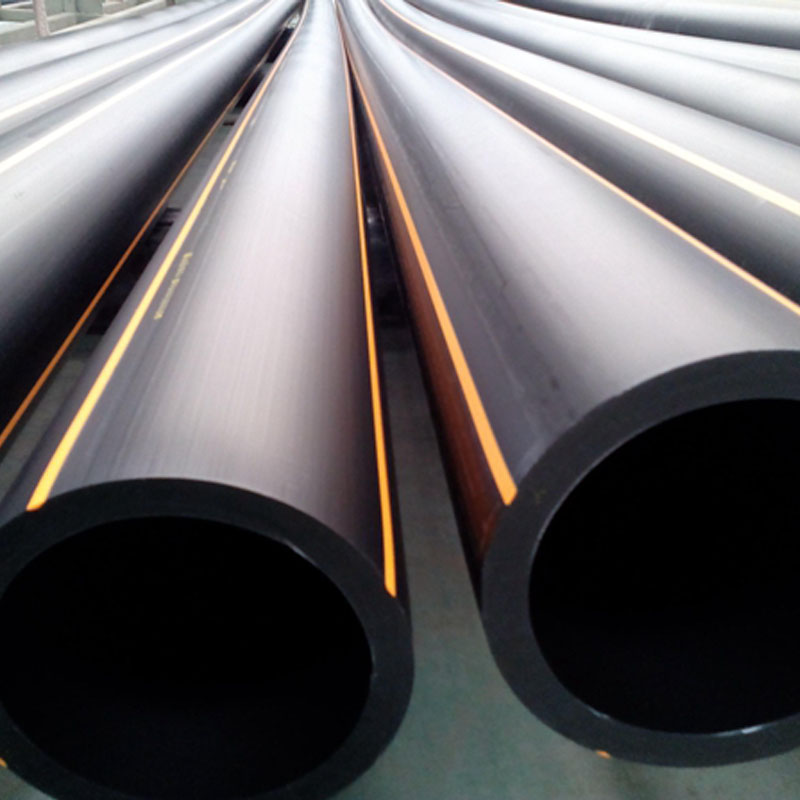
Introduction
China column pipe for submersible pumps represents a critical component in borehole well applications, facilitating the conveyance of hydraulic power to the pump intake and providing structural support for the entire submersible pump assembly. These pipes, typically manufactured from carbon steel with protective coatings, serve as the conduit for delivering produced fluids to the surface. Their performance is directly linked to the efficiency, reliability, and longevity of the entire pumping system. This technical guide provides a comprehensive overview of their material science, manufacturing processes, performance characteristics, failure modes, and applicable industry standards. The core pain points addressed include corrosion resistance in diverse downhole environments, ensuring adequate tensile and yield strength to withstand significant hydrostatic and axial loads, and maintaining dimensional accuracy for seamless pump assembly. Selection criteria prioritize not only initial cost but also lifecycle cost considering potential failure scenarios and required maintenance intervals. The increasing demand for higher flow rates and deeper well depths necessitates continually improving column pipe materials and manufacturing techniques.
Material Science & Manufacturing
Column pipes are predominantly manufactured from carbon steel, with API 5L grades X45, X52, and X65 commonly employed. The choice of grade depends on the anticipated operating pressure and corrosive environment. The steel's chemical composition, specifically the carbon equivalent (CE), influences its weldability and susceptibility to hydrogen-induced cracking (HIC). Manufacturing commences with seamless or welded pipe production. Seamless pipes, produced via the Mannesmann process or similar methods, offer superior strength and resistance to burst failure. Welded pipes, utilizing electric resistance welding (ERW) or submerged arc welding (SAW), are more cost-effective but require rigorous non-destructive testing (NDT) to ensure weld integrity. Following pipe formation, internal and external surface preparation is crucial. This typically involves pickling to remove mill scale, followed by phosphate coating for improved corrosion resistance and adhesion of subsequent coatings. Protective coatings are paramount. Epoxy resins, polypropylene, and polyethylene are commonly used, providing a barrier against corrosion from produced water, hydrogen sulfide (H2S), carbon dioxide (CO2), and chlorides. Coating thickness and application method (fusion-bonded epoxy, external coating) are critical parameters. Critical manufacturing parameter control includes dimensional tolerances (diameter, wall thickness, straightness), mechanical property verification (tensile strength, yield strength, elongation), and coating adhesion testing. Post-coating, pipes undergo hydrostatic testing to verify their ability to withstand specified pressure without leakage or deformation. The steel’s microstructure plays a vital role; controlled cooling rates during heat treatment are essential to achieve the desired balance between strength and toughness.
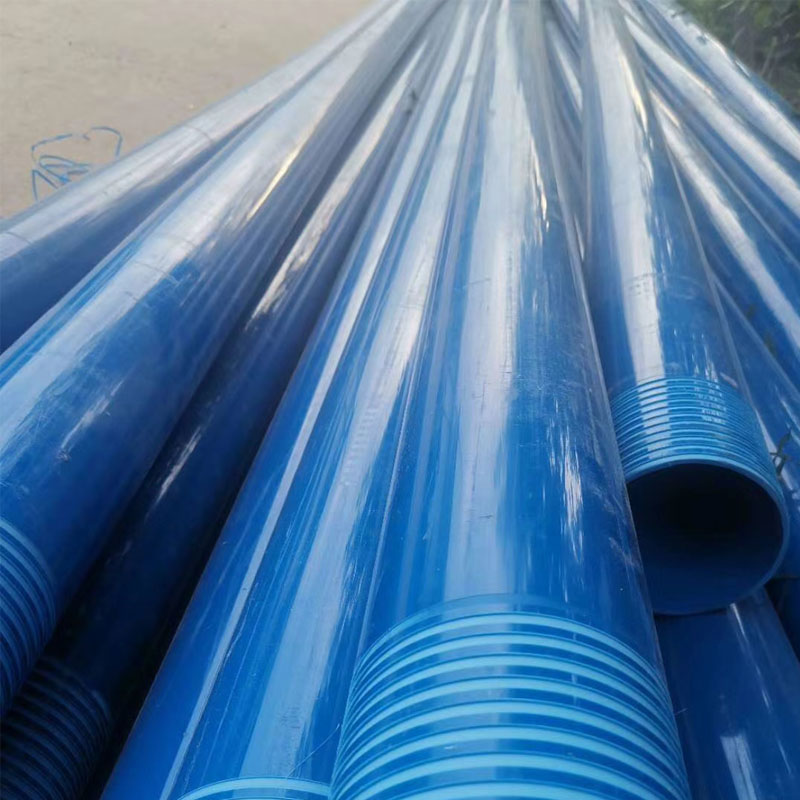
Performance & Engineering
The performance of column pipe is dictated by its ability to withstand internal pressure, external pressure (hydrostatic head), axial tensile loads (due to pump weight and fluid column), and torsional stresses (resulting from wellbore deviation). Force analysis, employing Finite Element Analysis (FEA) software, is routinely used to predict stress distributions under various loading conditions. Buckling analysis is critical, particularly for long column strings, to prevent catastrophic failure. Environmental resistance is a primary concern. Corrosion rates are influenced by the pH, temperature, salinity, and gas composition of the produced fluids. Cathodic protection (CP) systems, utilizing sacrificial anodes or impressed current, can mitigate corrosion, but require careful design and monitoring. Material selection must consider the predicted corrosion rates. Hydrogen embrittlement, induced by the presence of H2S, can significantly reduce the pipe's ductility and fracture toughness. Compliance requirements are stringent, with API 5CT (Casing and Tubing) and ISO 13679 (Subsea Production Systems) setting the standards for material properties, manufacturing, and testing. Thread connections are also critical; their geometry and thread compound must ensure a leak-proof seal under high pressure and temperature. Detailed engineering calculations must account for the thermal expansion and contraction of the column string, as well as potential differential settlement in the wellbore. Understanding the effects of creep, especially at elevated temperatures, is crucial for long-term reliability.
Technical Specifications
| Parameter | Unit | API 5L X45 | API 5L X52 |
|---|---|---|---|
| Yield Strength (Minimum) | MPa | 345 | 450 |
| Tensile Strength (Minimum) | MPa | 485 | 560 |
| Elongation (Minimum) | % | 21 | 20 |
| Wall Thickness | mm | 6.4 – 12.7 | 6.4 – 12.7 |
| Outside Diameter | mm | 88.9 – 177.8 | 88.9 – 177.8 |
| Coating Type (Typical) | - | Fusion Bonded Epoxy (FBE) | Fusion Bonded Epoxy (FBE) |
Failure Mode & Maintenance
Common failure modes include corrosion (uniform, pitting, galvanic), stress corrosion cracking (SCC), hydrogen embrittlement, fatigue cracking (due to cyclic loading), and thread failures. Corrosion manifests as material loss, reducing wall thickness and compromising structural integrity. SCC is particularly prevalent in environments containing chlorides and H2S. Hydrogen embrittlement leads to brittle fracture, often without significant prior warning. Fatigue cracking initiates at stress concentrators (e.g., weld defects, thread roots) and propagates under cyclic loading. Thread failures can result from improper makeup torque, corrosion, or galling. Regular inspection, utilizing Non-Destructive Examination (NDE) techniques such as ultrasonic testing (UT), magnetic particle inspection (MPI), and visual inspection, is crucial for detecting early signs of failure. Internal inspection tools (e.g., caliper logs, electromagnetic surveys) can assess corrosion and wall thinning. Preventive maintenance includes periodic coating repairs, thread cleaning and lubrication, and implementation of cathodic protection systems. Corrective maintenance involves replacing damaged sections of column pipe or repairing thread connections. Failure analysis, involving metallurgical examination of fractured components, is essential for identifying the root cause of failure and preventing recurrence. Maintaining accurate records of inspection results and maintenance activities is vital for effective asset management. Monitoring of downhole conditions (temperature, pressure, fluid composition) allows for proactive adjustments to mitigate corrosion and other potential failure mechanisms.
Industry FAQ
Q: What is the impact of H2S on the lifespan of carbon steel column pipe?
A: Hydrogen sulfide (H2S) significantly reduces the lifespan of carbon steel column pipe through several mechanisms. It promotes sulfide stress cracking (SSC), a form of brittle fracture, especially under tensile stress. H2S also accelerates general corrosion rates and contributes to pitting corrosion. Furthermore, it leads to hydrogen embrittlement, decreasing the steel's ductility. Mitigation strategies include using corrosion-resistant alloys (CRAs), employing H2S scavengers, and implementing effective cathodic protection systems.
Q: How do different coating types compare in terms of corrosion protection?
A: Fusion Bonded Epoxy (FBE) coatings offer excellent adhesion and barrier properties, providing robust corrosion protection for moderate temperature and salinity environments. Polypropylene coatings are more resistant to higher temperatures and abrasion but may have lower adhesion. Polyethylene coatings are cost-effective but generally offer less corrosion resistance than FBE or polypropylene. The selection of the appropriate coating depends on the specific downhole conditions, including temperature, pressure, fluid composition, and abrasion potential.
Q: What are the critical considerations for thread connection integrity?
A: Proper thread connection integrity requires careful attention to several factors. Correct makeup torque is essential to achieve the specified preload and seal. Thread compounds must be compatible with the produced fluids and provide adequate lubrication. Threads must be clean and free from damage or debris. The thread geometry must be precise and conform to relevant standards (e.g., API 5B). Regular inspection for thread damage and proper makeup is crucial.
Q: What is the role of hydrostatic testing in quality control?
A: Hydrostatic testing is a critical quality control step used to verify the structural integrity of column pipe. The pipe is subjected to an internal pressure significantly higher than its maximum operating pressure. This test identifies any defects, such as weld imperfections or material flaws, that could lead to failure under service conditions. Successful completion of hydrostatic testing confirms the pipe's ability to withstand the anticipated pressure without leakage or deformation.
Q: What are the limitations of using Non-Destructive Examination (NDE) methods for detecting corrosion?
A: While NDE methods like UT and MPI are valuable tools for detecting corrosion, they have limitations. UT can be affected by surface roughness and the presence of coatings. MPI is primarily effective for detecting surface and near-surface defects. Both methods require skilled operators and careful interpretation of results. Internal corrosion can be challenging to detect without specialized tools like internal inspection logs. NDE provides a snapshot in time and does not necessarily predict future corrosion rates.
Conclusion
China column pipe for submersible pumps are engineered critical components whose performance directly impacts the efficiency and reliability of oil and gas production operations. The selection of appropriate materials, manufacturing processes, and protective coatings is paramount to mitigating corrosion, preventing failures, and maximizing lifespan. A thorough understanding of the operating environment, coupled with adherence to industry standards and rigorous quality control measures, is essential for ensuring the long-term integrity of these vital systems.
Future trends will likely focus on the development of advanced corrosion-resistant alloys, improved coating technologies, and enhanced inspection techniques. The integration of real-time monitoring systems, providing continuous feedback on downhole conditions and pipe integrity, will enable proactive maintenance and optimization of pumping operations. Furthermore, advancements in FEA and modeling techniques will allow for more accurate prediction of stress distributions and failure modes, leading to more robust and reliable column pipe designs.
-
DN25 HDPE Compression Fitting-HORON INTERNATIONAL|Reliable Irrigation Solutions
NewsFeb.11,2026
-
china corrugated hdpe pipe fittings Performance Analysis
News2026-05-22
-
china ppr pipe for hot water Performance Analysis
News2026-05-22
-
china ppr Technical Performance Analysis
News2026-05-22
-
china corrugated dual wall pipe Performance Analysis
News2026-05-22
-
china sink inlet pipe Material Performance Analysis
News2026-05-22
-
china 1 2 inch pvc Performance Analysis
News2026-05-21
-
china hdpe pipe joint coupler Performance Analysis
News2026-05-21
-
china ppr pipes and fittings price list Technical Analysis
News2026-05-21
-
china 9 inch pvc pipe price Performance Analysis
News2026-05-21
-
china 2 inch borewell column pipe price Performance Engineering
News2026-05-21
-
china hdpe pipe suppliers Performance Analysis
News2026-05-20
-
china submersible pump column pipe Performance Engineering
News2026-05-20
-
china 8 hdpe corrugated pipe Manufacturing Analysis
News2026-05-20
-
china dual wall hdpe pipe Performance Analysis
News2026-05-20
-
china water lines under sink Performance Analysis
News2026-05-20