

Feb . 11, 2026 00:01 Back to list
china black pvc pipe for sale Performance Analysis
Introduction
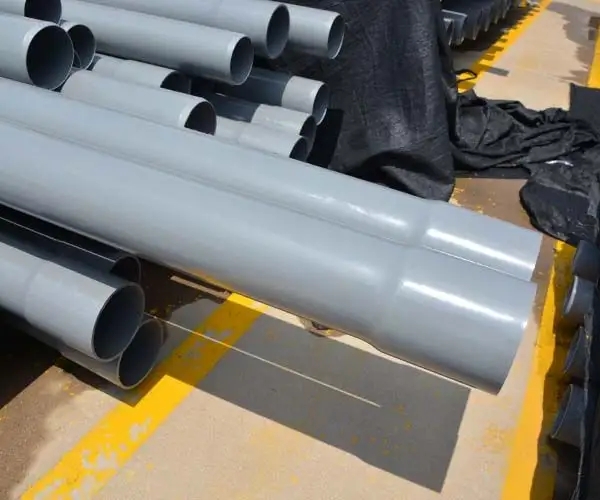
Polyvinyl chloride (PVC) pipe, particularly in its black formulation, represents a foundational material in modern infrastructure and industrial applications. This technical guide focuses on the properties, manufacturing, performance, and failure modes of China-manufactured black PVC pipe, intended for a B2B audience of engineers, procurement specialists, and project managers. Black PVC pipe distinguishes itself through the addition of carbon black, imparting enhanced UV resistance compared to standard white PVC. This makes it particularly suitable for outdoor applications exposed to prolonged sunlight. Its versatility extends to irrigation, drainage, sewage, chemical transfer, and increasingly, as conduit for electrical wiring. The manufacturing landscape in China has become a dominant force in global PVC pipe supply, presenting both opportunities and challenges related to quality control and material consistency. Core performance characteristics center around pressure rating (Schedule 40, Schedule 80), dimensional accuracy, and long-term durability in diverse operating environments. Understanding these facets is crucial for making informed procurement decisions and ensuring reliable system performance.
Material Science & Manufacturing
Black PVC pipe's foundation lies in the polymerization of vinyl chloride monomer (VCM). The resulting PVC resin is a thermoplastic polymer characterized by its inherent rigidity, chemical inertness, and relatively low cost. The addition of carbon black (typically ranging from 1-5% by weight) serves as a UV stabilizer, absorbing damaging ultraviolet radiation and preventing polymer degradation. The type and particle size of carbon black significantly influence the final product's UV protection level and mechanical properties. Beyond PVC resin and carbon black, common additives include plasticizers (e.g., phthalates, DINP) to enhance flexibility, impact modifiers (e.g., acrylic polymers) to improve toughness, heat stabilizers (e.g., organotin compounds, calcium-zinc stabilizers) to prevent thermal decomposition during processing, and lubricants to aid in extrusion. Manufacturing predominantly utilizes extrusion processes. PVC compound is fed into a single-screw or twin-screw extruder, where it's heated, melted, and forced through a die of the desired pipe diameter and wall thickness. Critical parameters include extrusion temperature (typically 180-220°C), screw speed, die geometry, and cooling rate. Post-extrusion, pipes undergo cutting, beveling, and quality inspection. Chinese manufacturers often employ automated extrusion lines to achieve high production volumes, however, variance in additive quality and process control can affect final product consistency.
Performance & Engineering
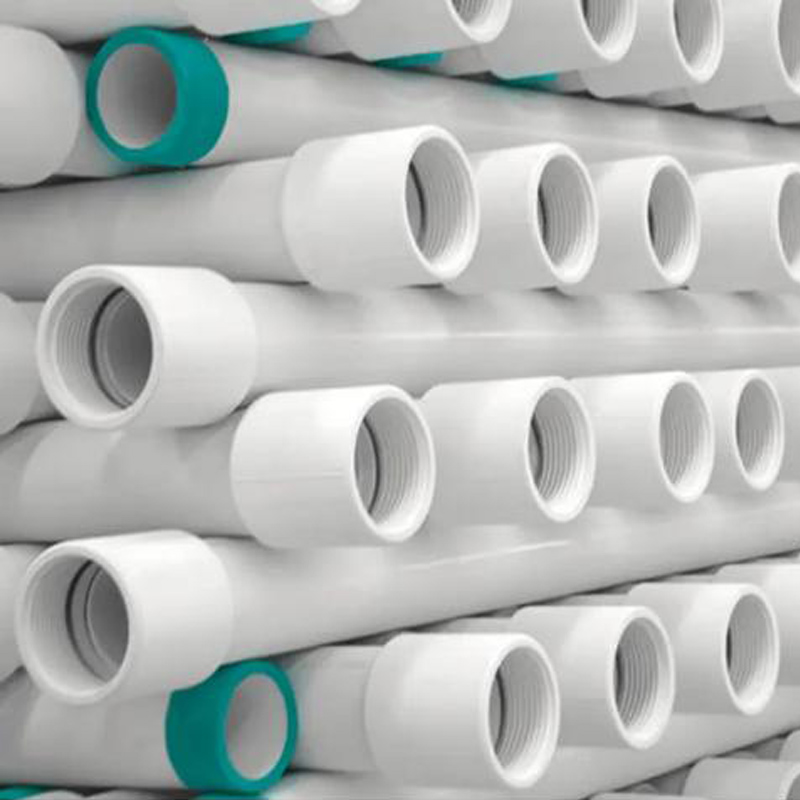
The performance of black PVC pipe is governed by several key engineering considerations. Hydrostatic pressure testing, conducted according to ASTM D1785, determines the pipe’s ability to withstand internal pressure without failure. The Schedule number (40, 80, etc.) directly correlates with wall thickness and, consequently, pressure rating. Tensile strength, measured by ASTM D882, dictates the pipe’s resistance to axial stress. Impact strength, assessed via ASTM D2444, is crucial for applications where the pipe may be subjected to sudden shocks or impacts. Environmental resistance is paramount. While carbon black enhances UV protection, prolonged exposure to extreme temperatures can lead to embrittlement. Chemical compatibility must also be considered; PVC exhibits good resistance to acids and bases but can be affected by certain organic solvents. Installation practices significantly impact long-term performance. Proper jointing techniques (solvent cementing, gasketed joints) are essential to maintain structural integrity and prevent leaks. Soil conditions and burial depth also play a role, with considerations for ground movement, corrosion potential, and external loading. Finite Element Analysis (FEA) is increasingly utilized in engineering design to optimize pipe dimensions and predict performance under various loading scenarios.
Technical Specifications
| Parameter | Schedule 40 (Typical) | Schedule 80 (Typical) | ASTM Standard |
|---|---|---|---|
| Material | PVC with Carbon Black | PVC with Carbon Black | ASTM D1785 |
| Pressure Rating (PSI at 73°F) | 400 | 600 | ASTM D1785 |
| Tensile Strength (PSI) | 6,000 - 8,000 | 6,500 - 8,500 | ASTM D882 |
| Impact Strength (Izod Notched, ft-lb/in) | 1.0 - 2.0 | 2.0 - 3.0 | ASTM D2444 |
| Operating Temperature Range (°F) | -40 to 140 | -40 to 140 | ASTM D1785 |
| Carbon Black Content (% by weight) | 1.5 - 3.0 | 2.0 - 4.0 | Manufacturer Specification |
Failure Mode & Maintenance
Black PVC pipe, while durable, is susceptible to several failure modes. Long-term hydrostatic stress can lead to slow crack growth (SCG), particularly in areas of stress concentration (e.g., around fittings). This is exacerbated by exposure to chlorine-containing water or certain aggressive chemicals. UV degradation, despite carbon black's protective effect, can still occur over extended periods, leading to surface chalking and embrittlement. Mechanical damage, such as punctures or impacts during installation or operation, can cause immediate failure. Soil settlement or ground movement can induce bending stresses and lead to cracking. Chemical attack from solvents or aggressive compounds can cause swelling, softening, and eventual degradation. Maintenance typically involves periodic visual inspections for cracks, leaks, or signs of deterioration. Joints should be checked for proper sealing. If SCG is suspected, pressure testing and polymer analysis can help assess the severity of the issue. Preventative measures include proper installation techniques, avoiding exposure to incompatible chemicals, and utilizing appropriate bedding and backfill materials. For minor cracks, repair sleeves or wraps may provide a temporary solution, but complete replacement is often recommended for significant damage.
Industry FAQ
Q: What is the impact of phthalate plasticizers on the long-term performance of black PVC pipe, and are phthalate-free alternatives available from Chinese manufacturers?
A: Phthalate plasticizers, while effective in enhancing flexibility, are known to leach over time, potentially leading to embrittlement and reduced lifespan. Regulatory pressures are increasing to limit phthalate usage. Many Chinese manufacturers now offer phthalate-free alternatives utilizing plasticizers like DINP or DOTP. However, it's crucial to verify the specific plasticizer used through material certifications and independent testing, as quality control can vary.
Q: How does the quality of carbon black affect the UV resistance and mechanical properties of the pipe?
A: The particle size, structure, and purity of carbon black directly influence UV protection and mechanical strength. Smaller particle sizes and higher structure provide better UV absorption and reinforcement. Impurities can negatively impact performance. It’s essential to request technical data sheets detailing the carbon black characteristics from the manufacturer.
Q: What are the common discrepancies found in Schedule 40 and Schedule 80 PVC pipe manufactured in China regarding dimensional accuracy and wall thickness?
A: Common discrepancies include variations in outside diameter, wall thickness, and concentricity. These deviations can impact pressure rating and joint integrity. Rigorous quality control, including dimensional measurements using calibrated instruments and adherence to ASTM standards, is crucial for mitigating these risks. Independent third-party inspection is recommended.
Q: What methods are used to assess the chemical resistance of black PVC pipe to specific chemicals before deployment in a chemical transfer application?
A: Immersion testing is the standard method. Samples of the pipe are immersed in the target chemical for a specified period at a defined temperature. Changes in weight, dimensions, hardness, and tensile strength are measured to assess the material's resistance. Consulting chemical resistance charts and performing accelerated aging tests can also provide valuable insights.
Q: What are the typical jointing methods employed for black PVC pipe, and what are the potential failure points associated with each method?
A: Common jointing methods include solvent cementing and gasketed joints. Solvent cementing relies on a chemical bond between the pipe and fitting, and failure can occur due to improper surface preparation, insufficient solvent application, or incompatible solvent/pipe combinations. Gasketed joints utilize elastomeric gaskets to create a seal, and failure can result from gasket degradation, improper compression, or damage to the sealing surfaces.
Conclusion
China-manufactured black PVC pipe offers a cost-effective solution for a wide array of industrial and infrastructure applications. However, realizing its full potential requires a thorough understanding of its material science, manufacturing processes, and performance characteristics. The addition of carbon black significantly enhances UV resistance, making it suitable for outdoor use, but long-term durability remains contingent on proper material selection, rigorous quality control, and adherence to industry standards.
Effective procurement demands a proactive approach to verifying specifications, conducting independent testing, and establishing robust quality assurance protocols. By prioritizing these elements, engineers and procurement professionals can mitigate potential risks and ensure the reliable, long-term performance of black PVC pipe systems, optimizing lifecycle costs and minimizing operational disruptions.
-
DN25 HDPE Compression Fitting-HORON INTERNATIONAL|Reliable Irrigation Solutions
NewsFeb.11,2026
-
china corrugated hdpe pipe fittings Performance Analysis
News2026-05-22
-
china ppr pipe for hot water Performance Analysis
News2026-05-22
-
china ppr Technical Performance Analysis
News2026-05-22
-
china corrugated dual wall pipe Performance Analysis
News2026-05-22
-
china sink inlet pipe Material Performance Analysis
News2026-05-22
-
china 1 2 inch pvc Performance Analysis
News2026-05-21
-
china hdpe pipe joint coupler Performance Analysis
News2026-05-21
-
china ppr pipes and fittings price list Technical Analysis
News2026-05-21
-
china 9 inch pvc pipe price Performance Analysis
News2026-05-21
-
china 2 inch borewell column pipe price Performance Engineering
News2026-05-21
-
china hdpe pipe suppliers Performance Analysis
News2026-05-20
-
china submersible pump column pipe Performance Engineering
News2026-05-20
-
china 8 hdpe corrugated pipe Manufacturing Analysis
News2026-05-20
-
china dual wall hdpe pipe Performance Analysis
News2026-05-20
-
china water lines under sink Performance Analysis
News2026-05-20