

Feb . 11, 2026 00:01 Back to list
yellow pvc pipe manufacturers Performance Analysis
Introduction
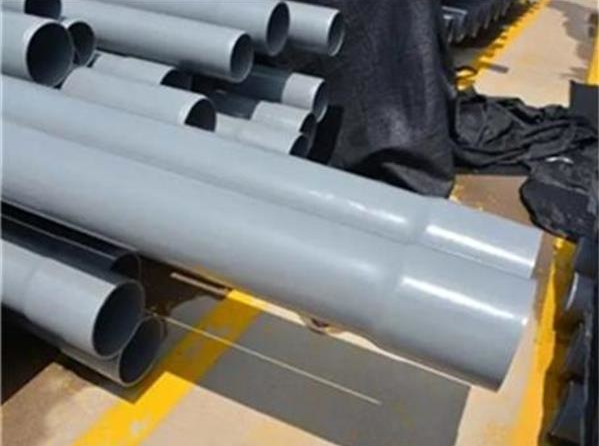
Polyvinyl Chloride (PVC) pipe, particularly in its yellow formulation, is a ubiquitous material in industrial fluid handling, irrigation, and drainage systems. The yellow color, often indicating pressure-rated pipe, differentiates it from schedule 40 PVC commonly used in lower-pressure applications. This guide provides a comprehensive technical overview of yellow PVC pipe, covering material science, manufacturing processes, performance characteristics, failure modes, and relevant industry standards. Yellow PVC’s position within the broader piping industry lies in its balance of cost-effectiveness, chemical resistance, and mechanical strength, serving as a critical intermediary between commodity plastic piping and more expensive, specialized materials like stainless steel or ductile iron. Its core performance characteristics center around maintaining fluid integrity under pressure, resisting environmental degradation, and providing a long service life with minimal maintenance. A key industry pain point is ensuring consistent quality control across manufacturing batches, particularly regarding dimensional accuracy and compound homogeneity, which directly affects weld integrity and long-term performance.
Material Science & Manufacturing
Yellow PVC pipe is primarily composed of PVC resin, a thermoplastic polymer produced through the polymerization of vinyl chloride monomer (VCM). The addition of stabilizers (typically lead-based, calcium-zinc, or organotin compounds), lubricants, and plasticizers (phthalates or alternatives) are crucial to processing and performance. The yellow pigmentation is achieved through the incorporation of specific dye formulations, commonly based on diarylide pigments, chosen for their UV stability and compatibility with PVC. Raw material quality significantly influences final product properties. PVC resin grade, molecular weight distribution, and impurity levels impact impact strength, elongation at break, and long-term creep resistance.
Manufacturing typically involves extrusion. PVC compound is fed into a single-screw or twin-screw extruder where it is heated, melted, and forced through a die to form the pipe’s shape. Critical parameters include barrel temperature profile (typically 180-220°C), screw speed, die pressure, and cooling rate. Precise control of these parameters ensures dimensional accuracy, uniform wall thickness, and proper fusion of the PVC matrix. Downstream processes include cutting the pipe to length, bell-end forming (for solvent welding), and quality inspection. Calibration sleeves and vacuum sizing tanks are used to maintain precise outer diameter and wall thickness. The selection of extrusion die material (typically tool steel with a hard chrome coating) affects surface finish and longevity. Improper cooling can lead to residual stresses, increasing the risk of cracking over time.
Performance & Engineering
The performance of yellow PVC pipe is characterized by its pressure-bearing capacity, chemical resistance, and long-term durability. Stress analysis, utilizing finite element modeling (FEM), is essential to determine the maximum allowable operating pressure (MAP) for a given pipe diameter and wall thickness. MAP is heavily influenced by hydrostatic design stress (HDS), a material property determined through standardized testing (ASTM D1597). The HDS accounts for long-term creep, temperature effects, and statistical variations in material properties.
Environmental resistance is a key consideration. PVC exhibits good resistance to many acids, bases, and salts, but can be affected by prolonged exposure to certain solvents and hydrocarbons. UV degradation, leading to embrittlement and discoloration, is mitigated through the use of UV stabilizers in the PVC compound. Yellow PVC is generally formulated with higher concentrations of these stabilizers compared to white PVC. Compliance requirements vary by region and application. For potable water applications, the PVC compound must meet NSF/ANSI Standard 61 for lead content and extractable chemicals. For pressure applications, standards like ASTM D1785 govern dimensional requirements and performance testing. The impact of soil corrosivity on buried pipelines is also assessed, requiring appropriate protective measures like cathodic protection in aggressive environments. Furthermore, the coefficient of thermal expansion (approximately 8 x 10⁻⁵ /°C) must be accounted for in system design to prevent stress buildup due to temperature fluctuations.
Technical Specifications
| Parameter | Schedule 40 (in) | Schedule 80 (in) | ASTM D1785 Specification | Typical Pressure Rating (psi) @ 73°F |
|---|---|---|---|---|
| Outer Diameter (1/2") | 0.625 | 0.625 | ± 0.010 in | 860 |
| Outer Diameter (1") | 1.050 | 1.050 | ± 0.015 in | 540 |
| Outer Diameter (2") | 2.375 | 2.375 | ± 0.020 in | 300 |
| Outer Diameter (3") | 3.500 | 3.500 | ± 0.025 in | 220 |
| Wall Thickness (Schedule 40, 1/2") | 0.065 | N/A | ± 0.005 in | N/A |
| Wall Thickness (Schedule 80, 1/2") | 0.085 | N/A | ± 0.005 in | N/A |
Failure Mode & Maintenance
Yellow PVC pipe can experience several failure modes during its service life. Fatigue cracking, particularly at stress concentrators like fittings and joints, can occur under cyclic pressure loading. This is exacerbated by improper installation (over-tightening of fittings) and material defects. Chemical attack, particularly from aggressive solvents or hydrocarbons, can lead to crazing, swelling, and eventual cracking. UV degradation causes embrittlement, reducing impact resistance and increasing susceptibility to cracking. Slow crack growth (SCG), a time-dependent failure mechanism, can occur in the presence of sustained tensile stress and specific chemicals. Thermal stress, resulting from temperature fluctuations, can also induce cracking, especially in restrained pipelines. Creep, the time-dependent deformation under constant load, can lead to dimensional changes and eventual failure.
Maintenance primarily focuses on preventative measures. Regular visual inspections should be conducted to identify signs of cracking, deformation, or chemical attack. Properly supporting pipelines to minimize bending stress is crucial. Avoiding exposure to incompatible chemicals is essential. For buried pipelines, ensuring adequate soil cover and preventing corrosion are important. In the event of a leak, the damaged section of pipe should be replaced with a compatible PVC section, utilizing appropriate solvent welding techniques. Periodic pressure testing can help identify potential weaknesses before they lead to catastrophic failure. Avoid using abrasive cleaning agents that can damage the pipe surface and promote crack initiation.
Industry FAQ
Q: What is the significance of the yellow color in PVC pipe, and how does it relate to pressure ratings?
A: The yellow color typically denotes a higher pressure rating PVC pipe. While not a universal standard, it’s commonly used to visually differentiate pressure-rated pipe (often Schedule 80) from lower-pressure Schedule 40 PVC which is frequently white. The yellow pigmentation itself doesn’t contribute to the pressure rating; the increased wall thickness is the primary factor increasing the pipe’s ability to withstand internal pressure. The color serves as a quick visual indicator for installers and maintenance personnel.
Q: How does temperature affect the performance of yellow PVC pipe, and what are the limitations?
A: Elevated temperatures reduce the pressure-bearing capacity of PVC pipe. The hydrostatic design stress (HDS) decreases with increasing temperature due to the reduction in tensile strength and increased creep. Maximum operating temperatures are typically limited to 140°F (60°C) to maintain long-term performance. Below-freezing temperatures can cause the water inside the pipe to freeze, leading to expansion and potential cracking if not adequately protected. Thermal expansion and contraction should also be considered during installation.
Q: What are the common chemical compatibility concerns with yellow PVC pipe, and how can they be addressed?
A: PVC exhibits poor resistance to certain organic solvents (e.g., toluene, benzene), ketones, and esters. Prolonged exposure can cause swelling, softening, and cracking. Chlorinated hydrocarbons can also cause degradation. Compatibility charts should be consulted before using PVC pipe in contact with specific chemicals. Using alternative piping materials (e.g., CPVC, PP, PVDF) may be necessary for incompatible applications. Proper labeling and segregation of chemical pipelines are crucial.
Q: What are the key differences between Schedule 40 and Schedule 80 yellow PVC pipe, and when would you choose one over the other?
A: Schedule 80 PVC has a thicker wall thickness than Schedule 40 PVC. This results in a higher pressure rating, increased impact resistance, and greater rigidity. Schedule 40 is suitable for lower-pressure applications like irrigation and drainage, where cost is a primary concern. Schedule 80 is preferred for higher-pressure applications, such as industrial fluid handling and chemical processing, where safety and reliability are paramount. The choice depends on the operating pressure, fluid temperature, and application-specific requirements.
Q: How does proper solvent welding technique influence the long-term integrity of a PVC piping system?
A: Proper solvent welding is critical for creating leak-free and structurally sound joints. Inadequate surface preparation (cleaning and priming) prevents proper fusion of the PVC surfaces. Applying insufficient or excessive solvent cement weakens the joint. Incorrect cement application techniques or working in unsuitable environmental conditions (e.g., low temperature, high humidity) can also compromise joint integrity. Following manufacturer's instructions and using compatible primers and cements are crucial for ensuring long-term reliability.
Conclusion
Yellow PVC pipe remains a vital material in numerous industrial applications due to its balance of performance, cost, and ease of installation. Understanding its material science, manufacturing nuances, and performance limitations is essential for engineers and procurement professionals. Addressing the core industry pain point of consistent quality control through rigorous testing and adherence to standards is paramount. Successful deployment relies on meticulous attention to detail, from material selection and fabrication to proper installation and maintenance.
Looking forward, advancements in PVC compound formulations, including bio-based plasticizers and enhanced UV stabilizers, will further improve the sustainability and longevity of yellow PVC pipe. Increased focus on non-destructive testing methods, such as ultrasonic testing, will enable more accurate assessment of joint integrity and overall system health. Continued adherence to evolving industry standards and best practices will ensure the safe and reliable performance of yellow PVC piping systems for years to come.
-
DN25 HDPE Compression Fitting-HORON INTERNATIONAL|Reliable Irrigation Solutions
NewsFeb.11,2026
-
discount ppr for hot water Performance Analysis
News2026-06-25
-
discount bulk pvc pipe Material Performance
News2026-06-25
-
discount pvc pipes price list Material Science and Manufacturing
News2026-06-25
-
discount 20 ft pvc pipe Performance Analysis
News2026-06-25
-
discount ppr cold water pipe Performance Analysis
News2026-06-25
-
discount 24 inch diameter pvc pipe price Performance Analysis
News2026-06-24
-
discount 4 hdpe drain pipe Performance Analysis
News2026-06-24
-
discount 12 hdpe pipe Performance Analysis
News2026-06-24
-
discount hdpe reducing coupling Performance Analysis
News2026-06-24
-
discount hdpe corrugated sewer pipe Performance Engineering
News2026-06-24
-
discount pvc pipe cost per foot Material and Performance Analysis
News2026-06-23
-
discount double walled corrugated pipe Performance Analysis
News2026-06-23
-
discount hdpe sprinkler pipe price list Performance and Engineering
News2026-06-23
-
discount water pipe in kitchen Technical Analysis
News2026-06-23
-
discount hdpe to pvc pipe coupling Performance Engineering
News2026-06-23