

Feb . 11, 2026 00:01 Back to list
water supply hdpe pipe products Performance and Engineering
Introduction
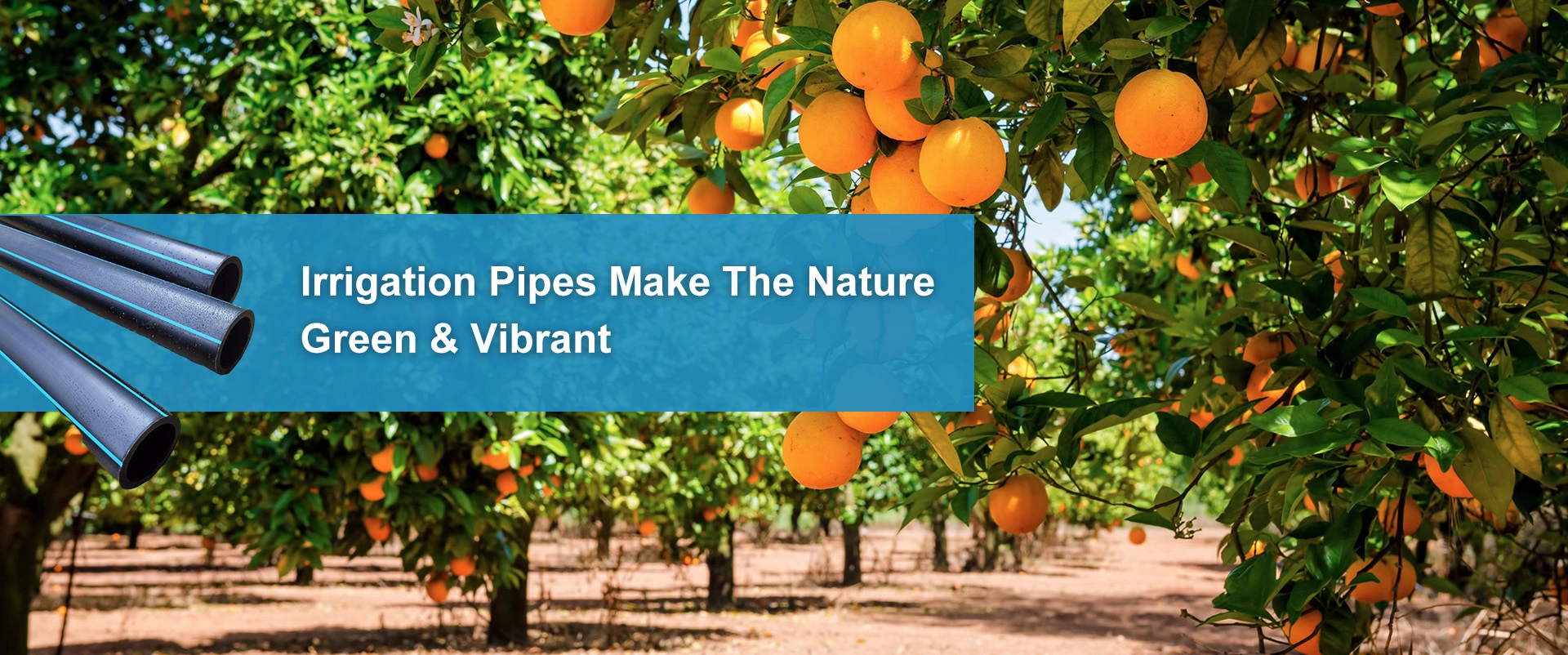
High-Density Polyethylene (HDPE) pipe for water supply represents a significant advancement in municipal and industrial fluid conveyance systems. Positioned as a direct replacement for traditional materials like ductile iron, steel, and PVC, HDPE pipe offers a compelling combination of durability, flexibility, and cost-effectiveness. Its application spans potable water distribution, irrigation, industrial process piping, and wastewater management. The core performance characteristics of HDPE pipe – including its pressure-bearing capacity, chemical resistance, and long-term hydrostatic strength – are derived from the unique properties of the polyethylene material itself and the manufacturing processes used to create the pipe. A primary driver for its increasing adoption is the reduction in life-cycle costs compared to legacy materials, attributable to minimal maintenance requirements, leak-free joints (through fusion welding), and extended service life exceeding 50 years. Understanding the nuanced aspects of HDPE pipe, from material composition to installation techniques, is critical for engineers and procurement specialists aiming to optimize system performance and minimize operational expenses.
Material Science & Manufacturing
HDPE pipe is manufactured from polyethylene resin, a thermoplastic polymer produced from the polymerization of ethylene. The specific grade of polyethylene used – typically PE3408, PE4710, or PE100 – dictates the pipe’s performance characteristics, notably its hydrostatic strength and slow crack growth resistance. PE100, the most commonly used grade for water supply, exhibits superior mechanical properties. The resin’s molecular weight distribution and density directly influence these properties. Raw material quality control is paramount, focusing on melt flow index, oxidation induction time (OIT) to assess resistance to degradation, and carbon black content (for UV protection).
The manufacturing process generally involves extrusion. Polyethylene resin is melted and forced through a circular die to create a continuous pipe profile. Critical parameters during extrusion include melt temperature, die pressure, haul-off speed, and cooling rates. Precise control of these parameters is crucial to ensure dimensional accuracy, uniform wall thickness, and optimal molecular orientation. Pipe dimensions are typically manufactured according to established standards (see Section 7). Fusion welding – butt fusion, socket fusion, and electrofusion – is the dominant joining method for HDPE pipe, creating a homogenous, leak-proof joint that exhibits strength comparable to the pipe material itself. Welding parameters, including temperature and pressure, must be meticulously controlled based on pipe diameter, wall thickness, and material grade. Improper welding can lead to joint failure and compromise the integrity of the system. Quality control measures throughout the manufacturing process include hydrostatic testing, where pipes are pressurized to a specified level for a defined period to verify their ability to withstand internal pressure without failure.
Performance & Engineering
The performance of HDPE pipe in water supply applications is dictated by several key engineering considerations. First, pressure rating – determined by the pipe’s dimensions (diameter and wall thickness) and the material’s hydrostatic strength – must be sufficient to withstand the maximum operating pressure of the system, with a substantial safety factor. Pressure surge (water hammer) is a critical design consideration. The flexibility of HDPE pipe allows it to absorb some pressure fluctuations, but surge protection devices may be necessary in larger systems. Second, soil loading is crucial for buried pipelines. HDPE’s flexibility allows it to conform to ground movements, reducing the risk of cracking or deformation. However, adequate bedding and backfill are essential to distribute the load evenly and prevent localized stress concentrations. Third, chemical compatibility is vital, especially in industrial applications. HDPE exhibits excellent resistance to a wide range of chemicals, but its compatibility with specific substances should be verified. Fourth, long-term creep resistance – the tendency of the pipe to slowly deform under sustained pressure – is an important factor influencing service life. PE100 grade HDPE exhibits superior creep resistance compared to earlier grades. Fifth, UV degradation needs to be addressed in exposed applications. Carbon black additives provide UV protection, but additional shielding may be necessary in areas with intense sunlight exposure.
Finite Element Analysis (FEA) is frequently employed to model the stress distribution within HDPE pipelines under various loading conditions, optimizing pipe selection and installation procedures. Buried pipe designs often incorporate deflection calculations to assess the impact of ground settlement or heave on pipe integrity.
Technical Specifications
| Parameter | PE80 | PE100 | Units |
|---|---|---|---|
| Minimum Required Strength (MRS) | 8.0 | 10.0 | MPa |
| Hydrostatic Design Stress (HDS) | 6.3 | 7.5 | MPa |
| Density | 930-955 | 940-965 | kg/m³ |
| Melt Flow Index (MFI) | 0.3 - 0.8 | 0.1 - 0.5 | g/10min |
| Slow Crack Growth Resistance (SCGR) | Moderate | Excellent | - |
| Operating Temperature Range | -40 to +40 | -40 to +60 | °C |
Failure Mode & Maintenance
While HDPE pipe is remarkably durable, several failure modes can occur. Slow Crack Growth (SCG) is a primary concern, particularly in older PE80 pipe or in systems exposed to sustained stress and aggressive chemicals. SCG initiates at stress concentrators (e.g., scratches, gouges) and propagates slowly over time, eventually leading to catastrophic failure. Another failure mode is Brittle Fracture, which can occur at low temperatures, especially if the pipe is subjected to impact loading. Fatigue Cracking can occur in areas subject to repeated bending or flexing, such as near joints or supports. Oxidation, caused by exposure to high temperatures and oxygen, can degrade the material’s properties over the long term. Joint failures are typically attributable to improper welding procedures or inadequate quality control during installation. Third-party damage during excavation is a common cause of failure.
Maintenance for HDPE pipe systems is minimal. However, regular inspections are recommended to identify potential problems early. Visual inspections should focus on identifying cracks, deformations, or evidence of ground movement. Leak detection surveys can help pinpoint small leaks that might otherwise go unnoticed. Repairing HDPE pipe typically involves cut-and-replace techniques using fusion welding. For small cracks or leaks, specialized repair sleeves can be used. Preventive maintenance measures include proper bedding and backfill installation, protection against UV exposure, and avoiding mechanical damage during excavation.
Industry FAQ
Q: What is the impact of different polyethylene grades (PE80, PE100) on the lifespan of a water supply HDPE pipe?
A: PE100 offers significantly improved long-term performance and a longer projected lifespan compared to PE80. Its higher Minimum Required Strength (MRS) and superior slow crack growth resistance translate to a reduced risk of premature failure, particularly in demanding applications. While PE80 may suffice for certain non-critical applications, PE100 is generally preferred for water supply due to its enhanced durability and extended service life, often exceeding 50 years.
Q: How does the jointing method (butt fusion, electrofusion, socket fusion) affect the overall integrity of an HDPE pipeline?
A: Fusion welding is paramount to the integrity of an HDPE pipeline. Butt fusion, electrofusion, and socket fusion all create a homogenous joint when performed correctly, but they differ in application. Butt fusion is generally used for larger diameter pipes, electrofusion for critical applications and smaller diameters, and socket fusion for smaller dimensions. Improper welding parameters – temperature, pressure, and dwell time – can weaken the joint and create a potential failure point. Rigorous quality control, including visual inspection and pull testing, is essential to ensure the integrity of each joint.
Q: What are the common causes of slow crack growth (SCG) in HDPE pipes, and how can they be mitigated?
A: SCG is initiated by stress concentrations, often arising from scratches, gouges, or internal defects. Exposure to aggressive chemicals and sustained stress accelerates SCG. Mitigation strategies include careful handling during installation to avoid damage, selecting PE100 material with superior SCGR, ensuring proper bedding and backfill to distribute loads, and avoiding exposure to incompatible chemicals.
Q: What are the considerations for installing HDPE pipe in areas with unstable soil conditions?
A: HDPE's flexibility is advantageous in unstable soil, but proper installation practices are critical. Adequate bedding and backfill are essential to provide uniform support and prevent stress concentrations. Compaction levels must be carefully controlled to avoid over-compaction or inadequate support. In areas prone to significant ground movement, additional measures, such as flexible couplings or expansion joints, may be necessary.
Q: How does UV exposure affect HDPE pipe, and what preventative measures should be taken?
A: Prolonged UV exposure can degrade HDPE, leading to brittleness and reduced strength. Carbon black additives provide a degree of UV protection, but extended exposure necessitates additional shielding. This can be achieved through burial, protective coatings, or the use of UV-resistant HDPE formulations. Regular inspections for signs of UV degradation are also recommended.
Conclusion
HDPE pipe represents a robust and cost-effective solution for water supply applications, offering advantages over traditional materials in terms of durability, flexibility, and installation efficiency. Its performance is intimately tied to material selection—specifically the grade of polyethylene—and the precision of manufacturing and installation processes. A thorough understanding of the potential failure modes, such as slow crack growth and brittle fracture, alongside proactive maintenance strategies, is critical for maximizing service life and minimizing operational costs.
Looking ahead, continued advancements in polyethylene resin technology and welding techniques will further enhance the performance and reliability of HDPE pipe systems. Increased adoption of non-destructive testing methods, such as acoustic emission monitoring, will enable early detection of potential problems and proactive maintenance interventions. As municipalities and industries strive for sustainable infrastructure solutions, HDPE pipe is poised to play an increasingly prominent role in delivering safe, reliable, and long-lasting water conveyance systems.
-
DN25 HDPE Compression Fitting-HORON INTERNATIONAL|Reliable Irrigation Solutions
NewsFeb.11,2026
-
china corrugated hdpe pipe fittings Performance Analysis
News2026-05-22
-
china ppr pipe for hot water Performance Analysis
News2026-05-22
-
china ppr Technical Performance Analysis
News2026-05-22
-
china corrugated dual wall pipe Performance Analysis
News2026-05-22
-
china sink inlet pipe Material Performance Analysis
News2026-05-22
-
china 1 2 inch pvc Performance Analysis
News2026-05-21
-
china hdpe pipe joint coupler Performance Analysis
News2026-05-21
-
china ppr pipes and fittings price list Technical Analysis
News2026-05-21
-
china 9 inch pvc pipe price Performance Analysis
News2026-05-21
-
china 2 inch borewell column pipe price Performance Engineering
News2026-05-21
-
china hdpe pipe suppliers Performance Analysis
News2026-05-20
-
china submersible pump column pipe Performance Engineering
News2026-05-20
-
china 8 hdpe corrugated pipe Manufacturing Analysis
News2026-05-20
-
china dual wall hdpe pipe Performance Analysis
News2026-05-20
-
china water lines under sink Performance Analysis
News2026-05-20